House Republicans took aim at President Barack Obama’s immigration policy’s that allows young undocumented immigrants to stay in the United States.

The ENFORCE Act, which passed 233 to 181, is not about immigration exclusively. The bill goes after Obama for alleged overreach on a variety of issues, including the Affordable Healthcare Act, education and drug laws. The bill would allow Congress to sue the executive branch for allegedly failing to enforce the law, which could lead to key policies protecting some undocumented immigrants to being dismantled.

This move stands in stark contrast to the immigration principles put forward by House Republican leadership in January and moves further away from the Democrat-controlled Senate actions to try to pass immigration reform. While those guidelines called for young undocumented immigrants who came to the United States as children — often referred to as Dreamers — to receive eventual citizenship, this bill could end the Deferred Action for Childhood Arrivals policy that keeps the same people from being deported.

For those who will go through the marriage petition process, the very end of the process comes at the interview for your green card. During the interview the immigration officer asks the beneficiary if they have ever lied to them for an immigration benefit. This question tends to come early on in the interview because anything said during the interview will then be taken into consideration regarding that question, by which they swore under oath that they have not done. The seriousness and consequence that this question poses can be applied even years after the interview happened.

Recently a client of ours was issued a Request for Documents from the USCIS field office that held the client’s marriage interview more than years ago. The request stated that our client was made inadmissible because it stated she misrepresented herself at the marriage interview when she said she worked for a company that was a “non-existent, fictitious shell company”. While this allegation was not true of our client, since they were never given the opportunity to rebut this claim it was required of us to file a hardship waiver to handle the inadmissible status of the client.

There are two issues to this situation that needed to be addressed, the first issue was the allegations against the client. The determination by USCIS that our client was inadmissible was not founded on any facts that had been challenged or questioned by immigration throughout the entire process. What occurred was that USCIS found out through its background checks of our clients work history that one of its employers ended up being a bad company and ended up folding. It concluded that because our client worked for the company, that it must have known the company was not a legitimate company and therefore lied about working for a legitimate company. All of these assumptions were never questioned during the marriage interview nor was a second interview issued to address what came up while the case was pending (for more than two years). Although the hardship waiver was needed in filing the response, the record needed to reflect that this was an egregious error on USCIS’ part since it neither gave our client nor her husband the chance to address the implied allegations laid against them. Despite the fact that our client had an approved petition from USCIS that was for the “non-existent, fictitious shell company”, they still implied by making her inadmissible that she must have had knowledge of their fraudulent practices. Our response to USCIS made it clear that no such proof exists and that without concrete evidence confirming her knowledge of their activities that she cannot be held accountable for their actions.

Today in a town hall-style meeting in Washington DC designed to showcase his health reform law for the Latino community, President Barack Obama told those who attended that he was powerless to stop mass expulsions of illegal immigrants, which has prompted one Latino advocacy group to brand him “deporter in chief.” The president said Congress is forcing him to enforce existing immigration laws while balking at passing a comprehensive bill that would offer illegal immigrants a path to citizenship. “I am constrained in terms of what I am able to do,” Mr. Obama said. “The reason why these deportations are taking place is that Congress said ‘you have to enforce these laws’. I cannot ignore those laws any more than I can ignore any of the other laws that are on the books.”

To mitigate Congress’ lack of action on immigration reform, Mr. Obama said he ordered government agents to give priority to deportations of those involved in illegal activity and gangs — and even used executive power to shield undocumented young people with illegal status who have known no home other than the United States. “What I have done is to use my prosecutorial discretion,” Mr. Obama said.

The National Council of La Raza, America’s largest Latino advocacy organization, week broke with the president over the deportation issue. “Any day now, this administration will reach the two million mark for deportations,” said NCLR CEO Janet Murguia. “It is a staggering number that far outstrips that of any of (Obama’s) predecessors, and it leaves behind a wake of devastation for families across America. We respectfully disagree with the president on his inability to stop unnecessary deportations. He does have the power to stop this.”

More than 500 leaders for the networks of young immigrants, frustrated with House Republicans’ failure to move on immigration this year so far, have decided to turn their protests on President Obama in an effort to pressure him to act unilaterally to stop deportations.

Months of lobbying, rallies and sit-in demonstrations have not brought any movement in the House on a pathway to citizenship for immigrants here illegally. The youths who gathered in Phoenix last week for an annual congress of the network, United We Dream, have voiced severe disappointment by Republicans and Democrats who seem to not be moving over political reasons more than a true desire to reform immigration. Pointing to Mr. Obama’s promise earlier this year to use his own powers when Congress would not move on this agenda, they now demand that he take executive action to increase protections for immigrants without papers.

“The community we work with is telling us that these deportations are ripping our families apart; this has to stop,” said Cristina Jiménez, the managing director of the network, the largest organization of immigrants who grew up in this country without legal status after coming as children and who call themselves Dreamers. “And we know the president has the power to do it.”

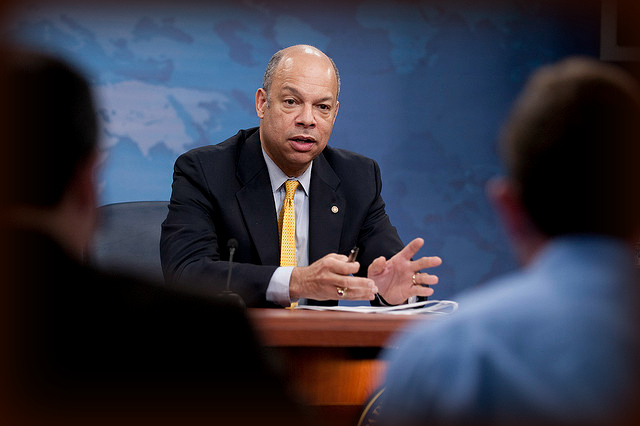
Recent hearings in the House of Representatives are showing us that the focus is not on solving the issues to pass immigration reform but focused on past problems that have been debated about before. In one House hearing before the Homeland Security committee, Secretary Jeh Johnson laid out his vision for the Department of Homeland Security (DHS). Among the questions the Secretary took from committee members were inquiries about deportation priorities and immigrants who overstay their visas. At the same time, the House Judiciary committee held a hearing about the president’s constitutional duties and the use of executive power in his administration. The real question is why are our House members focused on enforcing current immigration policies when the dialogue should be on immigration reform?

It is clear that many Representatives are concerned about border security more than anything. In fact, at the House hearing with Sec. Johnson, he fielded questions about whether the administration was deporting immigrants who fit the department’s stated priorities, including putting resources toward finding immigrants who overstay their visas. “If in the category of visa overstays there are those people [who are national security threats], then we need to go after those people,” Johnson said. Some House members claimed the administration wasn’t deporting enough immigrants, while Rep. Eric Swalwell (D-CA) expressed concern that too many immigrants are being removed because of minor driving offenses and not violent crimes. These comments show how the focus is still on the current policies being implemented and less on how the changes to our policies will affect these concerns.

With the debate over the President’s constitutional authority to unilaterally implement immigration policy going on, House members assert that his broad authority is still limited. Rep. Tom Rice (R-SC) asserted that while the president has prosecutorial discretion, “he does not have the authority to exempt a specified class of up to 1.76 million individuals.” Rep. Luis Gutierrez (D-IL) explained that DACA is decided on a case-by-case basis as every individual application is examined before DACA is granted.

Reflecting back on the State of the Union Address, it has been a month since President  Obama said he was not afraid of using his executive powers to make sure immigration reform will happen. There is pressure on President Obama from those whose favor he curried heading into the 2012 election. Young immigrants, members of United We Dream (UWD), are demanding that the president stop deportations of illegals.

Young immigrants may be in luck.  Recent polls are showing that for the first time that Americans are just as concerned about what to do with people already in the country illegally as they are about securing our borders. Historically, people have been more worried about shutting down border crossings.

Further confirmation of a sea-change in attitude comes from a recent CNN poll. Last month, in answer to “What should be the main focus of the U.S. government in dealing with the issue of illegal immigration,” 54 percent selected “developing a plan that would allow illegal immigrants who have jobs to become legal U.S. residents.” Only 41 percent chose “developing a plan for stopping the flow of illegal immigrants into the U.S. and for deporting those already here.” In 2010, the numbers were significantly higher calling for tighter border security.

Recently, USCIS posted on its website that those who were given DACA in August are coming up on the expiration of their deferred action.  The recent post notifies individuals that If you wish to renew your deferred action for another two year period, Form I-821D must be submitted to USCIS again.  This form must be completed, properly signed and accompanied by a Form I-765, Application for Employment Authorization (along with the accompanying filing fees for that form, totaling $465), and Form I-765WS.

USCIS also warns that if your previous period of deferred action expires before you receive a renewal of deferred action under DACA, you will accrue unlawful presence and will not be authorized to work for any time between the periods of deferred action.  It is for these reasons that USCIS encourages submission for renewal 120 days before the current period of deferred action under DACA expires.

Also as a reminder, USCIS has issued further guidance on renewing DACA by stating “An individual whose case was initially deferred under DACA by ICE may be considered for Renewal of DACA from USCIS if he or she:

Canada has recently terminated two investor immigrant programs, an act that has Chinese agencies saying the policy change is unfair. The Canadian policy is a signal to wealthy applicants that they must improve their social integration in and increase financial contributions to destination countries. “All of Canada’s immigration programs are open to anyone who meets the criteria, and do not target specific countries,” the Canadian embassy in China told China Daily.

Citizenship and Immigration Canada said in a written interview that China “has been among the top sources for more than a decade”, and immigration is a key part of Canada’s plan to “grow our economy, spur job creation, and ensure long-term prosperity for all Canadians”.

The Immigrant Investor Program requires investors to have a minimum net worth of 1.6 million Canadian dollars ($1.5 million) and to invest 800,000 Canadian dollars in the form of a multi-year, interest-free loan to the government. Canada’s Citizenship and Immigration Services have stated that: “Research shows that immigrant investors pay less in taxes than other economic immigrants, are less likely to stay in Canada over the medium- to long-term and often lack the skills, including official language proficiency, to integrate as well as other immigrants from the same countries.”

Recently, the Federal Register published two new exemptions to the Immigration and Nationality Act on Wednesday by the Departments of Homeland Security and State mean that who provided “insignificant” or “limited” material support for terror groups will no longer be automatically denied eligibility from asylum or refugee status.

An unknown number of people currently in the process of being deported, as well as about 3,000 people with pending asylum cases will be affected by this rules change. It will likely help Syrian refugees who would otherwise be blocked from receiving U.S. aid by the existing rules.
The new exemptions apply to “limited material support.” A DHS spokeswoman reported that the term is defined as “material support that was insignificant in amount or provided incidentally in the course of everyday social, commercial, family or humanitarian interactions, or under significant pressure.”

Reactions to the release of the House GOP leadership’s principles for immigration reform  tended more toward cautious praise for releasing something as a starting point, but with serious doubts about the shortcomings of the actual policy proposals. Because these principles are guidelines—without specific  detail—“cautious optimism” is probably the healthiest approach to take in understanding what the document means for reform. Summarizing what the document says doesn’t take long; understanding its nuances, particularly its omissions and departures from the past, requires a bit more digging. In reality, this new document should not be read as an unwavering set of principles, but rather  as a list of expectations and strategic choices. The first half, dealing with enforcement contains no real surprises, but the second half is full of them.

There is much rhetoric about the necessity of securing our borders and creating a zero-tolerance policy for people who violate our laws in the future. These standards endorse the use of an electronic work site verification program and the full implementation of an entry/exit registration program for tracking arrivals and departures to and from the U.S. They emphasize the necessity of enforcement of laws first, before turning to any more positive reforms. Ultimately, the enforcement section of the document merely repeats the idea that we must be able to measure enforcement successes and thwart efforts to get around the law.

The second half of the GOP stance is far more interesting, as it emphasizes rewarding hard work and merit, and puts a premium on outcomes. The authors declare that the legal immigration system needs to be reformed to avoid an over reliance on family ties or luck; instead, they prioritize rewarding foreign students who can contribute to the economy and meeting the needs of employers. Similarly, temporary work programs, particularly in agriculture, have to provide realistic and predictable means of entry to the U.S., without harming the interests of native-born workers. It is striking how the emphasis on finding a way to use the immigration system to improve the economy is an acknowledgment of the importance of immigration that has been lacking in the past.