On March 8, 2013, USCIS released a new Employment Eligibility Verification Form I-9. Employers are required to use the Form I–9 to verify the identity and employment authorization eligibility of their employees. We are providing this update for U.S. employers to notify them of the changes and updates in connection with the release of the new form.

Structure of Form I-9

Form I–9 contains three sections.

Recently, Congress has been dealing with numerous issues in reforming our immigration laws to meet some of the pressing societal matters, whether it be family members living here illegally, businesses wanting more qualified individuals to come work in the U.S. or trying to retain and keep those in hard sciences here with easier access to other work visas. One of the current debates within the immigration overhaul concern the needs of some businesses versus the major labor organizations in the U.S. There is some disagreement between these two groups on how to create availability of lesser skilled work visas for those who may not come in under other work visas that require substantially more education.

Right now, both sides agree to a common set of principles, including the creation of a new visa for lesser-skilled workers who come to the U.S. for year-round work. At present, no visa category provides for that type of immigrant worker. The only lesser-skilled worker visa category that exists is the H-2b visa, a seasonal worker visa that allows individuals to come to work during seasonal periods and usually within very specific fields.

With the Senate group approaching a self-imposed late-March deadline for a bill, there have been signs that negotiations between labor and business are strained. Both AFL-CIO President Richard Trumka and Republican John McCain (Ariz.), one of the senators working on the reform bill, have acknowledged that the two sides might not reach a deal on how to handle flows of lesser-skilled workers. However, despite the public doubts, negotiations are still very much alive, according to Randy Johnson, the senior vice president of labor, immigration, and employee benefits at the U.S. Chamber of Commerce.

“I think it’s a sign that it’s not all a bed of roses, but one could make the same argument about the various disagreements that I’m sure you’re seeing in the press over legalization versus citizenship,” Johnson said in an interview. “But all of these are just bumps in the road, and we hope to get through them and still come up with a deal.”
Ana Avendaño, a top immigration policy aide at AFL-CIO, said that unions believe they have an advantage in negotiations because of the reelection of President Barack Obama, whose immigration plan — which is being withheld while members of Congress craft their own bill — aligns closely with labor goals.

“This is the mandate that the president was elected with,” said Avendaño. “To actually fix the immigration system in a way that respects the democratic rights of the immigrant community. And so anything short of a path to citizenship just isn’t going to satisfy the people who elected the president.”
Labor isn’t just backing a pathway to citizenship for the undocumented currently living in the country. The new visa program for lesser-skilled workers should also contain an eventual path to citizenship, Avendaño said. The framework released last month by labor and business said that the new visa would “not keep all workers in a permanent temporary status,” but doesn’t spell out a specific roadmap to citizenship for those workers. Avendaño believes the balance of power is tipping in favor of worker rights.

Continue reading

Our Blog readers and Facebook fans often inquire about other temporary work visa options other than the H-1B Visa. This article was prepared by Attorney Yingfei Zhou from our office.

For individuals who possesses extraordinary ability in the field of sciences, arts, education, business, or athletics, or who has a demonstrated record of extraordinary achievement in the motion picture or television industry and has been recognized nationally or internationally for those achievements, we will recommend the O-1 visa.

A job offer from a U.S. employer is a basic requirement for the O-1 visa. The O-1 visa is filed by the employer, along with the evidence of the individual’s extraordinary ability. Different from the H-1B visa, there is no annual limit on the number of people, who can receive O-1 visas, there is no limit on the time we can file the application, and you can work for multiple employers at the same time.

Beginning today, March 4, certain immigrant visa applicants who are the spouses, children and parents of U.S. citizens (immediate relatives), and have been unlawfully present in the United States, can start applying for provisional unlawful presence waivers through a new process.

The new provisional unlawful presence waiver process is for certain individuals who seek a waiver of inadmissibility only for unlawful presence. They can now apply for a provisional unlawful presence waiver while in the United States and before departing for their immigrant visa interview at a U.S. Embassy or Consulate abroad.

Under the current process, which continues to remain in effect, immediate relatives of U.S. citizens who are not eligible to adjust status in the United States have to travel abroad and be found inadmissible at their immigrant visa interview before they can apply for an inadmissibility waiver.

Written by Ekaterina Powell

Our office has extensive experience working on EB-2 National Interest Waiver petitions for scientists and researchers in a variety of academic fields. Many clients come to us after their NIW petitions have already been denied as a result of their first attempts to file the petitions without qualified attorney guidance.

Unfortunately, often times after careful review of the petitions it becomes clear that the scientist is qualified for NIW but the petition was done in such a way that it did not properly highlight the scientist’s accomplishments and did not articulate how the scientist meets the criteria for NIW petition.

There is real optimism that in 2013 immigration reform may become a reality. But until the United States Congress finally acts, and the President signs that bill into law, no one is sure exactly what form this new legislation will take.

While there is hope for comprehensive changes to U.S. immigration law, there is uncertainty about the details, including the all-important “path to citizenship” for undocumented or illegal immigrants already living in the U.S.

If you are one of the approximately 11 million people who may be affected by immigration reform, you are likely curious and anxious about what the future will bring for you. It may be many months before we know which proposed changes will be part of the final legislative package, but there are certain actions you can and should take immediately to give you the best chance of taking advantage of it.

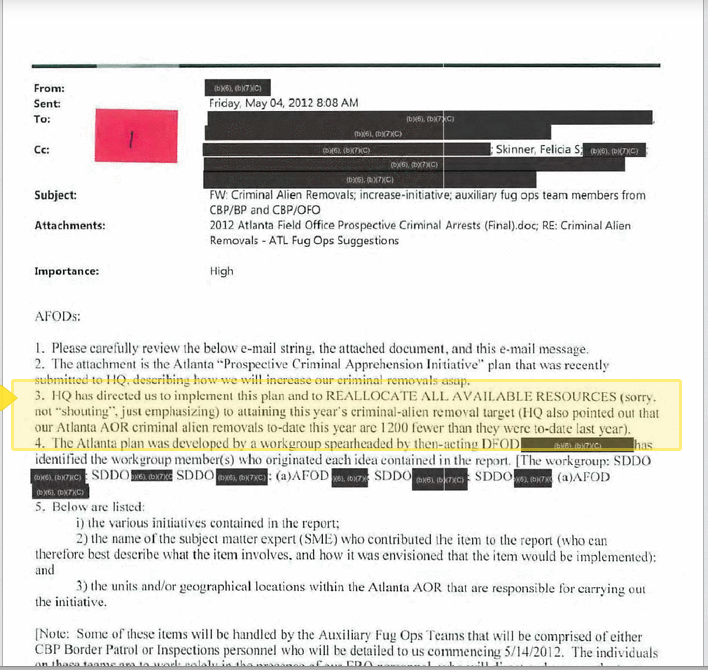
AILA recently shared an internal email communication between ICE and other agencies. The title of the attachment in the email is: “Prospective Criminal Apprehension Initiative”. The focus of course is on criminals, but more so, the need to meet certain numbers.

ice-internal-email.png

See the complete email report here: http://www.documentcloud.org/documents/603861-ice-documents.html

Deportation numbers show that the Immigration and Customs Enforcement agency is making good on its promise to focus on the more serious offenders in the undocumented immigrant population.

Our Blog readers often inquire regarding visa wait times and priority dates. This article will answer the top three frequent asked questions by previous clients, which are “What is the visa waiting list?”, “Why there is a preference category?” and “What is the current cut-off date for my visa category in my country?”

I. What is the visa waiting list?

The visa waiting list refers to those cases where the petition from the U.S. sponsor has been approved, but they still cannot proceed with processing because of statutory limits on the total number of visas and the per-country limits. According to the U.S. Department of State, the annual family sponsored preference categories are limited to 226,000 (Note: this excludes spouses, parents, and minor children of U.S. Citizens, who are the highest priority for immigration and are exempt from immigration caps). It is required by the Immigration and Naturalization Act that family sponsored visas be granted in the order that the eligible potential immigrants applied.

What a great speech tonight at the State of the Union Address. The president continued his push for Congress to act on politically volatile issues such as immigration reform.

He said:

Our economy is stronger when we harness the talents and ingenuity of striving, hopeful immigrants. And right now, leaders from the business, labor, law enforcement, faith communities, they all agree that the time has come to pass comprehensive immigration reform. Now’s the time to do it.

Many immigrants have different skills from the native-born population, and complement the skills of the U.S. labor force. Immigrants make the economy more efficient by reducing bottlenecks caused by labor shortages, both in the high-skill and low-skill area.

That’s because the educational backgrounds of immigrants and native-born Americans are different. Statistically, the average skills of native-born American workers are distributed in a bell-shaped curve. Many Americans have high school diplomas and some college education, but relatively few adults lack high school diplomas and even fewer have Ph.D.s in math and science.

In contrast, immigrants’ skills are distributed in a U-shaped curve, with disproportionate shares of adults without high school diplomas who seek manual work and others with Ph.D.s in math and science. Among native-born Americans, 91% have a high school diploma or higher, whereas only 62% of noncitizens do. Foreign-born workers are about 16% of the labor force, according to the Labor Department, yet represent 49% of the labor force without a high school diploma, 25% of all doctorates, and 35% of doctorates in science, math, computer science and engineering.

Since immigrants have a smaller share of high school diplomas and B.A.s, which is where native workers tend to be concentrated, they do not compete directly with most native-born workers. Now think about the arguments some politicians are making about how immigrants take away jobs from Americans during this economy. If the distribution of labor shows that immigrants are entering areas of the labor force that native-born Americans choose not to work in, then those immigrants are filling a vital role in the economy.

Immigrants choose different jobs from native-born Americans. Low-skilled immigrants are disproportionately represented in the service, construction, and agricultural sectors, with occupations such as janitors, landscapers, tailors, plasterers, stucco masons, and farmworkers.

They come to be fruit pickers, as well as janitors and housekeepers, jobs native-born Americans typically do not choose as careers. However, immigrants are not found as crossing guards and funeral service workers, low-skill jobs preferred by Americans. Government, education, health, and social services, are sectors that employ few immigrants. Just looking at the fields of work that immigrants enter into compared to native-Americans, the fields that native-Americans enter compared to immigrants vary quite substantially in terms of how many occupy a given field.

Continue reading