A great update from AILA, the pace of filing cap-subject petitions increases as USCIS closes in on reaching the H1B cap. The week of May 7, it was receiving an average of 840 per day . The next week it was 1060, the next week 1280, and the week of May 28 it was 1800 per day.

As of June 1, USCIS reported that 55,600 non-advanced degree cap-subject filings had been received. So, if the most recent week’s “burn rate” continued, USCIS would reach 65,000 by early next week.

However, it is not that simple. Each year, USCIS accepts more than the 65,000 before it starts rejecting petitions, since it must account for a certain percentage of withdrawals and denials. However, the agency has stopped publishing what that number (previously known as the target number) is, so the actual number it will receive before the gate comes down is unknown. We will keep you posted.
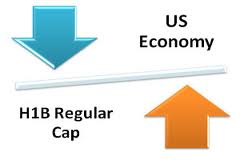
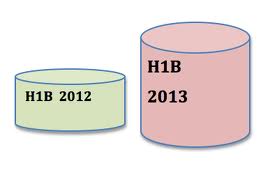
So the race is on, only a few days left for the H1B cap to be reached. USCIS has received approximately 55,600 H-1B petitions subject to regular-cap (for bachelor’s degree holders) and 18,700 H-1B petitions subject to master-cap (for U.S. advanced degree holders). Therefore, there are about 9,400 spots available under the regular-cap, and 1,300 spots left under the master-cap.

Hurry Up, you may just make it. Is it an indication that our economy is doing much better?
H1B-CAP-V1.jpg

H1B-CAP-V2.jpg

Pic Source: http://redbus2us.com/

According to Michael Barone’s Examiner column today about immigration brings to mind interesting points. Michael concludes:

My prediction is that we won’t ever again see the heavy Latin immigration we saw between 1983 and 2007, which averaged 300,000 legal immigrants and perhaps as many illegals annually.

Mexican and other Latin birth rates fell more than two decades ago. And Mexico, the source of 60 percent of Latin immigrants, is now a majority-middle-class country.

The Justice Department announced today that it filed a lawsuit against Tuscany Hotel and Casino LLC in Las Vegas, alleging that the company engaged in a pattern or practice of discrimination in the employment eligibility verification and re-verification process. The Immigration and Nationality Act (INA) requires employers to treat all authorized workers equally during the hiring, firing and employment eligibility verification process, regardless of their national origin or citizenship status. This conforms with the 14th Amendment’s protection against discrimination based on national origin, a protected class under the U.S. Constitution.

The complaint alleges that Tuscany treated non-citizens differently from U.S. citizens during the employment eligibility verification and reverification process by requesting non-citizen employees to provide more or different documents or information than required during the initial employment eligibility verification process, and demanded specific documents during the reverification process. The complaint further alleges that Tuscany subjected lawful permanent residents to unnecessary reverification based on their citizenship status after requesting and entering into the payroll system the expiration date of their Permanent Resident Cards (green cards) for purposes of reverification.

“Employers must not treat authorized workers differently during the employment eligibility verification process based on their citizenship status or national origin,” said Thomas E. Perez, Assistant Attorney General for the Civil Rights Division. “The department vigorously enforces the anti-discrimination provisions of the INA so that authorized workers are treated fairly in the work place.”

Still time to apply for H1B Visas, but numbers are running fast. U.S. Citizenship and Immigration Services (USCIS) announced that, as of May 18, 2012, it has received approximately 48,400 H-1B petitions counting towards the congressionally-mandated 65,000 limit.

USCIS also confirmed that it has received approximately 17,500 H-1B petitions for employees with advanced degrees from U.S. colleges and universities. The annual limit on H-1B petitions in the advanced degree category is 20,000. Accordingly, USCIS is still accepting H-1B petitions under both the general cap and the advanced degree cap.

red-h1visa1.jpg

Labor shortages have been a significant challenge to U.S. agriculture for as long as I can remember. On rice farms in Texas to corn fields in Nebraska, it seems as though farmers are always running short of farmhands when it comes time to harvest.

But now, unlike the simpler days of 20 years ago and longer, when farmers could just hire teenagers and retirees, farmers and ranchers are facing new challenges with labor issues. From border security concerns and state versus federal authority questions to I-9 audits and government-caused labor delays under the H2-A program, finding a reliable agriculture workforce is becoming more and more difficult.

From the Border to the Court

Since the passage of the E2 Investor Visa Bill by the house in March, many Israelis have been calling my office asking when can they finally move here and start the business of their dreams. Well,the Senate passed the bill by unanimous voice vote last week. It had been unanimously passed the U.S. House of Representatives on March 19 and now heads to President Obama for his signature.

The measure added Israel to the list of countries eligible for E-2 investor visas. Once signed into law by President Obama, as expected, the bill will put Israel on a list with more than 79 other countries whose citizens are eligible for the visas.

The Embassy of Israel in Washington applauded the passage of legislation, saying it enables “Israeli nationals to make large investments in the U.S. economy, creating many additional jobs for Americans.

With the upcoming Provisional Waiver changes, as well as the, June 4, 2012 change to allow mail requests to waive certain grounds of inadmissibility directly to a U.S. Citizenship and Immigration Services (USCIS) Lockbox facility, we have to remember that Waivers are complicated and frustrating to handle. But his article, prepared by attorney Ekaterina Powell from our office will focus on a success story we are happy to share.

For many, immigration to the United States through marriage to U.S. citizens is an easy process that leads to permanent residency within 6 months. For others, the road to permanent residency in the U.S. is a thorny one, consisting of years of separation, extreme hardships suffered by the family members, followed by administrative delays, immigration backlogs, and struggles as they go through the immigration system.

Our firm is especially happy when we are able to help our clients in a particular difficult case which results in another family being reunited.

Some great news to report for our readers. As you may know the processing of I-601 and I-212 waivers may take a very long time, often resulting is the separation of families.

BORDER%20PIC.jpg

If you are not familiar with Waivers, some foreign nationals may be deemed inadmissible under INA 212(a), which covers bases including unlawful presence, criminal violations, and immigration fraud or misrepresentation. If a foreign national is considered inadmissible, then he or she must obtain a waiver of inadmissibility if they are seeking lawful permanent resident status. Generally, in order to successfully obtain an I-601 waiver, you must prove “extreme hardship” to a qualifying relative is moved to the applicant’s country, and that the qualifying relative can’t remain in the US without the applicant. These hardships are also weighed against “mitigating and aggravating factors.” Currently waiver cases are filed directly with specific US posts around the world resulting in different processing times depending on where the case is filed.

Beginning June 4, 2012, individuals abroad who have applied for certain visas and have been found ineligible by a U.S. Consular Officer, will be able to mail requests to waive certain grounds of inadmissibility directly to a U.S. Citizenship and Immigration Services (USCIS) Lockbox facility. This change affects where individuals abroad, who have been found inadmissible for an immigrant visa or a nonimmigrant K or V visa, must send their waiver applications.

The United States faces intense competition from foreign countries, especially China, who seek to persuade highly skilled citizens who have settled in our country to return home to start businesses there, according to a report released Tuesday by an immigration group led by Mayor Michael R. Bloomberg of New York.

“China is proving the most aggressive and ambitious” among the United States’ economic competitors in seeking to reverse a brain drain and lure back their scientists, engineers and entrepreneurs, the report by Mr. Bloomberg’s group, the Partnership for a New American Economy, found.

The report is broadly critical of the American immigration system, which says is slow, inflexible and not in sync with the nation’s labor needs. “Self-inflicted economic wounds” caused by the system, the report says, discourages foreigners from investing and blocks foreign students with advanced degrees from American universities from remaining here.