Articles Posted in Permanent Residents

1a233a6

In this segment, we answer 4 of your most frequently asked questions received on our social media platforms and our website. Please remember that every case is different and every immigration journey is unique. You should not compare your situation to anyone else’s. We hope that our answers will provide you with further guidance while you embark on your immigration journey. If you have any further questions, please call our office to schedule a free first time consultation. We serve international clients and domestic clients in all 50 states. We thank you for your continued trust in our law office. For more information on the services we offer please click here.

Consular Report of Birth Abroad (CRBA) and the Affidavit of Support

Q:  I am a US Citizen married to a foreign national. We have a child together. We recently moved to the United States from abroad.  My husband and son entered the United States on a B-2 visa and we are planning to apply for their adjustment of status. My question is regarding the Form I-864 Affidavit of Support. I have just secured employment and will be able to sponsor my family. I want to know what documents are required in support of the Affidavit of Support as proof that I have sufficient income to support my family. At the moment I do not have pay stubs. I plan to start my employment next month.

A: Thank you for your question. If your child was born abroad, your child may acquire U.S. Citizenship by filing for a Consular Report of Birth Abroad (CRBA, Form FS-240) before your child reaches their 18th birthday. To do so, the U.S. Citizen parent must report the birth of the child at their nearest U.S. Embassy or Consulate. Anytime that a child of a U.S. Citizen parent is born abroad, the parent must report the birth to nearest U.S. Consulate as soon as possible. This will allow the Consulate to issue a Consular Report of Birth Abroad as an official record of your child’s claim to U.S. Citizenship. The CRBA may be used as proof of your child’s U.S. Citizenship and allows the child to obtain a U.S. passport. A child with a consular report of birth abroad receives the same privileges as a child born in the United States. It is recommended that you first contact your closest U.S. embassy or Consulate before filing a petition for your son, because it is likely that you will not need to go through the immigration process for your son.
Continue reading

2982449071_57fc209774_z
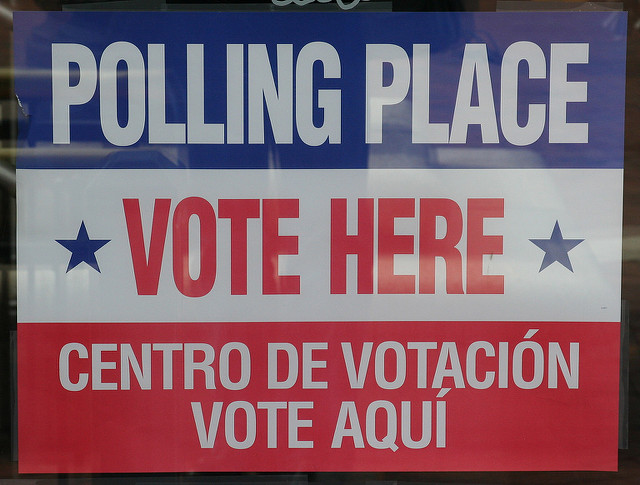
According to a new study by the Pew Research Center, the number of permanent residents applying for U.S. Citizenship has risen 5% when compared to the 2012 election cycle. This fiscal year USCIS received the highest number of applications for naturalization in four years. The Pew Research Center suggests that the recent surge in applications for naturalization is not due to political reasons.

This fiscal year approximately 249,609 permanent residents applied for naturalization, a 13% increase from the previous fiscal year, according to preliminary data provided by the U.S. Citizenship and Immigration Services. During the last election cycle, in fiscal years 2011 and 2012, there was a 19 % increase in applications, compared to this year’s election cycle at 13%. Research conducted by the Pew Research Center indicates that the increase in the number of applications is due to practical reasons, such as avoiding fee increases and criminal prosecution, and not for political reasons. For instance, during fiscal years 2007 and 2008, the number of naturalization applications decreased by 62%, at a time when USCIS announced an increase in the application fee for adults, from $330 to $595, taking place on July 30, 2007. As a result of this announcement, an unusual number of applications were filed before the planned increase in filing fees. In fiscal year 2007, before the increase in filing fees, the number of naturalization applications increased by 89% compared to fiscal year 2006. This was the largest increase in naturalization applications ever seen since 1907.

From fiscal year 1995 to 1998, more than 900,000 people applied for citizenship every fiscal year, reaching a record high 1.4 million naturalization applications in fiscal year 1997, due to a series of Congressional legislation enacted in the mid 1980s. According to the Pew Research Center, one such legislation was the Immigration Reform and Control Act of 1986, which gave approximately 2.7 million undocumented immigrants the opportunity to become legal permanent residents. This piece of legislation increased the pool of potential citizens who would apply for naturalization within 5-10 years. By 2009, nearly 40% of permanent residents had become U.S. Citizens. In 1996 Congress passed laws restricting public benefits and legal protections of noncitizens, and expanded the list of offenses for which legal permanent residents could be prosecuted and deported. These laws prompted millions of permanent residents to apply for naturalization out of fear of deportation.