Articles Posted in America

10396442325_d0fe47943a_z

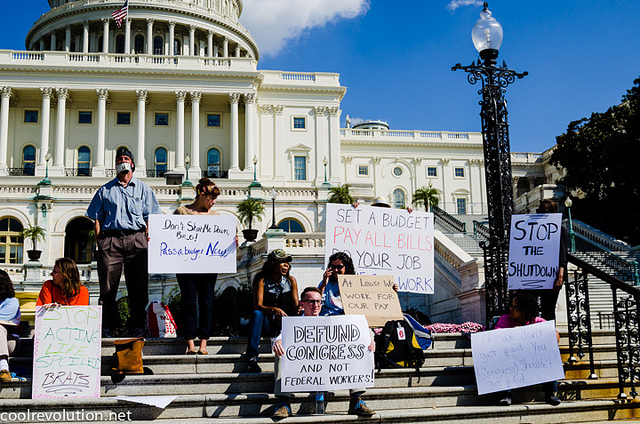
On Monday the Senate will be voting on a short-term spending bill introduced by Senate Appropriations Committee Chairman Thad Cochran. If passed, the bill will temporarily fund the government through December 11th of this year. If the bill is not passed, the country will face a government shutdown beginning on October 1, 2015. The temporary funding bill called a continuing appropriations resolution will be required to keep government agencies afloat for the remainder of the year. Congressional Republicans and Democrats have been at odds with one another since the Planned Parenthood scandal was brought to light. The non-profit organization’s involvement in the practice of procuring tissues from aborted fetuses for the purpose of medical research has been deeply contested by Republicans, who believe Planned Parenthood should no longer receive federal funding. Due to this impasse, no resolution bill has yet been agreed upon.

Repercussions on Immigration: LCA’s and PERM applications

A government shutdown would mean that various government agencies may not be operating at full capacity. Due to this we urge our clients to file urgent Labor Condition Applications or PERM applications prior to October 1, 2015. While the shutdown will have an effect on the economy, families, and business throughout the country, entities not affected by the government shutdown include USCIS, the military, airport security, FBI, Border Patrol, Social Security, Medicare, Medicaid, Food Stamps, among others.

Continue reading

flag

On September 9th the Department of State and USCIS jointly announced new procedures that will allow family-based and employment-based applicants stuck in immigrant visa backlogs to apply for an immigrant visa (adjustment of status) before their priority date becomes current and an immigrant visa becomes immediately available to them. These new procedures will be implemented beginning October 1, 2015 as part of President Barack Obama’s executive actions on immigration with the purpose of modernizing and streamlining our legal immigration system for the 21st century. These new changes were introduced in the October Visa Bulletin. 

What is the Visa Bulletin?

The Department of State publishes a monthly report of visa availability known as the ‘Visa Bulletin.’ The Visa Bulletin is essentially a guide to be used by applicants and consular officials denoting visa availability for the issuance of visas at consulates and embassies worldwide. USCIS utilizes the Visa Bulletin to determine whether Form I-485, Application to Register Permanent Residence or Adjust Status, can be accepted for filing and processing. In order to file Form I-485 a prospective immigrant must determine whether a visa is available to them at the time the Form I-485 is filed and at the time Form I-485 is approved. The Department of State and Department of Homeland Security work together to revise the Visa Bulletin on a monthly basis estimating immigrant visa availability for prospective adjustment of status applicants. The DOS allocates available visas by providing visa numbers according to the prospective immigrant’s preference category, country of birth and priority date. This allows distribution of visas for all preference categories. A prospective immigrant’s priority date can be found on Form I-797 Notice of Action or ‘Receipt Notice’ for the petition filed on the applicant’s behalf.

What is a Priority Date?

A priority date is generally defined as the “date when your relative or employer properly filed the immigrant visa petition on your behalf with USCIS.”  For employment-based petitions, “if a labor certification is required to be filed with your immigrant visa petition, the priority date is the date the labor certification application was accepted for processing by the Department of Labor.”

Continue reading

8595641020_e7cc3a68f1_z

By now you may have heard that on the morning of June 26, the Supreme Court of the United States ruled in a landmark 5-4 decision (Obergefell v Hodges) that same-sex couples have a constitutional right to marriage, a right that cannot be denied by the laws of any state.

Prior to the ruling, same sex couples could only be married in 36 states and the District of Columbia. Marriage equality for same sex couples has been a controversial subject for decades, making the ruling all the more historic.

In 2013 the Supreme Court made a similar ruling which declared the Defense of Marriage Act (DOMA) unconstitutional. DOMA was initially enacted by Congress in 1996, defining marriage as the union between a man and a woman. DOMA essentially barred the federal government from recognizing same-sex marriages. Despite the ruling, the rights of same sex couples continued to be abridged by individual state laws. Even after DOMA was declared unconstitutional, many conservative states continued to deny same sex couples the right to marry. Due to this, thousands of law suits flooded into the courts to settle the issue once and for all. One of these suits was brought to court by Jim Obergefell, a widower demanding that his legal marriage to his partner of 21 years, be recognized in his state of residency, the state of Ohio. The June 26th SCOTUS decision has now put the debate to rest, though a long journey still lies ahead.

Continue reading