It has been reported that this Wednesday, July 23, the State Department’s global database for issuing travel documents has crashed, resulting in major delays for potentially millions of people around the world waiting for U.S. passports and visas.

Unspecified glitches in State Department’s Consular Consolidated Database have resulted in “significant performance issues, including outages” in the processing of applications for passports, visas and reports of Americans born abroad since Saturday. Spokeswoman Marie Harf said the problem is worldwide and not specific to any particular country, citizenship document, or visa category.

This failure may cause hardship to applicants waiting on visas and passports. State Department is working to correct the issue as quickly as possible.

7512877940_2720e3be12_z
On July 19, 2014 the Federal Bureau of Investigation’s San Antonio Office issued a press release discussing fraudulent attempts made by con artists targeting the families of unaccompanied children—mostly from Central America—coming to the United States through the Rio Grande valley and Tucson border. According to the press release, these con artists operate by making themselves appear as credible entities and reaching out to the family members of unaccompanied children, seeking payment in exchange for what the families believe will cover travel and legal expenses that will allow the children to be reunited with them. These plots are deceptive and fraudulent. The San Antonio FBI office confirmed that on July 18 two fraud schemes of this sort occurred via telephone. In one instance the perpetrator(s) disguised themselves as a charitable/non-profit organization aimed at reuniting unaccompanied children with their families. Another perpetrator disguised themselves as a reputable business organization from San Antonio. According to San Antonio FBI, the payment amounts demanded by these illegitimate sources ranged from $300.00 to several thousand dollars. The press release seeks to inform the public of these occurrences and encourage the public to be extremely cautious when receiving such a request. The FBI San Antonio Office has warned the public that fraudulent schemes such as these are abound especially in instances of crisis and natural disasters. The public should be extremely wary in such times. If you have been the victim or know someone who has been a victim of such a crime contact your local FBI office.

In general to protect the public from being victimized the press release provides several guidelines:

  • Be skeptical of individuals representing themselves as officials asking for payments or donations door-to-door, via phone, mail, e-mail or social networking sites.

8639003804_2bd2b5f140_z

By Ekaterina Powell, Esq.

On July 11, 2014, USCIS released new guidance on adjudication of H-1B petitions for nursing occupations, which superseded the previous USCIS Memorandum of Johnny Williams, INS Office of Field Operations, Guidance on Adjudication of H-1B Petitions filed on Behalf of Nurses, HQISD 70/6.2.8-P (November 27, 2002).

New USCIS guidance has the “Policy” designation, which means that it has to be followed by USCIS adjudicators.

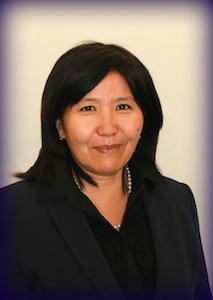
It is a pleasure for our law office to introduce associate attorney Nadia Galash to our readers

Bio: Nanadiadia Galash has been a California licensed attorney since 2009 and has been practicing immigration law since 2011. Nadia Galash specializes in adjustment of status/permanent resident processing; citizenship; deportation and removal proceedings before Immigration Court; law and motion work; and immigration appeals. Her practice although limited also includes criminal defense and family law matters.

Nadia is a Russian attorney with 3 children. In her free time she enjoys yoga and meditation.

5739974254_54e246c823_z
The rise in the number of unaccompanied children crossing into the United States illegally has dominated talks between lawmakers, pundits, political analysts, and humanitarian organizations, all of whom have a stake in bringing about comprehensive immigration reform. According to reports by the New York Times, since the month of October, over 50,000 children have been caught crossing the United States border illegally; a number that is double the amount of children who crossed illegally in 2013. This issue has become a point of contention not just for pro-immigration reform advocates, but has also transformed into a humanitarian issue worthy of continued debate, due to the dangerous nature a child succumbs to in making the dangerous trek to the United States unaccompanied and vulnerable.

Where are these children coming from you might ask? The vast majority of these unaccompanied children are coming from poverty stricken towns across El Salvador, Guatemala, and Honduras, which are also notorious for their violence. The New York Times reports that unaccompanied children from Mexico make up less than a quarter of the total amount of children coming to the United States illegally. The increase in the number of children crossing into the United States illegally began in 2012. Of the children that were apprehended, more than 70% were caught crossing through the Rio Grande Valley in Texas, while only 13% were caught crossing through Tucson, Arizona.

Though experts have continuously debated the reasons why these unaccompanied children are coming to the United States, most agree that there are various factors which drive these children to escape the conditions in their country: poverty, violence, and the desire to re-unite with their families. Among the countries mentioned, Honduras boasts the world’s highest murder rate. Children coming from Guatemala and El Salvador tend to come from very poor and rural towns. Some of the problem may lie in the fact that previously, minors who were detained were not immediately deported. This may have led many Central Americans with the perception that the Department of Homeland Security would allow these children to remain in the United States.

3698942980_57cbb35d58_z

By Lupe Lopez

Alan and Diana married in February 2014.  They quickly filed for Diana’s green card and because they had been married less than two years at the time of the interview, Diana received conditional permanent residence.  Everything was fine and there were no problems until Alan received a promotion to a position in one of the firm’s overseas offices.  Both Alan and Diana were concerned because they knew that Diana would not be able to spend much time out of the U.S. and still maintain her permanent residence.

Alan and Diana came to our office in to get an attorney’s opinion of their situation and to see if there was any way they could file a form that would maintain Diana’s permanent residence while living abroad.  Normally, if you are a permanent lawful resident, you cannot be out of the country for an extended period of time if you wish to maintain your residency; especially for the purpose of obtaining citizenship.  In order to be naturalized as a U.S. Citizen, the permanent resident must fulfill residency requirements and show evidence that he or she has been physically present in the United States for at least half of the three years (for people who have gained status through marriage to a U.S. Citizen – half of five years for all others).  Diana would not be able to accumulate the time needed if she is forced to live abroad with her husband.

166467691_f3b4775dcc_b

By Yingfei Zhou, Esq.

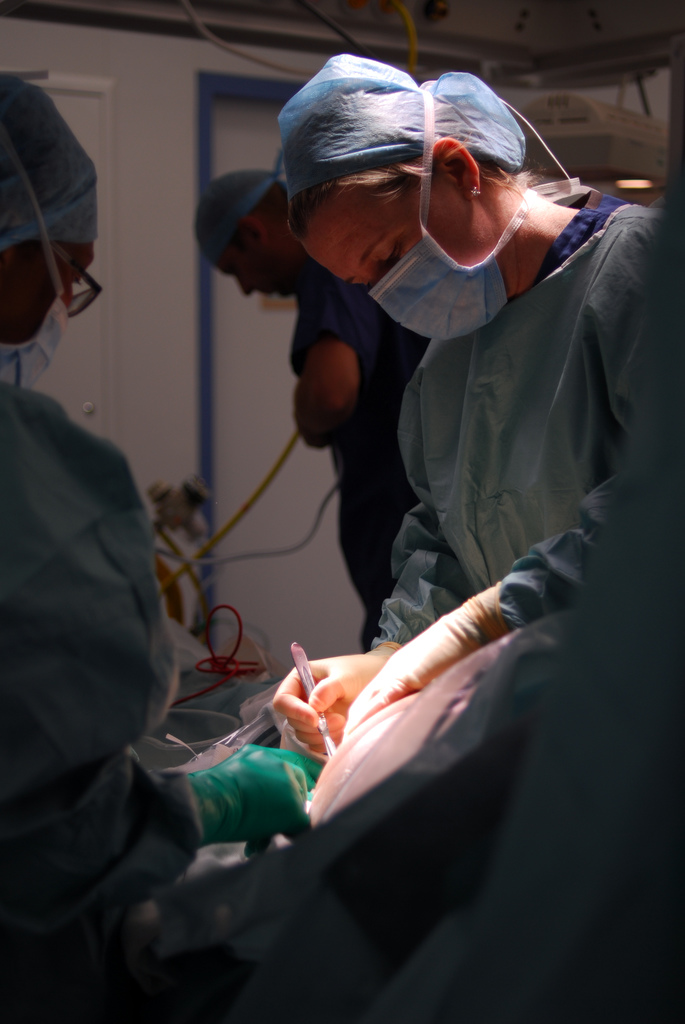
The Conrad 30/J-1 Visa Waiver program allows J-1 medical doctors to apply for a waiver of the 2-year residence requirement upon completion of the J-1 exchange visitor program. From October 1 through September 30 of each year, up to 30 waivers can be recommended by each state’s Department of Health. If the home government funded the physician’s exchange program, the physician also needs to obtain a “no objection” letter from his or her home country. Once the waiver is approved, applicants can file for cap-exempt H-1B visa to work for the health care facility.

In order to be eligible, the applicant must be a physician practicing clinical medicine full time (no less than 40 hours per week) in an area designated by U.S. Department of Health and Human Services (HHS) as a Health Professional Shortage Area (HPSA), Medically Underserved Area (MUA), or Medically Underserved Population (MUP). The employment should commence within 90 days from the date the waiver is approved by the USCIS.

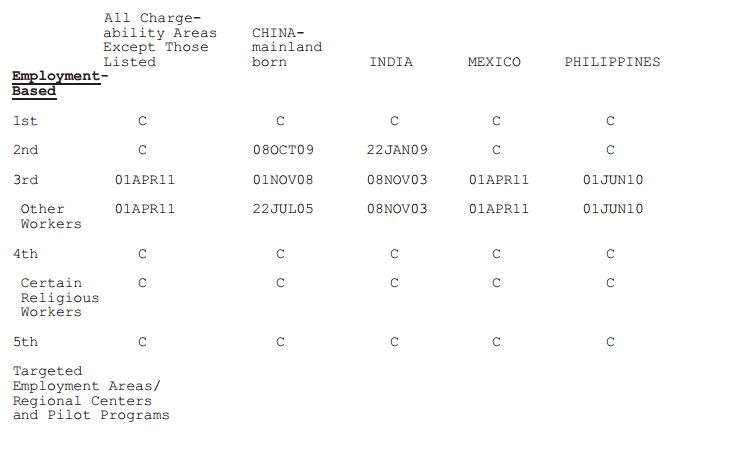
Great news for Indian Nationals! The United States Department of State Bureau of Consular Affairs recently released the August Visa Bulletin which summarizes the availability of immigrant visas for the month of August for family-based and employment-based visa preferences. According to Section 201 of the Immigration and Nationality Act (INA) the allotted number of employment based visas is set to at least 140,000 visas for the worldwide level. The Visa Bulletin for August indicates that the second preference EB-2 employment-based category for India has advanced by 5 years when compared to the Visa Bulletin in the recent year. The advancement of the employment based second preference EB-2 category provides Indian nationals whose Form I-140 Immigrant Petition for Alien Worker was approved and whose priority dates fall before January 22nd of 2009, with the opportunity to apply for their green cards beginning August 2014. For priority dates related to family sponsored preferences and diversity immigrant categories please click here to read the August Visa Bulletin. For legal questions please contact our office and we would be happy to help.

Employment Based

9069182796_e8643422b5_z (2)
Want to track the status of a pending case? Moving to a new address? Want to report a problem with your case? No problem!

Our loyal fans and followers, who communicate with us through our various social networking sites and web page, often ask our law office how they can track or check the status of their pending case, how they can change their address with USCIS while their case is pending, and how they can report a problem with their case. These are all very important questions. It is imperative that all applicants who have pending cases with USCIS regularly check the status of their case both online and by calling USCIS. There are several ways to communicate with USCIS. You can check the status of your pending case online, submit a service request online, schedule an Infopass online, and submit a change of address online.  For time sensitive issues, applicants should check the status of their pending case or report a problem with their pending case by calling USCIS directly by phone. In this post we will walk you through the steps of how to communicate with USCIS via all of these methods.

How to check the status of a case online:

By Ekaterina Powell, Esq.

Since the H-1B season kicked off on April 1, 2014, USCIS has started issuing Requests for Evidence (RFE). This article will address the RFE trends and practice tips.

Below are 4 main points USCIS addresses in the RFEs: