Articles Posted in Deferred Action and DREAM Act Students

Capitol
Today, January 14, 2015 the Republican-led House of Representatives made their first step toward attempting to dismantle major provisions of Obama’s executive order, an order which will make millions of undocumented immigrant’s eligible for employment authorization and will prioritize deportations based on criminal history. For those who believe all Republicans will be supporting the vote, think again. Many republicans have voiced their concern in the House, fearing that the GOP will have to endure backlash from the immigrant and more liberal population for many years to come. Democrats have said that they will filibuster the bill, while some reluctant Republicans plan on joining the ranks of the opposition. It is very unlikely that there will be enough votes, for the bill to gain momentum, and of course Obama will not be giving his support by signing the bill. The existence of the bill indicates that there is a lack of consensus between Republicans and Democrats as to what comprehensive immigration reform will look like and how far each party is willing to push the envelope.

The majority of Republicans simply do not believe the order is within the purview of Obama’s executive powers and do not want the President overstepping his boundaries. The bill however is helpful in that it has stimulated much debate between the parties which is exactly what is needed to bring about bipartisan support for comprehensive immigration reform. The House will be discussing the budget it will appropriate to the Department of Homeland Security, which will run out of congressional funding at the end of February. Congress can use the power of the purse to their benefit and withhold financing, in opposition of Obama’s executive order.

All in all, 26 House Republicans voted in opposition to an amendment that would end Obama’s 2012 executive order which allowed undocumented immigrant children, known as Dreamers, to stay in the country legally. The amendment passed 218 to 209, all votes from Republicans. The funding bill for the Department of Homeland Security passed 236 to 191. Further amendments of the bill are expected. What is clear: Republicans are making their voice heard. We will keep you updated on the final outcome in the coming months.
imagePresident Obama closed off the year by announcing his highly anticipated executive action on November 20, 2014 which will go into effect early this year, but the executive action was only one of many important initiatives that occurred in 2014.


2014 was a big year for immigrants for several reasons:

  • AB 60 California Driver’s License Applicants: Beginning January 01, 2015 undocumented immigrants can start the process of obtaining their driver’s licenses under AB 60 at their local DMV field office
  • Executive Action: Beginning February 2015, eligible applicants can apply for the expanded DACA program which shields undocumented individuals from deportation who were brought to the United States illegally as children, our office will be providing you with further updates early this year
  • Beginning May 2015 eligible parents of U.S. Citizens and lawful permanent residents can apply for deferred action thereby protecting them for deportation and allowing millions of parents to be eligible for employment authorization

Continue reading

4097702175_2000b12d31_z

President Obama’s executive order is looming on the horizon, as part of an alleged 10 point plan the president plans to announce as early as Friday, November 21. According to a draft proposal released by a U.S. government agency, the plan may suspend removal proceedings for millions of undocumented immigrants who came to the United States as children, as well as parents of U.S. Citizen children residing in the United States illegally, and parents of green card holders, by allowing them to benefit from a reprieve that will expand deferred action for these individuals. Among its 10 initiatives, firstly, the plan proposes to bolster border security, secondly, to improve pay for immigration officers, thirdly, to provide a 50% discount to the first 10,000 applicants whose income levels are below 200% of the poverty level in order to encourage participation, fourthly, to establish a program designed to stimulate the tech industry which could potentially offer millions of immigrants and their dependents a path to citizenship, and lastly, to prioritize removal proceedings on the basis of the severity of an immigrant’s criminal history, calling an end to the program known as ‘Secure Communities.’ This 10 point plan makes anyone who entered the United States before turning 16 and before the date of January 01, 2010, eligible for naturalization. Such a plan would thereby suspend deportation for millions of undocumented immigrants.

The proposal has not yet been announced, we would like to inform our audience to please be wary of fraudulent schemes. At this time ONLY preliminary information has been released.

Please continue to follow our blog for further updates, for more information please contact our office.  It is our goal to provide you with the most up to date immigration reform developments.

2583548876_29ce8b50e7_o

By Lupe Lopez

Just a few weeks ago, Maria Elena came in to get information for her parents.  Her brother, a U.S. citizen, had just turned 21 and they wanted to know if the parents would be able to get their green cards when their son filed a petition for them.

While discussing the issues related to their parents’ case, we spoke to Maria Elena about her status as well.  We found that Maria Elena was 29 years old and had been in the U.S. since she was 5 years old.  She did attend school in the U.S. her entire life and was just a few credits short of fulfilling the requirements for her high school diploma when she had to drop out of high school due to pregnancy.

Maria Elena was now married to Jorge, her baby’s father but he, too, had entered the country illegally as a child and has not obtained legal status.  Jorge graduated two years before Maria Elena and was able to finish two years of community college before he had to stop going to school so he could support Maria Elena and the baby.  Even though Jorge had an Associate’s Degree in biology, he could not get a job.  His friends who had graduated with him were able to get jobs at local biotech firms, but he did not have a social security number or legal work authorization.  Both he and Maria Elena struggled to find consistent and meaningful work.

Continue reading

8128488258_ce420104bb_z
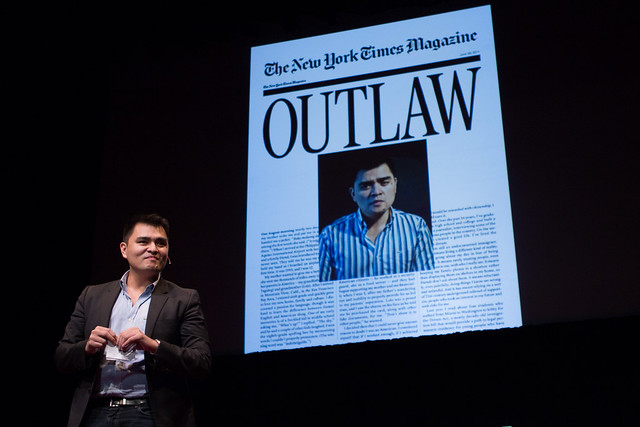
Jose Antonio Vargas has quickly become the face that has humanized the struggle for immigration reform. Unlike other immigrants, Jose is a Pulitzer Prize winning journalist, Washington Post reporter, activist, and the founder of an immigration awareness campaign called ‘Define American’. Back in June of 2011, Vargas courageously revealed to the world that he was undocumented in a column he wrote for New York Times magazine. In it he describes what his move to the United States was like, the lengths he went to as a child to fit in to the American lifestyle, and what it has been like residing in the United States unlawfully. Jose’s journey to the United States began much like that of any other immigrant. He was smuggled into the United States from the Philippines when he was only 12 years old by an individual he believed to be his relative. Once in the United States, Vargas was raised by his hardworking grandparents who afforded him a better future. From the outset, his upbringing in the bay area of San Francisco appeared to be much like that of any other American child.

It was not until he made a visit to the DMV to obtain his driver’s permit that he realized the green card he was given by his grandfather was in fact fake when he was told by the woman at the DMV window not to come back there again. For years, Jose Antonio Vargas has dedicated his life to standing in solidarity with the thousands of undocumented immigrants residing in the United States illegally. He has done this by serving as the voice of the undocumented, attending hundreds of conferences and speaking engagements, in addition to writing as a distinguished columnist.

Up until July 15th Vargas was able to advocate for the plight of undocumented immigrants without being apprehended despite constantly being in the public eye. A few days prior to July 15th Vargas appeared at a shelter housing Central American children and refugees and attended a vigil to honor them near the Rio Grande Valley. His presence in the region was meant to call attention to the humanitarian nature of the subject. In order to attend the event, Vargas crossed the McAllen, Texas TSA checkpoint, an area known to be highly secured and militarized. Vargas had not given much thought to the possible risk of being detained once he would return to the United States through the same checkpoint. According to the Department of Homeland Security Vargas was detained once he told TSA officials that he was residing in the country illegally. He was then taken to the McAllen Border Patrol Station and was given a Notice to Appear before an immigration judge. He was released within the same day after speaking with Immigration and Customs Enforcement officials. Unfortunately for Vargas, until comprehensive immigration reform is passed, he will continue to be forced to live under the radar. Vargas was not able to qualify for the Dream Act or for DACA, because his age did not meet the cutoff age as required by law. Shortly after being released Vargas issued a statement saying that the undocumented are constantly having to live in fear as a result of the failure of Congress and President Obama to act and bring about a viable solution to the problem. Jose Antonio Vargas challenges Congress to act by asking them the question: how do we define American?

4461975475_0327d6d722_z

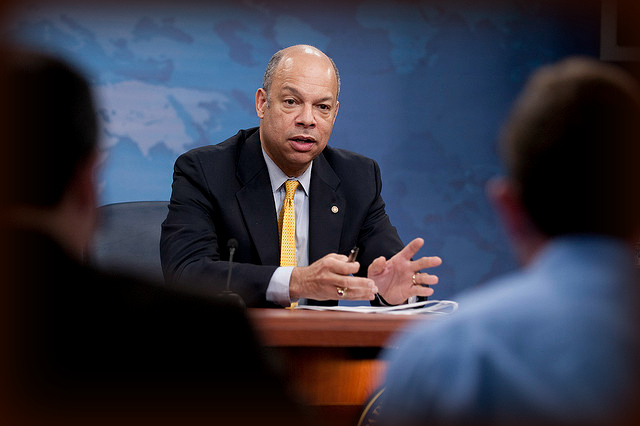
Secretary of the Department of Homeland Security Jeh Johnson

On June 05, 2014 the Secretary of the Department of Homeland Security, Jeh Johnson, announced the renewal process for enrollment in the program, Deferred Action for Childhood Arrivals (DACA). Effective immediately, USCIS will begin to accept renewal requests, as well as initial requests from DACA applicants who have not yet benefitted from the program. The first DACA applications that were approved by USCIS will expire in September 2014. USCIS recommends that initial DACA approved applicants file their renewal requests approximately 4 months before their current DACA expires. Following the renewal process, these applicants will be able to remain lawfully present in the United States and apply for an employment authorization valid for up to 2 years. According to USCIS, more than 560,000 applicants have already been approved under DACA since April of this year. The Secretary of the Department of Homeland Security, Jeh Johnson, added that children who crossed the border illegally with their parent(s) in search of a better life, should not be punished as adult offenders and should thus receive different treatment, given that they did not have a choice in the matter.

NOTE: Individuals who have not resided continuously within the United States since June 15, 2007 are not eligible to apply for DACA.

2623040544_cc5b1b7c28_z
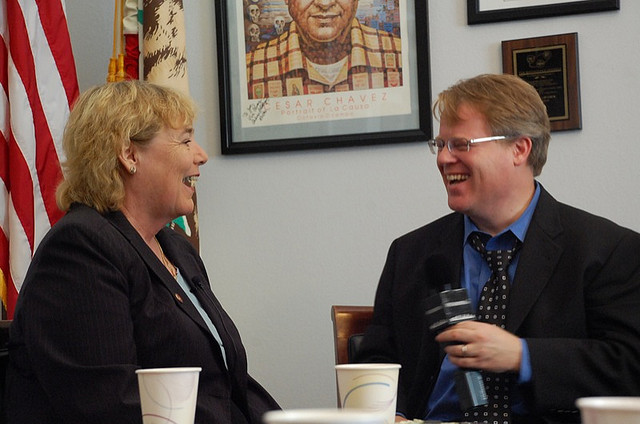
Last Monday, April 28, Congresswoman Zoe Lofgren, U.S. Representative of California’s 19th district, introduced what is known as a Private Relief Bill to Congress in an effort to reunite fellow DREAMer and San Jose State University college student, David Gonzalez, with his mother Antonia Aguilar. The Private Relief Bill, which is introduced once or twice during each congressional session, is intended to bring congressional awareness to the plight of a specific person, whose situation demonstrates a ‘compelling humanitarian reason’ which would allow them to remain in the country legally.

Ms. Aguilar found herself in the position of being deported from the United States after returning from a trip to Mexico to see her dying father for the last time. David Gonzalez is only one of three of her children, and like thousands of other young men and women across the United States, has had to take on the parental role of raising his younger siblings while tending to his scholarly obligations.

After meeting with the young man and hearing his story, Congresswoman Lofgren echoed the same sentiments that millions across the country have expressed saying, “Sadly, this story is not unique. Our dysfunctional immigration system continues to rip families apart, separating husbands from wives and children from their parents. When our immigration system fails families I step in to do as much as I can….. Even extraordinary efforts on behalf of individuals are often not enough because our immigration system is fundamentally broken and will continue to be broken until we reform our immigration laws.”

Beginning September of 2012, USCIS began granting what is known as deferred action to children who arrived to the United States before reaching the age of 16, having met other various requirements. Eligible deferred action applicants received an employment authorization good for a period of up to two years from USCIS. Applicants who applied for deferred action early on are now facing the expiration of their initial two year employment authorization granted to them by USCIS. Due to this, a DACA renewal process is currently underway, giving qualified applicants the opportunity to request and extend their deferred action, in order to avoid unlawful presence in the United States and be able to continue their employment. Details regarding the renewal process will be released in late May 2014, at which time USCIS anticipates that Form I-821D will be used for the dual purpose of initiating DACA petitions and renewal requests. All DACA applicants who wish to file a renewal request must wait until USCIS releases the new form designated for that purpose. Applicants that wish to file an initial deferred action request and not a renewal, can continue to file using the form currently available.

House Republicans took aim at President Barack Obama’s immigration policy’s that allows young undocumented immigrants to stay in the United States.

The ENFORCE Act, which passed 233 to 181, is not about immigration exclusively. The bill goes after Obama for alleged overreach on a variety of issues, including the Affordable Healthcare Act, education and drug laws. The bill would allow Congress to sue the executive branch for allegedly failing to enforce the law, which could lead to key policies protecting some undocumented immigrants to being dismantled.

This move stands in stark contrast to the immigration principles put forward by House Republican leadership in January and moves further away from the Democrat-controlled Senate actions to try to pass immigration reform. While those guidelines called for young undocumented immigrants who came to the United States as children — often referred to as Dreamers — to receive eventual citizenship, this bill could end the Deferred Action for Childhood Arrivals policy that keeps the same people from being deported.

More than 500 leaders for the networks of young immigrants, frustrated with House Republicans’ failure to move on immigration this year so far, have decided to turn their protests on President Obama in an effort to pressure him to act unilaterally to stop deportations.

Months of lobbying, rallies and sit-in demonstrations have not brought any movement in the House on a pathway to citizenship for immigrants here illegally. The youths who gathered in Phoenix last week for an annual congress of the network, United We Dream, have voiced severe disappointment by Republicans and Democrats who seem to not be moving over political reasons more than a true desire to reform immigration. Pointing to Mr. Obama’s promise earlier this year to use his own powers when Congress would not move on this agenda, they now demand that he take executive action to increase protections for immigrants without papers.

“The community we work with is telling us that these deportations are ripping our families apart; this has to stop,” said Cristina Jiménez, the managing director of the network, the largest organization of immigrants who grew up in this country without legal status after coming as children and who call themselves Dreamers. “And we know the president has the power to do it.”