Articles Posted in Family Visas

6168801346_55ea65baac_z

By Ekaterina Powell, Esq.

Getting married is an important step in everyone’s life.  For some, it is a well-planned event. For others, it is a spontaneous decision. However, for those foreign nationals who are coming to the U.S. to marry U.S. citizens, it needs to be a very thought-through decision because if they marry too fast, it can result in big problems at the time they apply for the green card.

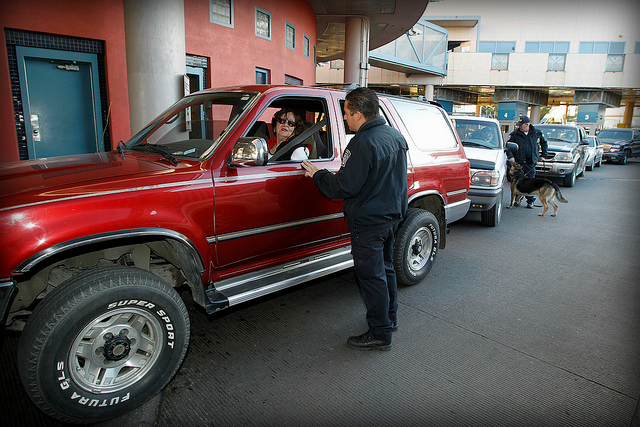
Whenever you come to the U.S. as a visitor, you represent to the immigration officer at the time of visa application and at the port of entry that you do not intend to reside in the U.S. permanently and that you intend to depart the U.S. after a short-term visit. Even if you are not asked a specific question by a consular officer or customers and border agent at the port of entry on whether you want to stay in the U.S., by way of coming into the U.S. with a nonimmigrant visa you show your nonimmigrant intent.

open for business
On Tuesday May 6, 2014 the Department of Homeland Security announced the publication of two newly proposed rules designed with the purpose of attracting and retaining highly skilled foreign workers. Both initiatives seek to advance the United States economy and improve competitiveness by recruiting the best and brightest professionals the world has to offer.

Proposal to Extend Employment Authorization to Spouses of Certain H-1B Workers:

The first proposal allows spouses of certain H-1B workers to extend their employment authorization in the United States

fff

by Lupe Lopez

Several weeks ago, Henry came in for a consultation to discuss an I-601 waiver of inadmissibility for his wife, Elizabeth.  Last year, they had attended Elizabeth’s interview in Ciudad Juarez, Mexico and she was denied a visa.  Elizabeth did not know why she was denied because the officer only told her “you are inadmissible and you will not get a visa.”  Elizabeth was given a blue piece of paper with lots of writing and the officer asked her to leave.

Elizabeth could only assume that it had to do with something that happened many years ago when she was 18.  She had not mentioned this to her attorney or to her husband.  She didn’t think it was important.  But, now, after being denied, she was fearful that this was the reason for her denial.

44
The Chief of the Visa Control and Reporting Division at the U.S. Department of State, Charles Oppenheim, recently shared the expected projections for monthly and annual visa demand and Visa Bulletin projections regarding family and employment based green cards. It is important to note that these projections may be subject to change based on the reported or observed visa demand witnessed by USCIS and the U.S. Department of State.

Important developments to look forward to this year include significant advancement of EB-2 category for India and unmarried sons and daughters of LPR over 21 years old. On the other hand, several immigrant visa categories are expected to retrogress due to high demand, such as the category of spouses and children of LPR, EB-5 for Chinese nationals and EB-3 for Chinese nationals. The expected projections are as follows:

Family Based Second Preference 2A Worldwide (FB-2A) –Spouses and Children (under 21) of Permanent Residents:

Unlike regular Social Security, which is a contributory insurance plan based on how long people worked and how much they made before retirement, S.S.I. is a welfare program for all citizens or resident immigrants who meet certain requirements of age, income or disability.

The number of elderly immigrants enrolled in the program has increased fivefold over the last 12 years. Now, more than a quarter of immigrants over 65 — and in some immigrant populations, almost half — receive S.S.I., at an annual cost of $2 billion.

By comparison, less than 10 percent of elderly United States citizens are in the program.

Back in November, USCIS issued a policy memorandum to amend the USCIS Adjudicator’s Field Manuel to ensure consistent adjudication of parole requests made on behalf of certain military family members. The policy is intended to ease the stress and anxiety palced upon military service members and veterans that is caused by the lack of immigration status of their close family members in the U.S.

To be eligible for parole in place, it is a discretionary action under the Immigration Nationality Act. The parole memo states that an individual who is a spouse, child, or parent of an active duty member of the U.S. Armed Forces, Selected Reserve of the Ready Reserve, or veteran who previously served in the armed forces or reserves “weighs heavily in favor of parole in place.” The memo further notes that “absent a criminal conviction or other serious adverse factors, parole in place would generally be an appropriate exercise of discretion for such an individual.” As of the date of this memo, it is unclear what type of criminal conviction or “other serious adverse factor” would prevent USCIS from favorably exercising discretion.

The eligibility for adjustment of status is available if the only barrier to adjustment was the lack of inspection and amission or parole. The memo is clear” “an alien who entered the United States without inspection, but subsequently receives parole, is not inadmissible under either of the two inadmissibility grounds…” Therefore, once USCIS grants parole in place, the provision in the INA that requires the applicant be “inspected, admitted or paroled” is satisfied. However, the individual must still satisfy all of the other requirements for adjustment of status, including maintenance of status under the code, if he or she is not an immediate relative or the provisions of the INA do not apply. It is also important to note that parole in place eliminates only those grounds of inadmissibility found in INA 212(a)(6)(A)(i) for purposes of adjustment of status and that all other grounds of inadmissibility must still be overcome.

Great news to report about Visa Waiver Overstays and Adjustment of Status. USCIS has finally issued policy guidance on adjudication of adjustment of status (green card) applications filed by individuals admitted under the Visa Waiver Program (VWP). Until now, USCIS offices throughout the country have been inconsistent in adjudication of visa waiver overstay adjustment of status applications with some offices consistently granting adjustment of status and with the others outright denying such applications in the exercise of discretion without consideration of the equities and without providing any reasons for the denial. Our last update on this subject was from January 2012 and it left the subject very unclear.

The guidance issued by USCIS on November 14, 2013 is binding on all USCIS offices and is designed to ensure consistency in adjudication of VWP adjustment applications throughout the country. The following is a summary of the new guidance as prepared by Attorney Ekaterina Powell from our office.

What is Visa Waiver Program

In June, same-sex marriages resumed in California after the state’s ban on it back in May 2008. The new decision made it possible for local government to issue marriage certificates for same-sex couples. Its effect on immigration law has also been revolutionary, because U.S. citizens can now petition for his or her same-sex spouses. Recently, our office has successfully assisted with a handful of same-sex couples with their marriage interview, and we would like to share our experience with all those who are still on the way.

Since same-sex marriage interviews are relatively new to immigration officials as well, many clients came to us with tensions and nervous. One of the reasons is that they don’t know how their interviews will be different from those opposite-sex couples, whether higher level of scrutiny will be applied, and what questions to expect. This article will brief the same-sex marriage interviews and provide you tips to success based on our professional experience.

First and foremost, always be on time for your immigration marriage interview. We always suggest our client to arrive at least 15-20 minutes before the scheduled interview time, to leave enough time for security check before entering the federal building and for check-in at the field office front window. USCIS officers expect you to be on time and it is important to leave a good impression before the conversation starts. If you have an attorney to accompany you, it is very important that you begin the interview only when your attorney is present. Another reason we want our clients to arrive a little earlier is that we will go over the entire process one more time with clients, let them know what to expect in the interview so they will walk in calmly and confidently, and make sure all documents, originals and photocopies, are all there and well organized.

Second, dress formally and conservatively. It takes less than 3 seconds to leave an impression. So you definitely would like to give a good impression to the adjudicating officer who will be interviewing you, because the way you dress is the first thing that an officer will see. For men, we suggest you at least business casual attire. For women, business casual will also be fine.

Continue reading

Back in June, the U.S. Supreme Court decided the DOMA case that granted same-sex couples federal benefits in states that recognize same-sex marriages. This decision also had a far-reaching effect on immigration laws that allows for same-sex couples to remain together in the U.S. by petitioning for their spouses. Our office recently had some immigration interviews for these marriage cases, which was new for our attorneys and for the immigration officers who must handle these types of cases.

When it comes to a marriage interview, the interviewing officer asks questions to determine the bona fides of the marriage. Some of these questions concern relationships with family members to see how involved the families of the petitioner and beneficiary are in the lives of the couple there at the interview. This notion does not necessarily apply when it concerns a same-sex relationship, since the families of the couple may not approve of the relationship. For some cultures, because it is wrong to be in a same-sex marriage and is constantly disapproved, leaving the couple alienated from their families. In this context, it is interesting for our clients when they are faced with questions from the officer regarding family relationships.

For one of our interviews, the immigration officer was presented with correspondences between the couple where one of them was referred to by a female name because they were pretending to their family to have a girlfriend when they had a boyfriend. This sort of difference would be a concern for the immigration officer in the past, but because of the sensitivity that same-sex couples face with having to address this issue with their families, the officer understood the circumstances and accepted those reasons while accepting the correspondences as genuine between the couple.

When an applicant is facing the deadline to remove the conditions of his or her lawful permanent residency status, and the marriage on which the initial I-130 petition and conditional residence were based is on life support, deciding how and when to file the Form I-751 Petition to Remove the Conditions of Residence requires careful planning. The following provides a summary of the I-751 available waivers.

Differences Between Jointly-Filed Petitions and Waivers

There are some key differences between I-751 Petitions filed jointly and those filed under one of the waiver provisions. If a conditional permanent resident (CPR) is filing an I-751 Petition jointly, with the petitioning spouse, and files after the expiration date of the LPR card, he or she will need to include an explanation of the late-filing with the I-751 Petition. However, if filing under one of the waiver grounds, the CPR does not need to provide such an explanation. A waiver can be filed prior to or after the expiration of the LPR card up until the date an immigration judge issues a final order of removal.