Articles Posted in News

Drivers license for undocumented
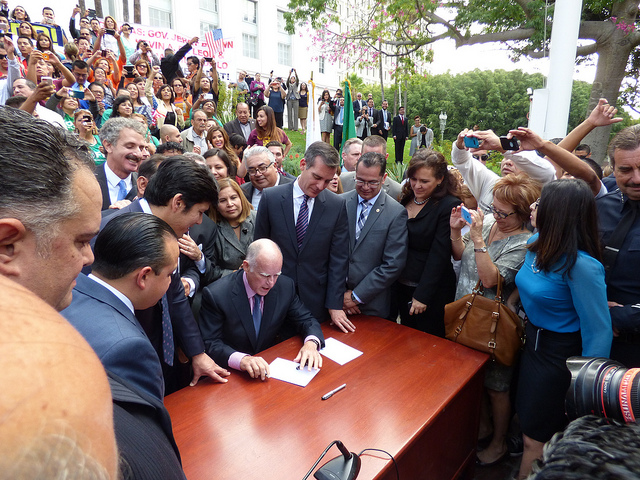
In October of 2013, California made history when it became the first most populous state in the nation to sign a bill into law which allows undocumented immigrants to obtain a California driver’s license. This measure, Assembly Bill 60, was signed into law by California Governor Jerry Brown and was passed in an effort to make the roads safer. Through this piece of legislation, the Department of Motor Vehicles, was required to begin issuing driver’s licenses to undocumented immigrants beginning January 01, 2015.

Early this month, the Obama administration informed California state officials that the design of these California driver’s licenses was found to be against federal law, based on the fact that the design of these new drivers’ licenses appear much too similar to California driver’s license’s issued to law abiding residents.

Since September 11, 2011, federal law has required that state licenses issued to unlawful residents be easily distinguishable from all other forms of identification that can be used for the purpose of boarding commercial airplanes. The Department of Homeland Security recently issued a letter to California’s Department of Motor Vehicles regarding the problematic design alleging that the letters ‘DP’ signifying ‘Driving Privilege,’ placed on the front of these new driver’s licenses, in replacement of ‘DL’ signifying ‘Driver’s License,’ which appears on the front of driver’s licenses issued to law abiding residents, did not meet the federal standard of being easily distinguishable from drivers licenses issued to law abiding residents. Additionally, DHS wrote that the licenses, “must clearly state on the face and in the machine readable zone that they may not be accepted for federal purposes.”

open for business
On Tuesday May 6, 2014 the Department of Homeland Security announced the publication of two newly proposed rules designed with the purpose of attracting and retaining highly skilled foreign workers. Both initiatives seek to advance the United States economy and improve competitiveness by recruiting the best and brightest professionals the world has to offer.

Proposal to Extend Employment Authorization to Spouses of Certain H-1B Workers:

The first proposal allows spouses of certain H-1B workers to extend their employment authorization in the United States

2623040544_cc5b1b7c28_z
Last Monday, April 28, Congresswoman Zoe Lofgren, U.S. Representative of California’s 19th district, introduced what is known as a Private Relief Bill to Congress in an effort to reunite fellow DREAMer and San Jose State University college student, David Gonzalez, with his mother Antonia Aguilar. The Private Relief Bill, which is introduced once or twice during each congressional session, is intended to bring congressional awareness to the plight of a specific person, whose situation demonstrates a ‘compelling humanitarian reason’ which would allow them to remain in the country legally.

Ms. Aguilar found herself in the position of being deported from the United States after returning from a trip to Mexico to see her dying father for the last time. David Gonzalez is only one of three of her children, and like thousands of other young men and women across the United States, has had to take on the parental role of raising his younger siblings while tending to his scholarly obligations.

After meeting with the young man and hearing his story, Congresswoman Lofgren echoed the same sentiments that millions across the country have expressed saying, “Sadly, this story is not unique. Our dysfunctional immigration system continues to rip families apart, separating husbands from wives and children from their parents. When our immigration system fails families I step in to do as much as I can….. Even extraordinary efforts on behalf of individuals are often not enough because our immigration system is fundamentally broken and will continue to be broken until we reform our immigration laws.”

44
The Chief of the Visa Control and Reporting Division at the U.S. Department of State, Charles Oppenheim, recently shared the expected projections for monthly and annual visa demand and Visa Bulletin projections regarding family and employment based green cards. It is important to note that these projections may be subject to change based on the reported or observed visa demand witnessed by USCIS and the U.S. Department of State.

Important developments to look forward to this year include significant advancement of EB-2 category for India and unmarried sons and daughters of LPR over 21 years old. On the other hand, several immigrant visa categories are expected to retrogress due to high demand, such as the category of spouses and children of LPR, EB-5 for Chinese nationals and EB-3 for Chinese nationals. The expected projections are as follows:

Family Based Second Preference 2A Worldwide (FB-2A) –Spouses and Children (under 21) of Permanent Residents:

8151523059_4914681262_z
On May 01, 2014 U.S. Customs and Border Protection launched a revamped webpage which allows non-immigrant visitors entering the United States, to access their I-94 arrival/departure record and their arrival/departure history. Prior to April 2013, non-immigrant visitors could only access and retrieve their recent I-94 arrival/departure record.

The overwhelmingly positive response to the agency’s I-94 arrival/departure online retrieval tool was what prompted the agency to also offer online travel history retrievals on the website. With this new electronic tool, travelers can access both their I-94 arrival/departure record and their arrival/departure history up to five years back from the date of their request. According to U.S. Customs and Border Protection, non-immigrant travelers may no longer need to file a Freedom of Information Act request (FOIA) to obtain their arrival/departure history thanks to this new electronic tool.

Through the website’s new function, travelers will be able to retrieve their I-94 record number, as well as their five year travel history, by entering only their name, date of birth, and passport information. It is important to note that this travel information will not reflect any changes of status, extensions of stay, or adjustments of status granted by USCIS.

11697209523_14b9817f14
Since the year 1990, USCIS has administered the Immigrant Investor Program, better known as ‘EB-5’. The program was first launched by Congress with the goal of expanding the U.S. economy by encouraging job creation and capital investment through foreign investment. It has now become known for its Regional Center pilot immigration program, with the purpose of allocating certain EB-5 visas to investors in Regional Centers designated by USCIS. These Regional Centers support the goal of economic growth. Recently, the program director of the pilot immigration program, Nicholas Colucci, held a conference with EB-5 stakeholders assuring them that he is committed to revitalizing the program. This action by Colucci signals an interest in making the EB-5 process more efficient, transparent, and resourceful. First a brief overview of the EB-5 visa process:

General Guidelines:

  • Under section 203 (b)(5) of the Immigration and Nationality Act also known as INA, 10,000 EB-5 immigrant visas are allocated per year

5486338003_22baa78f1b_z

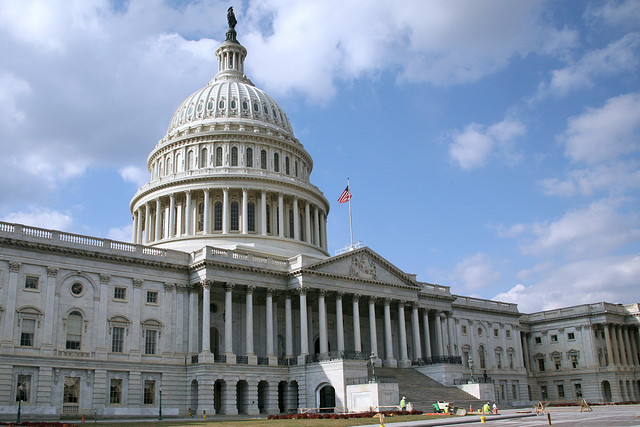
The Law Offices of Jacob J. Sapochnick bring you the most recent developments in immigration policy at the judiciary level. We express our concern at the hesitation the federal judicial system and our federal legislative system has shown in their reluctance to address the issue of comprehensive immigration reform. Recently, two appeals have come before the Supreme Court from the towns of Hazelton in Pennsylvania and Farmers Branch in Texas. These appeals are important because they signal a conflict that has arisen time and time again between state and federal judiciaries regarding immigration policy. Such conflict can only be rectified by calling upon the national government to take a firm stance in clearly delineating immigration law, ultimately setting a precedent for state judiciaries to follow.

Fortunately, the federal government has begun to feel the pressure from the people in hearing such appeals. These appeals clearly bring the issue of comprehensive immigration reform to the forefront specifically in the cases of City of Hazelton v. Lozano (13-531) and City of Farmers Branch V. Villas at Parkside Partners (13-516).

City of Hazelton v. Lozano and City of Farmers Branch v. Villas at Parkside Partners

Beginning September of 2012, USCIS began granting what is known as deferred action to children who arrived to the United States before reaching the age of 16, having met other various requirements. Eligible deferred action applicants received an employment authorization good for a period of up to two years from USCIS. Applicants who applied for deferred action early on are now facing the expiration of their initial two year employment authorization granted to them by USCIS. Due to this, a DACA renewal process is currently underway, giving qualified applicants the opportunity to request and extend their deferred action, in order to avoid unlawful presence in the United States and be able to continue their employment. Details regarding the renewal process will be released in late May 2014, at which time USCIS anticipates that Form I-821D will be used for the dual purpose of initiating DACA petitions and renewal requests. All DACA applicants who wish to file a renewal request must wait until USCIS releases the new form designated for that purpose. Applicants that wish to file an initial deferred action request and not a renewal, can continue to file using the form currently available.

6885947248_6bb1a6d849
On April 07, 2014, in a much awaited public announcement, U.S. Citizenship and Immigration Services announced that it had already reached the statutory cap of H-1B petitions allotted for the 2015 fiscal year. According to the announcement, on the first five days USCIS began to count H-1B petitions, it was already flooded with more than 65,000 of regular cap H-1B petitions and more than 20,000 H-1B petitions qualifying for the advanced degree exemption.

USCIS began accepting H-1B petitions subject to the 2015 fiscal year cap on April 01, 2014. The H1-B visa program is utilized by U.S. businesses seeking to employ foreign workers in what are known as ‘specialty occupations’. Specialty occupations are those that necessitate highly specialized knowledge, whether theoretical or practical, as stated on the USCIS website. Specialty occupations include but are not limited to scientists, doctors, mathematicians, or engineers.

According to the announcement, USCIS completed initial intakes for all filings received by the filing deadline (April 07, 2014), and will conduct a random computer generated selection process also known as a lottery system of selection. Under this process, USCIS will select the number of petitions necessary to fulfill the 65,000 visa cap limit for the general category, and the 20,000 visa cap limit under the advanced degree exemption. Those whose cap-based petitions are not selected will have their cases rejected and filing fees returned to them. As stated by USCIS, the computer generated selection process will consider the advanced degree exemption first. Advanced degree petitions that are not accepted through the initial lottery system will be subjected to the lottery system for the general category.

Nelson Mandela, South Africa’s first Black president and the symbol of the anti-apartheid movement has passed away. Through untiring and ever vigilant efforts, Mandela would work through the hardest circumstances, including 27 years in prison to see apartheid end in South Africa. Because of his work, Mandela was a Nobel Peace Prize recipient and elected as his country’s first Black President.

Nelson Mandela represents the virtues of those who work tireless to bring equality and justice to his country. He is quoted as saying “People tend to measure themselves by external accomplishments, but jail allows a person to focus on internal ones; such as honesty, sincerity, simplicity, humility, generosity and an absence of variety,” These values continued to show through his work fighting against apartheid in jail and the changes he tried implementing when he became president of his country.

What we can take from Nelson Mandela’s passing is that these virtues are important for accomplishing important changes in government and in society. The immigration reform movement stands for the kind of change that is necessary to benefit all Americans. The impact immigration has on our lives and in our communities is the kind of change that Mandela would strive for because of how many people and communities are affected by the changes that are truly needed. Let us follow Mandela’s example and continue to implore, to speak out, and to actively call on our government to pass immigration reform that Americans have been asking for.