Articles Posted in Work Visas

680788490_4800b68180_z
Great News! Today, USCIS announced that the computer-generated selection process has been completed to select the H-1B petitions necessary to fulfill both the general cap and master’s cap for this H-1B season. The randomized lottery was completed yesterday April 11, 2018.

This H-1B season, USCIS received 190,098 H-1B petitions for Fiscal Year 2019 during the filing period that began on April 2nd. During Fiscal Year 2018, USCIS received 199,000 H-1B petitions during the filing period and completed the randomized lottery on the same day (April 11th).

USCIS will now begin the process of rejecting and returning all petitions that were not selected during the randomized lottery. As in previous years, USCIS completed the selection process for the master’s cap first, and all unselected master’s cap petitions were then placed in the random selection process for the general cap, giving master’s cap applicants a greater chance of being selected. In previous years, our office began to receive rejection notices for applicants that were not selected from mid to late June.

16508486200_fd1f4dd0c4_z

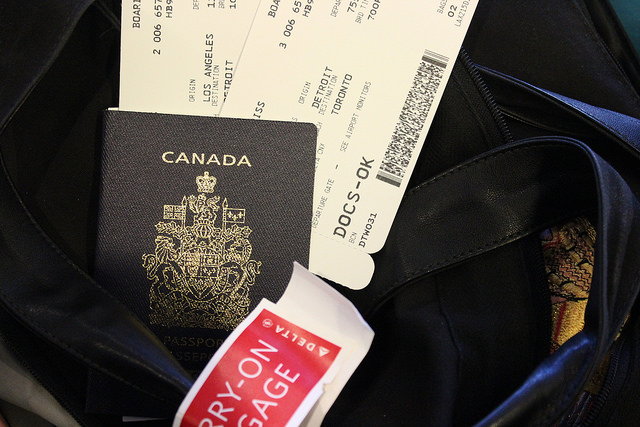
Beginning April 30, 2018 until October 31, 2018, the California Service Center (CSC) and the U.S. Customs and Border Protection (CBP) at the Blaine, Washington, Port of Entry (POE) will implement a joint 6-month pilot program for the benefit of Canadian citizens seeking entry to the United States in L non-immigrant visa status pursuant to the North American Free Trade Agreement (NAFTA).

The L-1 Visa:

The L-1 visa designation allows a foreign company to transfer an executive or manager to an existing U.S. subsidiary or parent company of the foreign entity, or allows the foreign entity to send the executive or manager to the U.S. for the purpose of establishing an affiliated subsidiary or parent company of the foreign entity (L-1A). In addition, the foreign company can transfer an employee with specialized knowledge to the U.S. on an L-1B visa. To qualify, applicants must have worked abroad for the foreign employer for at least one year within the proceeding three years.

Under the NAFTA program, Canadians can apply to receive an L visa at the border and are not required to file an L visa application with USCIS or at a U.S. Consulate abroad. Up until this point, the application procedure involved same-day processing of an L application where the worker would file Form I-129 with supporting evidence at a Class A Port of Entry to the United States, or airport pre-clearance location, where the petition would be granted or denied at the port of entry.

Pilot Program

Under the new pilot program, petitioners may file an L petition on behalf of a Canadian citizen by first submitting Form, I-129, Petition for a Nonimmigrant Worker, and supporting evidence to the California Service Center, before the Canadian citizen seeks nonimmigrant L-1 admission to the United States through the Blaine Port of Entry. Petitioners should include a cover sheet annotated with “Canadian L” to ensure quick identification of the Form I-129 and for any correspondence thereafter, such as a response to a request for evidence (RFE).

Continue reading

9416361052_3178b0293d_z

Today April 6, 2018 the U.S. Citizenship and Immigration Services (USCIS) announced that the H-1B general bachelor’s cap has been reached for fiscal year 2019. In addition, USCIS received more than 20,000 petitions for the advanced degree exemption.

Sometime within the next week, USCIS will conduct a random computer-generated process, known as a ‘lottery,’ to select the petitions needed to fill the 65,000-bachelor’s cap. USCIS will first randomly select the petitions that will count toward the advanced degree exemption. Unselected advanced degree petitions will then be entered into the random lottery that will be conducted to fill the 65,000-bachelor’s cap. All unselected cap-subject petitions will be rejected and in turn CIS will return the H-1B packages containing filing fees and rejection notices. CIS has not yet provided any details concerning the date the lottery will be conducted. We suspect it will occur within the next week. In the meantime, cap exempt H-1B petitions will continue to be processed including H-1B worker extensions, petitions requesting a change to the terms of an H-1B workers’ employment, and petitions requesting concurrent work for an H-1B worker.

So, what’s next?

Petitions filed with regular processing

If your employer filed your petition with regular processing, you will not know whether your petition has been selected in the lottery until late April through mid-May. Petitions filed under regular processing that were selected in the lottery will receive hard copy ‘receipt notices’ from USCIS. These notices will only be received by the attorney on file and the employer. In previous years, we began to receive these receipt notices in late April.

Receiving a receipt notice is great news. It means that you have been selected in the lottery, but it does not mean that your application has been approved. Once selected, your application will undergo adjudication, which takes several months.

Continue reading

33802743586_4b5b31f962_z

A new policy memorandum issued by the United States Citizenship and Immigration Services (USCIS) makes clear that different H-1B petitioners may not file multiple H-1B petitions for a single beneficiary. This applies in a situation where different employers seek to file an H-1B petition for the same person.

According to the memorandum, in Matter of S-Inc, the Administrative Appeals Office (AAO) made clear in the decision that “related entities” are prohibited from making multiple H-1B filings for the same beneficiary. The memorandum clarifies that the term “related entities” “includes petitioners, whether or not related through corporate ownership and control, that file cap-subject H-1B petitions for the same beneficiary for substantially the same job. Absent a legitimate business need to file multiple cap-subject petitions for the same beneficiary, USCIS will deny or revoke the approval of all H-1B cap-subject petitions filed by “related entities” for that beneficiary.”

In light of this new memorandum, we caution petitioners against filing multiple H-1B petitions for the same beneficiary, even if the different petitioners are not related, where the cap-subject petition is being filed for the same beneficiary for substantially the same job.

Continue reading

25703056681_5c501f1c48_z

H-1B Filing Season Opens Next Week

USCIS will begin accepting H-1B petitions that are subject to the FY 2019 cap on April 2, 2018. To make sure you are prepared click here for a running checklist of supporting documents typically included in a cap-subject petition. In addition please click here to read our H-1B guide. For filing assistance, and tips on increasing your chances of approval please contact our office for a consultation. Best of luck!

Power of Attorney No Longer Accepted

Beginning March 18, 2018, the United States Citizenship and Immigration Services (USCIS) will no longer accept power of attorney signatures on forms submitted to the agency.

Now, applicants and petitioners for immigration benefits will be required to provide a valid signature on forms submitted to the agency. This prohibition will apply to forms that are filed by a corporation or other legal entity, meaning that an authorized representative or agent of the corporation or entity must be prepared to provide a valid signature on all forms submitted to USCIS.

Individuals who will remain unaffected by this new policy change are minors who are younger than the age of 14, or individuals with qualifying disabilities. USCIS will no longer allow applicants or petitioners the opportunity to correct a faulty signature, and will instead reject a form submitted without a valid signature.

Continue reading

33321606943_5cfbf8a916_z

In what seems like déjà vu, today, March 20, 2018 the United States Citizenship and Immigration Services (USCIS) formally announced that the agency will be temporarily suspending premium processing service for all fiscal year 2019 cap-subject petitions, including petitions that seek an exemption for individuals who possess a U.S. master’s degree or higher. The suspension is expected to last until September 10, 2018. Based on similar announcements made by USCIS in the past, we expect premium processing service to remain suspended until at least September 10.

As some of you may remember, USCIS suspended premium processing in a similar fashion during April of last year for fiscal year 2018 cap-subject petitions, and lifted the suspension until September 18 of 2017.

Petitions not subject to FY 2019 Cap

Premium processing requests will continue to be accepted for H-1B petitions NOT subject to the FY 2019 cap. USCIS will make an announcement as we get closer to September notifying the public regarding any decision to resume premium processing for cap-subject H-1B petitions. In previous years, USCIS lifted the suspension in July for beneficiaries who were exempt from the cap, because of their employment at a qualifying cap-exempt institution, organization, or entity. We expect USCIS to follow a similar pattern in July of this year, with the temporary suspension for cap-subject petitions being lifted sometime in early September.

Continue reading

9595278129_80e622a87a_z

Tis the season to file for one of the most popular visa types: The H-1B visa. Filings for cap-subject petitions will begin to be accepted by USCIS beginning April 2nd and the filing period will end on April 6, 2018. As many of you know, the odds of being selected in the H-1B visa lottery are slim, but even those who are selected in the visa lottery have to overcome yet another hurdle, the Request for Evidence. Since President Trump issued the executive order “Buy American, Hire American,” the United States Citizenship and Immigration Services (USCIS) began scrutinizing the adjudication of H-1B visa applications more closely.

Our attorneys witnessed this phenomenon first hand. The volume of requests for evidence increased significantly and USCIS began to be more demanding in the types of documentation requested to qualify for the program.

For this reason, we advise our clients and readers to be very careful this H-1B season and be mindful of the challenges they may face as they proceed with the H-1B visa process.

Common Types of RFE’s and how to avoid them:

  • Level One Wage: Executive Order “Buy American, Hire American” directs the Department of State to ensure that H-1B visas are awarded to the most-skilled or highest-paid petition beneficiaries. USCIS has increasingly issued RFEs in which the employer is paying the H-1B worker a level 1 wage. This has prompted USCIS to question why someone with a specialty occupation would be paid the level 1 wage, a wage that is typically reserved for entry-level positions and individuals who only have a basic understanding of the occupation. Thus, it would not be appropriate for someone who has an intermediate to advanced understanding of the occupation to be paid a level 1 wage. Situations in which a level 1 wage is inappropriate also include cases where the worker will take on a complex set of job duties.

Continue reading

40115765202_7e780f7ef7_z

During December of last year, the United States Citizenship and Immigration Services (USCIS), announced that the agency was beginning to take preliminary steps to terminate H-4 Employment Authorization for certain H-4 spouses, a privilege that has been available to eligible spouses of H-1B nonimmigrant workers since 2015. As it stands, the 2015 H-4 EAD rule allows certain H-4 dependent spouses of H-1B nonimmigrant workers the ability to obtain an employment authorization card (work permit), provided the H-1B nonimmigrant worker is in the process of obtaining an employment based green card.

Proposal to Amend the 2015 H-4 EAD Rule

On December 14, 2017, a rulemaking notice was first published in the Federal Register notifying the public that the Department of Homeland Security, in conjunction with USCIS, would be reviewing and possibly amending the 2015 H-4 EAD rule, following the issuance of Executive Order 13788, “Buy American, Hire American.”

According to the notice published in the Federal Register, DHS reserves the authority to amend the 2015 H-4 EAD rule under section 102 of the Homeland Security Act of 2002 and section 103(a) of the Immigration and Nationality Act (INA). These sections of the law give the Secretary of the Department of Homeland Security the discretionary power to amend the law so that it aligns with the policies set out in the President’s executive order.

Continue reading

31192602946_34cf286a7f_z
In an effort to modernize and streamline the application process, the United States Citizenship and Immigration Services (USCIS) has finally announced that it will begin to accept payment via credit card for all 41 fee-based forms. Previously, applicants were required to make filing fee payments by personal check or money order for most fee-based forms. Now applicants will be able to use their credit cards to pay their filing fees using Form G-1450 Authorization for Credit Card Transaction.Accepted credit cards include Visa, MasterCard, American Express and Discover cards.  Applicants for naturalization and those renewing or replacing their Green Cards can pay via credit card using the e-file system.

Applicants filing any of the following forms with a USCIS Lockbox facility may now utilize the credit card payment option. Please remember to include Form G-1450 along with your application when filing by mail:

*Most frequently used forms appear in bold.

6104368494_6fd7405753_z

Now is the time to begin preparing for the upcoming H-1B visa lottery. USCIS will begin to accept H-1B cap-subject petitions for fiscal year 2019 beginning Monday, April 2, 2018. Please note: employers cannot file an H-1B petition for an employee more than 6 months before the employee’s intended start date. If accepted, H-1B visa workers can begin employment by October 1st. The H-1B visa is issued for up to three years but may be extended for another three years.

By law, a congressionally mandated cap exists which limits the issuance of H-1B visas to 65,000 per year. That is why the H-1B visa is commonly referred to as a ‘lottery’ visa.

Individuals (such as F-1 students) who hold advanced degrees (U.S. master’s or higher) are exempted from the 65,000 visa cap. Such applicant’s must demonstrate that they have obtained an American master’s degree or higher to be exempted from the cap, however only the first 20,000 petitions received by USCIS will benefit from this cap exemption. Initial H-1B petitions that are received by USCIS after that limit will count towards the regular 65,000 cap.

In order to qualify for an H-1B visa:

  • a foreign worker must possess both a theoretical or practical application of a body of highly specialized knowledge;
  • an employer-employee relationship must exist. Only a U.S. employer can petition the entry of a foreign employee by filing USCIS Form I-129 Petition for Non-immigrant Worker. An employer-employee relationship exists if the U.S. employer has the right to hire, pay, fire, supervise or control the work of the employee;
  • the foreign worker must possess a bachelor’s degree, its foreign equivalent, or relevant work experience. If the foreign worker does not have formal education, but has at least 12 years of relevant work experience related to the specialty occupation, they may still qualify for an H-1B visa;
  • the foreign worker must be employed in a specialty occupation related to their field of study. A specialty occupation is an occupation that requires a bachelor’s degree or its equivalent;
  • the foreign worker must be paid at least the prevailing wage for the specialty occupation in the area of intended employment;

Continue reading