Articles Posted in American Politics

8536270677_216de82424_z


Yesterday, December 2, 2015 the state of Texas brought suit against the federal government and the International Rescue Committee (IRC), before the United States District Court in Texas Health and Human Services Commission V. United States et al., 12/2/15. In its suit, the state of Texas claims that the federal government and the IRC acted unlawfully in their attempt to resettle Syrian refugees without prior consultation and direct cooperation with the state of Texas, as required by federal law. The lawsuit was brought by the Texas Health and Services Commission (THSC) representing the interests of the state of Texas in court. The THSC is an agency responsible for the administration and development of the refugee resettlement program in Texas. The state of Texas discovered in a phone call with the IRC that the Committee intended on resettling 6 Syrian refugees in Dallas, Texas on December 4, 2015 without consent. On December 1, 2015 Texas addressed the Committee in a letter requesting a halt to the resettlement of Syrian refugees until the state would receive security assurances and discuss proper screening procedures for said refugees. The IRC responded on December 2nd that it would continue the resettlement process as planned resettling the refugees in Texas.

Refugee Resettlement Program

Texas administers the refugee resettlement program along with the assistance of local government agencies responsible for the financial costs associated with the refugee’s resettlement and transition to the state of Texas.  In order to accomplish its endeavors, all federal and state agencies must adhere to strict framework’s established by the Refugee Act of 1980, which require collaborative and cooperative efforts between all entities involved in the process of refugee resettlement. According to Texas, “instead of adhering to that statutory framework, the federal government and the Committee have left Texas uninformed about refugees that could well pose a security risk to Texans and without any say in the process of resettling these refugees.”

Arguments for the state of Texas

In its suit, Texas aims to re-assert its sovereignty and obligation to protect the safety of its residents. Texas claims that the government’s failure to adhere by the law has raised legitimate security concerns involving potential complicity between refugees and terrorists.

Continue reading

3021087753_980feb0669_z

Yesterday night, in a 2-1 vote the United States Fifth Circuit Court of Appeals voted to uphold the lower court’s decision in Texas v. United States blocking President Obama’s extended Deferred Action for Childhood Arrivals (DACA) and Deferred Action for Parents of Americans and Lawful Permanent Residents (DAPA) programs from going into effect.

The expanded DACA and new DAPA provisions were announced November of last year as part of Obama’s executive actions on immigration giving eligible undocumented individuals a legal status in the United States. The expanded DACA program would have made millions of law abiding undocumented aliens (with no criminal history) eligible for employment authorization and social security benefits. To qualify, expanded DACA applicants would need to provide documented evidence proving their continuous physical presence in the United States from January 1, 2010 onward. In exchange, the United States government would recognize these individuals as law abiding residents and safeguard them against deportation. The move was significant since it would mean that undocumented individuals would no longer need to live on the fringes of society. By granting these individuals an immigration classification, insurance companies would become accessible to them for the first time ever.

Similarly, Obama’s DAPA program would have extended eligibility of deferred action to parents of US Citizens and Lawful Permanent Residents born or or before November 20, 2014 the date of the DAPA program’s announcement. As part of the application process, DAPA applicants would be required to undergo extensive background checks and prove continuous residence since January 1, 2010 among other provisions. Click here for more information on DAPA.

Continue reading

10396442325_d0fe47943a_z

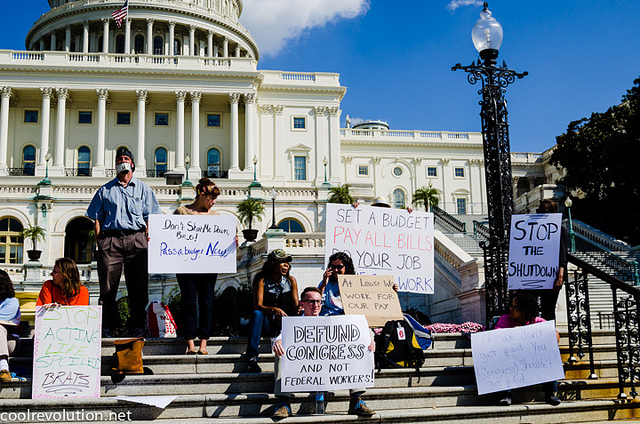
On Monday the Senate will be voting on a short-term spending bill introduced by Senate Appropriations Committee Chairman Thad Cochran. If passed, the bill will temporarily fund the government through December 11th of this year. If the bill is not passed, the country will face a government shutdown beginning on October 1, 2015. The temporary funding bill called a continuing appropriations resolution will be required to keep government agencies afloat for the remainder of the year. Congressional Republicans and Democrats have been at odds with one another since the Planned Parenthood scandal was brought to light. The non-profit organization’s involvement in the practice of procuring tissues from aborted fetuses for the purpose of medical research has been deeply contested by Republicans, who believe Planned Parenthood should no longer receive federal funding. Due to this impasse, no resolution bill has yet been agreed upon.

Repercussions on Immigration: LCA’s and PERM applications

A government shutdown would mean that various government agencies may not be operating at full capacity. Due to this we urge our clients to file urgent Labor Condition Applications or PERM applications prior to October 1, 2015. While the shutdown will have an effect on the economy, families, and business throughout the country, entities not affected by the government shutdown include USCIS, the military, airport security, FBI, Border Patrol, Social Security, Medicare, Medicaid, Food Stamps, among others.

Continue reading