Articles Posted in Work Visas

8639003804_2bd2b5f140_z

By Ekaterina Powell, Esq.

On July 11, 2014, USCIS released new guidance on adjudication of H-1B petitions for nursing occupations, which superseded the previous USCIS Memorandum of Johnny Williams, INS Office of Field Operations, Guidance on Adjudication of H-1B Petitions filed on Behalf of Nurses, HQISD 70/6.2.8-P (November 27, 2002).

New USCIS guidance has the “Policy” designation, which means that it has to be followed by USCIS adjudicators.

44
The Chief of the Visa Control and Reporting Division at the U.S. Department of State, Charles Oppenheim, recently shared the expected projections for monthly and annual visa demand and Visa Bulletin projections regarding family and employment based green cards. It is important to note that these projections may be subject to change based on the reported or observed visa demand witnessed by USCIS and the U.S. Department of State.

Important developments to look forward to this year include significant advancement of EB-2 category for India and unmarried sons and daughters of LPR over 21 years old. On the other hand, several immigrant visa categories are expected to retrogress due to high demand, such as the category of spouses and children of LPR, EB-5 for Chinese nationals and EB-3 for Chinese nationals. The expected projections are as follows:

Family Based Second Preference 2A Worldwide (FB-2A) –Spouses and Children (under 21) of Permanent Residents:

By Yingfei Zhou, Esq.

Q: How can I apply for EB-5 visa?

A: There are two requirements on foreign investors seeking a green card. First, you must invest sufficient funds in an approved project of your choice. Second, ten new full-time jobs must be created as a direct result of that investment. The investment must be either in a new business or an existing business and the investment will spur either a 40% increase in net worth or employees of the existing business.

6885947248_6bb1a6d849
On April 07, 2014, in a much awaited public announcement, U.S. Citizenship and Immigration Services announced that it had already reached the statutory cap of H-1B petitions allotted for the 2015 fiscal year. According to the announcement, on the first five days USCIS began to count H-1B petitions, it was already flooded with more than 65,000 of regular cap H-1B petitions and more than 20,000 H-1B petitions qualifying for the advanced degree exemption.

USCIS began accepting H-1B petitions subject to the 2015 fiscal year cap on April 01, 2014. The H1-B visa program is utilized by U.S. businesses seeking to employ foreign workers in what are known as ‘specialty occupations’. Specialty occupations are those that necessitate highly specialized knowledge, whether theoretical or practical, as stated on the USCIS website. Specialty occupations include but are not limited to scientists, doctors, mathematicians, or engineers.

According to the announcement, USCIS completed initial intakes for all filings received by the filing deadline (April 07, 2014), and will conduct a random computer generated selection process also known as a lottery system of selection. Under this process, USCIS will select the number of petitions necessary to fulfill the 65,000 visa cap limit for the general category, and the 20,000 visa cap limit under the advanced degree exemption. Those whose cap-based petitions are not selected will have their cases rejected and filing fees returned to them. As stated by USCIS, the computer generated selection process will consider the advanced degree exemption first. Advanced degree petitions that are not accepted through the initial lottery system will be subjected to the lottery system for the general category.

Now that the H-1B cases have been filed, we are anxiously waiting to get the news from USCIS on the cap count.

Last year, USCIS announced on April 5 that it received approximately 124,000 H-1B petitions during the five day filing period, including petitions filed for the advanced degree exemption. Then, on April 7, 2013, USCIS used a computer-generated random selection process (commonly known as a “lottery”) to select for processing a sufficient number of petitions needed to meet the caps of 65,000 for the general category and 20,000 under the advanced degree exemption limit.

What to Expect This Year

Our office receives many inquiries from start-up companies that want to hire employees under H-1B visa. As the H-1B season has begun, we would like to provide our readers with the updates and important considerations for this category of H-1B visas.

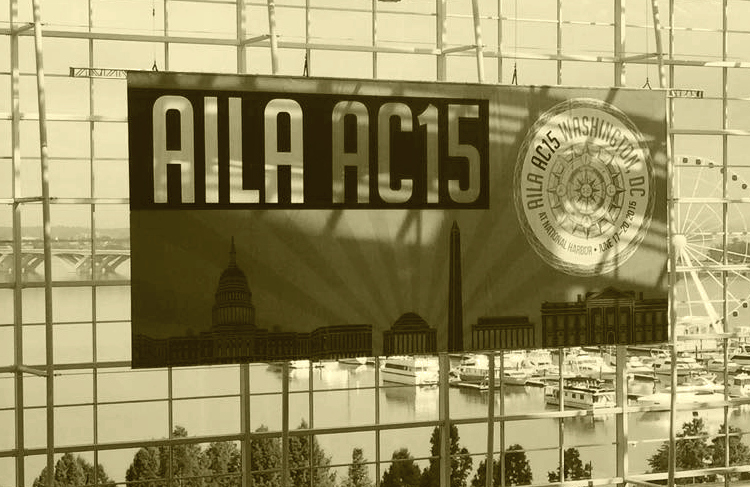
The following article was prepared by attorney Ekaterina Powell from our office and was featured as the cover article in VOICE, the American Immigration Lawyers Association publication.

Start-up Companies Still Fight for H-1Bs

Reactions to the release of the House GOP leadership’s principles for immigration reform  tended more toward cautious praise for releasing something as a starting point, but with serious doubts about the shortcomings of the actual policy proposals. Because these principles are guidelines—without specific  detail—“cautious optimism” is probably the healthiest approach to take in understanding what the document means for reform. Summarizing what the document says doesn’t take long; understanding its nuances, particularly its omissions and departures from the past, requires a bit more digging. In reality, this new document should not be read as an unwavering set of principles, but rather  as a list of expectations and strategic choices. The first half, dealing with enforcement contains no real surprises, but the second half is full of them.

There is much rhetoric about the necessity of securing our borders and creating a zero-tolerance policy for people who violate our laws in the future. These standards endorse the use of an electronic work site verification program and the full implementation of an entry/exit registration program for tracking arrivals and departures to and from the U.S. They emphasize the necessity of enforcement of laws first, before turning to any more positive reforms. Ultimately, the enforcement section of the document merely repeats the idea that we must be able to measure enforcement successes and thwart efforts to get around the law.

The second half of the GOP stance is far more interesting, as it emphasizes rewarding hard work and merit, and puts a premium on outcomes. The authors declare that the legal immigration system needs to be reformed to avoid an over reliance on family ties or luck; instead, they prioritize rewarding foreign students who can contribute to the economy and meeting the needs of employers. Similarly, temporary work programs, particularly in agriculture, have to provide realistic and predictable means of entry to the U.S., without harming the interests of native-born workers. It is striking how the emphasis on finding a way to use the immigration system to improve the economy is an acknowledgment of the importance of immigration that has been lacking in the past.

We previously reported on the temporary freeze on filing H2B visas. H-2B petitions for temporary non-agricultural workers are being adjudicated once again at the Vermont Service Center (VSC).

VSC anticipates completing pending petitions by early May, and have advised that no action is required by petitioners. The suspension of H-2B adjudications was imposed by USCIS on March 22, 2013, in response to a court order vacating part of the DOL’s 2008 wage methodology rule for certain H-2B prevailing wage determinations.

VSC management has confirmed that premium processing refunds for H-2B petitions filed in March have all been processed and the Debt Management Office is handling the review and issuance of the refunds. Some refunds have already been issued and petitioners should expect to see those in the coming weeks.

So the H1B season is over, faster than expected. But what occupations were the most popular this H1B season, how many Computers Programmers, Engineers, Consultants, etc were filed this past few months? The Labor Department provided statistics as to the number of Labor Condition Applications (LCA) filed this season.

LCA stands for Labor Condition Application. Before an employer may file an H1B petition, the employer must first file an LCA with the Department of Labor. In filing an LCA, the employer attests to a number of conditions that must be followed during the term of the LCA. An employer may withdraw and LCA if the employer revokes the H1B petition. If an employer fails to adhere to the representations made, the DOL may bring an action to compel back pay and fines.

72,604 Programmer Analysts H1B LCA’s were filed, the top occupation. New Jersey is the leading state in filing Visas. California is second. Read more below:

Bad news, but it is official. The annual H-1B cap has been reached for this year, according to the U.S. Citizenship and Immigration Services, and at a pace that is several months ahead of last year.

The U.S. issues 85,000 H-1B visas each year under its cap, with 20,000 of that number set aside for advanced degree graduates of U.S. universities.

The USCIS, which begins accepting H-1B petitions on April 1 of each year, announced today that the openings for fiscal 2013 have been filled.