Articles Posted in Global Immigration

By Marie Puertollano, Esq.

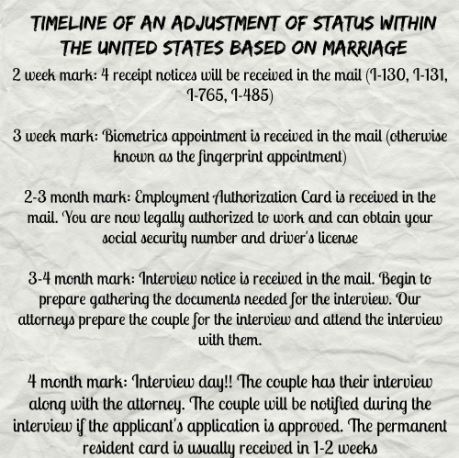
When an immigrant gets married with a U.S citizen, the immigrant can obtain a green card either through consular processing, if the immigrant is outside the United States, or through adjustment of status within the United States, if the immigrant entered with a visa and is present in the United States. This article will focus on the interview that will be the last step of the adjustment of status and will take place at a USCIS field office within the United States.

Why are we interviewed?

9677860781_8f985a6513
On August 23rd the Chief of the Department of State’s Immigrant Visa Control and Reporting Division, Charles Oppenheim, made an important announcement regarding significant changes made to the EB-5 preference category. Oppenheim announced that for the first time since the creation of the EB-5 category, the EB-5 preference category would become unavailable to Chinese applicants for the 2014 fiscal years.

What does it mean for the EB-5 preference category to become unavailable? 

What the department means is that, the maximum number of EB-5 immigrant visas available to Chinese applicants for the fiscal year of 2014 have already been issued. Thus, there are no longer any available EB-5 immigrant visas for the 2014 fiscal year.

6263551146_8d70e2698c_z
You are a H-1B visa holder from a country with a backlogged employment based category and you are currently living and working in the United States. You have applied for permanent residence through your employer. You have been working for the same employer for years and have extensive experience in your field. Despite all of these factors, you are still waiting in line for your priority date to become current, and what’s more, your spouse has not been eligible to apply for their employment authorization due to the restrictions on their visa. What, if anything, can be done to receive your permanent resident card sooner?

Thousands of immigrants are in the same hypothetical situation. Comprehensive Immigration Reform is necessary not just for undocumented immigrants living in the United States, but also for such specialty workers who regularly contribute to our economy and society, but are stuck in limbo awaiting their permanent residency. Comprehensive immigration reform is also necessary because specialty occupation workers often run out of their H-1B status while they are in line for their priority date to become current. If the specialty occupation worker is married, chances are their spouse has not had the opportunity or privilege to legally obtain employment while the primary applicant has been in line waiting to adjust their status. Many immigrants who have found themselves in similar situations fear international travel due to the risk they may run in not being able to return to the United States.

Bypassing the Quota System

4097699785_073813177e_z
Much of the deliberation surrounding immigration reform has largely occurred behind closed doors, despite pressure from the booming immigrant population in the United States to become more transparent. In a much anticipated June speech, President Obama announced that he would be utilizing executive action to bring about comprehensive immigration reform in response to Congress’ inaction.

For the most part, the administration has remained mum about the process and the proposals that have been laid out on the table.

Here’s what we do know about what is happening behind closed doors:

289992273_ece293954b_z

By Lupe Lopez

Francis was excited.  As a student of holistic nutrition, he had excelled and the school he was attending wanted him to stay on to work with them as an assistant instructor. The school Francis was attending in the M1 status was pleased with his depth of knowledge and his ability to work with people.  They wanted to find a way for Francis to work with them and to help other students achieve the level of knowledge that he had and so willingly shared.  Also, Francis not only had previous education, he had years of experience in a community clinic using holistic nutrition and alternative medicine to heal people of serious ailments.

Francis called us excitedly looking to learn about his employment options.  The school had not ever offered optional practical training (OPT) to their foreign students and although they are SEVIS certified (schools are required to be certified to enroll foreign students), they were not able to answer the questions that Francis had relative to employment authorization.

10012162166_cde34d427e_z
The Department of State (DOS) and U.S. Customs and Border Protection (CBP) have announced a joint initiative, in response to the technical problems the U.S. Department of State’s Consular Consolidated Database (CCD)—responsible for the issuance of visas—has been experiencing. These technical problems have had a significant impact on the department’s ability to process nonimmigrant visas, causing worldwide delays. Together the DOS and CBP will waive the visa requirements for nonimmigrant visa applicants seeking admission into the United States on a case by case basis. Applicants who have applied for but have not been issued non-immigrant visas, due to such delays, may request consideration from DOS and CBP for special travel permission to the United States under the following conditions:

The applicant’s travel to the United States must be considered urgent, involving a bona fide emergency, such as urgent humanitarian travel and life and death situations, or a situation that impacts U.S. national interests. DOS and CBP will respond to such requests via their joint task force teams. Travel permission that has been approved will be facilitated by the DOS.

All individuals requesting emergency travel are required to have a pending visa application with the DOS that has not been approved as a result of delays caused by the Consular Consolidated Database.

13903388778_5b429faf5c_z
The American Immigration Lawyers Association (AILA) recently released a report helping foreign workers and their employers answer the following question:

Where on the ETA Form 9089 should the employer enter the foreign worker’s qualifications which show that the foreign worker does in fact meet the minimum requirements to perform the job opportunity?

Such qualifications may include certifications, licensures, or other credentials. The ETA Form is meant to establish whether the foreign worker meets all of the qualifications for the job opportunity offered by their employer. The employer must list the foreign worker’s specific skills and other requirements for the job opportunity they are offering in Section H Question 14, and demonstrate that they in fact possess those skills and or requirements by utilizing Section K, and listing the foreign worker’s qualifications to prove that the requirements for the specified job opportunity listed in Section H have been met. Examples of qualifications that can be provided in Section K are; bar admissions, medical residency, ordination, professional exams, medical board certifications, professional certifications, teaching certificates, university or professional coursework, professional insurance, etc. For each special skill or requirement listed in Section H, the employer must demonstrate its respective business necessity. If not listed elsewhere, the qualifications to fulfill the job opportunity should be entered after all jobs held in the past three years are listed under Question 9 Job Details. It is advised that Question Numbers one to eight requesting job information can be left blank.

8128488258_ce420104bb_z
Jose Antonio Vargas has quickly become the face that has humanized the struggle for immigration reform. Unlike other immigrants, Jose is a Pulitzer Prize winning journalist, Washington Post reporter, activist, and the founder of an immigration awareness campaign called ‘Define American’. Back in June of 2011, Vargas courageously revealed to the world that he was undocumented in a column he wrote for New York Times magazine. In it he describes what his move to the United States was like, the lengths he went to as a child to fit in to the American lifestyle, and what it has been like residing in the United States unlawfully. Jose’s journey to the United States began much like that of any other immigrant. He was smuggled into the United States from the Philippines when he was only 12 years old by an individual he believed to be his relative. Once in the United States, Vargas was raised by his hardworking grandparents who afforded him a better future. From the outset, his upbringing in the bay area of San Francisco appeared to be much like that of any other American child.

It was not until he made a visit to the DMV to obtain his driver’s permit that he realized the green card he was given by his grandfather was in fact fake when he was told by the woman at the DMV window not to come back there again. For years, Jose Antonio Vargas has dedicated his life to standing in solidarity with the thousands of undocumented immigrants residing in the United States illegally. He has done this by serving as the voice of the undocumented, attending hundreds of conferences and speaking engagements, in addition to writing as a distinguished columnist.

Up until July 15th Vargas was able to advocate for the plight of undocumented immigrants without being apprehended despite constantly being in the public eye. A few days prior to July 15th Vargas appeared at a shelter housing Central American children and refugees and attended a vigil to honor them near the Rio Grande Valley. His presence in the region was meant to call attention to the humanitarian nature of the subject. In order to attend the event, Vargas crossed the McAllen, Texas TSA checkpoint, an area known to be highly secured and militarized. Vargas had not given much thought to the possible risk of being detained once he would return to the United States through the same checkpoint. According to the Department of Homeland Security Vargas was detained once he told TSA officials that he was residing in the country illegally. He was then taken to the McAllen Border Patrol Station and was given a Notice to Appear before an immigration judge. He was released within the same day after speaking with Immigration and Customs Enforcement officials. Unfortunately for Vargas, until comprehensive immigration reform is passed, he will continue to be forced to live under the radar. Vargas was not able to qualify for the Dream Act or for DACA, because his age did not meet the cutoff age as required by law. Shortly after being released Vargas issued a statement saying that the undocumented are constantly having to live in fear as a result of the failure of Congress and President Obama to act and bring about a viable solution to the problem. Jose Antonio Vargas challenges Congress to act by asking them the question: how do we define American?

It has been reported that this Wednesday, July 23, the State Department’s global database for issuing travel documents has crashed, resulting in major delays for potentially millions of people around the world waiting for U.S. passports and visas.

Unspecified glitches in State Department’s Consular Consolidated Database have resulted in “significant performance issues, including outages” in the processing of applications for passports, visas and reports of Americans born abroad since Saturday. Spokeswoman Marie Harf said the problem is worldwide and not specific to any particular country, citizenship document, or visa category.

This failure may cause hardship to applicants waiting on visas and passports. State Department is working to correct the issue as quickly as possible.