Articles Posted in Researchers

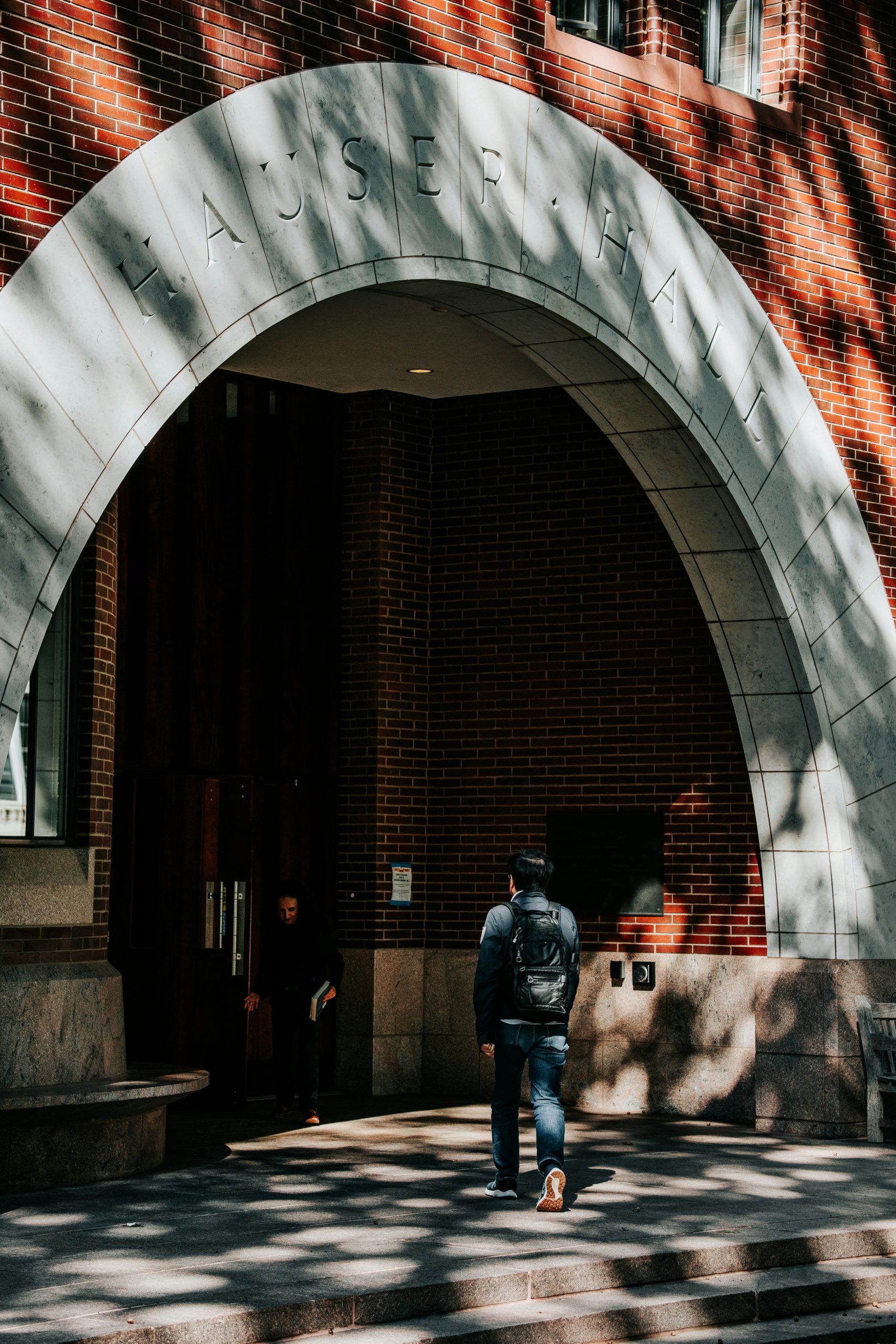
beverly-kimberly-tfiGOGEmJVI-unsplash-scaledOn June 4, 2025, President Trump continued his ongoing assault on Harvard University with a new Executive Order entitled, “Enhancing National Security by Addressing Risks at Harvard University.”

Effective June 4th, the order suspends the entry of all nonimmigrants and exchange visitors bound for Harvard University for a period of 6 months, citing national security concerns over Harvard’s failure to police foreign students and ensure that foreign nationals admitted on student and exchange visitor visas remain in compliance with Federal law.

The executive order also accuses Harvard of having extensive entanglements with foreign adversaries including China.

Who is affected?


All nonimmigrants who enter or attempt to enter the United States to begin attending Harvard University through the Student and Exchange Visitor Program (SEVP) after the effective date of the proclamation (June 4, 2025).

The executive order further empowers the Secretary of State Marco Rubio to consider in his discretion whether foreign nationals who currently attend Harvard University and are in the United States pursuant to F, M, or J visas, should have their visas revoked pursuant to the proclamation.

Who is not affected?


The suspension does not impact Harvard students who are already inside the United States with a valid student visa as of the effective date of the proclamation.

The suspension also does not apply to any alien who enters the United States to attend other universities through the Student and Exchange Visitor Program (SEVP).

It also does not apply to any alien whose entry would be in the national interest, as determined by the Secretary of State, the Secretary of Homeland Security, or their designated representatives.

Impact on Harvard Students Currently in the United States


The executive order does not:

  • Restrict change or extension of status applications filed with U.S. Citizenship and Immigration Services (USCIS)
  • Revoke existing visas, I-94, or STEM OPT work authorization status for students currently in the United States

Continue reading

update-5238325_1920

In this blog post we share with our readers several new developments in immigration relating to COVID-19.

At a Glance: What’s in This Blog?

  • DOS Announces One-Month Extension for Immigrant Visa Medical Examinations
  • Phased Resumption of Routine Visa Services
  • DOS Releases SEVP Online Course Guidance for F and M Students for Fall 2020
  • When will the Presidential Proclamation Suspending Entry for the Schengen Countries be Lifted?
  • Are there any National Interest Exceptions for Certain Travelers from the Schengen Area, United Kingdom, and Ireland?
  • Are there any National Interest Exceptions to Presidential Proclamations (10014 & 10052) Suspending the Entry of Immigrants and Nonimmigrants Presenting a Risk to the United States Labor Market?

DOS Announces One-Month Extension for Immigrant Visa Medical Examinations


We are pleased to report that on July 24, 2020, the Department of State issued an important announcement confirming that the Centers for Disease Control and Prevention (CDC) have approved a one-month extension for medical examinations conducted between January 1, 2020 and June 30, 2020. As many of you know, medical examinations for immigrant visa applicants are valid for a maximum of six months.

The Department of State has advised applicants (1) who were unable to travel on an issued visa, or (2) who obtained a medical examination but did not receive a visa, to contact the Immigrant Visa Unit of the U.S. Embassy or Consulate that issued or is adjudicating your visa application to determine whether you may be issued or reissued a visa for one additional month. Applicants who are unable to travel within one additional month, should consider waiting until they are able to travel to obtain a new, full validity medical examination and visa.


Phased Resumption of Routine Visa Services

In March 2020 the Department of State suspended routine visa services worldwide in response to the Coronavirus pandemic. On July 14, 2020 the Department of State released information on its webpage notifying the public that resumption of routine visa services will occur on a post-by post basis, in coordination with the Department’s Diplomacy Strong framework to safely return personnel to Department facilities. With that being said, the Department of State cannot provide a specific date for when each Consular post will return to processing at pre-Covid workload levels. Applicants are advised to monitor each individual U.S. Embassy or Consulate’s website for information regarding operating status, and updates on which services they are currently offering.

As always, U.S. Embassies and Consulates will continue to provide emergency and critical visa services.

The DOS has also stated that MRV fees are valid and may be used to schedule a visa appointment in the country where it was purchased within one year of the date of payment.

  • For more information about this announcement and FAQs please click here.
  • For a list of Embassies and Consular webpages click here.

Continue reading

chuttersnap-aku7Zlj_x_o-unsplash-scaled

The Trump administration is setting their sights on a new enemy: students and researchers of the People’s Republic of China. A new presidential proclamation, “Proclamation on the Suspension of Entry as Nonimmigrants of Certain Students and Researchers from the People’s Republic of China,” issued on May 29, 2020, will temporarily suspend the entry into the United States of Chinese nationals seeking to enter the United States on an F or J visa to study or conduct research in the United States, except for student seeking to pursue an undergraduate course of study. The proclamation goes into effect at 12:00 pm (ET) today June 1, 2020 and will remain in effect until terminated by the President.  

Specifically, the proclamation limits the People’s Liberation Army’s (PLA) ability to misuse nonimmigrant F student and J researcher visa programs.


Who will be suspended?


F or J Chinese nationals entering to study or conduct research in the United States and who either

  • Currently “receive funding from or who currently is employed by, studies at, or conducts research at or on behalf of… an entity in the PRC that implements or supports the PRC’s ‘military-civil fusion strategy’,” or
  • In the past “has been employed by, studied at, or conducted research at or on behalf of… an entity in the PRC that implements or supports the PRC’s ‘military-civil fusion strategy'”

The proclamation defines “military-civil fusion strategy” as “actions by or at the behest of the PRC to acquire and divert foreign technologies, specifically critical and emerging technologies, to incorporate into and advance the PRC’s military capabilities.”

Section 1 exempts F and J undergraduate students from the proclamation. In addition, graduate students and researchers are also exempt from the proclamation if they do not have any of the specific current or past funding, employment, study, or research nexuses with “an entity in the PRC that implements or supports the PRC’s ‘military-civil fusion strategy’.”


Why the Proclamation?


The proclamation was issued to protect the country’s national and economic security from attempts by the People’s Republic of China “to illicitly acquire American technology and intellectual property from our academic institution and research facilities for Chinese military ends.”

According to the Department of State, “[the country’s] concern is with the malign actions of the Chinese Communist Party and specific individuals, not with the Chinese people.” These actions were made as “a direct consequence of PRC government strategies and policies that exploit the access of some of China’s brightest graduate students and researchers, in targeted fields, to divert and steal sensitive technologies and intellectual property from U.S. institutions, taking undue advantage of our [country’s] open and collaborative academic and research environment.”

The U.S. government is particularly concerned that U.S. graduate students and researches will be targeted, co-opted, and exploited by the government of the People’s Republic of China for military gain.

Continue reading