Articles Posted in Undocumented Immigrants

9374736981_85a6e772fd_z

A new factsheet published by AILA and Kids in Need of Defense (KIND) provides statistics on the representation and removal of unaccompanied children and families facing removal proceedings before immigration court. The data concludes that an overwhelming number of unaccompanied children and families are ordered removed from the United States, despite having demonstrated a legitimate fear of persecution or torture and passing a credible fear interview, making these individuals viable candidates for asylum, prosecutorial discretion, or other relief from deportation. This is due to a lack of legal representation and legitimate concern for the due process of law.

Families Passing Credible Fear in preliminary interviews with federal asylum officers

On the whole, the majority of families in detention centers demonstrate a legitimate fear of persecution or torture and maintain a high rate of approval during credible fear interviews;

  • In preliminary interviews with asylum officers, approximately 90% of families successfully demonstrated a credible fear of persecution or torture;
  • Upon completion of these interviews, approximately 88% of detained families pass their credible fear interviews;
  • The USCIS Asylum Office has indicated that the credible fear passage rates remain unchanged—at a rate of 90%;
  • DHS data indicates that 53% of 121 individuals, arrested by DHS during the January raids, lacked legal representation before immigration court;

Continue reading

3198083648_b5276e02c4_z

This morning, the Supreme Court announced that it would hear arguments for and against the extended Deferred Action for Childhood Arrivals (DACA) program and the new Deferred Action for Parents of U.S. Citizens and Lawful Permanent Residents (DAPA) program. If the government succeeds in its appeal, millions of undocumented immigrants will be granted temporary employment authorization, ‘deferred status’ meaning that these individuals will no longer need to fear deportation, and other benefits such as the ability to apply for a social security number. This decision is a victory for the Obama administration since it leaves open the possibility that the Supreme Court will lay down an important legal precedent in the midst of the presidential campaign and Obama’s exit from the White House.

  • To learn how expanded DACA is different than the initial DACA program click here.
  • To learn about the DAPA program click here.

3198083750_597c4a4e90_z
The Supreme Court justices are currently in deliberations, to decide the fate of Barack Obama’s expanded Deferred Action for Childhood Arrivals (DACA) and Deferred Action for Parents of U.S. Citizens and Lawful Permanent Residents (DAPA) announced November 2014, as part of the President’s executive actions on immigration. At issue is whether or not the Court will hear arguments for and against lifting the temporary court injunction, which prevented the expanded DACA program and the new DAPA program from moving forward as initially anticipated.

The extended DACA and DAPA provisions were scheduled to go into effect on February 18, 2015, but were quickly blocked by a temporary injunction filed by Texas and 26 other states, just three days before applications for extended DACA and DAPA would have been accepted by USCIS. What has resulted has been a near two-year legal battle between the federal government and the states in question.

Timeline of legal action between the federal government and plaintiffs:

2529706103_d43e75cd10_z

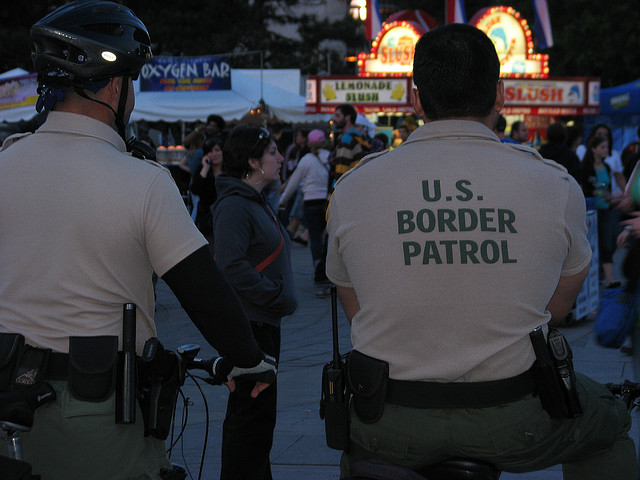
Following a recent surge in apprehensions of undocumented immigrants at the Southwest border, the Department of Homeland Security announced that, beginning January 1st Immigration and Customs Enforcement (ICE) engaged in a concerted nationwide crackdown, taking adults and some children into custody, who have evaded their orders for removal. In a recent press release, the Secretary of DHS, Jeh Johnson indicated that the crackdown occurred as a result of President Obama’s November 2014 executive action on immigration, which put in place new priorities for removal, including the removal of convicted criminals, individuals posing a threat to national security, individuals apprehended at the border or who were found to have entered the United States unlawfully after January 1, 2014. In November 2014 President Obama had implemented these new priorities in an effort to secure the border. In the press release, Jeh Johnson added, “as I have said repeatedly, our borders are not open to illegal migration; if you come here illegally, we will send you back consistent with our laws and values…individuals who constitute enforcement priorities, including families and unaccompanied children will be removed.”

According to the Department of Homeland Security, Central American migrants were removed and repatriated at an increasing rate since the summer of 2014. During this time, there was a surge in the number of families and unaccompanied children from Central America attempting to cross the southern border illegally. In response to this surge, DHS collaborated with the Mexican, Guatemalan, Honduran, and Salvadorian governments to decrease these numbers. According to Jeh Johnson the collaborative efforts were temporarily successfully. In 2015 the number of apprehensions by the U.S. Border Patrol decreased dramatically to 331, 333. Fiscal year 2015 experienced the lowest amount of apprehensions on the southern border since 1972. Recently, an increased rate of apprehensions resurfaced. This sudden spike resulted in the January 1st crackdown prompting ICE to action. As part of the crackdown, dozens of female agents and medical personnel were deployed to assist with the apprehension and removal process. According to DHS, in cases involving medical urgency or other reasons, ICE exercised prosecutorial discretion. As stated by DHS, enforcement operations will continue as needed in collaboration with state and local law enforcement.

Continue reading