Articles Posted in SCOTUS

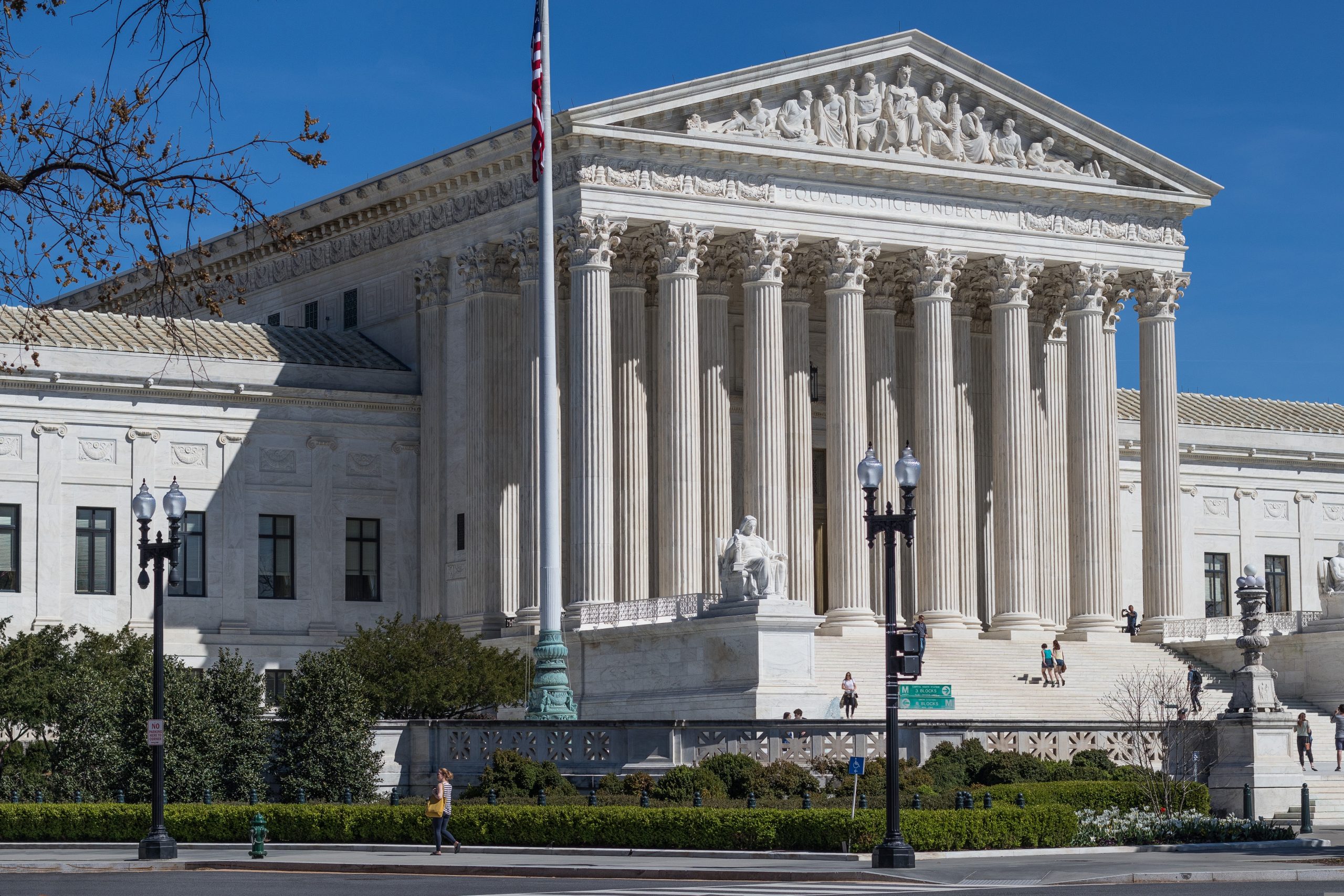
ralphs_fotos-banner-3585161-scaledOn June 30, 2026, the U.S. Supreme Court rejected President Trump’s attempt to restrict birthright citizenship, ruling that children born in the United States to parents who are unlawfully or temporarily present in the country are citizens at birth under the Fourteenth Amendment.

The 6-3 decision, authored by Chief Justice John Roberts, marks a major ruling on the meaning of American citizenship and the limits of executive power in immigration policy.

The case, Trump v. Barbara, centered on Executive Order 14160, titled “Protecting the Meaning and Value of American Citizenship.”

The order sought to deny automatic U.S. citizenship to certain children born in the United States if neither parent was a U.S. citizen or lawful permanent resident. Specifically, it targeted children born to mothers who were either unlawfully present or lawfully present on a temporary basis, such as on a student, work, or tourist visa, when the father was not a U.S. citizen or green card holder.

The Supreme Court held that the executive order violated the Citizenship Clause of the Fourteenth Amendment. That clause provides that all persons born or naturalized in the United States, and subject to its jurisdiction, are citizens of the United States and of the state where they reside. The Court concluded that children born in the United States to parents who are unlawfully or temporarily present are still “subject to the jurisdiction” of the United States and therefore are citizens at birth.
Continue reading

markthomas-us-supreme-court-building-2225765-scaledFamilies across the United States are anxiously waiting for the Supreme Court to decide the future of President Trump’s birthright citizenship executive order.

The order seeks to deny automatic U.S. citizenship to certain children born in the United States if their parents do not have permanent legal status.

For many immigrant families, the case is not just about politics or legal theory. It is about whether their children will be recognized as Americans from the moment they are born.

The Supreme Court is expected to issue its ruling by the end of June or early July, as the Court finishes its current term.

Until then, the executive order remains blocked by court orders, meaning children affected by the policy are still protected for now. But the uncertainty has left many families fearful about what could happen next.

At the heart of the case is the Fourteenth Amendment, which has long been understood to guarantee citizenship to most children born on U.S. soil. Trump’s order challenges that understanding by targeting children born to undocumented parents or parents in the U.S. on temporary visas, such as student, work, or tourist visas.

Continue reading

wander-works-MAgz-27IO68-unsplash-scaledThe Trump administration is asking the Supreme Court to end Temporary Protected Status (TPS) for hundreds of thousands of Haitians living in the United States. TPS is a humanitarian program that allows people from countries affected by disasters or conflict to live and work in the U.S. legally, without fear of deportation.

This move comes as part of a broader effort to scale back immigration protections. The Supreme Court has already allowed the administration to reduce TPS protections for Venezuelan migrants, while a similar request involving Syrian immigrants is still pending.

Haiti was first granted TPS in 2010 after a catastrophic earthquake, and the designation has been extended several times since. The administration set a termination date of February 3, 2026, arguing that conditions in Haiti have improved enough to allow the return of TPS holders.

Last December, five Haitian nationals challenged the decision, seeking to block the termination. A federal district court sided with them last month, finding that the decision to end protections may have been influenced in part by racial bias. The Justice Department appealed, but a divided three-judge panel on the U.S. Court of Appeals in Washington, D.C., refused to halt the lower court’s ruling.

In an emergency filing with the Supreme Court, Solicitor General D. John Sauer argued that the lower courts had overstepped, interfering in “an area of wide Executive Branch latitude.”

Continue reading

us-1978465_1280Last week, the U.S. Supreme Court handed down a troubling decision that could strip legal status from hundreds of thousands of Venezuelans currently living in the United States under Temporary Protected Status (TPS).

On Friday, the Court granted the Trump administration’s request to halt a lower court ruling that found the administration’s cancellation of TPS protections for Venezuelans unlawful. The unsigned order from the Court effectively allows the government to proceed, for now, with its plans to revoke temporary protections that had shielded Venezuelan nationals from deportation and granted them employment authorization.

TPS was created in 1990 as a humanitarian safeguard for individuals whose home countries are experiencing extraordinary crises such as armed conflict, environmental disasters, or other temporary but severe disruptions. Venezuela was designated for TPS in 2021 under President Biden, in response to the country’s severe economic collapse, widespread human rights abuses, and political instability.

Since then, approximately 300,000 Venezuelans have relied on that protection to live and work legally in the U.S., building lives, paying taxes, and raising families.

Trump Administration Moves to Strip Venezuela’s TPS Designation


But the political tides have shifted. When the Trump administration returned to office, it appointed Kristi Noem as Secretary of Homeland Security. Earlier this year, Noem moved to revoke Venezuela’s TPS designation, arguing that conditions in the country had improved and that continuing the program was no longer in the national interest. That decision sparked immediate legal challenges. A coalition of Venezuelan TPS recipients and advocacy groups sued, claiming the administration’s actions were arbitrary, rushed, and in violation of federal law.

Continue reading

sarah-kranz-pKqAaTUi0wg-unsplash-scaledIn a significant ruling handed down on Friday, the U.S. Supreme Court limited the power of federal judges to impose nationwide injunctions against President Trump’s executive order aimed at denying birthright citizenship to children born in the U.S. to noncitizens.

While the justices did not rule on the legality of the President’s executive order, this decision is an extraordinary victory for the Trump administration, because it hinders lower courts from intervening in potentially illegal actions by the government.

Historically, lower courts have issued nationwide preliminary injunctions early in litigation to block government conduct that could cause irreparable harm to plaintiffs pending judicial review.

The court’s decision to restrain judges from providing such relief is a remarkable departure from historic precedent and ventures into dangerous territory. It further indicates that the balance of power on the Supreme Court has clearly shifted in Trump’s favor, with six conservative justices backing his position.

What it Means

The ruling means that lower courts cannot stop the enforcement of the executive order on a nationwide basis for affected individuals. The executive order can only be suspended against individuals who have filed lawsuits against the government (either as individual plaintiffs or in class actions) or where a state has issued a state-wide injunction.

It will take time before the Supreme Court ultimately rules on the constitutionality of the executive order, with some legal experts suggesting the process could stretch on for years.

It is also uncertain whether this decision could restrict future nationwide blocks on controversial laws, particularly in other immigration and civil rights cases against the government.

Continue reading

united-states-supreme-court-6330563_1280On May 19th the U.S. Supreme Court handed the Trump administration a legal victory after the justices agreed to lift a lower court order that had previously stopped the President’s efforts to strip Venezuelans of deportation protections granted under Temporary Protected Status (TPS).


What is TPS?


Temporary Protected Status (TPS) is a humanitarian program allowing nationals of certain countries to remain in the United States temporarily, if the government has determined that it is unsafe for them to return to their home country for humanitarian reasons, such as armed conflict or a natural disaster.

It allows nationals of designated countries to live and work in the United States for a temporary period of time, during which they are protected from deportation. Those who qualify are given temporary employment authorization, which is automatically extended if the government extends their TPS validity period.


Biden’s Designation of Venezuela for TPS


The original TPS designation for nationals of Venezuela was issued on March 9, 2021, due to extraordinary conditions preventing their safe return to Venezuela (the 2021 designation). A separate re-designation was issued on October 3, 2023 (the 2023 designation).

Before leaving office, the Biden administration extended Venezuela’s 2023 designation for an additional period of 18 months, which was meant to last from, April 3, 2025, to October 2, 2026.

Continue reading

united-states-supreme-court-6330563_1280The recent Supreme Court decisions handed down in Loper Bright v. Raimondo and Relentless, Inc. v. Dep’t of Commerce, have overturned a longstanding rule known as the “Chevron” doctrine, which eliminates the need for federal courts to defer to federal agency decisions and regulations moving forward. This move essentially strips power away from federal agency interpretations of the law and gives it back to the courts.

This is positive news in the world of immigration, considering that a federal agency’s interpretation of the Immigration and Nationality Act (INA) will no longer automatically prevail when litigating cases in court and filing immigration challenges to visa denials.

This will benefit many immigrants and businesses who for many years have been blocked by federal agencies from obtaining employment-based visas and green cards based on ambiguous agency interpretations of their cases.

For instance, in removal cases, those seeking review of decisions previously made by immigration judges’ or the Board of Immigration Appeals (BIA) will now have a clean slate, since courts no longer have to rely on an agency’s standpoint and can now interpret unclear laws with a new set of eyes.

These rulings could also pave the way for new litigation to be filed to defend challenges to previous visa denials. Where interpretations of the law once made by the U.S. Citizenship and Immigration Services (USCIS) were automatically upheld in court, they will now be challenged forcefully.

U.S. employers seeking a favorable interpretation of a statute granting H-1B or L visa classification to a noncitizen worker may also have greater opportunities to argue their cases in court and win on behalf of their clients.

Continue reading

usa-3808026_1280

In this blog post, we share with you the latest regarding the controversial immigration law from the state of Texas known as SB-4.

In a stunning turn of events, on Tuesday March 19th the Supreme Court of the United States cleared the way for the state of Texas to enforce its controversial immigration law SB4, which would allow state officials to arrest and detain those suspected of entering the country illegally.

The Supreme Court rejected the Biden administration’s request to intervene and keep Texas’s strict immigration enforcement law on hold pending litigation.

The legal challenges however did not stop there. Later that day, a federal appeals court put the controversial law back on hold, just hours after the Supreme Court would have allowed Texas to begin enforcing the new law.

The order came down from the 5th U.S. Circuit Court of Appeals in which a three-judge panel voted 2-1 to vacate a previous ruling that had put the law into effect.

The future of the law still hangs in the balance as the 5th Circuit prepares to hear arguments over the controversial law to decide once and for all whether the law is unconstitutional.

Continue reading

The Supus-supreme-court-building-2225766_1280reme Court of the United States has issued an important but temporary victory to the Biden administration. On Monday, the court temporarily halted the enforcement of a controversial immigration law from the state of Texas known as SB4, which would authorize state law enforcement officials to arrest and detain those suspected of entering the country illegally, while imposing harsh criminal penalties.

The administrative hold issued by Supreme Court Justice Samuel Alito blocks the law from taking effect in the state of Texas until March 13. This temporary pause will give the court enough time to review and respond to court proceedings initiated by the Biden administration. Alito has ordered Texas to respond to the government’s lawsuit by March 11.

U.S. Solicitor General Elizabeth Prelogar has argued that SB4 violates the law by placing the authority to admit and remove noncitizens on state law enforcement when these matters fall under the jurisdiction of the federal government, and not individual states.

Continue reading

court-g331acf2eb_1920

Former President Donald Trump’s legacy continues to leave a lasting mark on U.S. immigration policy. On July 21, 2022, the conservative leaning Supreme Court blocked the Biden administration from implementing a new immigration policy that would prioritize deportation for those residing in the country illegally who pose the greatest public safety risk. At least for now that means the Biden administration’s measure will be halted.

The Supreme Court justices were almost nearly split in their decision. In a 5-4 vote, the decision stated that Justices Barrett, Sotomayor, Kagan, and Jackson would have allowed the Biden administration to pursue the policy.

The decision sets the stage for arguments in the case United States, et al. v. Texas, et al. to begin in late November.


Why the decision?


The Supreme Court’s decision was made in response to the Biden administration’s emergency request for the court to settle once and for all the legality of enforcing the policy after conflicting decisions were made by federal appellate courts. In September of last year, the Biden administration had implemented a policy calling for a pause to deportation unless individuals had committed acts of terrorism, espionage, or were egregious threats to public safety.

This directive prompted a flurry of lawsuits by Arizona, Ohio, and Montana, and a separate lawsuit by the state of Texas and Louisiana.

Texas and Louisiana argued that the Biden administration had violated federal law by halting the detention of people in the U.S. illegally convicted of serious crimes. The states also argued that they would be burdened by the administration’s decision because they would need to set in to detain such individuals.

For more information about this decision please click here.

Continue reading