Articles Posted in Deportation & Removal

5376966004_8d13877cc2_z

By Lupe Lopez

Rosario and her son Alan came into our office a few weeks ago.  Rosario had entered the country without inspection (illegal entry) many years ago.  Her son Alan was born in the United States and just turned 21.  They came in hoping that Alan would be able to help his mother obtain her green card.

We asked Rosario the usual questions.  When and how did you enter the U.S.?  Have you ever been detained or deported?  Have you committed any crimes in the U.S. or in your country?  The list goes on.  We first need to determine if Rosario will be admissible to the U.S. before we begin any paperwork.

8128488258_ce420104bb_z
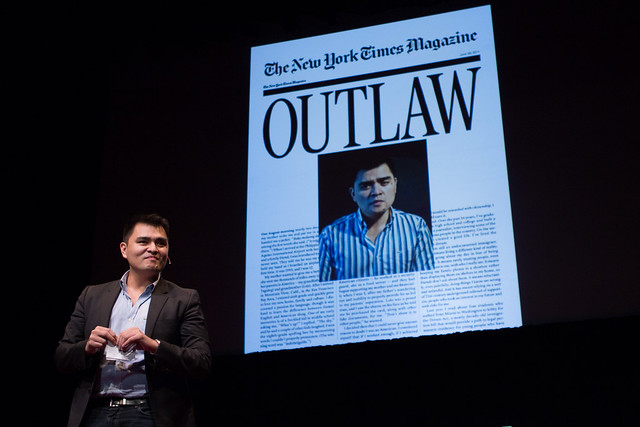
Jose Antonio Vargas has quickly become the face that has humanized the struggle for immigration reform. Unlike other immigrants, Jose is a Pulitzer Prize winning journalist, Washington Post reporter, activist, and the founder of an immigration awareness campaign called ‘Define American’. Back in June of 2011, Vargas courageously revealed to the world that he was undocumented in a column he wrote for New York Times magazine. In it he describes what his move to the United States was like, the lengths he went to as a child to fit in to the American lifestyle, and what it has been like residing in the United States unlawfully. Jose’s journey to the United States began much like that of any other immigrant. He was smuggled into the United States from the Philippines when he was only 12 years old by an individual he believed to be his relative. Once in the United States, Vargas was raised by his hardworking grandparents who afforded him a better future. From the outset, his upbringing in the bay area of San Francisco appeared to be much like that of any other American child.

It was not until he made a visit to the DMV to obtain his driver’s permit that he realized the green card he was given by his grandfather was in fact fake when he was told by the woman at the DMV window not to come back there again. For years, Jose Antonio Vargas has dedicated his life to standing in solidarity with the thousands of undocumented immigrants residing in the United States illegally. He has done this by serving as the voice of the undocumented, attending hundreds of conferences and speaking engagements, in addition to writing as a distinguished columnist.

Up until July 15th Vargas was able to advocate for the plight of undocumented immigrants without being apprehended despite constantly being in the public eye. A few days prior to July 15th Vargas appeared at a shelter housing Central American children and refugees and attended a vigil to honor them near the Rio Grande Valley. His presence in the region was meant to call attention to the humanitarian nature of the subject. In order to attend the event, Vargas crossed the McAllen, Texas TSA checkpoint, an area known to be highly secured and militarized. Vargas had not given much thought to the possible risk of being detained once he would return to the United States through the same checkpoint. According to the Department of Homeland Security Vargas was detained once he told TSA officials that he was residing in the country illegally. He was then taken to the McAllen Border Patrol Station and was given a Notice to Appear before an immigration judge. He was released within the same day after speaking with Immigration and Customs Enforcement officials. Unfortunately for Vargas, until comprehensive immigration reform is passed, he will continue to be forced to live under the radar. Vargas was not able to qualify for the Dream Act or for DACA, because his age did not meet the cutoff age as required by law. Shortly after being released Vargas issued a statement saying that the undocumented are constantly having to live in fear as a result of the failure of Congress and President Obama to act and bring about a viable solution to the problem. Jose Antonio Vargas challenges Congress to act by asking them the question: how do we define American?

7512877940_2720e3be12_z
On July 19, 2014 the Federal Bureau of Investigation’s San Antonio Office issued a press release discussing fraudulent attempts made by con artists targeting the families of unaccompanied children—mostly from Central America—coming to the United States through the Rio Grande valley and Tucson border. According to the press release, these con artists operate by making themselves appear as credible entities and reaching out to the family members of unaccompanied children, seeking payment in exchange for what the families believe will cover travel and legal expenses that will allow the children to be reunited with them. These plots are deceptive and fraudulent. The San Antonio FBI office confirmed that on July 18 two fraud schemes of this sort occurred via telephone. In one instance the perpetrator(s) disguised themselves as a charitable/non-profit organization aimed at reuniting unaccompanied children with their families. Another perpetrator disguised themselves as a reputable business organization from San Antonio. According to San Antonio FBI, the payment amounts demanded by these illegitimate sources ranged from $300.00 to several thousand dollars. The press release seeks to inform the public of these occurrences and encourage the public to be extremely cautious when receiving such a request. The FBI San Antonio Office has warned the public that fraudulent schemes such as these are abound especially in instances of crisis and natural disasters. The public should be extremely wary in such times. If you have been the victim or know someone who has been a victim of such a crime contact your local FBI office.

In general to protect the public from being victimized the press release provides several guidelines:

  • Be skeptical of individuals representing themselves as officials asking for payments or donations door-to-door, via phone, mail, e-mail or social networking sites.

5739974254_54e246c823_z
The rise in the number of unaccompanied children crossing into the United States illegally has dominated talks between lawmakers, pundits, political analysts, and humanitarian organizations, all of whom have a stake in bringing about comprehensive immigration reform. According to reports by the New York Times, since the month of October, over 50,000 children have been caught crossing the United States border illegally; a number that is double the amount of children who crossed illegally in 2013. This issue has become a point of contention not just for pro-immigration reform advocates, but has also transformed into a humanitarian issue worthy of continued debate, due to the dangerous nature a child succumbs to in making the dangerous trek to the United States unaccompanied and vulnerable.

Where are these children coming from you might ask? The vast majority of these unaccompanied children are coming from poverty stricken towns across El Salvador, Guatemala, and Honduras, which are also notorious for their violence. The New York Times reports that unaccompanied children from Mexico make up less than a quarter of the total amount of children coming to the United States illegally. The increase in the number of children crossing into the United States illegally began in 2012. Of the children that were apprehended, more than 70% were caught crossing through the Rio Grande Valley in Texas, while only 13% were caught crossing through Tucson, Arizona.

Though experts have continuously debated the reasons why these unaccompanied children are coming to the United States, most agree that there are various factors which drive these children to escape the conditions in their country: poverty, violence, and the desire to re-unite with their families. Among the countries mentioned, Honduras boasts the world’s highest murder rate. Children coming from Guatemala and El Salvador tend to come from very poor and rural towns. Some of the problem may lie in the fact that previously, minors who were detained were not immediately deported. This may have led many Central Americans with the perception that the Department of Homeland Security would allow these children to remain in the United States.

7450062082_08d8fbac32
The Los Angeles Times recently released an article which discusses a new policy taken by the Obama Administration and Department of Homeland Security. The new policy aims at limiting deportations by making small, but significant changes to a program which started under the George W. Bush administration called Secure Communities.

Secure Communities

Secure Communities was created for the purpose of coordinating cooperation between federal immigration authorities and local law enforcement. The program allows federal immigration officials to request to utilize city and town police officials, as well as detention facilities to facilitate removal proceedings for immigrants found to be in the United States unlawfully.

First time visitor at our office? We have you covered on what to expect during your first visit in 5 easy steps.

Newclientsblog_zps6445fb31
Our Clients

Since every client’s case is truly unique, it is important for our potential clients to attend their free consultation, where a member from our team will explain the appropriate legal process that should be taken, in addition to answering all of their questions and concerns. Please contact our office to schedule an appointment for an in person or phone consultation at (619) 819-9204 or Toll Free at 1-866-488-1554

fff

by Lupe Lopez

Several weeks ago, Henry came in for a consultation to discuss an I-601 waiver of inadmissibility for his wife, Elizabeth.  Last year, they had attended Elizabeth’s interview in Ciudad Juarez, Mexico and she was denied a visa.  Elizabeth did not know why she was denied because the officer only told her “you are inadmissible and you will not get a visa.”  Elizabeth was given a blue piece of paper with lots of writing and the officer asked her to leave.

Elizabeth could only assume that it had to do with something that happened many years ago when she was 18.  She had not mentioned this to her attorney or to her husband.  She didn’t think it was important.  But, now, after being denied, she was fearful that this was the reason for her denial.

Today in a town hall-style meeting in Washington DC designed to showcase his health reform law for the Latino community, President Barack Obama told those who attended that he was powerless to stop mass expulsions of illegal immigrants, which has prompted one Latino advocacy group to brand him “deporter in chief.” The president said Congress is forcing him to enforce existing immigration laws while balking at passing a comprehensive bill that would offer illegal immigrants a path to citizenship. “I am constrained in terms of what I am able to do,” Mr. Obama said. “The reason why these deportations are taking place is that Congress said ‘you have to enforce these laws’. I cannot ignore those laws any more than I can ignore any of the other laws that are on the books.”

To mitigate Congress’ lack of action on immigration reform, Mr. Obama said he ordered government agents to give priority to deportations of those involved in illegal activity and gangs — and even used executive power to shield undocumented young people with illegal status who have known no home other than the United States. “What I have done is to use my prosecutorial discretion,” Mr. Obama said.

The National Council of La Raza, America’s largest Latino advocacy organization, week broke with the president over the deportation issue. “Any day now, this administration will reach the two million mark for deportations,” said NCLR CEO Janet Murguia. “It is a staggering number that far outstrips that of any of (Obama’s) predecessors, and it leaves behind a wake of devastation for families across America. We respectfully disagree with the president on his inability to stop unnecessary deportations. He does have the power to stop this.”

Recently, the Federal Register published two new exemptions to the Immigration and Nationality Act on Wednesday by the Departments of Homeland Security and State mean that who provided “insignificant” or “limited” material support for terror groups will no longer be automatically denied eligibility from asylum or refugee status.

An unknown number of people currently in the process of being deported, as well as about 3,000 people with pending asylum cases will be affected by this rules change. It will likely help Syrian refugees who would otherwise be blocked from receiving U.S. aid by the existing rules.
The new exemptions apply to “limited material support.” A DHS spokeswoman reported that the term is defined as “material support that was insignificant in amount or provided incidentally in the course of everyday social, commercial, family or humanitarian interactions, or under significant pressure.”

Back in 2011, the Department of Homeland Security had instructed ICE enforcement agents to refrain from detaining individuals at sensitive locations. This 2011 memo required ICE agents to have prior approval before going to certain “sensitive locations”, including schools, churches, and hospitals. The list did not include courthouses among its list of sensitive locations. Recently, ICE has been making arrests at courthouses in and around the Bakersfield area.

The ACLU reported on the recent arrests made by ICE at the Kern County courthouses and noted that “ICE agents have repeatedly raided Kern County courthouses in recent years, rounding up residents waiting to pay fines, appear in court, get married, and even – in one case reported to the ACLU – get a domestic violence restraining order. ICE’s tactics are in tension with their own written policies, which state they will not conduct enforcement actions at “sensitive” locations. Ironically, the raids have kept people from paying tickets and attending court.”

In response to these arrests at courthouses, the ACLU wrote directly to ICE to address what they feel is a location that should be added to the “sensitive locations” list that was in the 2011 memo. The rationale for this is pretty clear, it is in the public interest for individuals that have court matters to be able to go to court without fearing being detained by ICE. Those with minor traffic offenses, seeking court orders for domestic violence matters and temporary restraining orders will be deterred from going to court if they fear being detained.