Articles Posted in Immigration Enforcement

6886069226_c51dae64e0_z

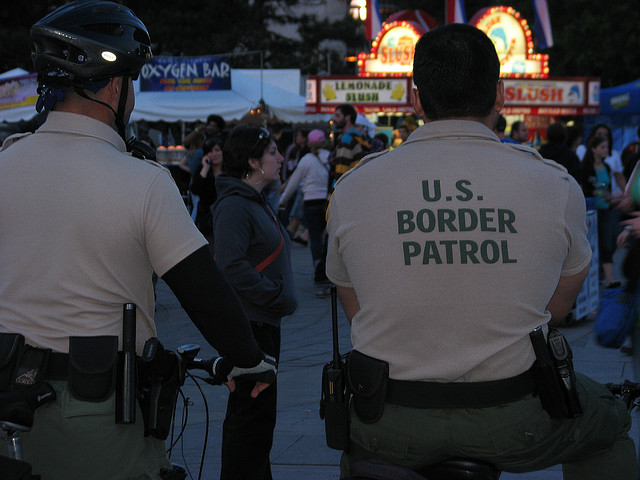
According to new reports released by the U.S. Border Patrol, the surge in Central Americans crossing into the United States is dropping at an alarming rate—approximately 60% fewer unaccompanied minors were apprehended during the month of August, in comparison to the summer months, a time when the migration crisis was in full effect in Central America. These unaccompanied minors make the perilous trek north from their Central American countries due to the violence they have encountered right at home.

The report suggests that the primary reason for the sudden drop is owed to the Mexican government’s crackdown on Central American immigrants. According to the report, increasing pressure on Mexico to instill effective deterrents has resulted in increased arrests and deportations of thousands of Central Americans, making it harder for such migrants to reach the American border.

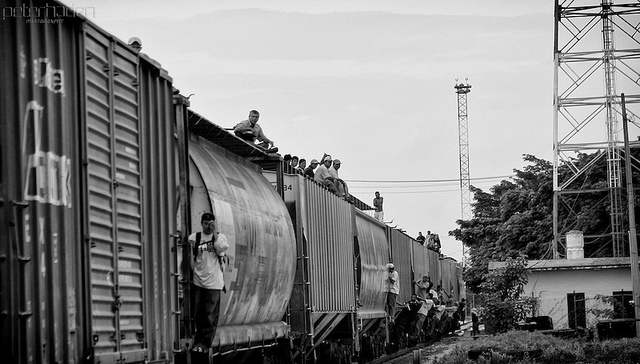
Bowing to American pressure, the Mexican government recently announced a plan to militarize the southern border by placing federal forces along it. As part of these plans, the government will be setting up interior checkpoints, whereby authorities can inspect buses and vans carrying passengers into northern Mexico. Setting up checkpoint will also allow the authorities to ID passengers and question them. Additionally, Mexican authorities have forbidden migrants to board the infamous lumbering freight train known as ‘La Bestia,’ or the Beast in English. Many Central Americans and children have died while attempting to board such freight trains bound for the United States border. What does this mean for Central American immigrants journeying north? A longer and more dangerous journey ahead of them. According to the Mexican interior ministry, since the crackdown, approximately 30,000 Central Americans have been apprehended and sent back home; 20,000 of which were minors. Central Americans who have sought shelter from authorities in Mexico say that they are afraid of being turned in by Mexican authorities, according to news reports by NPR. Pro-immigrant activists argue that the work being done by Mexican authorities should be done by United States authorities which are better staffed and have better resources. Moreover, they argue, that despite the crackdown, nothing has changed in Central America. Central American countries remain impoverished, and innocent children are left to suffer the consequences of living in a country where impunity and violence run rampant. These critics argue that much more must be done and the issue is much more complex than the American and Mexican government are admitting. Critics insist that the issue is bilateral and humanitarian in nature. Congressional oversight will be necessary to tackle the issue.

Continue reading

4097699785_073813177e_z
Much of the deliberation surrounding immigration reform has largely occurred behind closed doors, despite pressure from the booming immigrant population in the United States to become more transparent. In a much anticipated June speech, President Obama announced that he would be utilizing executive action to bring about comprehensive immigration reform in response to Congress’ inaction.

For the most part, the administration has remained mum about the process and the proposals that have been laid out on the table.

Here’s what we do know about what is happening behind closed doors:

The Immigration-Hold policy used by ICE has been an issue for many immigrants here in the U.S. It is something used by law enforcement to hold individuals while local charges are being resolved. George Gascon, a District Attorney up in San Francisco, recently shared his views of the Immigration-Hold policy and the abuse of it by law enforcement and its consequences.

Mr. Gascon expressed his views by saying, “In my 30 years in law enforcement, I have often witnessed the unintended consequences of well-meaning but poorly developed public safety policies. Few have had as profound an impact on our constitutional rights as the widespread use of immigration holds issued by Immigration and Customs Enforcement. What the federal government touts as a sound public safety practice is having a chilling effect on local law enforcement’s effectiveness.

In 2010, Norma, an undocumented immigrant living in San Francisco, was held on an immigration hold in our local jail for days without due process. Norma, repeatedly abused by her partner, had been too fearful to call police. When she finally did, she was arrested along with her abuser, even though no charges were filed against her. While her deportation was eventually canceled, Norma recalls being “so scared not knowing what would happen to my 3-year-old child while I was in jail. I later discovered that I had an immigration hold, even though no one told me what was happening.”
As explained briefly above, Immigration Holds are requests by an ICE officer to have local authorities hold someone up to 48 hours after local charges are resolved. In addition, it requires no demonstration of probable cause, and such holds are often issued with little more than a suspicion that the individual in question doesn’t have documents. In no other aspect of law enforcement can we jail people without probable cause; the right to due process is the bedrock of the U.S. criminal justice system.

Mr. Gascon further discusses his view of the abuse of the Immigration Hold as follows, “The use of Immigration Holds has led to mistakes and abuses. These include ICE agents relying on birthplace, language or physical appearance to determine who should be detained. This has resulted in the detention of hundreds of thousands of individuals, including U.S. citizens and authorized immigrants. In fact, between October 2008 and March 2010, ICE identified 16,870 U.S. citizens through this program. ICE stopped reporting the number of U.S. citizens identified in 2010, so the total number held is unknown.

The broader implications are concerning: Police occasionally arrest crime victims such as Norma when it is unclear who the perpetrator is, such as domestic violence cases where a victim fights back in self-defense. These victims may find themselves subject to immigration holds and detained in jail because an ICE agent believes they may match the identity of someone who could be deportable.”

Continue reading

Fewer undocumented immigrants stopped for traffic violations will face deportation, under newly unveiled changes to a prominent immigration enforcement program.

Known as Secure Communities, the program compels state and local law enforcement officers to enter the fingerprints of anyone they detain into a federal database. Federal immigration officials can cross-reference those fingerprints and initiate deportation proceedings if the detained person is in the country illegally.

The result: many undocumented immigrants being deported over minor breaches like broken tail lights and speeding. The number of deportations stemming from a traffic stop increased sharply last year, amplifying immigration advocates’ critique that the Obama administration is failing in its stated goal of targeting immigrants who have criminal records or could undermine public safety.

A task force convened by Department of Homeland Security Secretary Janet Napolitano and comprised of law enforcement officials, immigration attorneys and immigration enforcement union representatives, among others, recently issued a report detailing how critics of Secure Communities believe it is breaking apart families and breeding distrust of law enforcement.

“Many state and local officials believed they were joining a program targeting serious offenders” by participating in Secure Communities, the report’s authors wrote, but the impact of Secure Communities has not been limited to convicted criminals, dangerous and violent offenders, or threats to public safety and national security.”
In response to the report, the Department of Homeland Security announced changes to how officials will handle immigrants detained at traffic stops. The reform affects immigrants without any prior criminal record. Federal agents will only request that local officers hold immigrants arrested at traffic stops if those immigrants are subsequently convicted. The change will not apply to immigrants stopped for drunk driving. This change is more in line with the DHS memo concerning prosecutorial discretion over cases of low immigration offenders.

Continue reading

A special Immigration and Customs Enforcement (ICE) program announced last August to reduce the massive backlog of pending matters by identifying those that could be dismissed or put on hold has resulted in the closure of 2,609 cases, according to government data covering the period up to the end of March. The backlog reduction is less than one percent of the 298,173 cases pending before the Immigration Courts as of the end of last September.

“Prosecutorial discretion” is the authority of an agency or officer to decide what charges to bring and how to pursue each case. A law-enforcement officer who declines to pursue a case against a person has favorably exercised prosecutorial discretion. The authority to exercise discretion in deciding when to prosecute and when not to prosecute based on a priority system has long been recognized as a critical part of U.S. law. The concept of prosecutorial discretion applies in civil, administrative, and criminal contexts.

The stated goal of the ICE program was to better prioritize and reduce the backup of pending matters that had led to lengthy delays in the proceedings of noncitizens it wanted to deport. So far, however, the pace of these closures has not been sufficient to stop the growth in the court’s backlog. In fact, as of the end of March 2012, the Immigration Court backlog had risen to 305,556 matters.

Florida Marlins closer Leo Nunez admitted Friday to using fake documents and a fake ID to sign a professional contract more than a year ago. Central Electoral Commission President Roberto Rosario said at a press conference that Nunez signed a sworn statement saying he is not the person identified in official documents. Dominican authorities also have arrested Hector Pena Diaz, who is accused of falsifying Nunez’s documents. Nunez returned to his native Dominican Republic on Thursday amid accusations that he was playing under an assumed name.

A person familiar with Nunez’s immigration status told The Associated Press on Thursday that his real name is Juan Carlos Oviedo, and he’s 29, a year older than listed in the team media guide. The person also said the Marlins have been aware of the issue for several months. The person spoke to the AP on condition of anonymity because team officials haven’t made any public comment on the case.

The future consequences for providing false documentation to obtain work in the U.S. is severe. Juan Carlos Oviedo’s actions constitute fraud, which will always come up whenever he will apply for a new visa for any reason to come to the U.S. Although there are no statements by him to clarify why he chose to use false documents to come to the U.S. as an athlete, his actions have certainly cost him hundreds of thousands of dollars and many opportunities. That is why it is always important to provide your proper and accurate documentation when you apply for any visa in the U.S.

U.S. Immigration and Customs Enforcement (ICE), under the Department of Homeland Security is conducting massive I-9 Audits to trap the employers. As part of an I-9 audit, ICE agents review I-9 forms, company payroll records, W-2 reports, and other documents. They seek to determine whether the employer has properly checked the new employee’s identity and work authorization, and re-verified authorization, as needed for temporary authorizations. They also ascertain whether any counterfeit documents were used as proof of identity and/or employment authorization. John T. Morton, the new Assistant Secretary of U.S. Immigration and Customs Enforcement (ICE), under the Department of Homeland Security, recently stated that ICE intends to increase its attention to auditing I-9, employment eligibility verification forms. We all are aware that I-9 forms must be completed and retained by U.S. employers under specific requirements.

I-9 audits have dramatically increased in recent months. The audits stand at 652 Notices of Inspection (NOIs) for July 2009, alone. Many more employers will be notified by ICE in the coming months that their I-9s and company records will be audited. Fines for I-9 violations range from $110 for one single, minor or technical violation, up to $3,200 per violation for serious first offenses. A third offense can lead to a fine of up to $16,000, per offense. Employers should take compliance with Form I-9 requirements seriously, as there are multiple possible violations per form.

An I-9 audit may lead ICE agents to evidence that criminal law violations have occurred. ICE may accuse employers of knowingly hiring, retaining, or even harboring workers who are not authorized for employment in the U.S. The first immigration enforcement action by the Obama Administration came to a partial conclusion on August 18, 2009 in Washington state. ICE issued a press release on August 18, 2009 announcing that two corporate directors of a family-owned business in Bellingham, Washington had pled guilty to felony immigration violations. These two directors, siblings, each pled guilty to one federal felony count of aiding and abetting The said company itself has been charged with encouraging and inducing illegal aliens to reside in the U.S. and may face stiff fines for its actions.