 Visa Lawyer Blog


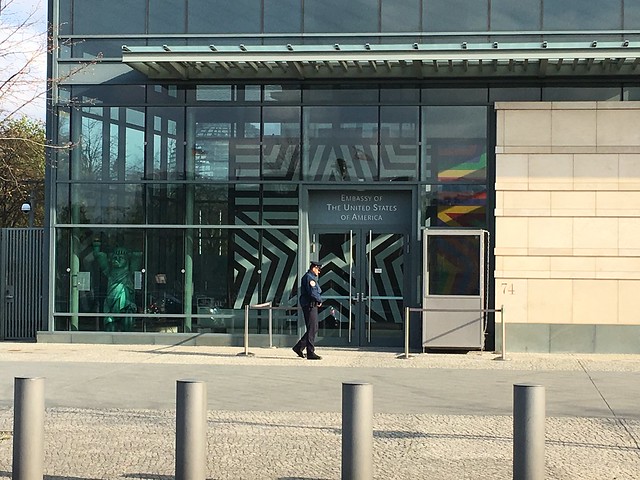
Flickr Creative Commons Attribution Jeroen Akkermans
In the last months, the U.S. Department of State released two significant policy updates that impact both immigrant and nonimmigrant visa applicants. These updates focus on a core change: applicants will now be required to have their visa interviews in their place of residence or country of nationality.
This change has significant consequences for third-country nationals who have traditionally applied for U.S. visas outside their country of nationality, particularly those renewing H-1B, E, O, and L visas, as well as immigrant visa applicants outside the United States.
Immigrant Visa Applicants Must Apply in their Country of Residence
On August 28, 2025, the State Department announced that, starting November 1, 2025, immigrant visa applicants must attend their interviews at a U.S. consulate or embassy located in their country of residence, or in their country of nationality, with limited exceptions. The update applies across all immigrant visa categories, including Diversity Visas.
There are exceptions to this rule, though they are limited. Exceptions may be granted in rare cases involving humanitarian or medical emergencies, or in circumstances involving specific foreign policy considerations. Applicants residing in countries where routine U.S. visa services have been suspended or paused will need to process their case at a designated consular post, which is typically assigned by the State Department to handle cases from those particular regions.
Existing appointments for immigrant visa interviews scheduled prior to November 1st will not be cancelled or rescheduled.
Same Policy Applies to Nonimmigrant Visa Applicants
A similar change was later announced on September 6, 2025, for nonimmigrant visa applicants. Effective immediately, nonimmigrant visa applicants must also apply for their visa in their country of residence or nationality. This means that individuals cannot simply choose a different country’s embassy based on convenience or shorter wait times unless they reside there or are citizens of that country. This applies to all third country nationals who previously traveled to embassies or consulates in Mexico or Canada to renew their nonimmigrant visas.
As with the immigrant visa policy, there are exceptions for certain visa types such as diplomatic (A) and international organization (G) visas, as well as for emergency humanitarian or medical reasons. However, the standard expectation is clear: applicants must be connected to the country in which they apply.
The reasoning behind these changes is rooted in the Department’s stated aim to improve consistency and clarity in visa adjudication.
For applicants from countries where the U.S. has limited or no visa services—such as Afghanistan, Belarus, Haiti, Iran, Libya, Russia, Somalia, South Sudan, Sudan, Syria, Venezuela, Yemen, and Zimbabwe—specific embassies have been designated to handle cases. These posts will continue to serve as regional processing hubs for nonimmigrants from those countries.
Conclusion
Overall, these policy changes introduce new challenges for third-country nationals, leading to workforce disruptions, higher travel expenses, and longer wait times for visa interviews in their home countries.
Applicants are encouraged to begin planning accordingly by checking visa wait times with U.S. embassy or consulates in their place of residence, ensuring that they have proper documentation to prove residence or nationality, and staying informed about appointment availability. Those who were previously hoping to apply in a third country should reevaluate their options based on the new rules.
With these changes now in place or fast approaching, the visa application landscape is evolving. While the intent is to make processing more efficient and predictable, applicants will need to be more mindful of where they apply, how they prepare, and how far in advance they plan their visa journeys.
For more information, please visit our helpful links below.
Contact Us. If you would like to schedule a consultation, please text 619-483-4549 or call 619-819-9204.
Helpful Links
- Adjudicating Applicants in Their Country of Residence – August 28, 2025
- Adjudicating Nonimmigrant Visa Applicants in Their Country of Residence – September 6, 2025
- September Visa Bulletin
- Adjustment of Status Filing Dates from Visa Bulletin
- Know your Rights if ICE visits your home or workplace
- Know your Rights Card (English)
- Know your Rights Card (Spanish)
- ICE Online Detainee Locator System
- ICE Immigration Detention Facilities
- USCIS Processing Times
- ImmigrationLawyerBlog
- ImmigrationU Membership
- Success stories
- Youtube channel
JOIN OUR NEW FACEBOOK GROUP
Need more immigration updates? We have created a new facebook group to address the impact of the new executive orders and other changing developments. Follow us there!