Articles Posted in Immigration Crackdown

9613483141_0df8534105_z

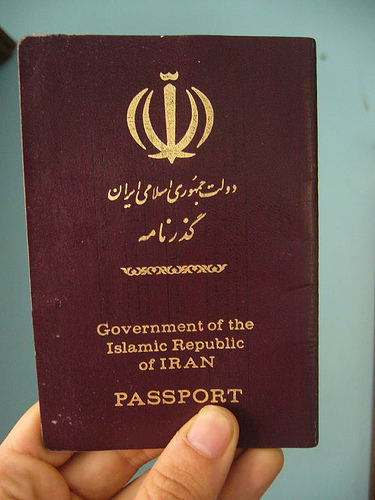
Yesterday, January 27, 2017, President Donald Trump signed and handed down the controversial executive order, “Protecting the Nation from Terrorist Attacks by Foreign Nationals” on immigration to protect the nation from terrorist attacks by foreign nationals. Among its main provisions the order suspends IMMIGRANT AND NON-IMMIGRANT entry of foreign nationals from countries of “particular concern” including Syria, Iraq, Iran, Libya, Somalia, Sudan, and Yemen for 90 days, indefinitely suspends Syrian refugees from entering the United States until the U.S. refugee admissions program has been overhauled, and terminates the visa waiver interview process. The temporary ban will affect all non-U.S. Citizens from Syria, Iraq, Iran, Libya, Somalia, Sudan, and Yemen including green card holders and valid U.S. visa holders. Foreign nationals of these countries will not be allowed to return to the United States for a period of 90 days, after temporary foreign travel, even if they are green card holders or visa holders. For this reason, if you are a foreign national from one of these countries, you should not engage in temporary foreign travel until the temporary ban has been lifted. Visa and green card holders already in the United States will be allowed to remain without problems.

An exemption has been drawn for immigrants and legal permanent residents whose entry is in the U.S. national interest, however it is not yet clear how that exemption will be applied.

Below is a summary of the main provisions of the order per the OFFICIAL signed copy.

To read the complete version please click here.

  1. Suspension of Issuance of Visas and Other Immigration Benefits to Nationals of Countries of Particular Concern
  • The immigrant and nonimmigrant entry into the United States of aliens from countries designated (including Syria, Iraq, Iran, Libra, Somalia, Sudan, and Yemen) is suspended for 90 days from the date of the order January 27, 2017 (excludes foreign nationals traveling on diplomatic visas, North Atlantic Treaty Organization visas, and C-2 visas for travel to the United Nations). This means that if you are a citizen of a country of “particular concern” as outlined above, you will NOT be allowed to re-enter the United States, after temporary foreign travel, until the ban has been lifted, even if you are a legal permanent resident (immigrant) or holder of a valid visa. If you are a foreign national of one of the above countries and you are an immigrant (green card holder) or non-immigrant (valid visa holder), you must NOT travel internationally. Otherwise, you will risk being denied re-entry.
  • The Secretary of State and Homeland Security may submit to the President the names of additional countries who pose a security risk and are recommended for suspension.
  • The Secretary of Homeland Security, in consultation with the Secretary of State and the Director of National Intelligence, must immediately conduct a review to determine the information needed from any country for adjudication of any visa, admission, or other benefit under the INA adequate to confirm the identity of the individual seeking the benefit and ensure that they are not a security or public-safety threat to the United States.

Continue reading

32526771855_f1e4ccf6f8_z

President Donald Trump is expected to hand down a controversial Executive Order on immigration within the coming days to protect the nation from terrorist attacks by foreign nationals. Although the Trump administration has not made a formal announcement regarding the proposed order yet, a leaked, unsigned copy of the President’s order has been making the rounds. We do not know whether the President has made any modifications to the order since its leak, and we do not know when exactly the order will be issued. One thing is clear, an executive order on immigration is imminent. It is rumored that the executive order will include a temporary ban on refugees, the suspension of issuance of visas for citizens of Syria and six other Middle Eastern and African countries, which are rumored to include Iraq, Iran, Libya, Somalia, Sudan and Yemen, collectively referred to as “countries of particular concern,” as well as the end of Syrian refugee processing, and the visa interview waiver program.

The passage of such an executive order although extremely controversial and unpopular, would be within the President’s executive power, if his administration determines that limiting refugee admissions temporarily and restricting the issuance of visas to persons from specific countries is of significant public interest to the United States to combat the war on terror. The administration would need to balance our country’s need to secure its borders against terrorism with the need to resolve the global humanitarian crisis we face today. Donald Trump has already passed a series of executive orders on border security and immigration enforcement authorizing the construction of a U.S.-Mexico border wall, withholding federal grant money for sanctuary cities, hiring 5,000 Border Patrol agents, reinstating local and state immigration enforcement partnerships, and ending the “catch-and-release” policy for undocumented immigrants.

The leaked copy of the executive order “Protecting the Nation from Terrorist Attacks by Foreign Nationals” gives two policy reasons for enacting the executive order. First, the purpose of the order is to protect American citizens from foreign nationals who intend to enter the United States to commit acts of terrorism. Second, the order serves to prevent the admission of foreign nationals who intend to enter the United States to “exploit” the country’s immigration laws for malevolent purposes. The order highlights that following the September 11 attack on the World Trade Center, hundreds of foreign nationals have successfully entered the United States on an asylum, visitor, student, or employment visa, and have been subsequently convicted or implicated in terrorism related crimes. The order goes on to blame the State Department’s consular officials for their failure to scrutinize the visa applications of the foreign nationals who went on to commit the September 11 attacks, which resulted in the deaths of thousands of Americans.

The main provisions of the leaked order “Protecting the Nation from Terrorist Attacks by Foreign Nationals” are as follows:

Continue reading

31170276656_209df54185_c

On the heels of being named “Person of the Year” by TIME magazine, a new interview with President-elect Donald J. Trump reveals new information regarding the former business tycoon’s stance on illegal immigration. As we have previously reported, throughout his campaign the President-elect Donald Trump vowed to crackdown on illegal immigration, claiming that he would deport the 11 million undocumented immigrants residing in the United States unlawfully during. Among other things, Trump also campaigned on the platform that he would end the Deferred Action for Childhood Arrivals (DACA) program once and for all; a program which to this date has shielded hundreds of thousands of young undocumented persons from deportation, and provided them with temporary work authorization. The lives of these young undocumented immigrants have in large part been shaped by the passage of DACA, and the false sense of security it brought them. Today, their lives are in a very fragile state, with the uncertain future of what may happen to this program under a Trump administration, and the looming possibility of their removal from the United States, given that USCIS now possesses vital information regarding their identities and whereabouts. Ever since his election, Trump has desperately attempted to unite the nation. His administration has endeavored to pick up the broken pieces that were left behind by his polarizing campaign rhetoric. In recent months, we have seen Trump dramatically soften his stance on immigration in what may be described as futile efforts to unify the country.

Continue reading

5808492140_09871b9bdc_z

There is no denying that the election of Donald Trump as next President of the United States has dealt a huge blow to the immigration reform effort and diminished any hope for the passage of broader legal immigration reform. We had hoped that with the election of Hillary Clinton we would see an increase in immigration levels for highly skilled workers, as well as increased visa opportunities for entrepreneurs and investors. While the news of Donald Trump’s election was a big setback for immigration in general, polling continues to suggest that people across the United States are willing to support fairness in dealing with the undocumented immigrant population in a sensible and human way. By contrast, most Americans disapprove of passing broad legal immigration reform that would benefit foreign workers.

Donald Trump was able to win the favor of a great number of Americans because of his critical view of programs like NAFTA that he believes has allowed American jobs to go overseas. Trump has blamed the U.S. government for allowing programs like the H-1B worker program to exist, saying that foreign workers are taking American jobs. We can expect to see Donald Trump take a restrictive view on legal immigration, keeping immigration levels within historic norms. Donald Trump has until recently softened his tone on illegal immigration, claiming that his priority is to deport only dangerous criminals residing in the United States unlawfully, although his 10-point plan contradicts his recent stance.

It is likely that the Republican House and the Senate will introduce legislation designed to benefit American workers and the economy, and focus less on creating immigration opportunities for foreign workers. Similarly, the Trump administration will likely focus on job creation, and less on passing any meaningful legal immigration reform.

The program that may come under fire by the Trump administration is the Deferred Action for Childhood Arrivals (DACA) initiative which began on June 15, 2012 as part of an executive order introduced by President Barack Obama. Donald Trump has repeatedly said that he wants to end the Deferred Action for Childhood Arrivals (DACA) program incorrectly calling it an “amnesty.” In actuality, DACA is not amnesty and does not provide a pathway to permanent residency or even citizenship. DACA merely shields the individual from deportation and allows them to legally obtain employment in the United States for a temporary period of time.

Continue reading

16204909498_c2948b5c85_z

The U.S. Department of Homeland Security is expected to run a study to determine whether privately run detention facilities are unsafe for migrants. The Secretary of the Department of Homeland Security, Jeh Johnson, has stated that the administration will evaluate whether or not the agency will end the practice of privatizing immigration detention facilities, issuing a recommendation by November 30th of this year.

The announcement comes following reports that private immigration detention facilities have unlawfully withheld proper mental health and medical care from persons being detained in their immigration facilities. Presently, the two major private companies running ICE immigration detention facilities across the United States are the Corrections Corporation of America and the GEO Group. Together these private companies hold lucrative state and federal government contracts. It is estimated that the Corrections Corporation of America has earned $689 million alone from its contracts with ICE dating back to 2008, while the GEO Group has earned an estimated $1.18 billion from these contracts during that same period.

Continue reading

Screen Shot 2016-05-26 at 2.59.40 PM

The state of Colorado is set to pass a new bill known as HB16-1391 that will prosecute non-attorneys posing as licensed immigration attorneys or legal representatives in matters relating to immigration. Colorado Senator Dan Pabon, first introduced the bipartisan bill, HB 16-1391 the Immigration Consultants Deceptive Trade Practice, before the Colorado Senate earlier this year. The focus of HB16-1391 is to crackdown on “notarios” targeting the Hispanic community, who are not licensed to practice law in the United States. The word “notario” in some Latin American countries refers to a person that is either highly trained to conduct legal matters or is an attorney. The word notary in the United States takes on a different meaning. A notary public in the United States is not an attorney and cannot conduct legal matters. They cannot provide legal advice nor represent individuals before court. Instead, a notary public can attest or certify writings to make them authentic. Notary publics are typically involved in the certification of affidavits, depositions, and other negotiable documents. In the United States they witness the making of documents and sign in order to attest that documents are authentic. The Hispanic community is often misled by these “notarios” who advertise themselves as authorized legal representatives and/or attorneys for compensation. Despite the fact that these “notarios” are not authorized to offer legal consultations, they often do causing irreparable damage to the people they serve. They often give false hope to people in the United States unlawfully and mislead them into applying for an immigration benefit they are not eligible to receive, prompting their removal from the United States. The bill, Immigration Consultants Deceptive Trade Practice, will prohibit non-attorneys from conducting consultations, receiving compensation, and providing legal services to individuals related to immigration.

Continue reading

14301886764_524229d763_z

The Supreme Court is expected to hear oral arguments for United States v. Texas, a lawsuit challenging the President’s executive actions on immigration, on Monday April 18th.  We have learned that attorneys representing the Republican led House of Representatives will be given 15 minutes to argue against Obama’s executive actions on immigration, included the expanded Deferred Action of Childhood Arrivals (DACA) program, and the Deferred Action for Parents of Americans and Lawful Permanent Residents (DAPA) program. This move comes after the House of Representatives voted in favor of filing a brief before the Supreme Court challenging the executive actions on immigration. The court has also authorized a group of undocumented mothers of U.S. Citizen children to speak before the Supreme Court for 10 minutes. The Obama administration is currently at a disadvantage, given that only eight Supreme Court justices will ultimately be handing down one of the most important decisions of our generation come June. Obama had hoped that the House of Representatives would hold hearings in consideration of his Supreme Court pick, Chief Judge of the District of Columbia Court of Appeals, Merrick Garland, by the time oral arguments would begin. Unfortunately, this has not been the case. Republicans have refused to hold hearings in consideration of Judge Garland. It is likely that they will continue to delay hearings until the next President of the United States takes office next year.

Oral arguments on April 18th will be no more than 90 minutes long. The majority of the time will be divided by the Obama administration and attorneys representing Texas and 25 other states challenging the constitutionality of Obama’s executive actions on immigration. United States v. Texas is unique because it will finally put to rest the issue of whether or not the executive action on immigration is within the President’s constitutional powers. This case is also unique because it will be one of the few times that the Supreme Court has addressed the issue of illegal immigration and the rights of unlawful immigrants under the constitution.

Continue reading

61320634_2e4c8e752c_z

Every year USCIS receives and adjudicates approximately 6 million applications from foreign nationals seeking to immigrate to the United States, and U.S. companies seeking to employ foreign workers temporarily.  According to the Department of Homeland Security’s Office of Immigration Statistics, “an estimated 13.1 million lawful permanent residents (LPRs) were living in the United States on January 1, 2013.” Of these permanent residents, more than half–8.8 million–were eligible to apply for naturalization. Additionally, the United States issues approximately 700,000 temporary non-immigrant work visas for a variety of temporary workers including: highly skilled foreign workers employed in specialty occupations in the STEM fields, fashion models, internationally acclaimed athletes and entertainers, aliens of extraordinary ability, religious workers, intra-company transferees, treaty traders/investors, foreign media workers, and agricultural and seasonal workers.

The reason the issuance of temporary worker visas is so low, when compared to the issuance of permanent resident cards, is because most of the temporary foreign worker visa programs are subject to a congressional cap, that limits the amount of non-immigrants that can be admitted per fiscal year. Additionally, certain temporary nonimmigrant worker visa classifications are granted for a specified period of time, although in most cases at least one extension may be granted. The cap applies primarily to the H nonimmigrant worker classifications, and non-minister religious workers. The H visa category accounts for approximately 54% of all visas issued for temporary workers. That is why the H visas are the most talked about visas among politicians when discussing immigration reform. The cap does not apply to treaty traders/investors, aliens of extraordinary ability, intra-company transferees, NAFTA professionals (Canada and Mexico), and foreign media workers. In comparison to developed countries, the United States admits a relatively low number of temporary foreign workers. Foreign workers are typically admitted either to fill labor shortages in the American job market, or because of their exceptional, or highly technical skills, as is the case for the H-1B visa classification.  Only highly skilled foreign nationals, aliens of extraordinary ability, aliens holding advanced degrees, high capital investors, nurses and physical therapists, doctors in undeserved area, and recipients of national interest waivers, have the unique opportunity to obtain permanent residence based on employment.

The mammoth task of meaningful immigration reform will not be easy and it will not happen overnight. The presidential nominees have failed to outline a clear strategy to overhaul our immigration system. None of the presidential candidates have addressed the most contentious areas of immigration policy that must be revised, in order to repair our broken immigration system.

Continue reading

17285892371_bff2d240ff_z
This morning, President Obama announced his nominee to fill the vacant seat of Antonin Scalia on the Supreme Court. Contrary to what was believed, President Obama chose the most experienced and respected nominee among his top contenders, as opposed to the most progressive choice. The final decision came down to Chief Judge of the United States Court of Appeals for the District of Columbia, Merrick B. Garland. The President’s choice reflects political concerns to seat a Justice in time for oral arguments to begin in the case, United States v. Texas, a case that challenges the President’s modified Deferred Action for Childhood Arrivals (DACA) program and Deferred Action for Parents of Americans and Lawful Permanent Residents (DAPA) program. In the coming weeks, Judge Garland will need to face the Republicans in the Senate, who have vowed to block him from sitting on the Supreme Court. In order to be confirmed, he must receive votes from Republicans in the Senate.  It is expected that Republicans will vote in Garland’s favor since he is not inclined to take leading positions on ideological questions such as DACA/DAPA. If appointed, Garland is unlikely to take a progressive approach on the bench. Throughout his career, Garland has taken a centrist or neutral view of the law. The Supreme Court is expected to hear oral arguments for United States v. Texas in April. For more on DACA/DAPA please click here.

Profile: 

In this photo taken May 1, 2008, Judge Merrick B. Garland is seen at the federal courthouse in Washington, Thursday, May 1, 2008. Garland has been in this position before. The last time a seat opened up on the U.S. Supreme Court, in 2010, he was widely considered a top candidate for the job and interviewed with President Barack Obama. But the slot ultimately went to Justice Elena Kagan. (AP Photo/Charles Dharapak)
Chief Judge Garland was appointed to the United States Court of Appeals in April 1997 and became Chief Judge on February 12, 2013. He graduated summa cum laude from Harvard College in 1974 and magna cum laude from Harvard Law School in 1977. Following graduation, he served as law clerk to Judge Henry J. Friendly of the U.S. Court of Appeals for the Second Circuit and to U.S. Supreme Court Justice William J. Brennan, Jr. From 1979 to 1981, he was Special Assistant to the Attorney General of the United States. He then joined the law firm of Arnold & Porter, where he was a partner from 1985 to 1989 and from 1992 to 1993. He served as an Assistant U.S. Attorney for the District of Columbia from 1989 to 1992, and as Deputy Assistant Attorney General in the Criminal Division of the U.S. Department of Justice from 1993 to 1994. From 1994 until his appointment as U.S. Circuit Judge, he served as Principal Associate Deputy Attorney General, where his responsibilities included supervising the Oklahoma City bombing and UNABOM prosecutions.

2529706103_d43e75cd10_z

Following a recent surge in apprehensions of undocumented immigrants at the Southwest border, the Department of Homeland Security announced that, beginning January 1st Immigration and Customs Enforcement (ICE) engaged in a concerted nationwide crackdown, taking adults and some children into custody, who have evaded their orders for removal. In a recent press release, the Secretary of DHS, Jeh Johnson indicated that the crackdown occurred as a result of President Obama’s November 2014 executive action on immigration, which put in place new priorities for removal, including the removal of convicted criminals, individuals posing a threat to national security, individuals apprehended at the border or who were found to have entered the United States unlawfully after January 1, 2014. In November 2014 President Obama had implemented these new priorities in an effort to secure the border. In the press release, Jeh Johnson added, “as I have said repeatedly, our borders are not open to illegal migration; if you come here illegally, we will send you back consistent with our laws and values…individuals who constitute enforcement priorities, including families and unaccompanied children will be removed.”

According to the Department of Homeland Security, Central American migrants were removed and repatriated at an increasing rate since the summer of 2014. During this time, there was a surge in the number of families and unaccompanied children from Central America attempting to cross the southern border illegally. In response to this surge, DHS collaborated with the Mexican, Guatemalan, Honduran, and Salvadorian governments to decrease these numbers. According to Jeh Johnson the collaborative efforts were temporarily successfully. In 2015 the number of apprehensions by the U.S. Border Patrol decreased dramatically to 331, 333. Fiscal year 2015 experienced the lowest amount of apprehensions on the southern border since 1972. Recently, an increased rate of apprehensions resurfaced. This sudden spike resulted in the January 1st crackdown prompting ICE to action. As part of the crackdown, dozens of female agents and medical personnel were deployed to assist with the apprehension and removal process. According to DHS, in cases involving medical urgency or other reasons, ICE exercised prosecutorial discretion. As stated by DHS, enforcement operations will continue as needed in collaboration with state and local law enforcement.

Continue reading