Articles Posted in News

5674635631_8c26088e86_z

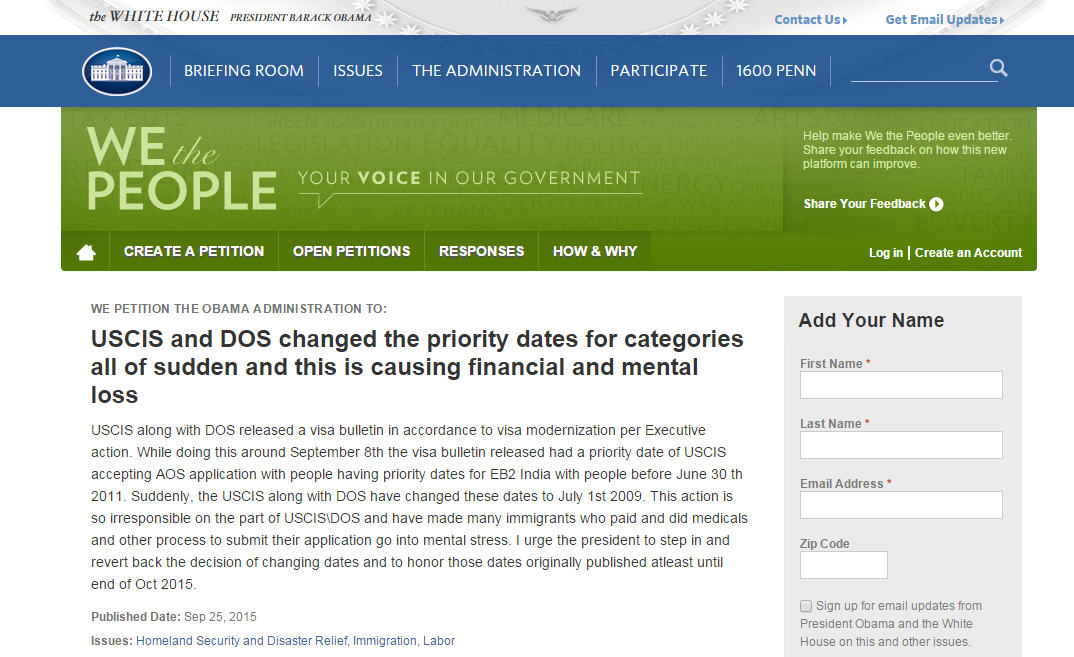
Today, on February 24, 2015, USCIS announced that effective May 26, 2015 it will extend eligibility for employment authorization to certain H-4 dependent spouses of H-1B nonimmigrants to allow them to accept employment in the U.S.

Finalizing the H-4 work authorization was an important step toward implementation of the President’s executive action initiatives announced in November 2014 for a purpose to modernize and improve our immigration system.

Not all H-4 holders will benefit from the employment authorization. Under the new regulation, eligible individuals include H-4 dependents whose H-1B spouses:

  • Are the principal beneficiaries of an approved Form I-140, Immigrant Petition for Alien Worker; or
  • Have been granted H-1B status under sections 106(a) and (b) of the American Competitiveness in the Twenty-first Century Act of 2000 as amended by the 21st Century Department of Justice Appropriations Authorization Act. The Act permits H-1B nonimmigrants seeking lawful permanent residence to work and remain in the United States beyond the six-year limit on their H-1B status.

In other words, only those H-4 dependents whose H-1B spouses are in the process of obtaining a green card through employment will be able to benefit from work authorization.

Continue reading

15558329057_8c48b4a564_z

By Ekaterina Powell, Esq.

As you may already know from reading our prior posts, on February 16, 2015, the Texas federal district court issued a preliminary injunction to stop expanded DACA (expanded guidance concerning deferred action for certain individuals who came to the United States as children) and DAPA (deferred action for the parents of U.S. citizens or lawful permanent residents) from going into effect. The case is known as Texas v. United States, the Lawsuit Challenging DAPA and DACA Expansion.

The decision came only two days before USCIS was supposed to start accepting applications under Expanded DACA guidelines issued by the President in November of 2014.

The decision was a surprise to many of those who were prepared to file their applications on February 18, 2015.

What does the preliminary injunction mean?

Since the preliminary injunction was issued, USCIS cannot accept any applications under expanded DACA, which was supposed to become effective on February 18, 2015, and will not implement its policies regarding DAPA, the program that was set to start in May 2015.

This injunction also affects those who file for extension of their existing DACA. Since expanded DACA rules have not become effective, USCIS will continue to issue employment authorization documents (EADs) for renewals of existing DACA requests for two-year periods as opposed to three-year periods.

What is a solution?

After the preliminary injunction was issued, the federal government promised to appeal the decision of the Texas district court in the Court of Appeals. However, an appeal can take a considerable amount of time and delay can detrimentally harm millions of families, causing unnecessary deportation for those who could qualify under expanded DACA and DAPA relief.

In order to prevent the harm caused by the appeal’s delays, today, February 23, 2015, the federal government filed an emergency expedited motion to stay,  pending appeal, its February 16 Order.

Continue reading

10073697206_45826e2230_z
Earlier this year, California DMV has started issuing AB 60 driver licenses, which are available to California residents regardless of their immigration status. This change became effective on January 1st, 2015.

AB 60 driver’s license can be used for personal identification and gives the right to legally drive in California but does not grant any other privileges. An AB 60 driver license looks the same as a regular driver’s license except for one feature. In the right corner, there is a pre-printed notation “Federal Limits Apply”.

If you want to get AB 60 driver license, you need to prove your identity and residency in the State of California, pass the knowledge tests and behind-the-wheel driving exams. In order to apply for AB 60 driver’s license, you need to make an appointment or visit DMV office.

7526267232_2e3a502b29_z

On Monday February 16, 2015 Judge Andrew Hanen of the U.S. District Court in Brownsville, Texas issued a preliminary injunction temporarily preventing President Obama’s executive actions on immigration (expanded deferred action) from going forward. The injunction does not make Obama’s executive actions illegal, however it does prevent the Obama administration from implementing expanded DACA and DAPA until the courts determine the constitutionality of the executive actions announced by Obama on November 20, 2014. According to Judge Hanen, 26 states brought the suit to his attention, all of whom he determined had standing to sue. A lawsuit against President Obama is expected to move its way through the court system in the coming months. The injunction claims that the President lacks the constitutional power to make such executive actions. As a result of the injunction, USCIS will no longer accept applications for DACA on February 18th the date that USCIS initially announced it would begin to accept applications. Additionally, plans to accept requests for DAPA will be suspended until further notice.

The Secretary of Homeland Security, Jeh Johnson announced that while he disagreed with the injunction, that the Department of Homeland Security would be forced to comply. Nevertheless, the Department of Justice plans to appeal on behalf of the federal government.

Will the court order affect existing DACA?

Father Holding Daughter's Hand

What is DAPA? DAPA allows eligible applicants, who do not have a criminal history, and who do not otherwise pose a threat to national security, to request deferred action having met certain conditions for a period of up to three years. DAPA allows parents of US Citizen or lawful permanent resident children to be granted an employment authorization card. DAPA also safeguards individuals against deportation.

To qualify under Obama’s executive action, an undocumented parent of a U.S. Citizen or lawful permanent resident child must meet the following conditions:

  • The applicant must have lived in the United States continuously since January 01, 2010 to the present
  • The applicant must have had a son or daughter on November 20, 2014 irrespective of age or marital status, who is either a US Citizen or lawful permanent resident
  • The applicant must have been physically present in the United States as of November 20, 2014, the date of President Obama’s announcement
  • The applicant must have had no lawful status on November 20, 2014, the date of President Obama’s announcement
  • The applicant must have been physically present in the United States on November 20, 2014 and at the time of requesting DAPA with USCIS

If you have been convicted of any of the following you may not be eligible for DAPA:

  • Felony
  • Misdemeanor or three or more other misdemeanors
  • Are a threat to national security
  • Are an enforcement priority for removal

When Can I Apply? Currently applications are not being accepted, however USCIS has indicated that requests for DAPA will begin to be accepted in mid to late May of this year.

Continue reading

15191703100_08df063499_z

This week the White House announced that President Obama’s executive action on immigration could stimulate California’s economy as much as $27.5 billion. According to White House advisor Cecilia Muñoz, the executive action could potentially increase wages and productivity in one of the country’s largest economies. The White House Council of Economic Advisors estimates the executive action could raise the country’s gross domestic product up to a figure of $90 billion over the next ten years.

This is not surprising given that Obama’s executive action will allow eligible applicant’s to receive employment authorization cards, thereby expanding the labor force and allowing immigrants the flexibility of seeking new jobs that were not previously available to them. A young, vibrant, employed immigrant population is sure to spark innovation and entrepreneurship at a rate that was not previously available with the restrictive DACA program. The order will allow some foreign workers who are occupying high-skilled fields the ability to benefit from employment portability while awaiting their permanent residency status. The acquisition of work permits will allow eligible immigrants to obtain better paying jobs. Higher incomes would result in greater expenditures and therefore a higher amount of taxes paid.

An analysis published by the President’s Council of Economic Advisers (CEA) revealed that the executive actions on immigration would boost economic output by an estimated figure of 0.4 to 0.9 percent over a period of time years, increasing the country’s GDP from $90 billion to $210 billion by 2024. By allowing foreign workers to come out of the shadows, the productivity of the American workforce as a whole will increase, since workers will find jobs that are best suited to their skills and potential. The White House contends that this labor shift will also allow native workers to specialize in jobs that are best suited to their skills and ability. Altogether, greater productivity and a larger workforce will result in: wage increases for all workers, increased tax revenues, and a reduction of the deficit. The analysis makes the claim that the executive actions would not adversely affect employment options for native workers. To read the complete publication please click here.

Continue reading

Capitol
Today, January 14, 2015 the Republican-led House of Representatives made their first step toward attempting to dismantle major provisions of Obama’s executive order, an order which will make millions of undocumented immigrant’s eligible for employment authorization and will prioritize deportations based on criminal history. For those who believe all Republicans will be supporting the vote, think again. Many republicans have voiced their concern in the House, fearing that the GOP will have to endure backlash from the immigrant and more liberal population for many years to come. Democrats have said that they will filibuster the bill, while some reluctant Republicans plan on joining the ranks of the opposition. It is very unlikely that there will be enough votes, for the bill to gain momentum, and of course Obama will not be giving his support by signing the bill. The existence of the bill indicates that there is a lack of consensus between Republicans and Democrats as to what comprehensive immigration reform will look like and how far each party is willing to push the envelope.

The majority of Republicans simply do not believe the order is within the purview of Obama’s executive powers and do not want the President overstepping his boundaries. The bill however is helpful in that it has stimulated much debate between the parties which is exactly what is needed to bring about bipartisan support for comprehensive immigration reform. The House will be discussing the budget it will appropriate to the Department of Homeland Security, which will run out of congressional funding at the end of February. Congress can use the power of the purse to their benefit and withhold financing, in opposition of Obama’s executive order.

All in all, 26 House Republicans voted in opposition to an amendment that would end Obama’s 2012 executive order which allowed undocumented immigrant children, known as Dreamers, to stay in the country legally. The amendment passed 218 to 209, all votes from Republicans. The funding bill for the Department of Homeland Security passed 236 to 191. Further amendments of the bill are expected. What is clear: Republicans are making their voice heard. We will keep you updated on the final outcome in the coming months.

imagePresident Obama closed off the year by announcing his highly anticipated executive action on November 20, 2014 which will go into effect early this year, but the executive action was only one of many important initiatives that occurred in 2014.

2014 was a big year for immigrants for several reasons:

  • AB 60 California Driver’s License Applicants: Beginning January 01, 2015 undocumented immigrants can start the process of obtaining their driver’s licenses under AB 60 at their local DMV field office
  • Executive Action: Beginning February 2015, eligible applicants can apply for the expanded DACA program which shields undocumented individuals from deportation who were brought to the United States illegally as children, our office will be providing you with further updates early this year
  • Beginning May 2015 eligible parents of U.S. Citizens and lawful permanent residents can apply for deferred action thereby protecting them for deportation and allowing millions of parents to be eligible for employment authorization

Continue reading

431619249_af1d2a3929_z


President Obama’s executive action announced on November 20, 2014 fell short in many ways than one for many people residing in the United States—both legally and illegally. Though a marginalized few have been allowed to come out of the shadows, some of the world’s best and brightest have been completely ignored by the executive action altogether. The United States would be quite a different place without our hard working immigrant population and without our foreign born innovators, movers, and shakers.

Obama’s announcement on November 20th notably left out any indication that the creation of a more expedient and efficient system would be considered— through which highly skilled and highly capable foreign workers would be able to more easily attain permanent residency and visas. Industry leaders in areas such as the Silicon Valley, seeking to employ such highly skilled and highly capable foreign workers for their startup companies, have expressed their concerns, forming groups such as FWD.us, albeit with the knowledge that Congress must act in order for an all-encompassing solution to be reached.

Though Obama’s speech shed little light on the topic, a memorandum released by the U.S. Department of Homeland Security following the speech is much more informative. The memorandum announces that inventors, researchers, and founders of start-up enterprises who do not qualify for a national interest waiver, but who have been awarded what is considered ‘substantial’ financing by a U.S. investor OR who ‘hold the promise of innovation and job creation through the development of new technologies or the pursuit of cutting edge research’ can attain parole authority under section 212(d)(5) of the INA,6 on a case-by-case basis after being assessed by the DHS. Possessing parole in this situation would authorize extraordinary inventors, researchers, or start-up entrepreneurs to temporarily conduct their research or development of innovative ideas or their business while in the United States.

Continue reading

14257053711_9f4f51b925_z

Beginning January 02, 2015 in the state of California, undocumented immigrants will be able to benefit from Assembly Bill 60, The Safe and Responsible Driver Act enacted in 2013. Beginning immediately, undocumented driver’s license applicants, will be able to schedule an appointment on or after January 02, 2015 with their local DMV by calling 1-800-777-0133, online on the California DMV website www. dmv.ca.gov, or via their smart phones on the DMV NOW iPhone and Android applications.

Applicants should make sure to comply with the following in order to obtain their ‘original’ driver’s licenses:

  • Study for the driver license exam
  • Complete a driver license application form (DL 44) available at the DMV office
  • Under AB 60, applicants will need to provide DMV with:

Continue reading