Articles Posted in Executive Actions

10753794774_02490d652f_z

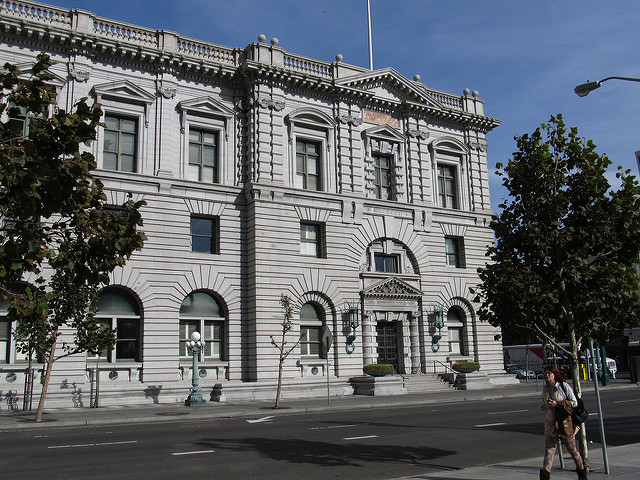
Ninth Circuit Court of Appeals San Francisco, CA

A three-judge panel from the Ninth Circuit Court of Appeals has unanimously ruled that the President’s Executive Order “Protecting the Nation from Foreign Terrorist Entry into the United States” banning the entry of immigrants and non-immigrants from seven Muslim-majority countries will not be reinstated. The Court refused to reinstate the Order after hearing oral arguments from the solicitor general of Washington state arguing for the states of Washington and Minnesota, and counsel from Washington D.C. The panel was tasked with reviewing a temporary restraining order (“TRO”) that was handed down by a federal judge from Seattle, an order which brought President Trump’s Executive Order “Protecting the Nation from Foreign Terrorist Entry into the United States” to a screeching halt. Since then several lawsuits have been filed against the President’s executive order and are making their way through the courts.

The Court considered four central questions before reaching their decision:

  • Whether the stay applicant “Government” has made a strong showing that he is likely to succeed on the merits;
  • Whether the applicant “Government” will be irreparably injured absent a stay;
  • Whether issuance of the stay will substantially injure the other parties interested in the proceeding and;
  • Where the public interest lies.

The Court concluded that the government failed to satisfy the first questions, and that arguments made by the government’s attorney in support of the last two questions did not justify the issuance of a stay to lift the temporary restraining order and reinstate the Executive Order. The Court reasoned that the government failed to show that it would be likely to succeed on appeal, noting the seriousness of the allegations raised by the States regarding religious discrimination and significant constitutional questions. In a powerful statement the Court noted that “the government has pointed to no evidence that any alien from any of the countries named in the Order has perpetrated a terrorist attack in the United States.” The Court further stated that the States “offered ample evidence that if the Executive Order were reinstated even temporarily, it would substantially injure the States and multiple other interested parties.”

Continue reading

8720728323_1bf3dec7d1_z

Following a dramatic turn of events, on Friday, February 3, 2017, a federal judge from the Western District of Washington, issued a Temporary Restraining Order (“TRO”) halting enforcement of the President’s Executive Order entitled “Protecting the Nation from Foreign Terrorist Entry into the United States” nationwide. The temporary restraining order was issued in response to an emergency motion filed by the state of Washington and Minnesota. The states collectively filed the motion seeking declaratory and injunctive relief against the controversial executive order which bans the entry of immigrant and non-immigrant foreign nationals from seven Muslim-majority countries (Syria, Iraq, Iran, Libya, Somalia, Sudan, and Yemen) for a 90-day period, suspends the U.S. Refugee Admissions Program for a 120-day period, and terminates the Syrian refugee program indefinitely.

In his ruling, Judge Robart stated that after hearing arguments, the States adequately demonstrated that they have suffered immediate and irreparable harm because of the signing and implementation of the order, and that granting a TRO would be in the public interest. In addition he stated “the Executive Order adversely affects the States’ residents in areas of employment, education, business, family relations, and freedom to travel. These harms extend to the States. . . are significant and ongoing.” A three-judge panel from the Ninth Court Court of Appeals is expected to issue a final ruling on the Executive Order tomorrow.

Continue reading

32473146652_bb782aab20_z

In today’s post, we will discuss how green card holders may be affected by President Trump’s Executive Order imposing a temporary travel ban on foreign nationals of seven Muslim-majority countries (Iraq, Syria, Iran, Sudan, Libya, Somalia, and Yemen), including green card holders as well as non-immigrants. Since the release of the Executive Order, several courts have issued temporary injunctions preventing green card holders (LPRs), legally authorized to enter the United States, from being detained and/or removed from the United States until a federal court can decide the constitutionality of the orders.

In response to these court orders, the Department of Homeland Security and Customs and Border Protection (CBP) has provided further guidance on the enforcement of these actions, and the impact on green card holders from these seven Muslim-majority countries. While both agencies have indicated that they are complying with the court orders, the consensus is that immigration officials will continue to enforce President Trump’s Executive Orders, and they will continue to remain in place.

What does this mean for green card holders? The Secretary of the Department of Homeland Security has stated that the entry of lawful permanent residents remains in the national interest, therefore “absent receipt of derogatory information indicating a serious threat to public safety and welfare,” lawful permanent resident status will be a deciding factor in allowing an LPR entry. The entry of lawful permanent residents will continue to be discretionary and green card holders will be evaluated on a case-by-case basis.

Continue reading

481127781_db85f31ce7

Yesterday, January 29, 2017 the Department of Homeland Security released a statement regarding President Trump’s executive order “Protecting the Nation from Terrorist Attacks by Foreign Nationals” which barred the entry of both immigrant and non-immigrant foreign nationals from 7 majority Muslim countries and suspended entry of Syrian refugees until proper vetting and security mechanisms could be put in place. The Department commented on the impact of a federal court order issued Saturday night which temporarily suspends enforcement of the executive order, until a federal judge can rule on its legality.

In their statement, the Department of Homeland Security noted that “upon issuance of the court order . . . U.S. Customs and Border Protection (CBP) immediately began taking steps to comply with the orders. Concurrently, the Department of Homeland Security continues to work with our partners in the Departments of Justice and State to implement President Trump’s executive order on protecting the nation from foreign terrorist entry into the United States. We are committed to ensuring that all individuals affected by the executive orders, including those affected by the court orders, are being provided all rights afforded under the law.  We are also working closely with airline partners to prevent travelers who would not be granted entry under the executive orders from boarding international flights to the U.S. Therefore, we do not anticipate that further individuals traveling by air to the United States will be affected.”

Continue reading

9613483141_0df8534105_z

Yesterday, January 27, 2017, President Donald Trump signed and handed down the controversial executive order, “Protecting the Nation from Terrorist Attacks by Foreign Nationals” on immigration to protect the nation from terrorist attacks by foreign nationals. Among its main provisions the order suspends IMMIGRANT AND NON-IMMIGRANT entry of foreign nationals from countries of “particular concern” including Syria, Iraq, Iran, Libya, Somalia, Sudan, and Yemen for 90 days, indefinitely suspends Syrian refugees from entering the United States until the U.S. refugee admissions program has been overhauled, and terminates the visa waiver interview process. The temporary ban will affect all non-U.S. Citizens from Syria, Iraq, Iran, Libya, Somalia, Sudan, and Yemen including green card holders and valid U.S. visa holders. Foreign nationals of these countries will not be allowed to return to the United States for a period of 90 days, after temporary foreign travel, even if they are green card holders or visa holders. For this reason, if you are a foreign national from one of these countries, you should not engage in temporary foreign travel until the temporary ban has been lifted. Visa and green card holders already in the United States will be allowed to remain without problems.

An exemption has been drawn for immigrants and legal permanent residents whose entry is in the U.S. national interest, however it is not yet clear how that exemption will be applied.

Below is a summary of the main provisions of the order per the OFFICIAL signed copy.

To read the complete version please click here.

  1. Suspension of Issuance of Visas and Other Immigration Benefits to Nationals of Countries of Particular Concern
  • The immigrant and nonimmigrant entry into the United States of aliens from countries designated (including Syria, Iraq, Iran, Libra, Somalia, Sudan, and Yemen) is suspended for 90 days from the date of the order January 27, 2017 (excludes foreign nationals traveling on diplomatic visas, North Atlantic Treaty Organization visas, and C-2 visas for travel to the United Nations). This means that if you are a citizen of a country of “particular concern” as outlined above, you will NOT be allowed to re-enter the United States, after temporary foreign travel, until the ban has been lifted, even if you are a legal permanent resident (immigrant) or holder of a valid visa. If you are a foreign national of one of the above countries and you are an immigrant (green card holder) or non-immigrant (valid visa holder), you must NOT travel internationally. Otherwise, you will risk being denied re-entry.
  • The Secretary of State and Homeland Security may submit to the President the names of additional countries who pose a security risk and are recommended for suspension.
  • The Secretary of Homeland Security, in consultation with the Secretary of State and the Director of National Intelligence, must immediately conduct a review to determine the information needed from any country for adjudication of any visa, admission, or other benefit under the INA adequate to confirm the identity of the individual seeking the benefit and ensure that they are not a security or public-safety threat to the United States.

Continue reading

32526771855_f1e4ccf6f8_z

President Donald Trump is expected to hand down a controversial Executive Order on immigration within the coming days to protect the nation from terrorist attacks by foreign nationals. Although the Trump administration has not made a formal announcement regarding the proposed order yet, a leaked, unsigned copy of the President’s order has been making the rounds. We do not know whether the President has made any modifications to the order since its leak, and we do not know when exactly the order will be issued. One thing is clear, an executive order on immigration is imminent. It is rumored that the executive order will include a temporary ban on refugees, the suspension of issuance of visas for citizens of Syria and six other Middle Eastern and African countries, which are rumored to include Iraq, Iran, Libya, Somalia, Sudan and Yemen, collectively referred to as “countries of particular concern,” as well as the end of Syrian refugee processing, and the visa interview waiver program.

The passage of such an executive order although extremely controversial and unpopular, would be within the President’s executive power, if his administration determines that limiting refugee admissions temporarily and restricting the issuance of visas to persons from specific countries is of significant public interest to the United States to combat the war on terror. The administration would need to balance our country’s need to secure its borders against terrorism with the need to resolve the global humanitarian crisis we face today. Donald Trump has already passed a series of executive orders on border security and immigration enforcement authorizing the construction of a U.S.-Mexico border wall, withholding federal grant money for sanctuary cities, hiring 5,000 Border Patrol agents, reinstating local and state immigration enforcement partnerships, and ending the “catch-and-release” policy for undocumented immigrants.

The leaked copy of the executive order “Protecting the Nation from Terrorist Attacks by Foreign Nationals” gives two policy reasons for enacting the executive order. First, the purpose of the order is to protect American citizens from foreign nationals who intend to enter the United States to commit acts of terrorism. Second, the order serves to prevent the admission of foreign nationals who intend to enter the United States to “exploit” the country’s immigration laws for malevolent purposes. The order highlights that following the September 11 attack on the World Trade Center, hundreds of foreign nationals have successfully entered the United States on an asylum, visitor, student, or employment visa, and have been subsequently convicted or implicated in terrorism related crimes. The order goes on to blame the State Department’s consular officials for their failure to scrutinize the visa applications of the foreign nationals who went on to commit the September 11 attacks, which resulted in the deaths of thousands of Americans.

The main provisions of the leaked order “Protecting the Nation from Terrorist Attacks by Foreign Nationals” are as follows:

Continue reading

8589969101_af962f711d_z

On Friday December 9, 2016, Democratic Senator Dick Durbin of Illinois, and Republican Senator Lindsey Graham of South Carolina, introduced the “Bar Removal of Individuals who Dream and Grow our Economy” BRIDGE act before Congress to protect Dreamers from deportation, and allow them to keep the temporary employment authorization (EAD) they currently possess. This legislation was introduced to provide temporary relief to the young, undocumented, immigrant population that was issued Deferred Action for Childhood Arrivals (DACA) or “deferred status” by President Barack Obama in 2012. Amid mounting pressure to protect the existing DACA program, as well as feelings of fear and uncertainty surrounding the future of the program, several Democratic and Republican Senators have come together to save the program from the Trump administration including Senators Dianne Feinstein, Lisa Murkowski, and Jeff Flake. As you may remember, DACA was first introduced by President Obama in 2012 to provide undocumented immigrants who came to the United States at a young age, the opportunity to apply for employment authorization, and be protected from deportation. DACA is not a form of amnesty, and does not provide a path to permanent residency or citizenship. DACA recipients, commonly referred to as “Dreamers” in the media, are undocumented persons who came to the U.S. as young children, and are pursuing the American Dream through higher education or military service in the United States.

Last week, just before Congress went into recess before the winter holiday, Senator Graham along with other Senators introduced the “Bar Removal of Individuals who Dream and Grow our Economy” (BRIDGE) act which will give current DACA holders “provisional protected presence” for a three year period, as well as undocumented persons who are eligible for the program, but who have not yet applied.  Although this act is not a revelation, given that this “provisional protected presence” sounds a lot like “deferred status” which DACA has already conferred upon DACA recipients, the legislation does promise to protect this population of undocumented immigrants from deportation, and allow them to continue living, working, and studying in the United States without the need to fear deportation. The criteria will also be the same as the eligibility criteria for the DACA program. At the very least this piece of legislation if passed, will protect current DACA holders from losing the temporary employment authorization they already possess, and will shield young undocumented people who would otherwise be eligible for the program, from deportation under the Trump administration.

Continue reading

8730510414_5b1c164d98_c

On September 21, 2016 the United States Citizenship and Immigration Services (USCIS) posted the adjustment of status filing dates for October 2016.

If you are waiting to apply for permanent residence based on an approved family-sponsored petition (I-130) or based on an approved employment-based petition (I-140), USCIS has advised that you refer to the ‘Dates for Filing Applications’ chart on the October Visa Bulletin to determine when to file your application for permanent residence according to your priority date (the date when your relative or employer properly filed your immigrant visa petition with USCIS) and your preference category. Generally, applicants who have filed the immigrant petition and have been approved, must wait in line until an immigrant visa becomes available, before seeking adjustment of status to permanent resident. This is because availability of immigrant visas for certain classes of immigrants are limited. These preference categories appear in the Visa Bulletin, as well as the number of visas available for each preference category.

Note: For employment-based petitions if a labor certification is required to be filed with your immigrant visa petition, the priority date is the date the labor certification application was accepted for processing by the Department of Labor.

What is the Visa Bulletin and the Dual Chart System?

Every month, the Department of State releases a monthly Visa Bulletin which provides estimates on immigrant visa availability according to family-sponsored and employment-based preference categories. As you may recall, in September of last year, USCIS introduced a new chart called the ‘Dates for Filing Applications’ chart in addition to the ‘Application Final Action Date’ chart. Together this dual chart system governs when applicants may file their applications for permanent residence according to visa availability, the applicant’s preference category, and the date of filing (priority date).

Continue reading

Men in a Huddle

On June 15, 2012 President Barack Obama first unveiled the Deferred Action for Childhood Arrivals (DACA) initiative to the world. In his 2012 announcement the President divulged that the DACA initiative would allow certain undocumented individuals who came to the United States as children the opportunity to be shielded from deportation and the right to a temporary work permit. To be eligible individuals were required to meet several guidelines to receive ‘deferred action’ for a period of two years, subject to renewal. USCIS began to accept applications for the DACA initiative on August 15, 2012.

At its core, ‘deferred action’ is the use of prosecutorial discretion to defer removal from the United States for a certain period of time. Although deferred action grants such deferment, it does not provide the individual lawful status and it is not a path to permanent residency.

On November 20, 2014 the President unveiled two initiatives that would expand the population eligible to obtain Deferred Action. Additionally, the President announced a new initiative called Deferred Action for Parents of Americans and Lawful Permanent Residents (DAPA). To be eligible for the expanded DACA program applicants were required to a) have entered the United States before the age of 16; b) demonstrate continuous residence in the United States since January 1, 2010; and pass required background checks. The initiative would also extend the period of ‘deferred action’ and work authorization to three years rather than two years.

Similarly, parents of U.S. Citizens and LPRs would be also be eligible for deferred action and employment authorization for a three-year period if a) they could demonstrate continuous residence in the United States since January 1, 2010 and b) pass required backgrounds checks. On February 16, 2015 just two days before applications would begin to be accepted for the expanded DACA and DAPA programs, a temporary injunction halted these programs from going into effect. The controversy that followed regarding these programs led to a federal lawsuit known as United States v. Texas which made its way to the Supreme Court of the United States. There the Supreme Court deadlocked in a 4-4 vote preventing these programs from going into effect.

Continue reading

6071512063_e265d65eba_z

Today the Supreme Court of the United States dealt a strong blow to President Barack Obama’s executive actions on immigration issuing a single one-line decision on the ruling “the judgment of the lower court is affirmed by an equally divided court.” Nearly two years ago, President Obama announced a series of executive actions on immigration after the Republican controlled House of Representatives refused to tackle the issue of comprehensive immigration reform. As part of his executive actions on immigration, President Obama announced the expansion of the Deferred Action for Childhood Arrivals (DACA) program, and introduced a new program known as Deferred Action for Parents of Americans and Lawful Permanent Residents, (DAPA) designed to shield nearly five million undocumented immigrants from deportation. Following these initiatives, USCIS announced that applications for expanded DACA and the new DAPA program would begin to be accepted on February 18, 2015.

The DACA program would have expanded the population eligible for the Deferred Action for Childhood Arrivals (DACA) program to people of any current age who entered the United States before the age of 16 and lived in the United States continuously since January 1, 2010, and extending the period of DACA and work authorization from two years to three years. The new DAPA program would have granted parents of U.S. Citizens and lawful permanent residents the opportunity to request deferred action and employment authorization for a three year period, on the condition that they have lived in the United States continuously since January 1, 2010 and pass required background checks.

On February 16, 2015 just two days before the programs were scheduled to go into effect, Texas along with 25 other states, filed a temporary court injunction ultimately suspending both programs from going into effect. This action prompted the Obama administration to intervene. For months, the federal government and the State of Texas battled one another in federal court. The court ultimately determined that Texas and at least 25 other status had sufficient ‘standing’ to challenge these programs. In response, the federal government filed an emergency motion to stay, however the motion was eventually denied by the court. This led the government to file a writ of certiorari before the Supreme Court. The fate of Obama’s executive actions grew all the more uncertain with the sudden death of conservative Supreme Court Justice Antonin Scalia on February 13th.  President Obama made desperate attempts to fill the vacated seat by nominating Merrick Garland to the Supreme Court, the Chief Judge of the United States Court of Appeals for the District of Columbia. Efforts to fill the seat were unsuccessful as Republicans vowed to keep Garland from sitting on the bench. Thus, Scalia’s death left behind an eight-person bench, and with no one to fill his seat, the growing possibility of a deadlock within the Supreme Court.

Continue reading