Articles Posted in LCA

9033805851_a19992134e_z

On Thursday, December 31, 2015 the Department of Homeland Security published a new proposed rule affecting highly skilled immigrant and non-immigrant workers alike. The proposed rule, introduced in last week’s federal register, aims to improve the ability of American employers to hire and retain highly skilled workers waiting to receive their employment-based lawful permanent residence in the visa bulletin backlogs. Additionally, the proposed rule aims to enhance opportunities for such workers allowing them to be more easily promoted, to accept lateral positions with their current employers, change employers, and pursue other employment. While the proposed rule is not groundbreaking, it does address important challenges employers and their highly skilled workers have faced as the law stands today and makes recommendations for such relief. The proposed rule will be open for comment until February 29, 2016.

You may remember that on November 20, 2014 the President highlighted, as part of his executive actions on immigration, that the employment-based immigration system needed to be amended to modernize, improve, and clarify immigrant and nonimmigrant visa programs in order to create more jobs, foster innovation at home, retain a highly skilled workforce that would allow the United States to compete with other countries, and to stimulate the American economy overall.  In order to modernize the employment based immigration system, USCIS would be required to work with the Department of State to modernize and simplify the immigrant visa allocation process. Part of this process would require the Department of State to make reasoned projections of employment-based immigrant visa availability on the visa bulletin, that could be relied upon by employers and their highly skilled workers.

Presently, immigrant workers from India and China are experiencing extraordinary delays in the employment-based queue for permanent residence, while other highly skilled workers are forced to wait over a five-year period to receive company sponsorship and lawful permanent residence. Furthermore, such workers are forced to remain on temporary employment-sponsored visas in the United States while waiting for an immigrant visa to become available to them. This puts the immigrant worker in a predicament giving the employer the upper hand, while restricting the employee from seeking advancement and discouraging new employment, since this would require the employer to file a new petition and incur the expensive fees required for filing. Highly skilled works facing extortionate delays in the visa backlogs have experienced hindered employer/employee career advancement and job mobility. The new rules will provide limited relief in this area.

Continue reading

9319698471_083278482d_zThis week USCIS and the Department of Homeland Security (DHS) announced the addition of sixteen new countries that will be eligible to participate in the H-2A and H-2B visa programs next year. Nationals from the following countries: Andorra, Belgium, Brunei, Colombia, Finland, France, Germany, Greece, Lichtenstein, Luxembourg, Malta, Monaco, San Marino, Singapore, Taiwan, and Timor-Leste will join sixty-eight other countries already participating in the H-2A and H-2B programs. Foreign nationals from these countries can apply for the H-2A and H-2B programs beginning January 18, 2016. If a country fails to meet the requirements for continued designation of these benefits, DHS reserves the right to remove any country from the list of eligibility, as it did recently with the country of Moldova and the H-2B program. Moldova may still continue to participate in the H-2A program since it has proven compliant with the necessary standards regulating the H-2A program. USCIS may consider other foreign nationals for the H-2A and H-2B programs even if their countries do not participate in these programs on a case by case basis.

Continue reading

10396442325_d0fe47943a_z

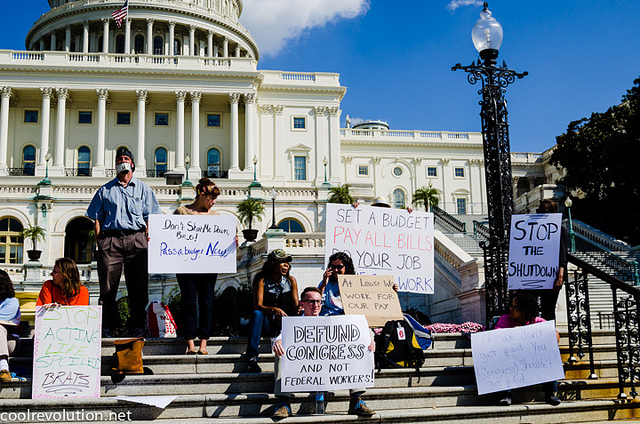
On Monday the Senate will be voting on a short-term spending bill introduced by Senate Appropriations Committee Chairman Thad Cochran. If passed, the bill will temporarily fund the government through December 11th of this year. If the bill is not passed, the country will face a government shutdown beginning on October 1, 2015. The temporary funding bill called a continuing appropriations resolution will be required to keep government agencies afloat for the remainder of the year. Congressional Republicans and Democrats have been at odds with one another since the Planned Parenthood scandal was brought to light. The non-profit organization’s involvement in the practice of procuring tissues from aborted fetuses for the purpose of medical research has been deeply contested by Republicans, who believe Planned Parenthood should no longer receive federal funding. Due to this impasse, no resolution bill has yet been agreed upon.

Repercussions on Immigration: LCA’s and PERM applications

A government shutdown would mean that various government agencies may not be operating at full capacity. Due to this we urge our clients to file urgent Labor Condition Applications or PERM applications prior to October 1, 2015. While the shutdown will have an effect on the economy, families, and business throughout the country, entities not affected by the government shutdown include USCIS, the military, airport security, FBI, Border Patrol, Social Security, Medicare, Medicaid, Food Stamps, among others.

Continue reading

5790405952_4e6dee6274_z
It is our pleasure to provide our readers with newly released statistics published by the Department of Labor’s Office of Foreign Labor Certification concerning the processing status of the PERM program and Prevailing Wage Determinations. The PERM graphic provides a breakdown for the review of applications certified during FY 2015 by the top 5 occupations, site states, industries, visa classifications, countries of citizenship, and minimum educational requirements. The graphic concerning the National Prevailing Wage Center outlines the determinations requests received for the H-1B program H-2B program, and PERM program FY 2015, breaks down prevailing wage actions, and issuance of prevailing wage determinations for PERM top 5 employers and occupations, H-1B top 5 employers and occupations, and H-2B top 5 employers and occupations.

PERM Graphic

Prevailing Wage Graphic

11400978_10153396425248766_3904864215081914789_n

Presently, attorneys Jacob Sapochnick, Esq., Ekaterina Powell, Esq., and Yingfei Zhou, Esq. from our office are in attendance at the 2015 American Immigration Lawyers Association (AILA) Conference on Immigration Law taking place in Washington, DC. Together, they have had the privilege of being present for an open forum where officials from the Department of State and the National Visa Center provided valuable information in regards to modernization of PERM, improvements in visa processing at the National Visa Center, technical issues experienced at U.S. Consulates abroad, H-1B fee announcements, and more!

Technical issues experienced at U.S. Consulates worldwide

1. In regards to technical issues causing delays in visa issuance at U.S. Consulates worldwide, visa issuance is currently frozen. No visas are currently being issued at any U.S. Consulates worldwide. U.S. Consulates are rescheduling appointments for visas that were affected by the technical issues. The DOS is working to repair the hardware, however it will not be until next week when all issues will be resolved. Due to this, there will be a backlog for visa issuance and it will take longer to schedule a consular appointment for a visa.

2. If a visa applicant was affected by the technical issues at a U.S. Consulate abroad and they need to retrieve their passport urgently, they will be able to retrieve their passport, however, in doing so, applicants will forfeit the visa fees they have paid, and will be issued a 221(g) visa denial letter. If applicants are still interested in receiving a visa, they must re-apply and re-pay any visa fees. Applicants who are re-applying must note on future applications that their visa was denied due to a technical glitch. Applicants from visa waiver countries who are concerned that the visa denial will automatically result in an ESTA denial can rest assured. ESTA submissions will not be denied based on the technical glitch. DOS has responded that the technical issues will not affect future visa applications. Continue reading