Articles Posted in Immigrant Visas

32587304895_da91aba89f_z

With only three days left until enforcement of President Donald Trump’s newly revised executive order “Protecting the Nation from Foreign Terrorist Entry into the United States,” Democratic legislators and immigration advocacy groups are rushing to file litigation in opposition of the new order. Although the new executive order has removed some of its controversial provisions, the essential components of the original order have remained the same. For example, the order continues to call for a 90-day travel ban on citizens of Syria, Iran, Libya, Somalia, Sudan, and Yemen who are outside of the United States on March 16, 2017 and who do not possess a valid U.S. visa or permanent resident card as of the date of the order. The order also calls for a travel ban on all refugees and suspension on all decisions for applications for refugee status for 120-days.

The new order has now removed Iraq from the list of countries affected by the travel ban and has removed the provision banning the admission of Syrian refugees indefinitely. The language of the newly revised version also makes clear that citizens of these 6 affected countries, who are legal permanent residents or who have valid U.S. visas as of the date of the order, will not be prevented from seeking admission to the United States. Citizens of these countries who do not already have a U.S. visa or green card on the date of the order will not be admitted until the temporary ban has been lifted. In addition, the new order exempts foreign nationals who are admitted into the United States on or after March 16, 2017, as well as dual nationals traveling on a passport issued by an unaffected country, and individuals traveling on diplomatic visas. The order also carves out a provision that allows qualifying individuals to apply for a waiver if they can demonstrate to the satisfaction of the US official that their country would cause them undue hardship or that that they are not a threat to national security, and that their admittance is in the national interest. It seems however that these waivers will be rarely issued and difficult to obtain, unless the U.S. official determines that the foreign national’s admittance is in the national interest.

Continue reading

32649529442_22f0c3b000_z

Beginning April 3, 2017, the United States Citizenship and Immigration Services (USCIS) will temporarily suspend expedited processing of H-1B visas, a service previously available to H-1B petitioners known as premium processing. The reason: to reduce overall H-1B processing times and prioritize processing of H-1B extensions nearing the 240-day mark. Premium processing previously guaranteed a 15-day processing time, or refund of the $1,225 premium processing fee. Although premium processing did not increase a petition’s chances of being selected for an H-1B visa, it gave petitioners the benefit of waiting a shorter period and allowed selected petitioners the option of upgrading their application to premium processing after filing.

Petitioners will not have the option of paying for the premium processing service for a period of at least 6 months beginning April 3, 2017. The suspension will affect all H-1B petitions filed on or after April 3, 2017 including all petitions filed for the FY18 H-1B regular cap and master’s advanced degree cap exemption. Additionally, the suspension may affect petitions that are cap-exempt, but will not apply to other eligible nonimmigrant classifications filed with Form I-129.  While the premium processing service is suspended, petitioners may not file a request for premium processing (I-907) for an I-129 Petition for H-1B worker until USCIS has announced that it has resumed premium processing for H-1B petitions. Beginning April 3, 2017 if a petitioner submits a single check combining fees for premium processing and the Form I-129 USCIS will reject both applications (not just the request for premium processing). To avoid this DO NOT submit any premium processing requests on or after April 3, 2017.

Continue reading

33013577331_8bd268194d_z

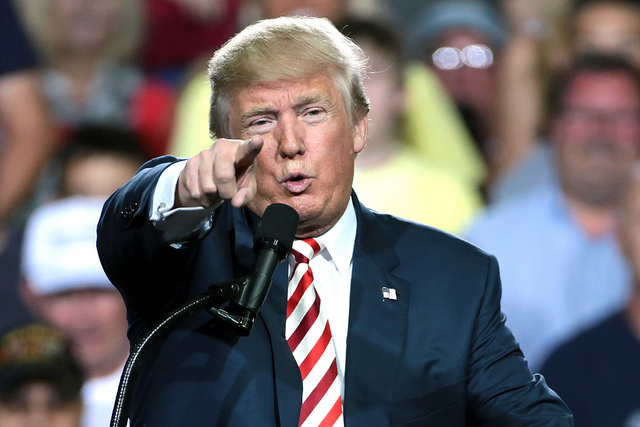
On Tuesday, February 28, 2017 the President of the United States Donald Trump addressed a joint session of congress for the first time ever delivering a unifying message to the American people. In his speech Donald Trump softened his stance on immigration while at the same time remaining true to his campaign promises.

On the topic of immigration, Donald Trump first discussed the creation of a Task Force to Reduce Violent Crime headed by the Department of Justice. Additionally, he stated that under his orders, the Department of Homeland Security, and Justice, the Department of State and Director of National intelligence will implement a plan to combat organized crime and the war on drugs. Trump pledged that he would work to dismantle criminal cartels and prevent them from bringing drugs into the country.

Second, Trump promised to keep his campaign promise to enforce the immigration laws of the United States and increase border security to “restore integrity and the rule of law at our borders.” He added, “We want all Americans to succeed, but that can’t happen in an environment of lawless chaos.”

Third, Trump called for the construction of a wall along our Southern border with Mexico to deter undocumented immigrants from entering the United States and to deter drug dealers and criminals from entering the United States and committing acts of violence. To his critics, Donald Trump posed the following question, “What would you say to the American family that loses their jobs, their income, or their loved one because America refused to uphold its laws and defend its borders?”

Continue reading

32876675381_f3e46f3cd9_cWe would like to wish our clients a very happy Presidents Day! Please remember that our office is closed in observance of the holiday, but will reopen tomorrow. To read more about the services we offer please visit our website.


7082659515_37d1ee154a_b

Last week, United States Immigration and Customs Enforcement (ICE) launched a series of immigration enforcement operations nationwide, otherwise known as “raids” to crack down on illegal immigration. The operations took place over a five-day period in the metropolitan cities of Los Angeles, Chicago, Atlanta, San Antonio, and New York City, and resulted in the arrest of more than 680 individuals. According to the Department of Homeland Security, these raids were targeted at convicted criminals unlawfully present in the United States, persons who are a threat to our public safety, including gang members, and “individuals who have violated our nation’s immigration laws” by illegally re-entering the country after having been removed, including fugitives who could not be found after having been ordered removed by federal immigration judges. Additionally, DHS reported that of those who were arrested, approximately 75 percent were criminal aliens, convicted of crimes including “homicide, aggravated sexual abuse, sexual assault of a minor, lewd and lascivious acts with a child, indecent liberties with a minor, drug trafficking, battery, assault, DUI and weapons charges.”

Communities across the United States went into uproar, after reports began pouring in that hundreds of non-threatening individuals including mothers and children were being taken into custody and removed from the United States during these operations. One of the first such individuals to be arrested was Guadalupe Garcia de Rayos, a Mexican mother of two U.S. Citizen children, who was detained by ICE at a routine check point in Phoenix, after having lived 20 years in that state. Garcia de Rayos had come to the United States illegally as a child. She was arrested during a 2008 raid on her Arizona workplace on suspicion that the business was hiring undocumented immigrants using fraudulent IDs. Garcia de Rayos was taken into custody six months later, when investigators discovered discrepancies in her employment documents. She pled guilty in 2009 to criminal impersonation and was sentenced to 2 year’s probation. Despite these offenses, Guadalupe was considered to be a “low priority” of enforcement and was required to check in with immigration officials.

After news broke of her arrest, the Mexican Foreign Ministry issued a statement urging Mexican nationals to contact the Mexican consulate for immigration assistance, information relating to their immigration rights, and protections offered to them by the Center for Information and Assistance to Mexicans (CIAM). According to the Foreign Ministry, Mexican consulates in the United States have allocated additional resources to protect the rights of Mexican nationals. The Foreign Ministry added that they anticipate these immigration raids will increase in severity and are likely to violate the due process of rights of Mexican nationals.

Continue reading

10753794774_02490d652f_z

Ninth Circuit Court of Appeals San Francisco, CA

A three-judge panel from the Ninth Circuit Court of Appeals has unanimously ruled that the President’s Executive Order “Protecting the Nation from Foreign Terrorist Entry into the United States” banning the entry of immigrants and non-immigrants from seven Muslim-majority countries will not be reinstated. The Court refused to reinstate the Order after hearing oral arguments from the solicitor general of Washington state arguing for the states of Washington and Minnesota, and counsel from Washington D.C. The panel was tasked with reviewing a temporary restraining order (“TRO”) that was handed down by a federal judge from Seattle, an order which brought President Trump’s Executive Order “Protecting the Nation from Foreign Terrorist Entry into the United States” to a screeching halt. Since then several lawsuits have been filed against the President’s executive order and are making their way through the courts.

The Court considered four central questions before reaching their decision:

  • Whether the stay applicant “Government” has made a strong showing that he is likely to succeed on the merits;
  • Whether the applicant “Government” will be irreparably injured absent a stay;
  • Whether issuance of the stay will substantially injure the other parties interested in the proceeding and;
  • Where the public interest lies.

The Court concluded that the government failed to satisfy the first questions, and that arguments made by the government’s attorney in support of the last two questions did not justify the issuance of a stay to lift the temporary restraining order and reinstate the Executive Order. The Court reasoned that the government failed to show that it would be likely to succeed on appeal, noting the seriousness of the allegations raised by the States regarding religious discrimination and significant constitutional questions. In a powerful statement the Court noted that “the government has pointed to no evidence that any alien from any of the countries named in the Order has perpetrated a terrorist attack in the United States.” The Court further stated that the States “offered ample evidence that if the Executive Order were reinstated even temporarily, it would substantially injure the States and multiple other interested parties.”

Continue reading

8720728323_1bf3dec7d1_z

Following a dramatic turn of events, on Friday, February 3, 2017, a federal judge from the Western District of Washington, issued a Temporary Restraining Order (“TRO”) halting enforcement of the President’s Executive Order entitled “Protecting the Nation from Foreign Terrorist Entry into the United States” nationwide. The temporary restraining order was issued in response to an emergency motion filed by the state of Washington and Minnesota. The states collectively filed the motion seeking declaratory and injunctive relief against the controversial executive order which bans the entry of immigrant and non-immigrant foreign nationals from seven Muslim-majority countries (Syria, Iraq, Iran, Libya, Somalia, Sudan, and Yemen) for a 90-day period, suspends the U.S. Refugee Admissions Program for a 120-day period, and terminates the Syrian refugee program indefinitely.

In his ruling, Judge Robart stated that after hearing arguments, the States adequately demonstrated that they have suffered immediate and irreparable harm because of the signing and implementation of the order, and that granting a TRO would be in the public interest. In addition he stated “the Executive Order adversely affects the States’ residents in areas of employment, education, business, family relations, and freedom to travel. These harms extend to the States. . . are significant and ongoing.” A three-judge panel from the Ninth Court Court of Appeals is expected to issue a final ruling on the Executive Order tomorrow.

Continue reading

32473146652_bb782aab20_z

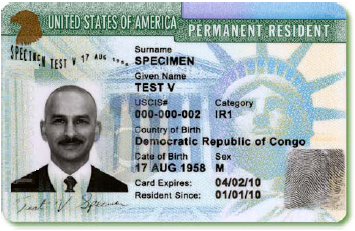
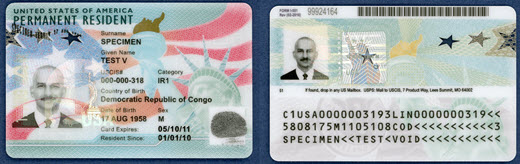
In today’s post, we will discuss how green card holders may be affected by President Trump’s Executive Order imposing a temporary travel ban on foreign nationals of seven Muslim-majority countries (Iraq, Syria, Iran, Sudan, Libya, Somalia, and Yemen), including green card holders as well as non-immigrants. Since the release of the Executive Order, several courts have issued temporary injunctions preventing green card holders (LPRs), legally authorized to enter the United States, from being detained and/or removed from the United States until a federal court can decide the constitutionality of the orders.

In response to these court orders, the Department of Homeland Security and Customs and Border Protection (CBP) has provided further guidance on the enforcement of these actions, and the impact on green card holders from these seven Muslim-majority countries. While both agencies have indicated that they are complying with the court orders, the consensus is that immigration officials will continue to enforce President Trump’s Executive Orders, and they will continue to remain in place.

What does this mean for green card holders? The Secretary of the Department of Homeland Security has stated that the entry of lawful permanent residents remains in the national interest, therefore “absent receipt of derogatory information indicating a serious threat to public safety and welfare,” lawful permanent resident status will be a deciding factor in allowing an LPR entry. The entry of lawful permanent residents will continue to be discretionary and green card holders will be evaluated on a case-by-case basis.

Continue reading

481127781_db85f31ce7

Yesterday, January 29, 2017 the Department of Homeland Security released a statement regarding President Trump’s executive order “Protecting the Nation from Terrorist Attacks by Foreign Nationals” which barred the entry of both immigrant and non-immigrant foreign nationals from 7 majority Muslim countries and suspended entry of Syrian refugees until proper vetting and security mechanisms could be put in place. The Department commented on the impact of a federal court order issued Saturday night which temporarily suspends enforcement of the executive order, until a federal judge can rule on its legality.

In their statement, the Department of Homeland Security noted that “upon issuance of the court order . . . U.S. Customs and Border Protection (CBP) immediately began taking steps to comply with the orders. Concurrently, the Department of Homeland Security continues to work with our partners in the Departments of Justice and State to implement President Trump’s executive order on protecting the nation from foreign terrorist entry into the United States. We are committed to ensuring that all individuals affected by the executive orders, including those affected by the court orders, are being provided all rights afforded under the law.  We are also working closely with airline partners to prevent travelers who would not be granted entry under the executive orders from boarding international flights to the U.S. Therefore, we do not anticipate that further individuals traveling by air to the United States will be affected.”

Continue reading

7507465248_ed7b64e022_z

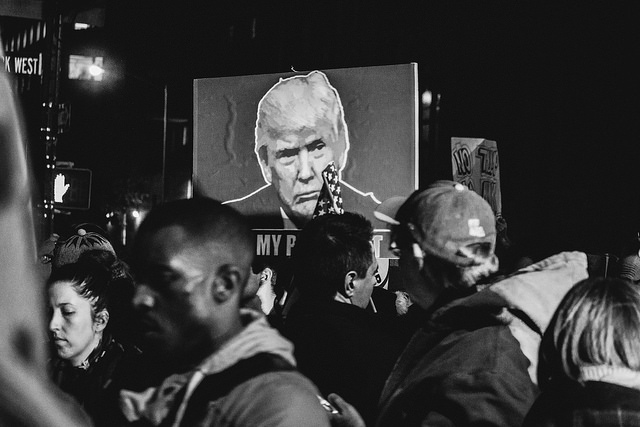
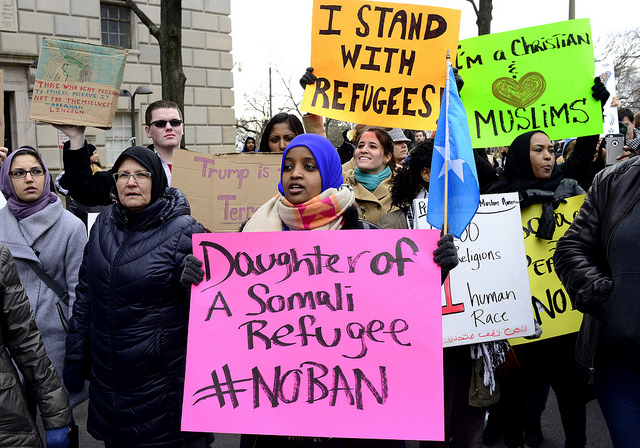
On Saturday night, a federal judge granted an emergency stay on Donald Trump’s executive orderProtecting the Nation from Terrorist Attacks by Foreign Nationals” which temporarily bans the entry of immigrant and non-immigrant foreign nationals from Syria, Iraq, Iran, Libya, Somalia, Sudan, and Yemen for a 90-day period. The stay filed by the American Civil Liberties Union, on behalf of two Iraqi men detained at New York’s John F. Kennedy airport, prevents immigration authorities from detaining foreign nationals from the 7 Muslim majority countries, who have already arrived on U.S. soil, as well as those mid-flight. The stay does not invalidate the executive order signed by Trump, but limits its enforcement on individuals who have already arrived in the United States. Individuals who have attempted to enter on valid visas, refugee status, or LPR status must be released from detention. Trump’s temporary ban on immigrants and non-immigrants from these countries sent the country into chaos, as protestors swarmed international airports across the nation calling for an end to the ban and the release of persons detained. U.S. Customs and Border Protection, and law enforcement officials are struggling with the executive order, absent clear policy and guidance from the Department of Homeland Security.

This is a developing story. More information soon.