Articles Posted in Suspensions

media-998990_1280On June 18, 2025, the State Department announced that U.S. Embassies and Consulates around the world will resume scheduling appointments for F, M, and J nonimmigrant visas, introducing new guidance that includes stricter vetting procedures and an expanded review of applicants’ social media activity.

Moving forward, all F, M, and J nonimmigrants applying for visas at U.S. Consulates overseas will be instructed to change their social media privacy settings to “public” so that they can be reviewed by Consular officers. Those who fail to comply may be presumed to be evading the vetting process and risk having their application denied.

Under the State Department’s new policy that views a U.S. visa as a privilege rather than a right, these enhanced screening and vetting measures aim to identify individuals who may present a threat to our national security.

As part of the process, visa officers will closely examine applications to confirm both the applicant’s eligibility for the requested visa and their intent to carry out activities aligned with the purpose of their entry into the United States. Internal guidance sent to Consular officers also states that officers should look for, “any indications of hostility toward the citizens, culture, government, institutions, or founding principles of the United States.”

Continue reading

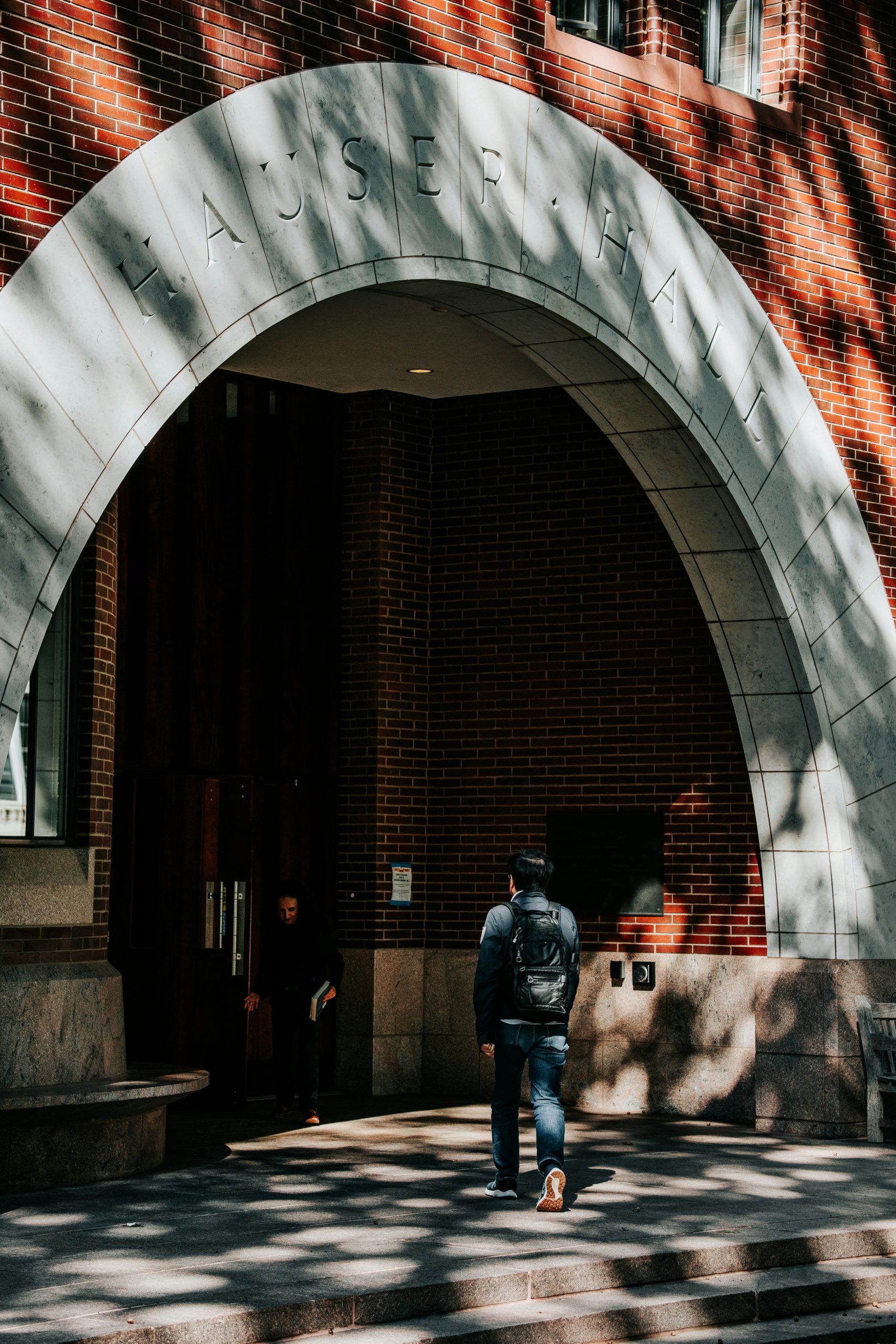
beverly-kimberly-tfiGOGEmJVI-unsplash-scaledOn June 4, 2025, President Trump continued his ongoing assault on Harvard University with a new Executive Order entitled, “Enhancing National Security by Addressing Risks at Harvard University.”

Effective June 4th, the order suspends the entry of all nonimmigrants and exchange visitors bound for Harvard University for a period of 6 months, citing national security concerns over Harvard’s failure to police foreign students and ensure that foreign nationals admitted on student and exchange visitor visas remain in compliance with Federal law.

The executive order also accuses Harvard of having extensive entanglements with foreign adversaries including China.

Who is affected?


All nonimmigrants who enter or attempt to enter the United States to begin attending Harvard University through the Student and Exchange Visitor Program (SEVP) after the effective date of the proclamation (June 4, 2025).

The executive order further empowers the Secretary of State Marco Rubio to consider in his discretion whether foreign nationals who currently attend Harvard University and are in the United States pursuant to F, M, or J visas, should have their visas revoked pursuant to the proclamation.

Who is not affected?


The suspension does not impact Harvard students who are already inside the United States with a valid student visa as of the effective date of the proclamation.

The suspension also does not apply to any alien who enters the United States to attend other universities through the Student and Exchange Visitor Program (SEVP).

It also does not apply to any alien whose entry would be in the national interest, as determined by the Secretary of State, the Secretary of Homeland Security, or their designated representatives.

Impact on Harvard Students Currently in the United States


The executive order does not:

  • Restrict change or extension of status applications filed with U.S. Citizenship and Immigration Services (USCIS)
  • Revoke existing visas, I-94, or STEM OPT work authorization status for students currently in the United States

Continue reading

haniel-espinal-zhbCAmm6d-Y-unsplash-scaled

Welcome back to Visalawyerblog! In this blog post, we celebrate a client’s recent success story and share with you how our office was able to expedite our client’s immigrant visa interview (CR-1) to help reunite the applicant with her spouse in the United States.

We recognize that these are truly challenging times in the world of immigration and would like our readers to know that they are not alone. For many, there are alternatives and solutions that can be explored by our knowledgeable immigration attorneys to help them reunite with their family members. From our staff members to our attorneys, we are with you every step of the way on your immigration journey.

For a comprehensive consultation to discuss solutions to your immigration issues, you may contact us at 619-819-9204. 


Suspension of Routine Visa Services Continues at Most Consulates Worldwide


As our readers will know, the ongoing coronavirus pandemic has made it extremely difficult for immigrants residing abroad to secure appointments for visa interviews at U.S. Consular posts and Embassies worldwide.

While some Consulates and U.S. Embassies have resumed routine visa services, these are very few and far in between. At the moment, routine visa services are only available on a “post-by-post” basis as individual country conditions permit operations to return to normalcy. For the most part, Consulates and Embassies have not been able to provide specific dates regarding when each post will completely resume routine visa services. This has left many immigrants in a state of uncertainty during what is already a very difficult time in our history. Many family members remain apart for extended periods of time with no end in sight.

Despite these limitations however, Consulates and Embassies are continuing to accommodate emergency and expedite requests for applicants with urgent matters who need to travel immediately. Where an applicant has been documentarily qualified by the National Visa Center, a U.S. Citizen petitioner may submit a request with the NVC to expedite the consular interview based on extreme hardship to the U.S. Citizen. Extreme hardship to a U.S. Citizen spouse can be demonstrated in several ways including where the USC is suffering from a disability or severe medical and/or psychological condition.

Continue reading

aronpw-ICg0DE369-Q-unsplash-scaled

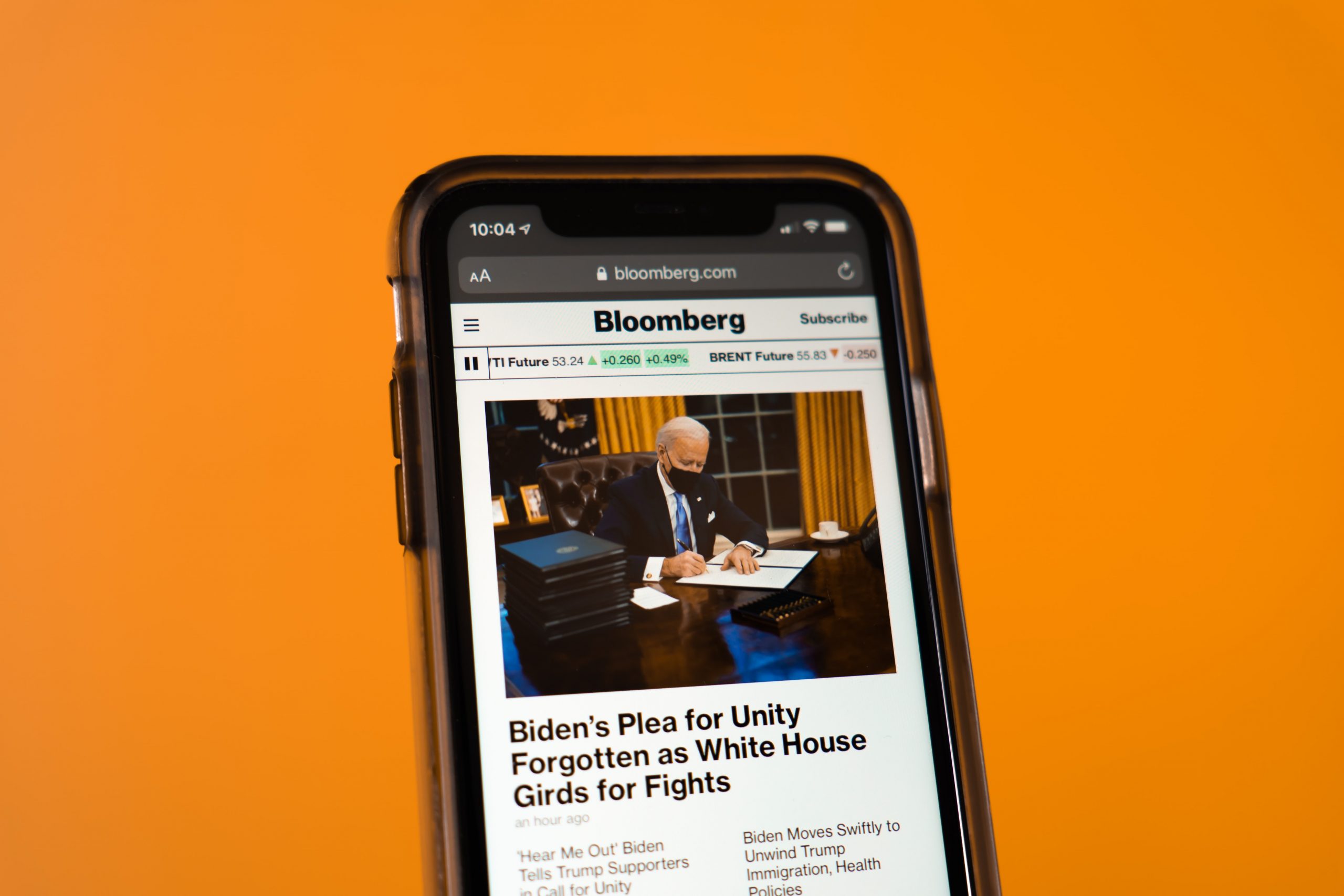
President Biden has been hard at work during his first days in office, releasing a flurry of Proclamations and Executive Actions on immigration, that reverse many of the controversial policies passed by former President Donald Trump.

Due to the volume of Proclamations being signed, our office will break down each of these actions on immigration during the next few weeks, and provide you with detailed information on what each Proclamation means and how you may benefit.

We encourage our readers to bookmark this page and follow our social media platforms as the Biden administration gears up to release even more executive actions on immigration in the coming days.


What is the Biden Proclamation all about?


On January 20, 2021, President Biden signed a number of orders including, “Proclamation on Ending Discriminatory Bans on Entry to the United States.” This Proclamation immediately revokes the four presidential actions taken by the previous administration, which banned individuals from predominantly Muslim and African countries from entering the United States.

The presidential actions being revoked are as follows:

*A brief overview of each action is discussed further below

(1) Executive Order 13780 “Protecting the Nation From Foreign Terrorist Entry Into the United States” 

(2) Proclamations 9645 “Enhancing Vetting Capabilities and Processes for Detecting Attempted Entry Into the United States by Terrorists or Other Public-Safety Threats”

(3) Proclamation 9723 Maintaining Enhanced Vetting Capabilities and Processes for Detecting Attempted Entry Into the United States by Terrorists or Other Public-Safety Threats” and

(4) Proclamation 9983 “Improving Enhanced Vetting Capabilities and Processes for Detecting Attempted Entry Into the United States by Terrorists or Other Public-Safety Threats”


What do you need to know about Biden’s Proclamation?


Biden’s decision to revoke these actions by his predecessor means that all Embassies and Consulates must immediately resume visa processing for nationals affected including Syria, Iran, Libya, Somalia, Sudan, and Yemen, Chad, Venezuela, North Korea, Burma (Myanmar), Eritrea, Kyrgyzstan, Nigeria, Sudan, and Tanzania.

Of course Embassies and Consulates are still conducting a phased reopening of routine visa services and are operating on a limited post by post basis. However, this is a step in the right direction because it means that Embassies and Consulates can no longer refuse to issue visas because these Proclamations are no longer in force.

Most importantly, President Biden has directed the Department of State to develop a system by which previous applicants who were being considered for a waiver of the restrictions can expedite their pending visa applications.

Continue reading

rafaela-biazi-0mfj0jJt0dY-unsplash-scaled

In response to the growing rate of coronavirus (COVID-19) cases in Brazil, on May 24, 2020, the President signed the “Proclamation on Suspension of Entry as Immigrants and Nonimmigrants of Certain Additional Persons Who Pose a Risk of Transmitting Novel Coronavirus.” This marks the fifth presidential proclamation to limit the entry of foreign nationals to prevent the spread of coronavirus in the United States. The previous proclamations were as follows:


Overview


The May 24th proclamation suspends the entry of immigrants or nonimmigrants to the United States who were physically present within the Federative Republic of Brazil during the 14-day period preceding their entry or attempted entry into the United States.


Who is Exempted?


The proclamation specifically exempts:

  • Lawful permanent residents of the United States
  • Any alien who is the spouse of a U.S. Citizen or lawful permanent resident
  • Any alien who is the parent or legal guardian of a U.S. citizen or lawful permanent resident, provided that the U.S. citizen or lawful permanent resident is unmarried and under the age of 21;
  • Any alien who is the sibling of a U.S. citizen or lawful permanent resident, provided that both are unmarried and under the age of 21;
  • Any alien who is the child, foster child, or ward of a U.S. citizen or lawful permanent resident, or who is a prospective adoptee seeking to enter the United States pursuant to the IR-4 or IH-4 visa classifications;
  • Any alien traveling at the invitation of the United States Government for a purpose related to containment or mitigation of the virus;
  • Any alien traveling as a nonimmigrant pursuant to a C-1, D, or C-1/D nonimmigrant visa as a crewmember or any alien otherwise traveling to the United States as air or sea crew;
  • Any alien: seeking entry into or transiting the United States pursuant to one of the following visas: A-1, A-2, C-2, C-3 (as a foreign government official or immediate family member of an official), E-1 (as an employee of TECRO or TECO or the employee’s immediate family members), G-1, G-2, G-3, G-4, NATO-1 through NATO-4, or NATO-6 (or seeking to enter as a nonimmigrant in one of those NATO categories); or

Continue reading