Articles Posted in Green card

30089618676_3593f9c552_z

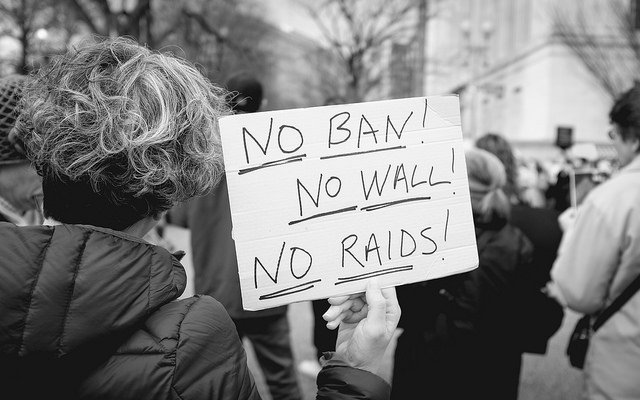
In response to a memorandum issued to United States consulates and embassies around the world by President Trump and his administration on March 6, consular officials at U.S. embassies around the world are now taking tougher measures to enhance security screening of U.S. visa applicants to prevent potential security threats from entering the United States. Enhancing vetting procedures are intended to target individuals from certain “countries of concern” including the six countries of concern listed in the President’s travel ban: Syria, Sudan, Somalia, Yemen, Libya, and Iran, as well as others.

Applicants for U.S. visas from “countries of concern” can expect to undergo additional vetting procedures immediately. The U.S. Department of State has been using a supplemental questionnaire called the DS-5535 since May 25, 2017 which asks both immigrant and non-immigrant visa applicants a series of detailed questions to help consular officials determine whether a visa applicant must go through enhanced vetting to determine whether the individual poses a national security threat, or other potential threat to the United States. The questionnaire has been used as a temporary emergency measure in response to the President’s March memo, which called for enhanced screening of visa applicants, and what he has called “extreme vetting” of foreign nationals admitted to the United States.

Continue reading

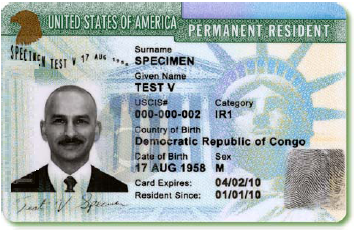
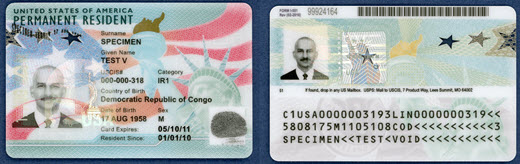
GreenCardImageBeginning May 1, 2017, the United States Citizenship and Immigration Services (USCIS) will begin issuing newly redesigned green cards and employment authorization documents with enhanced features and fraud-resistant technology to prevent tampering and fraud. The new technology has been introduced as part of the government’s ongoing effort to enhance the security of these documents and to facilitate detection of counterfeit documents.

The new green cards and employment authorization cards will

  • Display the individual’s photos on both sides;
  • Show a unique graphic image and color palette:
    • Green Cards will have an image of the Statue of Liberty and a predominately green palette;
    • EAD cards will have an image of a bald eagle and a predominately red palette;
  • Have embedded holographic images; and
  • No longer display the individual’s signature.
  • Green Cards will no longer have an optical stripe on the back.

USCIS may continue to issue some green cards and employment authorization cards with the previous design format, after May 1, 2017, until supplies for that design have run out.

EADCard

Document Validity

Existing and new green cards and employment authorization cards will remain valid until the printed expiration date indicated on the card. Older generation green cards that were issued without an expiration date will continue to remain valid and acceptable for purposes of filing Form I-9, Employment Eligibility Verification, EVerify, and Systematic Alien Verification for Entitlements (SAVE).

USCIS recommends that individuals who have an older green card that does not have an expiration date apply for a replacement card with an expiration date. Receiving a new replacement card will give individuals the benefit of having a highly secure card with fraud-resistant technology in the case the card is lost or stolen.

Continue reading

30994123601_945ea5da00_z

On December 6, 2016 Congress passed a continuing resolution to fund government programs through April 28, 2017. Among the programs that qualified to receive additional government funding was the EB-5 Regional Center Investor Program, a program made possible by a Congressional statute. The Continuing Resolution effectively extended the EB-5 Regional Center program through April 28, 2017 with no changes to the program’s policy. With time running out, Congress must either extend the statutory deadline once again to September 30, 2017, or pass reforms to the program. The government is currently holding Congressional hearings to make changes to the EB-5 Regional Center Program. It appears that legislators are contemplating overhauling the EB-5 program altogether, instead of extending the validity period of the program. At this stage, however, it is not likely that a major overhaul of the EB-5 program will take place by April 28th.

Proposed Rule EB-5 Immigrant Investor Regional Center Program

For their part, the U.S. Department of Homeland Security has already introduced a series of proposals in the Federal Register to modernize the EB-5 Immigrant Investor Program. The comment period for the proposed rule closed on April 11, 2017.

Among its major provisions the Department’s proposed rule would authorize:

  • Priority date retention for EB–5 petitioners;
  • Increases the minimum investment amount for targeted employment areas (TEAs) and nonTEAs to $1.8 million;
  • For investors seeking to invest in a new commercial enterprise that will be principally doing business in a targeted employment area (TEA), DHS proposes to increase the minimum investment amount from $500,000 to $1.35 million;
  • DHS is proposing to make regular CPI–U-based adjustments in the standard minimum investment amount, and conforming adjustments to the TEA minimum investment amount, every 5 years, beginning 5 years from the effective date of these regulations;
  • Revisions to the TEA designation process, including the elimination of state designation of high unemployment areas as a method of TEA designation;
  • DHS proposes to allow any city or town with high unemployment 4 and a population of 20,000 or more to qualify as a TEA;
  • DHS proposes to eliminate the ability of a state to designate certain geographic and political subdivisions as highunemployment areas; instead, DHS would make such designations directly;
  • Revisions to the filing and interview process for removal of conditions on lawful permanent residence.

Continue reading