Articles Posted in start-up companies

5201457826_d79cbeac26_z

If you are a foreign entrepreneur, you have probably discovered that the United States immigration system is very limited in that there are very few visa options available to entrepreneurs that do not tie down the entrepreneur to a foreign employer, as is the case for the L and H visas. To make matters worse, if your ultimate goal is to obtain a green card to live and work in the United States permanently, you must work for an American employer willing to sponsor your adjustment of status. Although there are few exceptions, the main avenue through which entrepreneurs can gain permanent residence is either through family-sponsorship or employment-based sponsorship.

To obtain permanent residence through an employer you must either a) be a professional employed by a U.S. employer willing to sponsor your green card b) demonstrate extraordinary ability in your industry (science, arts, education, business, or athletics, c) work in a management or executive position abroad requiring international transfer to the United States or d) qualify as an EB-5 investor. In either of these cases, the U.S. employer must submit the I-140 Immigrant Petition for Alien Worker for you, before you can apply for permanent residence. If your ultimate goal is not to obtain a green card, then you have more options available to you.

We decided to write about this topic because we have found that many entrepreneurs that visit our office are not well-informed on other visa types that put them on a more direct path to permanent residence. Often times the topic of conversation leads to the E-2 Treaty trader visa, by far the most discussed visa type among entrepreneurs. Few entrepreneurs however have heard about the L-1 visa classification, that may in some ways be more beneficial to foreign entrepreneurs wishing to live and work in the United States permanently. Below we discuss both visa types and the advantages and disadvantages of both visas.

The E-2 visa, the most talked about visa:

Without a doubt, the most popular visa option entrepreneurs ask about is the E-2 visa. Many entrepreneurs however do not know that the E-2 visa is not available to everyone, and it is not a path to permanent residence. The E-2 visa is a non-immigrant treaty investor visa that is only available to foreign nationals from specific treaty countries. The E-2 visa allows foreign nationals to carry out investment and trade activities, after making a substantial investment in a U.S. business that the foreign national will control and direct. E-2 visa investors can either purchase an existing U.S. business or start a new business.


Continue reading

6731529767_bb975c2f64_b

A recent working paper published by Harvard economist, William R. Kerr, and Wellesley economist, Sari Pekkala Kerr, is making waves on the subject of immigrant entrepreneurship. The study asks: just how important are foreign-born entrepreneurs to our economy? Are their contributions truly significant?

The study’s abstract reads as follows:

We examine immigrant entrepreneurship and the survival and growth of immigrant-founded businesses over time relative to native-founded companies. Our work quantifies immigrant contributions to new firm creation in a wide variety of fields and using multiple definitions. While significant research effort has gone into understanding the economic impact of immigration into the United States, comprehensive data for quantifying immigrant entrepreneurship are difficult to assemble. We combine several restricted-access U.S. Census Bureau data sets to create a unique longitudinal data platform that covers 1992-2008 and many states. We describe differences in the types of businesses initially formed by immigrants and their medium-term growth patterns. We also consider the relationship of these outcomes to the immigrants’ age at arrival to the United States.

The study is important because it forces members of Congress to conduct a cost-benefit analysis, in order to determine whether or not it is beneficial for the United States to create more opportunities for highly-skilled entrepreneurs and professionals. Regrettably, the immigration debate has largely centered around illegal immigration to the United States, ignoring calls to create more flexibility for highly-skilled immigrants and immigrant entrepreneurs. As it stands today, immigrant entrepreneurs can only obtain a green card via sponsorship from a United States employer. The majority of entrepreneurs are forced to remain in the United States on a temporary ‘dual intent’ nonimmigrant visa, until a U.S. employer agrees to sponsor their green card. Visa options are very limited for highly-skilled immigrants. Even for the most brilliant of entrepreneurs, this process requires time and patience. Our current immigration laws are doing us a disservice since they are keeping out some of the most talented entrepreneurs in the world. Immigrant entrepreneurs are increasingly important because the number of businesses and American jobs they create is on the rise.

Here are some of the study’s findings:

  • As of 2008, at least one in four entrepreneurs among start-up companies are foreign-born. Similarly, at least one in four employees among new firms are foreign-born
  • 37% of new firms had at least one immigrant entrepreneur working for the company
  • At least 1 in 3 start-up firms were founded by an immigrant entrepreneur, with an increasing rate from 1995-2008
  • The share of immigrants among all employees working for start-up companies is on the rise
  • Immigrant employees in low-tech positions comprise about 22.2% of start-up companies, while 21.2% of immigrants work in high-tech positions in start-up companies
  • Among new start-ups backed by venture capitalists, 60% had at least one immigrant entrepreneur
  • Immigrant employees working for a start-up company backed by venture capitalists have higher mean average quarterly earnings

Continue reading

14604464454_ab9f59b1e0_zA new lawsuit has been filed in federal court challenging the Department of Homeland Security’s authorization of the Optional Practical Training (OPT) for STEM students in the United States. The Washington Alliance of Technology Workers is seeking an end to the STEM OPT program because they claim the program is putting American technology workers at a competitive disadvantage. As previously reported, the Washington Alliance of Technology Workers had been battling the Department of Homeland Security in court for the past year asking a federal judge to invalidate 17-month OPT extensions granted to STEM students, because DHS violated the notice and comment requirements of the Administrative Procedure Act (APA).

In response, the federal judge had ordered the Department of Homeland Security to publish a new final OPT rule to allow certain F-1 students with degrees in science, technology, engineering, or mathematics to obtain employment authorization. DHS published the final rule earlier this year, replacing the previous 17-month STEM extension rule that had been in place since 2008. The new rule published by DHS allows certain F-1 students to apply for 24-month extension of their optional practical training program (OPT) in order to continue working in the United States following the completion of their studies. This new rule went into effect on May 10, 2016. The same plaintiffs who challenged DHS are coming forward yet again, this time questioning DHS policy, and alleging that the STEM OPT program is putting businesses first instead of protecting American technology workers.

The Washington Alliance of Technology Workers is a labor union that represents the interests of American technology workers, who they claim are losing out on jobs to foreign workers because of guest worker programs. The Immigration Reform Law Institute (IRLI) and the labor union are working together to dismantle the program which they say circumvents American labor protections in favor of cheap labor. In a recent statement the IRLI claims that the DHS exceeded its authority by allowing the STEM OPT program to exist. According to them, “not only does the OPT program create more competition for suitable unemployed and underemployed American workers, but it creates a tax incentive for unscrupulous employers to hire foreign labor over American workers because aliens on student visas and their employers do not have to pay Medicare and Social Security taxes.”

Continue reading

6855902540_2e5c5034a1_z

Throughout the next few months, USCIS will begin the process of returning H-1B petitions that were not selected in the H-1B lottery for fiscal year 2017. Each package will contain the respective H-1B petition along with a rejection notice specifying that the petition was not selected in the lottery. If you would like a copy of your rejection notice, please contact your employer or the attorney that filed your petition with USCIS. If you were not selected in the H-1B lottery for fiscal year 2017, there are a few visa options you may want to consider applying for. As always you can visit our website to read about the various different visa types that may be available to you. To discuss your options moving forward, please contact us for a consultation. Do not despair. Many applicants that were not selected in the H-1B lottery in previous years, have been chosen in subsequent years.

Long Term Options for Employment

Employment-Based Green Card

Typically, the employment-based green card application is the most permanent long term option for employment. The drawback is that obtaining an employment-based green card is a very long process that will require you to maintain another nonimmigrant status, while your green card application is pending. For more information on employment-based green cards please click here.

Family-Based Green Card (Adjustment of Status within the United States)

If you are the spouse, parent or child of a U.S. citizen, you may be eligible for family-based permanent residency. The green card application includes the application for employment authorization, which is granted within 3 months of filing. Employment authorization allows the applicant to work while their application is in process. Please be aware that the 3-month time frame for employment authorization is only for applicants applying for adjustment of status from within the United States. For more information about this process please click here.

Continue reading

6848823919_724f516a05_z

On May 04, 2016 the Department of Homeland Security published a proposed rule in the Federal Register, announcing that filing fees for many USCIS petitions and applications are expected to increase for U.S. employers and foreign nationals. The proposed regulation stipulates that filing fees may be adjusted for certain immigration and naturalization benefit requests by USCIS. The increase in filing fees was considered after USCIS conducted a comprehensive review of its fees and found that the current fees do not cover the cost of services provided by USCIS. According to USCIS, in an effort to fully recover costs and maintain adequate services, “an adjustment to the fee schedule will be necessary”. According to the regulation, fees for most employment-based petitions and applications would be raised by an average of 21%, though other types of petitions may experience a higher increase in filing fees.

According to DHS, the higher fees will more accurately reflect the current cost of processing immigration applications and petition. A portion of the increased fees would provide additional funding for refugee and citizenship programs as well as system support for interagency immigration status verification databases.  The increase in filing fees will not take effect until the federal government approves the regulation, which is expected to take several months following the close of the 60-day comment period on July 5, 2016.

According to the new fee schedule under consideration, employment-based petitions would be the most impacted by the increase in filing fees. The filing fee for Form I-129, Petition for a Nonimmigrant Worker, would increase by 42% to a fee of $460, from the current rate of $325.  Similarly, the filing fee for Form I-140, Immigrant Petition for Alien Worker, would increase by 21% to a fee of $700, from the current rate of $580. The complete fee schedule under consideration has been provided below for your reference.

The EB-5 Immigrant Investor Visa Program is expected to be the most heavily affected by the new fee schedule. The filing fee for Form I-924, Application for Regional Center Under the Immigrant Investor Pilot Program, would increase by a rate of 186% requiring Regional Centers seeking designation under the program to pay a filing fee of $17,795 instead of the current rate of $6,230. In addition, Regional Centers would be required to pay a $3,035 annual fee to certify their continued eligibility for the designation. Currently, there is no fee in place for annual certification. The filing fee for the I-526 Immigrant Petition by Alien Entrepreneur, an application associated with the EB-5 visa program, would also increase to a rate of $3,675, a 145% increase up from the current rate of $1,500. The filing fee for an investor’s petition to remove conditions on residence would remain unchanged under these new regulations.

Continue reading

15184528727_084715d318_z

Today May 2, 2016 USCIS announced that data entry for all selected H-1B cap-subject petitions has been completed for fiscal year 2017. Our office expects to receive the final receipt notices of selection for H-1B cap-subject petitions within the next 1-2 weeks. We do not believe that USCIS will be mailing out any more receipt notices for H-1B cap-subject petitions after May 13, 2016. USCIS will begin the process of returning all H-1B cap-subject petitions that were not selected in the random lottery conducted on April 9, 2016. In past years, unselected H-1B petitions have typically been received by our office in the month of June. USCIS recommends that petitioners wait until they have received either a receipt notice or unselected petition in the mail, before contacting USCIS to inquire about the status of a petition. USCIS will issue an additional announcement once all unselected petitions have been returned.

Continue reading

16541844787_fb5fd7f877_z
It is a busy time of the year for the Law Offices of Jacob J. Sapochnick, as we begin to box up and ship out the hundreds of H-1B petitions that will count toward the cap for fiscal year 2016. Tomorrow marks the very first day that H-1B petitions will begin to be accepted by USCIS. If your H-1B petition will not be received by USCIS on the very first day of the H-1B filing season (April 1st) do not fret. USCIS will continue to accept H-1B petitions through the first five business days of the filing season until the cap has been met. Receipt of your H-1B petition on April 1st does not guarantee that your application will be chosen in the randomized lottery. In fact, we have had clients file at the very last minute who have ended up being chosen in the cap. During the next few days, USCIS will carefully monitor the amount of H-1B petitions that are received and make an announcement once the cap has been met. Once the announcement has been made, no more petitions will be accepted for the lottery. Petitions received in excess of the cap will be rejected by USCIS. Employers will know that their H-1B petition has been chosen in the lottery if they receive a ‘notice of receipt’ in the weeks following the randomized selection process. Last year, receipt notices for H-1B petitions, filed without premium processing, started coming into our office in late April, while rejection notices did not appear until mid to late June. Petitioners may opt for premium processing to expedite the notification process. Although it is very easy to get lost in the chaos of H-1B season, it is important not to lose sight of what’s important this filing season.

To help ease your anxiety this H-1B season we are providing you with our last minute filing tips:

  1. Employer’s Financial Obligations: Employers must be prepared to pay their workers at least the Prevailing Wage based on the employee’s occupation and actual place of employment. Employer’s must understand their obligation to honor this financial commitment during the time the employee is working for the employer in H-1B status. Failure to do so can have serious consequences for the employer;

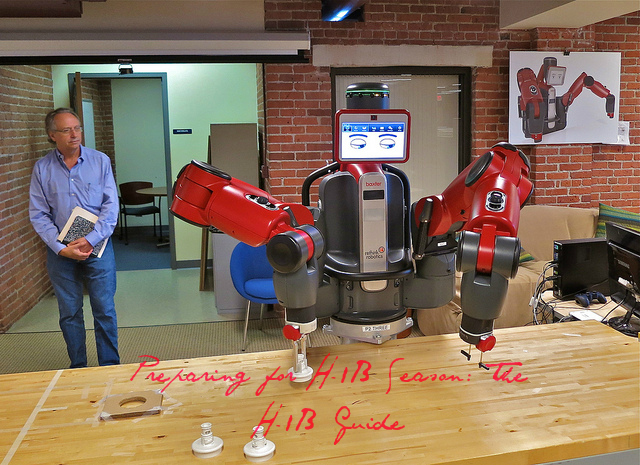
7468447528_3aaed1a0bd_bH-1B season is now in full swing. H-1B petitions will begin to be accepted by USCIS on April 1, 2016 for the 2017 fiscal year. Each year, foreign workers in specialty occupations compete for one of 65,000 H-1B visas allocated each fiscal year. Foreign workers with a U.S. Master’s degree or higher are exempt from the 65,000 congressionally mandated visa cap, however only the first 20,000 petitions received by USCIS may qualify for this cap exemption. Any petitions received after the 20,000 cap-exempt petitions have been allocated will count toward the regular cap. USCIS expects to receive more than 65,000 petitions during the first five business days of the application period. Once the H-1B cap has been reached, USCIS will notify the public, and begin selecting the H-1B petitions necessary to meet the cap through a randomized computer-generated lottery system. H-1B petitions that are not selected through this system will be rejected, along with any petitions received once the visa cap has closed. Duplicate H-1B petitions that are filed on behalf of a foreign worker by the same employer in the same fiscal year will also be rejected. 8 CFR § 214.2(h)(2)(i)(G) explicitly states that “an employer may not file, in the same fiscal year, more than one H1B petition on behalf of the same alien if the alien is subject to the numerical limitations of section 214(g)(1)(A). Filing more than one H-1B petition on behalf of the same alien in the same fiscal year will result in the denial or revocation of all such petitions.” Multiple H-1B petitions filed on behalf of the same alien by different employers during the same fiscal year is permitted although approval of such petitions is discretionary. According to USCIS, petitioners may be asked to demonstrate that a ‘legitimate business need’ exists in filing more than than one H-1B petition for the same alien. In such circumstances a request for evidence, notice of intent to deny, or notice of intent to revoke may result. This is true of both cap-subject and cap-exempt petitions filed by different employers for the same alien.

H-1B petitioners (employers) may request premium processing at the same time that the H-1B petition is filed by signing and completing Form I-907 and including the corresponding fee. Alternatively, petitioners may request premium processing once CIS notifies the petitioner whether the petition has been accepted or rejected. USCIS will not begin premium processing for H-1B cap petitions until May 16, 2016. If you are an American employer who is interested in filing an H-1B petition for a foreign worker, you must act quickly. Filing an H-1B petition is a very complicated and long process. For one if you have never sponsored a foreign worker, you will be required to register your FEIN with the Department of Labor before filing the H-1B petition. Secondly, if the foreign worker you wish to hire received their foreign degree abroad, they must obtain an academic evaluation from an accredited evaluation service. If the foreign worker you wish to hire does not have formal education, but has extensive experience in the specialty occupation, they will need to obtain work experience letters from individuals who can attest to their experience. Thirdly, once an employer has registered their FEIN with the Department of Labor, they will be required to file a Labor Condition Application with the Department of Labor and include the certified LCA with the H-1B petition. Certification of the LCA takes time. The LCA is an attestation made by the employer that they will pay the foreign worker at least the actual or prevailing wage for the occupation, whichever is higher, based on the physical location where the foreign worker will be employed. Once properly submitted to the DOL, the LCA alone takes approximately 2 weeks to be certified by the LCA. This means that in order to meet the April 1st priority date of filing, employers have a very limited period of time to decide whether they will file an H-1B petition for a foreign worker for the upcoming fiscal year. When in doubt it is best not to rush the process.

Last year, our office filed approximately seventy-six H-1B petitions for fiscal year 2016. Approximately 75% of these petitions were filed for the regular Bachelor’s cap, while only 18% of these petitions were filed for individuals holding U.S. Master’s degrees or higher. Approximately 82% of these petitions were filed with the California Service Center, while only 17% of these petitions were filed with the Vermont Service Center. The top H-1B specialty occupations, filed for fiscal year 2016 included: software engineer, technical writer, general manager, market research analyst, business specialist, budget analyst, and graphic designer.

8149521772_6fcf418645_c

Last week, the Senate held a hearing scrutinizing the temporary H-1B skilled worker program, the second hearing of its kind within just one year. At issue was the protection of American jobs and dissatisfaction with the program among conservatives in the Senate, who believe the program has caused job displacement at the expense of thousands of Americans. Beyond their own political convictions, Republican Senators eyeing the White House, have also scrutinized the H-1B visa program, in order to appease voters who, maintain a hard line stance on immigration.

During the hearing, the Senate Judiciary panel considered testimony questioning the integrity of the H-1B visa program. Many witnesses accused their employers of violating the conditions of the program, alleging that their employers sought to replace American workers with foreign workers by utilizing the H-1B visa program to pay those workers lower wages. This accusation is troublesome for various reasons. Firstly, it is well known that the H-1B visa program requires an employer to hire a foreign worker in a specialty occupation only when the employer cannot obtain the necessary skills and abilities to perform the specialty occupation within the American workforce. H-1B workers must possess distinguished merit and ability, and demonstrate their qualifications through the attainment of a bachelor’s degree or its equivalent, in the intended field of employment. Secondly, the H-1B visa program contains provisions which are specifically designed to protect similarly employed American workers from any adverse affects suffered from the employment of temporary foreign workers. Consequently, there are also provisions which aim to protect H-1B nonimmigrant workers from H-1B violations. One of those provisions includes the requirement that American employers pay temporary H-1B workers at least the ‘prevailing wage,’ the average wage paid to similarly employed workers (experience and qualifications) in a specific occupation in the area of intended employment. This would mean that any employer seeking to use the H-1B visa program for the purposes of obtaining ‘cheap foreign labor’ or to replace American workers would be violating the conditions of the H-1B visa program altogether.

Continue reading

8000143255_e02292c05d_z

What is the H-1B Visa? The H-1B visa is a work visa that is awarded on a lottery basis. The H-1B visa program allows American companies and/or qualifying organizations to employ foreign workers to fill specialty occupations temporarily. The foreign worker must posses a combination of education, specialized training, and/or experience that is equivalent to training acquired by the attainment of a U.S. bachelor’s or higher. The H-1B program was first enacted by Congress with the intention of helping American employers seek out distinguished foreign workers, possessing the skills and abilities necessary to perform the duties of the specialty occupation. The H-1B program has remained popular because it has allowed American employers to remain competitive and provides highly skilled foreign workers a path to permanent residence.

The provisions of the H-1B visa program allow qualified foreign workers to attain temporary employment having met specific requirements. H-1B visa recipients typically work in the STEM fields as scientists, engineers, computer programmers, software developers, business analysts, etc. although fashion models are also classified under the H-1B category.

USCIS will begin to accept H-1B cap-subject petitions for fiscal year 2017 beginning April 1, 2016. April 7, 2016 is the absolute deadline to file an H-1B cap-subject petition. Please note: employers cannot file an H-1B petition for an employee more than 6 months before the employee’s intended start date. If accepted, H-1B visa workers can begin employment by October 1st. The H-1B visa is issued for up to three years but may be extended for another three years.

Continue reading