Articles Posted in Work Visas

25388721144_c637ac5a36_z

Great news for cap-exempt H-1B applicants! Effective immediately, the United States Citizenship and Immigration Services (USCIS) will resume premium processing services for certain cap-exempt H-1B petitions.

As you may recall in early April, USCIS temporarily suspended expedited processing of all H-1B petitions to reduce H-1B processing times and prioritize processing of H-1B extensions nearing the 240-day mark.

Today, July 24, 2017, USCIS announced that certain cap-exempt H-1B petitioners can now take advantage of premium processing services.

Please note that H-1B petitions filed on behalf of physicians under the Conrad 30 waiver program are not affected by the suspension.

What is premium processing?

Premium processing service refers to an optional premium processing service offered by USCIS to employers filing Form I-129 (Petition for a Non-immigrant Worker) or Form I-140 (Immigrant Petition for Alien Worker). Premium processing guarantees 15 calendar day processing to petitioners or applicants who make use of the service. Applications that are not processed within 15 calendar days otherwise receive a refund of the $1,225 premium processing fee. To make use of the service, petitioners or applicants must file Form I-907 with their application and include the appropriate fees. The I-907 request for premium processing service can be filed together with an H-1B petition or separately pending a decision.

Continue reading

32515301090_38fdae4f01_z

On June 13, 2017, the American Immigration Lawyers Association (AILA) spoke with Charles Oppenheim, the Chief of the Visa Control and Reporting Division for the U.S. Department of State, to discuss current trends trends and future projections for various employment and family preference categories.

Family preference and employment immigrant categories are subject to numerical limitations and are divided by preference systems and priority dates on the Visa Bulletin. Family-sponsored preference categories are limited to a minimum of 226,000 visas per year, while employment-based preference categories are limited to a minimum of 140,000 visas per year. The Visa Bulletin is a useful tool for aliens to determine when a visa will become available to them so that they may apply for permanent residence. Applicants who fall under family preference or employment categories must wait in line until a visa becomes available to them in order to proceed with their immigrant visa applications. Once the immigrant’s priority date becomes current, per the Visa Bulletin, the applicant can proceed with their immigrant visa application.

Current Trends & Future Projections:

Employment-based preference categories:

EB-1 China and India:  

The final action date imposed on EB-1 China and EB-1 India (January 1, 2012) during the month of June of 2017, will remain and is expected to remain through the end of this fiscal year.

Per Charles Oppenheim, “Due to the availability (through May) of “otherwise unused numbers” in these categories, EB-1 China has used more than 6,300 numbers and EB-1 India has used more than 12,900 so far this fiscal year.”

EB-2 Worldwide:

Good news! EB-2 Worldwide remains current due to a slight decrease in demand in the second half of May and a steady level of demand in the month of June.

Projection: Oppenheim expects a final action cutoff date to be imposed on this category in August which is expected to be significant, however this category is expected to become current again on October 1, 2017.

Continue reading

30089618676_3593f9c552_z

In response to a memorandum issued to United States consulates and embassies around the world by President Trump and his administration on March 6, consular officials at U.S. embassies around the world are now taking tougher measures to enhance security screening of U.S. visa applicants to prevent potential security threats from entering the United States. Enhancing vetting procedures are intended to target individuals from certain “countries of concern” including the six countries of concern listed in the President’s travel ban: Syria, Sudan, Somalia, Yemen, Libya, and Iran, as well as others.

Applicants for U.S. visas from “countries of concern” can expect to undergo additional vetting procedures immediately. The U.S. Department of State has been using a supplemental questionnaire called the DS-5535 since May 25, 2017 which asks both immigrant and non-immigrant visa applicants a series of detailed questions to help consular officials determine whether a visa applicant must go through enhanced vetting to determine whether the individual poses a national security threat, or other potential threat to the United States. The questionnaire has been used as a temporary emergency measure in response to the President’s March memo, which called for enhanced screening of visa applicants, and what he has called “extreme vetting” of foreign nationals admitted to the United States.

Continue reading

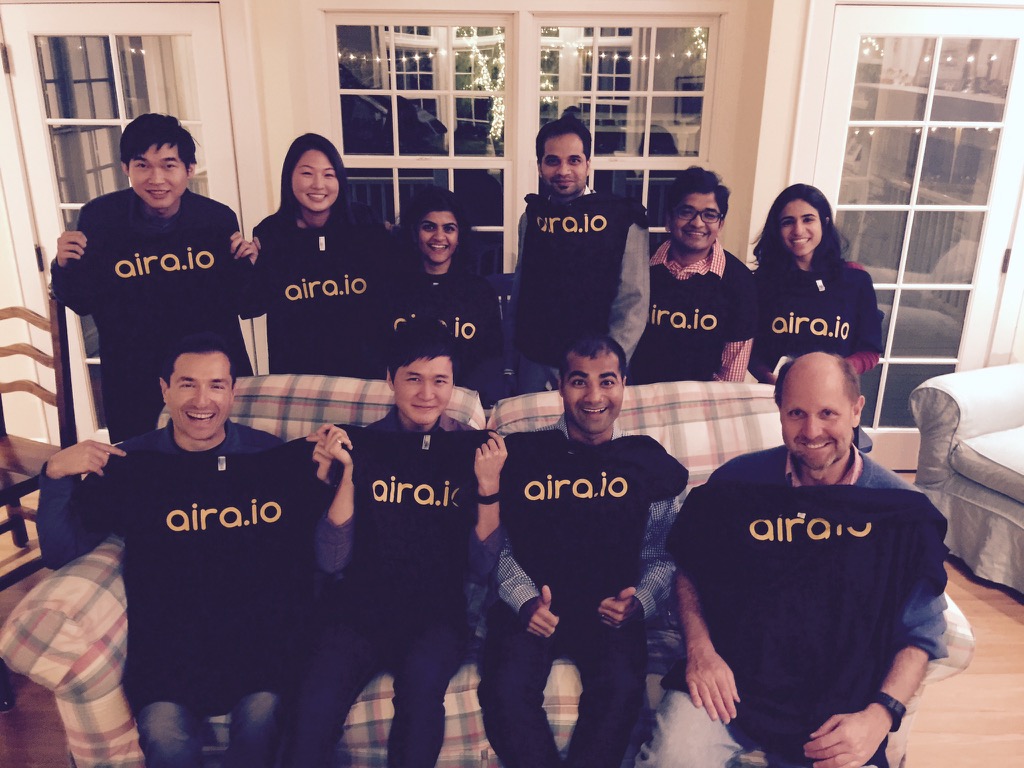
16F211BF-4FDC-4D41-8FF7-55867BAB7DB9I first met Suman Kanuganti two years ago, back then he was working for another company but contemplating opening his own high-tech startup company and becoming an entrepreneur.

In advising him on his ambitious pursuits, I recommended that he follow his plans and dreams confidently and full-heartedly. Shortly afterwards, Suman quit his previous job and started to focus on his new company, Aira, based here in San Diego. Through the assistance of my immigration law firm, he received his H-1B visa so that he could continue focusing on his amazing work at Aira in developing assistive technology and services for the blind and visually impaired.

His work at Aira continues at a rapid and productive pace, poising the company well for future growth and success. In just two years, Suman, as Co-Founder & CEO, has transformed his startup into the leading developer of remote technology that is bringing immediate access to information and assistance to those with vision loss. This is greatly enhancing the mobility, independence and productivity of blind people in a wide range daily activities – from navigating busy streets and airports, to reading printed material, recognizing faces, catching the bus or Uber, functioning efficiently in the office or classroom, experiencing cultural and sporting events, and literally traveling the globe.

Continue reading

8345814565_51632a4521_z

U.S. Customs & Border Protection (CBP) recently released a NAFTA Reference Guide that is filled with useful information to assist TN visa applicants filing applications under the North American Free Trade Agreement (NAFTA). Specifically, the guide addresses the process for issuing TN visa approval for multiple employers.

To facilitate approval for multiple employers, CBP has advised that Canadian citizens;


  • Provide a letter of support signed by each employer on company letterhead;
  • For applicants who filed their applications at a land border: CBP will include all the approved TN employers on a single I-94 card. If additional I-94 cards are required, CBP will use the same I-94 number for each card;
  • Upon visa issuance, the TN applicant’s electronic I-94 system will be updated by CBP to reflect TN approval for all the employers;
  • For applicants who file their applications at a CBP airport office (where no paper-based I-94 form is issued): CBP will update its electronic I-94 system to reflect TN approval for all the employers.
  • Applicants who file applications for multiple employers at the same time only need to pay one filing fee—however, additional fees may be required for multiple I-94 records;
  • If an additional employer is added by the TN worker at a later date, then a second filing fee will apply.

Continue reading

6224687976_e1786131a6_z

With the H-1B season quickly coming to a close, we are happy to announce that 83% of our clients were selected in this year’s master’s cap, while 56.67% of our clients were selected in the “general cap.” These estimates are above the national average. Of the petitions that were selected, the majority were filed with the California Service Center. Selections in this year’s lottery were made up until the very last minute. This fiscal year, USCIS received a total of 199,000 petitions, less than usual, and the computer-generated lottery was conducted on April 11, 2017 a bit later than usual given that the filing period opened on April 3, 2017. As in previous years, USCIS first began the selection process for the advanced degree exemption or “master’s cap,” and then proceeded with the selection process for the “general cap” to fill the 85,000-visa cap. During FY 2017, USCIS received over 236,000 petitions during the filing period which opened on April 1, 2016, and the computer-generated lottery was conducted on April 9, 2016.

USCIS has now completed data entry for all cap-subject petitions selected during fiscal year 2018. This means that USCIS will now begin the process of returning all H-1B cap-subject petitions that were not selected in this year’s lottery, along with their filing fees. While USCIS has indicated that they cannot provide a definite time frame as to when these unselected petitions will be returned, in previous years unselected petitions have traditionally been returned during mid-June to the end of June.

If you have not received a receipt notice in the mail notifying you of your selection, and your checks were not cashed by the Department of Homeland Security, between April 1st and May 3rd., unfortunately it is not likely that you were selected in this year’s lottery. For safe measure, applicants may wish to wait about a week or so to see if any late notices are received.

Continue reading

2760112757_1f649b4241_z

Background

It was only several years ago that Antoine, a French native, set his eyes on achieving his lifelong dream of starting an aviation company in the state of California, providing flight services to foreign pilots in transit to or vacationing in the state of California. With over six years of experience in the European aviation industry, as a private and commercial pilot, Antoine certainly had amassed the skills and experience necessary to launch his company. On a visit to California, Antoine identified a niche in the market and decided that he would cater to the needs of foreign pilots flying through the Los Angeles County area. With the help of the Law Offices of Jacob Sapochnick, Antoine was able to turn his lifelong dreams into reality. Today, Antoine’s company Heading West is off the ground and on its way to becoming Southern California’s leading flight service company. So how did we do it?

About the Visa

Here at the Law Offices of Jacob Sapochnick, it is no secret that our clients are our biggest inspiration. After having spoken to Antoine about his new business venture, his qualifications, and other needs, we agreed that the best option for Antoine and his family, was to apply for an E-2 Treaty Investor Visa. Although the E-2 Treaty Investor Visa does not create a path to permanent residency, it is a great visa for foreign entrepreneurs who wish to enter the United States and carry out investment and trade activities. To qualify for the treaty investor visa, the investor must be from a qualifying treaty trader country, and must invest a substantial amount of capital to develop and direct the business operations of a new commercial enterprise, or invest in an existing U.S. business. Other requirements for the E-2 visa are as follows:

  • If the investor is a company, at least 50% of the owners in the qualifying company must maintain the nationality of a treaty trader country if they are not lawful permanent residents of the U.S. If these owners are in the U.S., they must be in E-1 or E-2 status.
  • The investment funds and the applicant must come from the same Treaty Country.
  • The business in which investment is being made must provide job opportunities or make a significant economic impact tin the United States. The business should not be established solely for the purpose of earning a living for the applicant and his or her family.
  • The investment must come from the investor. The money must be “at risk”. Thus, a loan that is secured by the assets of the business itself will not qualify i.e. if loans have been taken out, they must be secured or guaranteed by the investor personally, and not by the assets of the corporation.
  • The investment must be substantial, a standard which depends on the nature of the enterprise. Generally, investment funds or assets must be committed and irrevocable. The funds or assets must be deemed sufficient to ensure the success of operations.
  • The investment must be real and active and not passive; this means that a bank account, undeveloped land or stocks, or a not-for-profit organization will not be sufficient to be considered.
  • The enterprise must be a real, operating commercial enterprise or active entrepreneurial undertaking productive of some service or commodity.

Continue reading

FullSizeRender-1
For this month’s staff spotlight, we invite you to learn more about our legal technical writer Suzanne Andersen.

Suzanne Andersen is a new addition to our firm, having joined in 2016. Ms. Andersen holds a Master of Laws degree from California Western School of Law, in addition to her law degree from the University of Southern Denmark.  Prior to attending law school, Ms. Andersen obtained a degree in Psychology from the University of Copenhagen.

Before joining the Law Offices of Jacob Sapochnick, Ms. Andersen practiced law in Denmark for three years in the area of litigation, white collar crime and immigration, contract law, tort law and human rights.

30123014595_45dba6b128_z

Image Courtesy of Gage Skidmore

USCIS has finally announced that the H-1B computer-generated lottery took place on April 11, 2017 to select the necessary petitions to meet the 65,000 visa cap for beneficiaries holding a U.S. bachelor’s degree or its equivalent, as well as the 20,000 visa cap for beneficiaries holding a U.S. master’s degree or higher. The announcement came a bit late this H-1B season, but you can now rest easy knowing that it has taken place.   On April 7th USCIS announced that they had received more than enough H-1B petitions necessary for fiscal year 2018. USCIS disclosed that they received 199,000 H-1B petitions this filing year.

Our office has already received 3 receipt notices for the “master’s” cap or advanced degree exemption, and 2 receipt notices for the “regular” cap as of April 20, 2017. 

USCIS will continue to mail receipt notices for selected petitions throughout the month of April and likely into early May.

If your petitioner has been monitoring their bank account closely and has noticed that the filing fees were charged to the account, that means that the H-1B petition was selected. Even if the filing fees have not yet been charged to your petitioner’s bank account, that does not mean that your H-1B petition was not selected. H-1B applicants must wait patiently to see if they were selected in this year’s lottery.

USCIS will not begin mailing out unselected H-1B petitions until around June through the month of July.

As a reminder, premium processing for H-1B petitions was suspended on March 3rd and will remain suspended for up to six months.

Continue reading