Articles Posted in Detentions

3415364650_2c6b27e94f_z

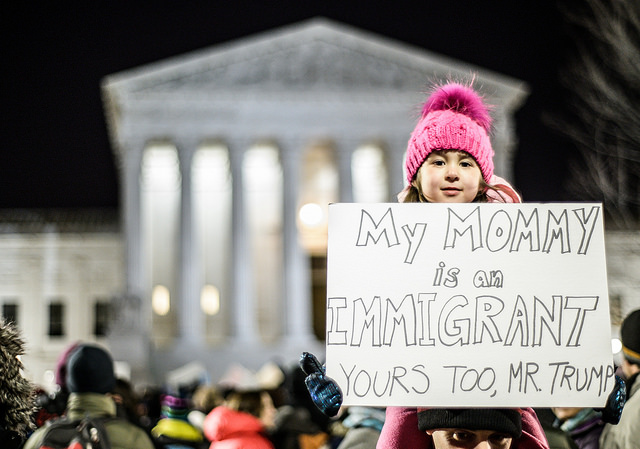
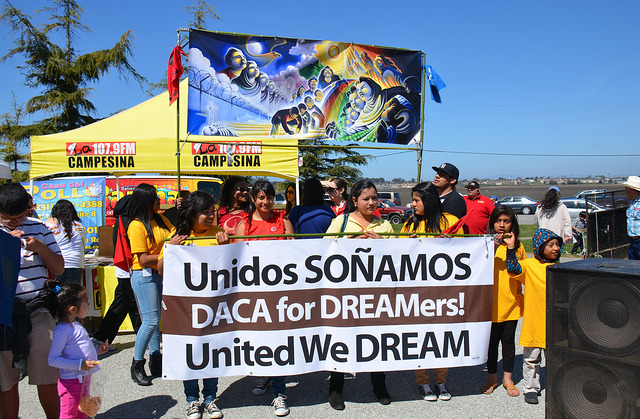
On June 23, 2016 the United States Supreme Court made headlines when it affirmed a federal court’s decision in United States v. Texas, preventing the expansion of the Deferred Action for Childhood Arrivals (DACA) program and Deferred Action for Parents of Americans and Lawful Permanent Residents (DAPA) program. An eight-person bench delivered a single one-line decision on the ruling stating, “the judgment of the lower court is affirmed by an equally divided court.” This controversial decision ultimately resulted in the halt of the expansion of the DACA and DAPA programs, leaving these programs in legal limbo. The DACA and DAPA programs were first introduced by President Barack Obama two years ago, as part of a series of executive actions on immigration. With the passage of these programs, the Obama administration hoped that the Republican controlled House of Representatives would be persuaded to discuss the issue of comprehensive immigration reform. This effort proved fruitless. Republican Congressmen and women not only refused to pass comprehensive immigration reform, they politicized the issue of immigration altogether, blocking the President’s Supreme Court nomination following the sudden death of Justice Antonin Scalia, in order to prevent the Supreme Court from becoming liberal. Together, these programs would have shielded nearly five million undocumented immigrants from deportation by giving them “deferred status,” and would have provided applicants with a temporary three-year employment authorization card. Although these measures proved short of an amnesty, they were made in response to Congress’s refusal to pass meaningful immigration reform for the undocumented population living in the United States.

The expansion of the DACA program would have increased the population eligible to apply for employment authorization to people of any current age, who had entered the United States before the age of 16, and who could demonstrate continuous residence in the United States since January 1, 2010. Similarly, the DAPA program would have shielded millions of parents of U.S. Citizens and Lawful Permanent Residents from deportation if they could demonstrate continuous residence in the United States since January 1, 2010, and pass the required background checks.

Continue reading

5808492140_09871b9bdc_z

There is no denying that the election of Donald Trump as next President of the United States has dealt a huge blow to the immigration reform effort and diminished any hope for the passage of broader legal immigration reform. We had hoped that with the election of Hillary Clinton we would see an increase in immigration levels for highly skilled workers, as well as increased visa opportunities for entrepreneurs and investors. While the news of Donald Trump’s election was a big setback for immigration in general, polling continues to suggest that people across the United States are willing to support fairness in dealing with the undocumented immigrant population in a sensible and human way. By contrast, most Americans disapprove of passing broad legal immigration reform that would benefit foreign workers.

Donald Trump was able to win the favor of a great number of Americans because of his critical view of programs like NAFTA that he believes has allowed American jobs to go overseas. Trump has blamed the U.S. government for allowing programs like the H-1B worker program to exist, saying that foreign workers are taking American jobs. We can expect to see Donald Trump take a restrictive view on legal immigration, keeping immigration levels within historic norms. Donald Trump has until recently softened his tone on illegal immigration, claiming that his priority is to deport only dangerous criminals residing in the United States unlawfully, although his 10-point plan contradicts his recent stance.

It is likely that the Republican House and the Senate will introduce legislation designed to benefit American workers and the economy, and focus less on creating immigration opportunities for foreign workers. Similarly, the Trump administration will likely focus on job creation, and less on passing any meaningful legal immigration reform.

The program that may come under fire by the Trump administration is the Deferred Action for Childhood Arrivals (DACA) initiative which began on June 15, 2012 as part of an executive order introduced by President Barack Obama. Donald Trump has repeatedly said that he wants to end the Deferred Action for Childhood Arrivals (DACA) program incorrectly calling it an “amnesty.” In actuality, DACA is not amnesty and does not provide a pathway to permanent residency or even citizenship. DACA merely shields the individual from deportation and allows them to legally obtain employment in the United States for a temporary period of time.

Continue reading

13107552985_8d0449c06f_z

In this segment, we bring you the latest immigration news. This month, the U.S. Department of Homeland Security released a status report on border security in the Southwestern border region. In other news we provide you with an update on the Proposed International Entrepreneur Rule, and finally we would like to remind our readers to tune into the final Presidential Debate on October 18th.

Department of Homeland Security Releases Report on Border Security for the Southwestern Border Region

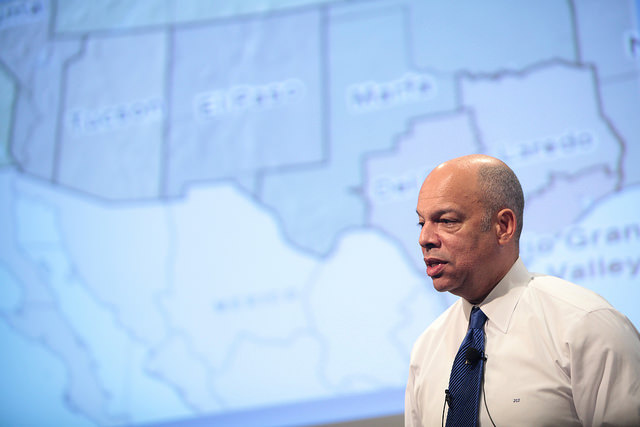
On October 17, 2016 the Secretary of the U.S. Department of Homeland Security, Jeh Johnson, released a report on the state of border security in the Southwestern region of the United States for fiscal year 2016. The Secretary reported that the total apprehensions by border patrol on the southwestern border have increased, relative to the previous fiscal year. During fiscal year 2016 there were a total of 408,870 unlawful attempts to enter the United States border without inspection by a border patrol officer. Although the number of apprehensions during this fiscal year were higher than the previous year, the number of apprehensions in fiscal years 2013 and 2014 were much higher than fiscal year 2016.  Johnson also reported that illegal migration in this region has changed demographically. Today, there are fewer Mexican foreign nationals and adults attempting to cross the Southwestern border illegally. The problem now is that more families and unaccompanied children from Central America are making the dangerous trek from Central America to the United States, fleeing gang related violence, organized crime, and poverty. In 2014 for the first time in history, the number of Central Americans apprehended on the Southern border outnumbered Mexican nationals. The same phenomenon occurred during fiscal year 2016.

How is DHS dealing with the influx of undocumented immigrants from Central America?

DHS is struggling to deal with this humanitarian crisis. Thus far the United States has implemented an in-country referral program for foreign nationals of Honduras, El Salvador, and Guatemala. The program gives certain immigrants the opportunity to apply for refugee protection in the United States. DHS has also expanded the categories of individuals that may be eligible for the Central American Minors program, although adults may only qualify for this program if they are accompanied by a qualified child. The Government of Costa Rica and the United Nations High Commissioner for Refugees and the International Organization for Migration have developed a protection transfer agreement to relocate unaccompanied children and their families to safer regions. DHS was given $750 million in Congressional funds this fiscal year to provide support and assistance to this vulnerable population of migrants. Johnson recognized that there is much work to be done to secure and border, while at the same time addressing the need for comprehensive immigration reform.

Continue reading

16204909498_c2948b5c85_z

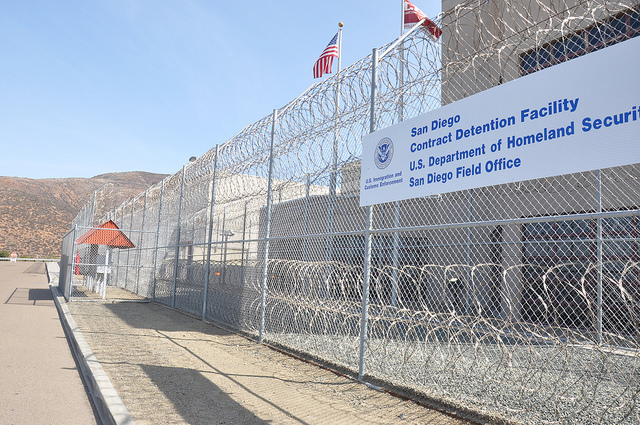
The U.S. Department of Homeland Security is expected to run a study to determine whether privately run detention facilities are unsafe for migrants. The Secretary of the Department of Homeland Security, Jeh Johnson, has stated that the administration will evaluate whether or not the agency will end the practice of privatizing immigration detention facilities, issuing a recommendation by November 30th of this year.

The announcement comes following reports that private immigration detention facilities have unlawfully withheld proper mental health and medical care from persons being detained in their immigration facilities. Presently, the two major private companies running ICE immigration detention facilities across the United States are the Corrections Corporation of America and the GEO Group. Together these private companies hold lucrative state and federal government contracts. It is estimated that the Corrections Corporation of America has earned $689 million alone from its contracts with ICE dating back to 2008, while the GEO Group has earned an estimated $1.18 billion from these contracts during that same period.

Continue reading

6991805074_a31fb26d22_c

The United States Citizenship and Immigration Services (USCIS) has published a new final rule that will expand the class of individuals who are eligible to apply for a ‘provisional’ waiver of certain grounds of inadmissibility (Form I-601A) based on their accrual of unlawful presence in the United States.

The provisional unlawful presence waiver allows certain individuals, unlawfully present in the United States, to request a provisional waiver before departing the United States for consular processing of their immigrant visas.

Previously, only immediate relatives of U.S. Citizens were eligible for this waiver. The provisional waiver is beneficial because it does not require the applicant to wait until the consular interview, to apply for a waiver, as in the case of the I-601 waiver. Provisional waivers also substantially reduce the time of separation between the applicant and his or her U.S. Citizen or legal permanent resident (LPR) relatives.

The rule was published in order to improve efficiency and reduce the amount of time that a U.S. Citizen/LPR spouse or parent is separated from his or her relatives while the relative completes the immigrant visa process. According to the 2013 rule, parents, spouses and children of U.S. Citizens were eligible to apply for provisional waivers of the 3- and 10-year unlawful presence bars before departing the United States for their immigrant visa interviews. The new rule expands upon the 2013 rule extending that benefit to family members of LPRs.

Who benefits?

The rule will expand the provisional waiver process to certain individuals who are family members of U.S. Citizens and lawful permanent residents (LPRs) who meet the statutory requirements to be eligible for an immigrant visa. The rule will expand eligibility to all individuals statutorily eligible for the waiver. In order to qualify, applicants must be able to establish that their U.S. Citizen or LPR spouse or parent would experience an “extreme hardship” if the applicant was not allowed to remain in the United States. The final rule will take effect on August 29, 2016.

Continue reading

5132848528_8a47684a87_z

Massachusetts Governor Charlie Baker has proposed a new policy that will allow State Police to contact federal immigration authorities for the purposes of verifying the immigration status of suspects already in custody on state criminal charges. In taking this step, Governor Baker, a Republican, is undoing the actions of his Democratic predecessor, ex-governor Deval Patrick. This new proposal will be put in place to allow federal law enforcement officials to better combat terrorism, gangs, and other activity of a criminal nature in the state of Massachusetts. This policy will affect undocumented immigrants, as well as legal permanent residents, with extensive criminal records or those convicted of serious crimes of moral turpitude.

State police will not be able to apprehend individuals based on immigration violations alone. Instead, as a result of this new policy, state troopers will be able to contact Immigration and Customs Enforcement (ICE) and inquire with ICE whether a person in custody is considered a ‘priority target.’ A ‘priority target’ is someone who has extensive criminal history or poses a security risk. By law, state police cannot enforce federal immigration law, but they will be able to assist federal law enforcement officials in detaining individuals in custody who pose a significant threat to the country’s national security.

Continue reading