2529706103_d43e75cd10_z

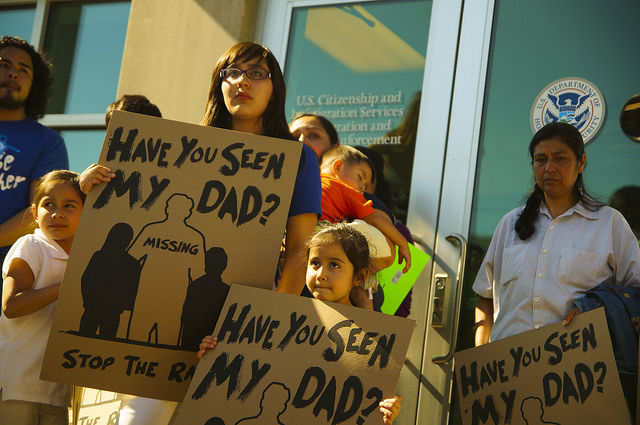
Following a recent surge in apprehensions of undocumented immigrants at the Southwest border, the Department of Homeland Security announced that, beginning January 1st Immigration and Customs Enforcement (ICE) engaged in a concerted nationwide crackdown, taking adults and some children into custody, who have evaded their orders for removal. In a recent press release, the Secretary of DHS, Jeh Johnson indicated that the crackdown occurred as a result of President Obama’s November 2014 executive action on immigration, which put in place new priorities for removal, including the removal of convicted criminals, individuals posing a threat to national security, individuals apprehended at the border or who were found to have entered the United States unlawfully after January 1, 2014. In November 2014 President Obama had implemented these new priorities in an effort to secure the border. In the press release, Jeh Johnson added, “as I have said repeatedly, our borders are not open to illegal migration; if you come here illegally, we will send you back consistent with our laws and values…individuals who constitute enforcement priorities, including families and unaccompanied children will be removed.”

According to the Department of Homeland Security, Central American migrants were removed and repatriated at an increasing rate since the summer of 2014. During this time, there was a surge in the number of families and unaccompanied children from Central America attempting to cross the southern border illegally. In response to this surge, DHS collaborated with the Mexican, Guatemalan, Honduran, and Salvadorian governments to decrease these numbers. According to Jeh Johnson the collaborative efforts were temporarily successfully. In 2015 the number of apprehensions by the U.S. Border Patrol decreased dramatically to 331, 333. Fiscal year 2015 experienced the lowest amount of apprehensions on the southern border since 1972. Recently, an increased rate of apprehensions resurfaced. This sudden spike resulted in the January 1st crackdown prompting ICE to action. As part of the crackdown, dozens of female agents and medical personnel were deployed to assist with the apprehension and removal process. According to DHS, in cases involving medical urgency or other reasons, ICE exercised prosecutorial discretion. As stated by DHS, enforcement operations will continue as needed in collaboration with state and local law enforcement.

Continue reading

9033805851_a19992134e_z

On Thursday, December 31, 2015 the Department of Homeland Security published a new proposed rule affecting highly skilled immigrant and non-immigrant workers alike. The proposed rule, introduced in last week’s federal register, aims to improve the ability of American employers to hire and retain highly skilled workers waiting to receive their employment-based lawful permanent residence in the visa bulletin backlogs. Additionally, the proposed rule aims to enhance opportunities for such workers allowing them to be more easily promoted, to accept lateral positions with their current employers, change employers, and pursue other employment. While the proposed rule is not groundbreaking, it does address important challenges employers and their highly skilled workers have faced as the law stands today and makes recommendations for such relief. The proposed rule will be open for comment until February 29, 2016.

You may remember that on November 20, 2014 the President highlighted, as part of his executive actions on immigration, that the employment-based immigration system needed to be amended to modernize, improve, and clarify immigrant and nonimmigrant visa programs in order to create more jobs, foster innovation at home, retain a highly skilled workforce that would allow the United States to compete with other countries, and to stimulate the American economy overall.  In order to modernize the employment based immigration system, USCIS would be required to work with the Department of State to modernize and simplify the immigrant visa allocation process. Part of this process would require the Department of State to make reasoned projections of employment-based immigrant visa availability on the visa bulletin, that could be relied upon by employers and their highly skilled workers.

Presently, immigrant workers from India and China are experiencing extraordinary delays in the employment-based queue for permanent residence, while other highly skilled workers are forced to wait over a five-year period to receive company sponsorship and lawful permanent residence. Furthermore, such workers are forced to remain on temporary employment-sponsored visas in the United States while waiting for an immigrant visa to become available to them. This puts the immigrant worker in a predicament giving the employer the upper hand, while restricting the employee from seeking advancement and discouraging new employment, since this would require the employer to file a new petition and incur the expensive fees required for filing. Highly skilled works facing extortionate delays in the visa backlogs have experienced hindered employer/employee career advancement and job mobility. The new rules will provide limited relief in this area.

Continue reading

8425492426_e2cd908a3f_z

As previously reported, the STEM Optional Practical Training (OPT) rule that had been in place since 2008, was invalidated following a court order requesting the Department of Homeland Security to issue a new replacement rule. The court gave the DHS until February 12, 2016 to come up with a replacement rule in order for the STEM OPT program to continue. In order for a new replacement rule to be put in place, DHS was required to publish the final rule 60 days before its effective date, according to procedural rules established by the Administrative Procedures Act. In order to meet such a deadline, DHS needed to have published the final rule by December 14, 2015 in order for it to be enforced by the February deadline. Luckily, the government filed a motion to extend the stay of the court order—to May 10, 2016, thus requesting an additional 90 days for the government to implement a final rule. In order for the motion to be successful the government must establish that exceptional circumstances warrant such relief to be given. The government has argued that there is an unprecedented amount of comments that cannot be reviewed and analyzed by the February deadline. During the comment period, DHS received over 50,000 comments that it must review, revise, and finally publish a final rule. The court is not expected to rule on the motion until early 2016. Meanwhile the plaintiffs of the original suit have filed an appeal before the DC Circuit Court arguing that the OPT program is not within the authority of the DHS.

If the motion is unsuccessful, the government may file a motion at the district court level or request a stay of the court’s injunction at the circuit court level. In any case, those affected should be aware that the government still has several avenues through which relief may be granted: (1) the Judge may grant the government its requested 90-day delay on the present motion; (2) the Judge may later grant a complete stay pending appeal of the injunction; or (3) the DC Circuit may stay the Judge’s injunction while it considers the merits of her rulings in the underlying case.  CIS has not yet released official correspondence explaining whether students affected will be granted a STEM extension after the February deadline.

For more information please contact us.


13283313123_fbd9b66cc9_z

Do’s and Don’ts

If you are considering applying for a temporary visitor visa to travel to the United States for purposes of leisure or to receive temporary medical treatment, there are several things you should be aware of. First, you should understand what you can do while on a temporary visitor visa and what you cannot do. You may travel to the United States on a visitor visa if your visit will be temporary. The proposed visit must be either for recreational purposes such as to visit your friends and relatives in the United States, receive medical treatment, attend a short course of study related to the nature of your trip, or to engage in activities of a fraternal, social, or service nature. You may not enroll in a course of study that exceeds your authorized duration of stay of is unrelated to the nature of your trip, and you may not seek employment during your stay. If approved, a visitor visa is generally authorized for a 6-month period which may be extended for an additional 6 months by filing Form I-539 Application to Extend/Change Nonimmigrant Status.

Does your country participate in the visa waiver program?

Before applying for a visitor visa , you should verify whether you are a citizen of a country that participates in the visa waiver program. Presently 38 countries participate in the visa waiver program, as shown below.

Andorra Hungary Norway
Australia Iceland Portugal
Austria Ireland San Marino
Belgium Italy Singapore
Brunei Japan Slovakia
Chile Latvia Slovenia
Czech Republic Liechtenstein South Korea
Denmark Lithuania Spain
Estonia Luxembourg Sweden
Finland Malta Switzerland
France Monaco Taiwan
Germany the Netherlands United Kingdom
Greece New Zealand

If your country of citizenship participates in the visa waiver program, you may not need to apply for a tourist visa at a US Consulate or Embassy abroad. If you have been previously denied a United States visa, the Electronic System for Travel Authorization (ESTA) will automatically deny your ESTA submission and you will not be eligible to travel under the VWP even if your country participates in the program. Note: The House of Representatives and the Senate is presently in talks to approve a bill that will block individuals who have traveled to Syria, Iraq, Iran, or Sudan during the last 5 years from using the visa waiver program.

Continue reading

District Court Denies Request for Temporary Restraining Order to Halt Syrian Re-Settlement Program in Texas

23348054250_3bfc1cd6a0_z

First Family of Syrian Refugees Arrives in Canada

In their December suit, Texas Health and Human Services Commission V. United States, et, al., the state of Texas alleged that the United States government and the International Rescue Committee unlawfully attempted to re-settle six Syrian refugees in the city of Dallas without prior  consultation and collaboration. According to Texas, the federal government failed to consult with the state regarding re-settlement of these refugees, and prevented them from receiving vital information relating to security risks posed by Syrian refugees prior to their re-settlement. Texas also claimed that the International Rescue Committee similarly failed to collaborate and consult with the Texas Health and Human Services Commission in advance prior to the re-settlement of these refugees. To protect itself, the state of Texas asked for an injunction and a temporary restraining order to halt the resettlement of Syrian refugees until security checks could confirm that these Syrian refugees do not pose a threat to the state of Texas.

On December 9, 2015 the U.S. district court denied the temporary restraining order, adding that the state of Texas failed to provide compelling evidence to suggest that Syrian refugees pose a substantial threat of irreparable injury to its citizens. Presiding district court Judge David C. Godbey added that, “the [Texas] commission has failed to show by competent evidence that any terrorists actually infiltrated the refugee program, much less that these particular refugees are terrorists’ intent on causing harm.” Although the lawsuit still stands and will likely not receive a final ruling until early next year, the district court set an important precedent in its denial of the temporary restraining order. Judge Godbey further maintained that it is not within the purview of the district court to assess what risk, if any, Syrian refugees pose to any particular state. Such risk can only be assessed by the federal government. On this issue Godbey stated that, “the Court has no institutional competency in assessing the risk posed by refugees. That is precisely the sort of question that is, as a general matter, committed to the discretion of the executive branch of the federal government, not to a district court.” The rest of the lawsuit remains in litigation.

Continue reading

3034083160_c443cddc38_z

Earlier this week, in a 407-19 vote the House of Representatives successfully passed the Visa Waiver Program Improvement and Terrorist Travel Prevention Act of 2015, a bill that seeks to increase restrictions for travelers coming to the United States under the Visa Waiver Program, a program which currently allows citizens from 38 designated countries to travel to the United States without a visa. In order to become law the bill must also pass through the Senate. The bill was introduced following President Barack Obama’s address to the nation, in which he confronted the threat of the Islamic State of Iraq and the Levant (ISIL) and the recent terrorist attacks in Paris and San Bernardino.

In his address, President Obama pledged to work closely with the Department of State and Homeland Security to revise the visa waiver program, under which one of the San Bernardino assailants traveled to the United States. The Problem? The President misspoke—the assailant traveled to the United States with a K-1 fiancé visa and not through the visa waiver program. Instead Obama meant to say that he would work with the DOS and DHS to revise the visa program in general. In light of this innocent mistake, the House continued its support to tighten the visa waiver program, despite the fact that no evidence has been presented suggesting that terrorists and/or their radicalized accomplices have traveled to the United States using this program. This would mean that the government is concerned that terrorists, disguised as refugees, may travel from Syria and surrounding countries, into Europe and in the process acquire European citizenship making it easy for them to travel to the United States through the visa waiver program. The government may also be concerned that ISIL is radicalizing and recruiting European citizens of middle eastern descent to their cause.

As it stands there are no middle eastern countries participating in the visa waiver program. The majority of the countries eligible to participate are from Western Europe with few exceptions including Chile, Taiwan, Australia etc. Individuals who have applied for a United States visa but have been denied, are not eligible to travel to the United States under the visa waiver program, even if their country participates in the program. Such individuals must apply for the appropriate visa at a US embassy or consulate abroad in order to travel to the United States. Critics allege that as a result of such legislation, consular officials and CBP agents will inevitably profile visa waiver travelers.

Continue reading

3549356643_457f255e03_z

Tashfeen Malik, a Pakistani citizen, and her husband Syed Rizwan Farook, a naturalized United States Citizen, are known globally as the couple behind the San Bernardino shootings, which took the lives of 14 people and left 21 injured. Twenty-eight-year-old Syed Farook was identified as an environmental health services inspector employed by the San Bernardino County Department of Public Health. He was attending a holiday party at the Inland Regional Center where he worked. Reports confirm that a dispute occurred between Syed and an attendee of the party causing Syed to leave the party. He later returned with his wife Tashfeen dressed in tactical gear carrying assault weapons and semi-automatic pistols. Days after the attack, it became known that the assault was inspired but not directed by the Islamic State of Iraq and the Levant (ISIL), the terrorist group which claimed responsibility for coordinated attacks that occurred in Paris just last month. Through a radio message disbursed online, ISIL confirmed that the duo were indeed supporters of the group praising them for their efforts, but stopping short of taking credit for the attack. The FBI has since confirmed that the couple had been ‘radicalized’ for some time before the actual attack took place, though it is not clear how the couple became radicalized, how they rehearsed the attack, and whether the couple maintained ties to any other terrorist organizations. It is known that Syed and his wife Tashfeen had visited gun ranges in the Los Angeles area for target practice just days before the December 2nd assault at the Inland Regional Center, a social services facility located in San Bernardino, California where Syed was employed.

Investigations have revealed that Syed and Tashfeen met one another on a Muslim dating site a couple of years ago. The relationship flourished, and eventually Tashfeen Malik obtained and entered the United States legally on a K-1 fiancé visa. Last year, Tashfeen became a United States lawful permanent resident through her marriage to Syed, a naturalized citizen. In response to the recent terror attacks around the world and the Syrian refugee crisis, President Obama delivered a rare address to the nation from the Oval Office yesterday evening declaring the San Bernardino massacre an “act of terrorism designed to kill innocent people.”

In his address, President Obama outlined his administration’s four-tier strategy to defeat ISIL and discussed necessary measures that must be taken by Congress to bring about legislation that will protect our country from extremism and combat the war on terror. Such measures include the following:

Continue reading

8536270677_216de82424_z


Yesterday, December 2, 2015 the state of Texas brought suit against the federal government and the International Rescue Committee (IRC), before the United States District Court in Texas Health and Human Services Commission V. United States et al., 12/2/15. In its suit, the state of Texas claims that the federal government and the IRC acted unlawfully in their attempt to resettle Syrian refugees without prior consultation and direct cooperation with the state of Texas, as required by federal law. The lawsuit was brought by the Texas Health and Services Commission (THSC) representing the interests of the state of Texas in court. The THSC is an agency responsible for the administration and development of the refugee resettlement program in Texas. The state of Texas discovered in a phone call with the IRC that the Committee intended on resettling 6 Syrian refugees in Dallas, Texas on December 4, 2015 without consent. On December 1, 2015 Texas addressed the Committee in a letter requesting a halt to the resettlement of Syrian refugees until the state would receive security assurances and discuss proper screening procedures for said refugees. The IRC responded on December 2nd that it would continue the resettlement process as planned resettling the refugees in Texas.

Refugee Resettlement Program

Texas administers the refugee resettlement program along with the assistance of local government agencies responsible for the financial costs associated with the refugee’s resettlement and transition to the state of Texas.  In order to accomplish its endeavors, all federal and state agencies must adhere to strict framework’s established by the Refugee Act of 1980, which require collaborative and cooperative efforts between all entities involved in the process of refugee resettlement. According to Texas, “instead of adhering to that statutory framework, the federal government and the Committee have left Texas uninformed about refugees that could well pose a security risk to Texans and without any say in the process of resettling these refugees.”

Arguments for the state of Texas

In its suit, Texas aims to re-assert its sovereignty and obligation to protect the safety of its residents. Texas claims that the government’s failure to adhere by the law has raised legitimate security concerns involving potential complicity between refugees and terrorists.

Continue reading

katie

It is our pleasure to introduce our readers to our esteemed Paralegal and Case Manager Katie Foley who has worked at the Law Offices of Jacob J. Sapochnick since 2010. Ms. Foley, originally from Santa Cruz, California holds a Bachelor’s Degree in Liberal Studies from Cal State East Bay and her paralegal certificate from San Diego Miramar College. Throughout her career, Katie Foley has assisted our attorneys with various different types of immigration petitions including family-based petitions, employment based petitions (H-1B, E-2 etc.), deferred action, marriage visas, I-751 petitions, fiancé visas, consular processing, naturalization, temporary visas (B-1/B-2, J-1, F-1 etc), deportation and removal cases.  She has successfully processed hundreds of applications and in the process has formed long standing relationships with our clients. In her role as case manager, she assists our legal assistants with their case loads and provides direction as needed. Ms. Foley is an outstanding member of our firm for her impressive attention to detail, her understanding of the law, and the extensive guidance she provides our clients to ensure every case has a successful outcome. She provides all of our client’s strong personal support and comprehensive step-by-step instructions for each immigration process. If you are an international or out of state client, not to worry, Ms. Foley has perfected an easy online case processing system to assist clients with their immigration concerns no matter where they reside. In her free time, she enjoys lap swimming, barbecues, and gardening. To read more about Ms. Foley please click here.

For immigration questions please call our office. Your Immigration is our Passion.

11116320723_8d37fed841_z

Last week, in a 289-137 vote the House of Representatives overwhelmingly voted in favor of a bill that would require a comprehensive background check to be conducted for every Syrian and Iraqi seeking refugee admission to the United States. Among its provisions, the bill, better known as the American Security Against Foreign Enemies Act of 2015 (American SAFE Act of 2015) will require supplemental certifications and background investigations to be conducted before a Syrian or Iraqi refugee can be admitted to the United States. These additional security protocols will require multiple federal government agencies to work together in order to determine whether 1) such an alien poses a threat to the national security of the United States and 2) whether it is in the public interest of the United States to admit the alien based on the findings of the security checks conducted. The bill received overwhelming support from Democrats and Republicans alike amid the recent terrorist attacks claimed by ISIS leaving 129 dead and 353 wounded in the city of Paris. Though the bill will need to pass through the Senate before it can become law, the House’s overwhelming support for the bill has blocked the President from using his veto power.

Specifically, the bill will apply only to Syrian and Iraqi nationals referred to in the bill as ‘covered aliens.’ A covered alien means any alien applying for admission to the United States who is either a) a national or resident of Iraq or Syria b) has no nationality but whose country of last habitual residence is Iraq or Syria c) has been present in Iraq or Syria at anytime on or after March 1, 2011.

Continue reading