Articles Posted in Immigration Fraud

8125387396_783cf023fd_z

In a recent blog post, we told you all about the I-751 Removal of Conditions Application. In this segment we will briefly cover the basics of the I-751 Removal of Conditions Application and what you can expect one you have filed the application with USCIS.

Overview: 

The I-751 Removal of Conditions Application is filed by conditional permanent residents who gained their ‘conditional’ permanent resident status, based on their marriage to a United States Citizen or Legal Permanent Resident. An easy way to know whether you have been given a conditional green card is by checking the abbreviations that appear on your green card under immigrant ‘category.’ If your green card contains the abbreviation ‘CR’ under the immigrant category, then you are a conditional permanent resident. Additionally, if your green card was granted for only a 2 year period, then you have received a conditional green card.

Who must file the Removal of Conditions Application?

It is important to understand who must file the Removal of Conditions Application. If you are still married to the same person through which you gained your ‘conditional’ permanent residence (2- year green card), and you wish to obtain a 10-year permanent green card, you must file an I-751 application for removal of conditions jointly with your spouse. If you have divorced your spouse, you may still apply for removal of conditions on your own, however you must provide substantial proof of bona fide marriage. Applications that are filed by the ‘conditional’ permanent resident alone, are called I-751 waiver applications. Regardless of whether you will be filing the I-751 application with your spouse, or filing the I-751 waiver application alone, applicants must be prepared to demonstrate that they entered their marriage in ‘good faith’ and not for the purposes of evading the immigration laws of the United States. In other words, the additional process to remove the conditions on your permanent residence, is a fraud prevention mechanism to safeguard against sham marriages.

The removal of conditions application must be filed only by those individuals who were given a two-year conditional green card by USCIS. USCIS issues 2-year conditional green cards to foreign spouses (and LPRs) who have been married to a U.S. Citizen for less than to two years, on the date that the green card application is approved. Foreign spouses who have been married to their U.S. Citizen spouse for more than two years, on the date the green card application is approved, receive permanent 10-year green cards, and do not need to apply for removal of conditions.


Continue reading

27512994306_54f949109a_zDuring November 2015, a couple came to our office seeking legal assistance, after having filed the adjustment of status application on their own, and attending their initial green card interview without legal representation. The couple visited our office seeking legal representation for their second interview before USCIS, also known as the ‘STOKES’ interview. At the conclusion of their initial interview, the couple were given a request for evidence by the immigration officer.  The Request for Evidence asked the couple to prove that the Beneficiary entered the marriage in good faith, and not for the purposes of evading the immigration laws of the United States. The couple responded to the Request for Evidence, providing documents in support of their bona fide marriage, to establish that they did indeed enter the marriage in good faith. In their response, the couple provided 21 items of evidence including photographs together, lease agreements as proof of cohabitation, and other bona fides such as joint utility bills and affidavits from the Petitioner’s parents, attesting to the couple’s bona fide marriage.

Despite producing such evidence, the immigration officer found the documents provided as evidence of cohabitation and marital union unconvincing. Additionally, the immigration officer found that the testimony given during the initial interview was unconvincing. Due to this, the immigration officer scheduled the couple for a second interview to discuss their relationship in more detail. The couple came to our office seeking guidance and representation at this second interview. The second interview is commonly referred to as the ‘STOKES’ interview. At the time of the second interview or ‘STOKES’ interview, the couple is questioned separately by an immigration officer regarding the details surrounding their marriage and relationship. A ‘STOKES’ interview is typically scheduled when an immigration officer suspects that the marriage is a ‘sham marriage’ entered for the purpose of obtaining an immigration benefit. During the ‘STOKES’ interview the immigration officer probes the couple on the intimate details of their relationship. The ‘STOKES’ interview is very taxing on both the Petitioner and Beneficiary. Some ‘STOKES’ interviews have lasted anywhere form 8-10 hours depending on the complexity of the case. Due to this, it is strongly recommended for an attorney to be present with the couple during a ‘STOKES’ interview.

Continue reading

Screen Shot 2016-05-26 at 2.59.40 PM

The state of Colorado is set to pass a new bill known as HB16-1391 that will prosecute non-attorneys posing as licensed immigration attorneys or legal representatives in matters relating to immigration. Colorado Senator Dan Pabon, first introduced the bipartisan bill, HB 16-1391 the Immigration Consultants Deceptive Trade Practice, before the Colorado Senate earlier this year. The focus of HB16-1391 is to crackdown on “notarios” targeting the Hispanic community, who are not licensed to practice law in the United States. The word “notario” in some Latin American countries refers to a person that is either highly trained to conduct legal matters or is an attorney. The word notary in the United States takes on a different meaning. A notary public in the United States is not an attorney and cannot conduct legal matters. They cannot provide legal advice nor represent individuals before court. Instead, a notary public can attest or certify writings to make them authentic. Notary publics are typically involved in the certification of affidavits, depositions, and other negotiable documents. In the United States they witness the making of documents and sign in order to attest that documents are authentic. The Hispanic community is often misled by these “notarios” who advertise themselves as authorized legal representatives and/or attorneys for compensation. Despite the fact that these “notarios” are not authorized to offer legal consultations, they often do causing irreparable damage to the people they serve. They often give false hope to people in the United States unlawfully and mislead them into applying for an immigration benefit they are not eligible to receive, prompting their removal from the United States. The bill, Immigration Consultants Deceptive Trade Practice, will prohibit non-attorneys from conducting consultations, receiving compensation, and providing legal services to individuals related to immigration.

Continue reading

1a233a6

In this segment, we answer 4 of your most frequently asked questions received on our social media platforms and our website. Please remember that every case is different and every immigration journey is unique. You should not compare your situation to anyone else’s. We hope that our answers will provide you with further guidance while you embark on your immigration journey. If you have any further questions, please call our office to schedule a free first time consultation. We serve international clients and domestic clients in all 50 states. We thank you for your continued trust in our law office. For more information on the services we offer please click here.

Consular Report of Birth Abroad (CRBA) and the Affidavit of Support

Q:  I am a US Citizen married to a foreign national. We have a child together. We recently moved to the United States from abroad.  My husband and son entered the United States on a B-2 visa and we are planning to apply for their adjustment of status. My question is regarding the Form I-864 Affidavit of Support. I have just secured employment and will be able to sponsor my family. I want to know what documents are required in support of the Affidavit of Support as proof that I have sufficient income to support my family. At the moment I do not have pay stubs. I plan to start my employment next month.

A: Thank you for your question. If your child was born abroad, your child may acquire U.S. Citizenship by filing for a Consular Report of Birth Abroad (CRBA, Form FS-240) before your child reaches their 18th birthday. To do so, the U.S. Citizen parent must report the birth of the child at their nearest U.S. Embassy or Consulate. Anytime that a child of a U.S. Citizen parent is born abroad, the parent must report the birth to nearest U.S. Consulate as soon as possible. This will allow the Consulate to issue a Consular Report of Birth Abroad as an official record of your child’s claim to U.S. Citizenship. The CRBA may be used as proof of your child’s U.S. Citizenship and allows the child to obtain a U.S. passport. A child with a consular report of birth abroad receives the same privileges as a child born in the United States. It is recommended that you first contact your closest U.S. embassy or Consulate before filing a petition for your son, because it is likely that you will not need to go through the immigration process for your son.

Continue reading

charlesFor this month’s staff spotlight, we invite you to learn more about Associate Attorney Charles S. Ward, Esq.

Attorney Ward has been a long time attorney at the Law Offices of Jacob J. Sapochnick. Charles received his Doctorate in Jurisprudence from Southern Methodist University graduating Cum Laude. Prior to attending law school, Mr. Ward worked for Delta Air Lines in the Reservations/Sales Department, where he focused on customer service issues and problems relating to traveling arrangements. He has been a California licensed attorney since 1997 and is also licensed to practice before the Federal Court system. His area of expertise includes Immigration and Family Law.

His Favorite Quote “Time and Tide Wait for No One” 

2529706103_d43e75cd10_z

Following a recent surge in apprehensions of undocumented immigrants at the Southwest border, the Department of Homeland Security announced that, beginning January 1st Immigration and Customs Enforcement (ICE) engaged in a concerted nationwide crackdown, taking adults and some children into custody, who have evaded their orders for removal. In a recent press release, the Secretary of DHS, Jeh Johnson indicated that the crackdown occurred as a result of President Obama’s November 2014 executive action on immigration, which put in place new priorities for removal, including the removal of convicted criminals, individuals posing a threat to national security, individuals apprehended at the border or who were found to have entered the United States unlawfully after January 1, 2014. In November 2014 President Obama had implemented these new priorities in an effort to secure the border. In the press release, Jeh Johnson added, “as I have said repeatedly, our borders are not open to illegal migration; if you come here illegally, we will send you back consistent with our laws and values…individuals who constitute enforcement priorities, including families and unaccompanied children will be removed.”

According to the Department of Homeland Security, Central American migrants were removed and repatriated at an increasing rate since the summer of 2014. During this time, there was a surge in the number of families and unaccompanied children from Central America attempting to cross the southern border illegally. In response to this surge, DHS collaborated with the Mexican, Guatemalan, Honduran, and Salvadorian governments to decrease these numbers. According to Jeh Johnson the collaborative efforts were temporarily successfully. In 2015 the number of apprehensions by the U.S. Border Patrol decreased dramatically to 331, 333. Fiscal year 2015 experienced the lowest amount of apprehensions on the southern border since 1972. Recently, an increased rate of apprehensions resurfaced. This sudden spike resulted in the January 1st crackdown prompting ICE to action. As part of the crackdown, dozens of female agents and medical personnel were deployed to assist with the apprehension and removal process. According to DHS, in cases involving medical urgency or other reasons, ICE exercised prosecutorial discretion. As stated by DHS, enforcement operations will continue as needed in collaboration with state and local law enforcement.

Continue reading


13283313123_fbd9b66cc9_z

Do’s and Don’ts

If you are considering applying for a temporary visitor visa to travel to the United States for purposes of leisure or to receive temporary medical treatment, there are several things you should be aware of. First, you should understand what you can do while on a temporary visitor visa and what you cannot do. You may travel to the United States on a visitor visa if your visit will be temporary. The proposed visit must be either for recreational purposes such as to visit your friends and relatives in the United States, receive medical treatment, attend a short course of study related to the nature of your trip, or to engage in activities of a fraternal, social, or service nature. You may not enroll in a course of study that exceeds your authorized duration of stay of is unrelated to the nature of your trip, and you may not seek employment during your stay. If approved, a visitor visa is generally authorized for a 6-month period which may be extended for an additional 6 months by filing Form I-539 Application to Extend/Change Nonimmigrant Status.

Does your country participate in the visa waiver program?

Before applying for a visitor visa , you should verify whether you are a citizen of a country that participates in the visa waiver program. Presently 38 countries participate in the visa waiver program, as shown below.

Andorra Hungary Norway
Australia Iceland Portugal
Austria Ireland San Marino
Belgium Italy Singapore
Brunei Japan Slovakia
Chile Latvia Slovenia
Czech Republic Liechtenstein South Korea
Denmark Lithuania Spain
Estonia Luxembourg Sweden
Finland Malta Switzerland
France Monaco Taiwan
Germany the Netherlands United Kingdom
Greece New Zealand

If your country of citizenship participates in the visa waiver program, you may not need to apply for a tourist visa at a US Consulate or Embassy abroad. If you have been previously denied a United States visa, the Electronic System for Travel Authorization (ESTA) will automatically deny your ESTA submission and you will not be eligible to travel under the VWP even if your country participates in the program. Note: The House of Representatives and the Senate is presently in talks to approve a bill that will block individuals who have traveled to Syria, Iraq, Iran, or Sudan during the last 5 years from using the visa waiver program.

Continue reading

District Court Denies Request for Temporary Restraining Order to Halt Syrian Re-Settlement Program in Texas

23348054250_3bfc1cd6a0_z

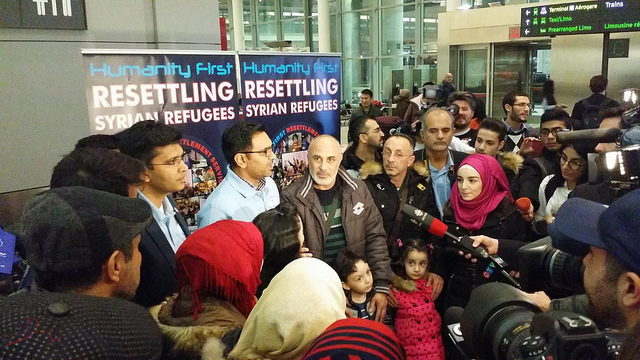
First Family of Syrian Refugees Arrives in Canada

In their December suit, Texas Health and Human Services Commission V. United States, et, al., the state of Texas alleged that the United States government and the International Rescue Committee unlawfully attempted to re-settle six Syrian refugees in the city of Dallas without prior  consultation and collaboration. According to Texas, the federal government failed to consult with the state regarding re-settlement of these refugees, and prevented them from receiving vital information relating to security risks posed by Syrian refugees prior to their re-settlement. Texas also claimed that the International Rescue Committee similarly failed to collaborate and consult with the Texas Health and Human Services Commission in advance prior to the re-settlement of these refugees. To protect itself, the state of Texas asked for an injunction and a temporary restraining order to halt the resettlement of Syrian refugees until security checks could confirm that these Syrian refugees do not pose a threat to the state of Texas.

On December 9, 2015 the U.S. district court denied the temporary restraining order, adding that the state of Texas failed to provide compelling evidence to suggest that Syrian refugees pose a substantial threat of irreparable injury to its citizens. Presiding district court Judge David C. Godbey added that, “the [Texas] commission has failed to show by competent evidence that any terrorists actually infiltrated the refugee program, much less that these particular refugees are terrorists’ intent on causing harm.” Although the lawsuit still stands and will likely not receive a final ruling until early next year, the district court set an important precedent in its denial of the temporary restraining order. Judge Godbey further maintained that it is not within the purview of the district court to assess what risk, if any, Syrian refugees pose to any particular state. Such risk can only be assessed by the federal government. On this issue Godbey stated that, “the Court has no institutional competency in assessing the risk posed by refugees. That is precisely the sort of question that is, as a general matter, committed to the discretion of the executive branch of the federal government, not to a district court.” The rest of the lawsuit remains in litigation.

Continue reading

3209934849_5f5faed197_b
It is our pleasure to bring you the latest in immigration news including recent USCIS announcements, workload updates, tips, and important reminders to avoid delays in application processing or rejections. For more information please contact our office.

Comment Period for Proposed USCIS Form Revisions:

The Department of Homeland Security (DHS) and United States Citizenship and Immigration Services (USCIS) have proposed changes to the following USCIS forms. DHS and USCIS invite the general public, organizations, and federal agencies to submit comments on the proposed revisions by the deadlines outlined below:

Senate

On October 20, 2015 Democrats in the Senate successfully blocked the Republican backed bill S. 2146: Stop Sanctuary Policies and Protect Americans Act from moving forward with a vote of 54-45. At its core, the bill aimed to hold sanctuary jurisdictions accountable for noncompliance of federal orders including detainment of undocumented immigrants, increasing penalties for individuals caught re-entering the United States after their removal, and providing protection to state and local law enforcement officials cooperating with federal law enforcement officials. The bill was introduced by Republicans after an act of violence took the life of a San Franciscan woman at the hands of an alleged undocumented immigrant with a felony record, who had also been the subject of multiple removals. Public outcry ensued after the city sheriff released the perpetrator despite a federal immigration detainment order. According to Republicans, San Francisco is one of hundreds of sanctuary cities that refuse to comply with federal immigration orders to facilitate the detainment and removal of undocumented immigrants.

Among its provisions, the bill aimed to crackdown on so called ‘sanctuary cities’ notorious for their noncompliance by limiting government funding. By cutting necessary funding, Republicans hoped that this would force cooperation between local law enforcement officials and federal law enforcement officials including ICE officers. Republican Senator Vitter who introduced the bill, argued that the violent crime that occurred in San Francisco was just one example highlighting the magnitude of compliance concerns. According to Vitter, ‘sanctuary cities’ like San Francisco have repeatedly refused to comply with orders of detainment issued by the Department of Homeland Security. Prior to the vote, the White House had warned Senate Republicans that if the bill did pass with the 60 necessary votes, they could expect the President to veto the bill. Although the bill was criticized by Democrats for stereotyping undocumented immigrants and making sweeping allegations against the undocumented immigrant community, the bill raises serious competence and compliance concerns.

Continue reading