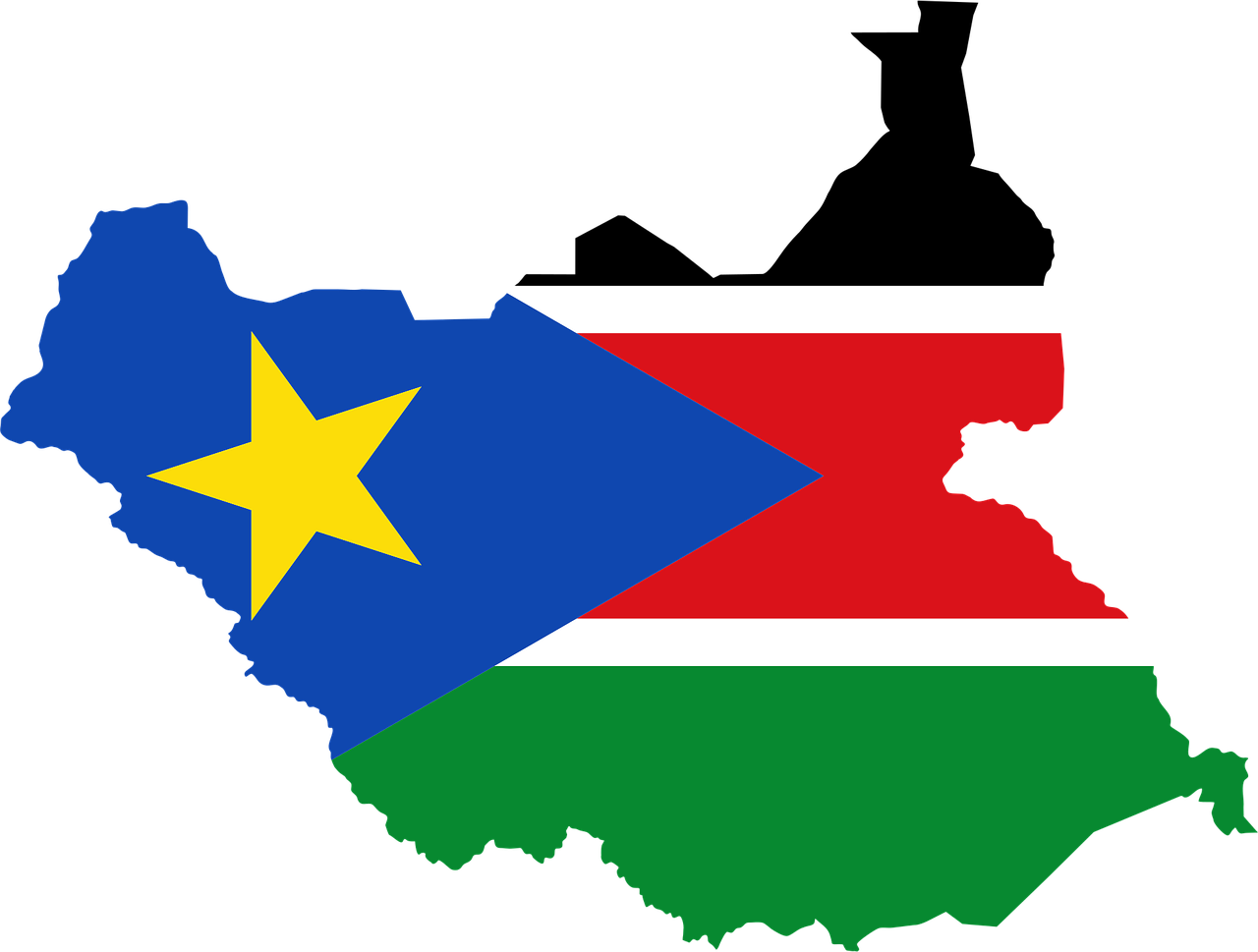
Articles Posted in South Sudan

update-1672346_1920

On July 10, 2026, U.S. Citizenship and Immigration Services issued new employment-authorization guidance, affecting certain Temporary Protected Status beneficiaries from Haiti, Burma, Ethiopia, Somalia, South Sudan, Syria, and Yemen.

The guidance was released shortly before the affected employment-authorization dates were scheduled to expire. Under the updated USCIS instructions, covered Haitian TPS beneficiaries have employment authorization through July 24, 2026. Covered beneficiaries from the other six countries have employment authorization through July 17, 2026. The temporary extensions affect hundreds of thousands of workers.

Updated employment-authorization dates

TPS country Updated USCIS expiration date
Haiti                                 July 24, 2026
Burma (Myanmar)                                 July 17, 2026
Ethiopia                                 July 17, 2026
Somalia                                 July 17, 2026
South Sudan                                 July 17, 2026
Syria                                 July 17, 2026
Yemen                                 July 17, 2026

TPS beneficiaries affected by these developments should immediately consult with a qualified immigration attorney to evaluate whether they may qualify for another lawful immigration status or form of relief.
Continue reading

brittani-burns-98uYQ-KupiE-unsplash-scaled

Key Takeaways

  • The Supreme Court terminated Haiti and Syria’s TPS status on June 25th
  • Approximately, 350,000 individuals will lose their work authorization and be subject to removal
  • Affected individuals must seek alternative legal status immediately to avoid removal proceedings once the transition period ends.

On July 1, 2026, DHS and USCIS set a temporary expiration date of July 10, 2026 for work permits held by Temporary Protected Status beneficiaries from seven countries (Haiti, Syria, Burma, Yemen, Ethiopia, South Sudan, and Somalia), after a Supreme Court ruling cleared the way for the government to end those protections.

On June 25th the Supreme Court ruled that the Department of Homeland Security (DHS) can move forward with ending TPS for certain countries specifically Haiti and Syria even while other smaller legal battles about those terminations continue in lower courts.

Although the deadline for some countries could still be extended while lower court cases continue, DHS has described any continued relief as temporary.

Continue reading

nils-huenerfuerst-xkq3mbthlh0-unsplash-scaledThe U.S. government has issued a revised travel ban that takes effect at 12:01 a.m. ET on January 1, 2026, significantly expanding restrictions on visa issuance for nationals of 39 countries and individuals travelling with Palestinian Authority–issued travel documents.

Under the new presidential proclamation, immigrant and nonimmigrant visas are fully suspended for nationals of 19 countries, which now include seven newly added nations. An additional 19 countries face partial restrictions — limiting immigrant visas and certain nonimmigrant categories (e.g., B, F, M, J visas). One country, Turkmenistan, now faces only immigrant visa restrictions.

Importantly, the ban does not revoke existing visas or apply to foreign nationals already in the United States on January 1, 2026, with valid visas. Other exceptions include U.S. lawful permanent residents, dual nationals travelling on a non-designated passport, certain diplomats, and athletes travelling for major events.

This expanded travel ban marks one of the most sweeping visa restrictions in recent U.S. policy, with potential impacts on U.S. employers, and visa holders.


What are the countries subject to full restrictions


The proclamation adds seven countries to the existing 12 countries whose nationals are barred from both immigrant and nonimmigrant visa issuance. The initial 12 countries with continued full visa restrictions are:

  • Afghanistan
  • Burma
  • Chad
  • Republic of Congo
  • Equatorial Guinea
  • Eritrea
  • Haiti
  • Iran
  • Libya
  • Somalia
  • Sudan
  • Yemen

The proclamation adds the following seven countries to the full restriction list:

  • Burkina Faso
  • Laos (previously on the June travel ban “partially restricted” list)
  • Mali
  • Niger
  • Sierra Leone (previously on the June travel ban “partially restricted” list)
  • South Sudan
  • Syria

Continue reading

south-sudan-1758979_1280On November 5th the Department of Homeland Security (DHS) announced that the country‑specific designation of South Sudan will be terminated for the Temporary Protected Status (TPS) program. The TPS designation for South Sudan will end on January 5, 2026.


What’s the background?


  • South Sudan was first designated for TPS in 2011 due to ongoing armed conflict and extraordinary temporary conditions in the country.
  • The designation was extended multiple times, including a six‑month extension from May 2025 through November 2025, because DHS was unable to make a timely determination by the statutory deadline.
  • In its termination decision, DHS determined that South Sudan “no longer continues to meet the conditions” for TPS under the statute.

Who is affected?


Nationals of South Sudan (and certain stateless individuals who last habitually resided in South Sudan) who currently hold TPS under that country’s designation. After January 5, 2026, they will no longer have TPS status.


What’s the timeline and transition?


  • Until January 5, 2026: The termination becomes effective then.
  • During the transition period, certain employment authorization documents (EADs) issued under the South Sudan TPS designation remain valid through that date.

Continue reading

boeing-159589_1280A new article published in the New York Times reveals the 43 countries that are reportedly included in President Trump’s new travel ban, expected to be released by executive order on Friday March 21st.

According to anonymous government sources, the White House is considering a draft proposal establishing partial or full suspensions on entry to the United States for countries falling into three different tiers: red, orange, and yellow.

The “red” list of countries includes nationals whose entry to the United States would be barred for a temporary period that is yet to be determined by the U.S. government including:

  • Afghanistan
  • Bhutan
  • Cuba
  • Iran
  • Libya
  • North Korea
  • Somalia
  • Sudan
  • Syria
  • Venezuela and
  • Yemen

The draft proposal also includes an “orange” list of countries whose nationals would not be barred from the United States, but who must be properly vetted and screened at mandatory in-person visa interviews before gaining admission to the United States.

Continue reading