Articles Posted in Deportation & Removal

6733401147_3a5069bba1_z
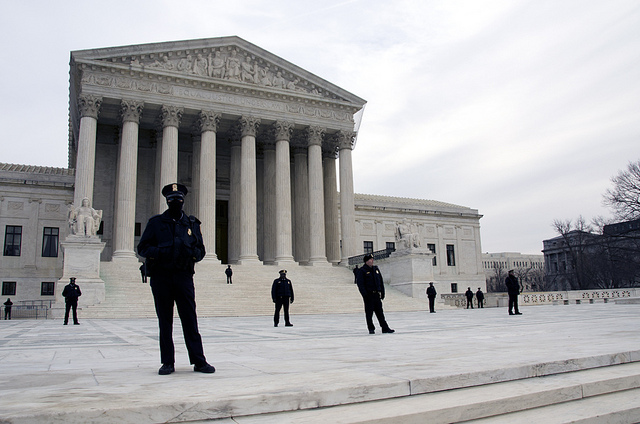
Today the Supreme Court of the United States will begin hearing arguments in the case United States v. Texas, a lawsuit challenging Obama’s executive actions on immigration. As you have heard, a federal court order temporarily froze the expanded DACA and new DAPA programs from going into effect as expected. The Supreme Court will decide the fate of these programs by June of this year.

It is truly an exciting time of the year for immigration law. United States v. Texas is the biggest immigration case of our generation. The Supreme Court’s ruling will set an important precedent for the future of immigration policy. The court will also determine whether the President had authority to enforce the executive actions on immigration. As a member of the American Immigration Lawyer’s Association (AILA), we invite you to join a live webcast with AILA experts Greg Chen,  Legal Director Melissa Crow, and UCLA School of Law Professor Hiroshi Motomura on Tuesday, April 19, 2016, at 1:00 pm (ET), as they recap and offer expert analysis of Monday’s Supreme Court oral arguments in the United States v. Texas case.

Click here to watch the live stream.

14301886764_524229d763_z

The Supreme Court is expected to hear oral arguments for United States v. Texas, a lawsuit challenging the President’s executive actions on immigration, on Monday April 18th.  We have learned that attorneys representing the Republican led House of Representatives will be given 15 minutes to argue against Obama’s executive actions on immigration, included the expanded Deferred Action of Childhood Arrivals (DACA) program, and the Deferred Action for Parents of Americans and Lawful Permanent Residents (DAPA) program. This move comes after the House of Representatives voted in favor of filing a brief before the Supreme Court challenging the executive actions on immigration. The court has also authorized a group of undocumented mothers of U.S. Citizen children to speak before the Supreme Court for 10 minutes. The Obama administration is currently at a disadvantage, given that only eight Supreme Court justices will ultimately be handing down one of the most important decisions of our generation come June. Obama had hoped that the House of Representatives would hold hearings in consideration of his Supreme Court pick, Chief Judge of the District of Columbia Court of Appeals, Merrick Garland, by the time oral arguments would begin. Unfortunately, this has not been the case. Republicans have refused to hold hearings in consideration of Judge Garland. It is likely that they will continue to delay hearings until the next President of the United States takes office next year.

Oral arguments on April 18th will be no more than 90 minutes long. The majority of the time will be divided by the Obama administration and attorneys representing Texas and 25 other states challenging the constitutionality of Obama’s executive actions on immigration. United States v. Texas is unique because it will finally put to rest the issue of whether or not the executive action on immigration is within the President’s constitutional powers. This case is also unique because it will be one of the few times that the Supreme Court has addressed the issue of illegal immigration and the rights of unlawful immigrants under the constitution.

Continue reading

61320634_2e4c8e752c_z

Every year USCIS receives and adjudicates approximately 6 million applications from foreign nationals seeking to immigrate to the United States, and U.S. companies seeking to employ foreign workers temporarily.  According to the Department of Homeland Security’s Office of Immigration Statistics, “an estimated 13.1 million lawful permanent residents (LPRs) were living in the United States on January 1, 2013.” Of these permanent residents, more than half–8.8 million–were eligible to apply for naturalization. Additionally, the United States issues approximately 700,000 temporary non-immigrant work visas for a variety of temporary workers including: highly skilled foreign workers employed in specialty occupations in the STEM fields, fashion models, internationally acclaimed athletes and entertainers, aliens of extraordinary ability, religious workers, intra-company transferees, treaty traders/investors, foreign media workers, and agricultural and seasonal workers.

The reason the issuance of temporary worker visas is so low, when compared to the issuance of permanent resident cards, is because most of the temporary foreign worker visa programs are subject to a congressional cap, that limits the amount of non-immigrants that can be admitted per fiscal year. Additionally, certain temporary nonimmigrant worker visa classifications are granted for a specified period of time, although in most cases at least one extension may be granted. The cap applies primarily to the H nonimmigrant worker classifications, and non-minister religious workers. The H visa category accounts for approximately 54% of all visas issued for temporary workers. That is why the H visas are the most talked about visas among politicians when discussing immigration reform. The cap does not apply to treaty traders/investors, aliens of extraordinary ability, intra-company transferees, NAFTA professionals (Canada and Mexico), and foreign media workers. In comparison to developed countries, the United States admits a relatively low number of temporary foreign workers. Foreign workers are typically admitted either to fill labor shortages in the American job market, or because of their exceptional, or highly technical skills, as is the case for the H-1B visa classification.  Only highly skilled foreign nationals, aliens of extraordinary ability, aliens holding advanced degrees, high capital investors, nurses and physical therapists, doctors in undeserved area, and recipients of national interest waivers, have the unique opportunity to obtain permanent residence based on employment.

The mammoth task of meaningful immigration reform will not be easy and it will not happen overnight. The presidential nominees have failed to outline a clear strategy to overhaul our immigration system. None of the presidential candidates have addressed the most contentious areas of immigration policy that must be revised, in order to repair our broken immigration system.

Continue reading

The Obama administration may announce its choice for the Supreme Court nomination as early as this week. We have learned that there are three contenders being considered for the Supreme Court nomination. All three candidates serve as judges for the United States Court of Appeals for the District of Columbia, and are well respected by both parties. They include Sri Srinivasan, Merrick Garland, and Paul Watford, who is rumored to be at the top of the President’s list. The Supreme Court nominee will be required to face a Republican Senate, in order to be formally appointed to the Supreme Court. Senate Republicans have already warned the White House that they will not hold hearings for any Supreme Court nominee suggested by President Barack Obama. As soon as Republicans heard of the passing of Justice Antonin Scalia, they urged caution from the White House. Senate Republicans anticipate that the next President of the United States will be the party’s Presidential nominee. It is for this reason that they claim that the Supreme Court nomination should be made by the next President of the United States, and not by Barack Obama. In a televised announcement, following the death of Antonin Scalia, President Obama made it very clear that his intentions were to choose the Supreme Court nomination, despite warnings from Republicans. Senate Republicans responded by stating that they would block any of the President’s advancements.

President Obama will need to choose a Justice that will have a tendency to vote liberally in order for his expanded Deferred Action for Childhood Arrivals (DACA) program and new Deferred Action for Parents of Americans and Lawful Permanent Residents (DAPA) program to survive. The expanded DACA and new DAPA program were introduced in November 2014 as part of President Obama’s executive actions on immigration. These programs have been temporarily suspended following a federal court order filed by Texas and other states. The Supreme Court is expected to hear oral arguments in the case, United States v. Texas, this April with a final ruling made by summer time.

Continue reading

6000446155_1d67582412_z

The fate of the President’s executive actions on immigration now rests in the hands of eight justices on the Supreme Court, absent Justice Antonin Scalia. The Supreme Court will begin to hear oral arguments for the case, United States v. Texas on April 18th of this year, with a final ruling expected by summertime. Nearly a year and a half ago, President Obama announced a series of executive actions on immigration including the expanded Deferred Action of Childhood Arrivals (DACA) program, the new Deferred Action for Parents of Americans and Lawful Permanent Residents (DAPA) program, and other measures to enhance border security, prioritize deportations, and modernize the immigration system. USCIS was expected to begin accepting applications for the expanded DACA and DAPA program on February 18th. The excitement surrounding the expanded DACA and DAPA program however was very short lived. A federal court order filed by Texas and other states on February 16th temporarily suspended these programs from going into effect.

Since then, the federal government and the State of Texas have been battling one another in court. The Fifth Circuit court determined that Texas and at least 25 other states had sufficient ‘standing’ to challenge both programs from being implemented. The state of Texas along with other states, argue that these programs are not only outside the purview of the President’s constitutional power, but that the States would be substantially burdened, should the programs go into effect. Texas states that as a result of these programs, the State would suffer increased health-care, law enforcement, and educational costs which would come out of the State budget and more importantly the pockets of Texas residents, who do not take kindly to these programs. Additionally, Texas claims that it would suffer additional financial burden in having to issue more drivers’ licenses to individuals qualifying for expanded DACA and DAPA, a state-subsidized benefit. If the Supreme Court decides in favor of the federal government, nearly 5 million immigrants residing in the United States unlawfully will be shielded from deportation, and States will be forced to bear the costs to accommodate their new ‘deferred’ status. Deferred status will grant individuals the right to legally obtain employment, obtain a social security number, a driver’s license, and an education, but it is not a path to citizenship. As it stands, it is unlikely that a new Supreme Court Justice will be appointed before oral arguments begin in this case, especially with mounting political pressure from Republicans seeking to block the President from making a nomination.

Continue reading

charlesFor this month’s staff spotlight, we invite you to learn more about Associate Attorney Charles S. Ward, Esq.

Attorney Ward has been a long time attorney at the Law Offices of Jacob J. Sapochnick. Charles received his Doctorate in Jurisprudence from Southern Methodist University graduating Cum Laude. Prior to attending law school, Mr. Ward worked for Delta Air Lines in the Reservations/Sales Department, where he focused on customer service issues and problems relating to traveling arrangements. He has been a California licensed attorney since 1997 and is also licensed to practice before the Federal Court system. His area of expertise includes Immigration and Family Law.

His Favorite Quote “Time and Tide Wait for No One” 

4668514068_02942d6921_z

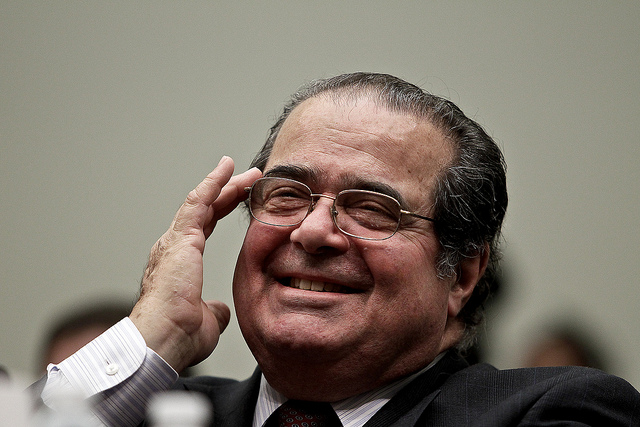
“He was a jurist of captivating brilliance and wit, with a rare talent to make even the most sober judge laugh. The press referred to his “energetic fervor,” “astringent intellect,” “peppery prose,” “acumen,” and “affability,” all apt descriptions. He was eminently quotable, his pungent opinions so clearly stated that his words never slipped from the reader’s grasp” -Ruth Bader Ginsburg

When news broke of the passing of the longest serving Justice on the Supreme Court, Antonin Scalia, a cloud of uncertainty lifted above the heads of Republican frontrunners vying for the Republican nomination for President of the United States. Indeed, the topic of conversation during the February 13th Republican Presidential Debate, which occurred on the day of Justice Scalia’s passing, focused on whether or not the current President should nominate the next Supreme Court Justice. Justice Antonin Scalia, nominated to the Supreme Court by President Ronald Reagan in 1986, was the most outspoken conservative on the bench, and not very well liked by liberal politicians and intellectuals, primarily due to the philosophy behind his jurisprudence. Scalia’s jurisprudence during his 29 years on the bench belonged to the Originalist school of thought. An Originalist’s interpretation of the Constitution denies the contention that the Constitution should be interpreted by the Court as a living, breathing document, a view that is typically shared by liberal Constructivist Justices like Ruth Bader Ginsburg. Instead, Originalists believe that the Constitution should be interpreted according to the original intent or meaning shared by the founders as it was written. This would require an Originalist to adhere to the spirit of the law as it was intended by the founders of our country, as well as an understanding of what was meant when the Constitution was originally drafted.

During his time on the bench, Scalia tenaciously criticized the liberal Constructivist view, calling this interpretation of the Constitution, judicial activism, which he viewed as inappropriate. In his view the Supreme Court must be insulated and not be swayed by the social concerns of the public. Throughout his trajectory, Scalia has gone down in history for handing down the most controversial dissents in the history of the Supreme Court, avidly supporting the right to bear arms, challenging the right to abortion, affirmative action, gay rights, and was ultimately instrumental in securing the Presidential nomination of George W. Bush in the 2000 case Bush V. Gore. Up until his untimely death, the Supreme Court held a conservative majority. The conservatives on the bench include Chief Justice, John G. Roberts Jr. nominated by President George W. Bush in 2005, Justice Clarence Thomas nominated by President George W. Bush in 1991, Justice Samuel Anthony Alito Jr nominated by President George W. Bush in 2006, Justice Anthony Kennedy, a moderate conservative swing vote nominated by President Ronald Reagan in 1988, and up until recently Antonin Scalia nominated by Ronald Reagan in 1986. Together, these conservative Justices established a 5-4 majority against liberal Justices: Ruth Bader Ginsburg, Stephen G. Breyer, and recently appointed Justices Elena Kagan and Sonia Sotomayor. Justice Antonin Scalia’s sudden death has now upset the conservative majority, creating a balance of power between conservative and liberal minds on the bench. With the death of Scalia, the bench is now evenly split ideologically 4-4 with a vacant seat ready to be filled by a liberal Justice, thereby creating a Liberal majority. This of course will not be easy, since the Senate is dominated by the Republican party, and the Senate will be in charge of vetting the President’s nominee.

Continue reading

9374736981_85a6e772fd_z

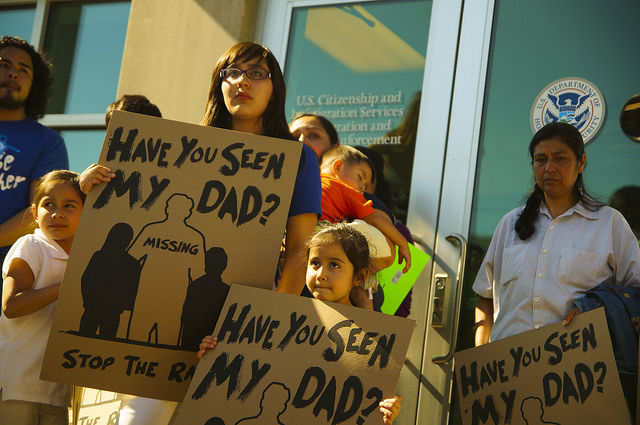
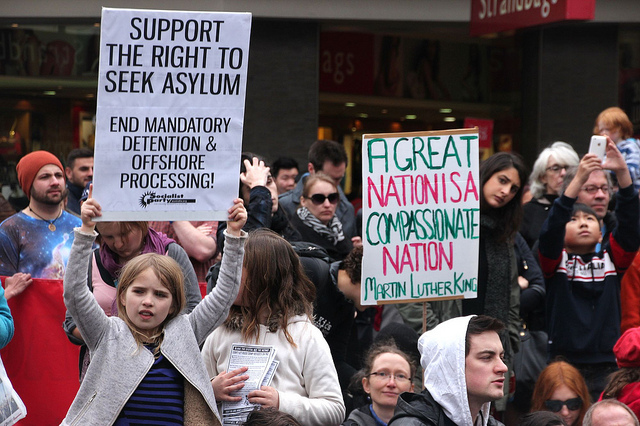
A new factsheet published by AILA and Kids in Need of Defense (KIND) provides statistics on the representation and removal of unaccompanied children and families facing removal proceedings before immigration court. The data concludes that an overwhelming number of unaccompanied children and families are ordered removed from the United States, despite having demonstrated a legitimate fear of persecution or torture and passing a credible fear interview, making these individuals viable candidates for asylum, prosecutorial discretion, or other relief from deportation. This is due to a lack of legal representation and legitimate concern for the due process of law.

Families Passing Credible Fear in preliminary interviews with federal asylum officers

On the whole, the majority of families in detention centers demonstrate a legitimate fear of persecution or torture and maintain a high rate of approval during credible fear interviews;

  • In preliminary interviews with asylum officers, approximately 90% of families successfully demonstrated a credible fear of persecution or torture;
  • Upon completion of these interviews, approximately 88% of detained families pass their credible fear interviews;
  • The USCIS Asylum Office has indicated that the credible fear passage rates remain unchanged—at a rate of 90%;
  • DHS data indicates that 53% of 121 individuals, arrested by DHS during the January raids, lacked legal representation before immigration court;

Continue reading

3198083648_b5276e02c4_z

This morning, the Supreme Court announced that it would hear arguments for and against the extended Deferred Action for Childhood Arrivals (DACA) program and the new Deferred Action for Parents of U.S. Citizens and Lawful Permanent Residents (DAPA) program. If the government succeeds in its appeal, millions of undocumented immigrants will be granted temporary employment authorization, ‘deferred status’ meaning that these individuals will no longer need to fear deportation, and other benefits such as the ability to apply for a social security number. This decision is a victory for the Obama administration since it leaves open the possibility that the Supreme Court will lay down an important legal precedent in the midst of the presidential campaign and Obama’s exit from the White House.

  • To learn how expanded DACA is different than the initial DACA program click here.
  • To learn about the DAPA program click here.

3198083750_597c4a4e90_z
The Supreme Court justices are currently in deliberations, to decide the fate of Barack Obama’s expanded Deferred Action for Childhood Arrivals (DACA) and Deferred Action for Parents of U.S. Citizens and Lawful Permanent Residents (DAPA) announced November 2014, as part of the President’s executive actions on immigration. At issue is whether or not the Court will hear arguments for and against lifting the temporary court injunction, which prevented the expanded DACA program and the new DAPA program from moving forward as initially anticipated.

The extended DACA and DAPA provisions were scheduled to go into effect on February 18, 2015, but were quickly blocked by a temporary injunction filed by Texas and 26 other states, just three days before applications for extended DACA and DAPA would have been accepted by USCIS. What has resulted has been a near two-year legal battle between the federal government and the states in question.

Timeline of legal action between the federal government and plaintiffs: