Articles Posted in First Time Clients
The End of the International Entrepreneur Rule and H-4 Work Authorization is Imminent
The Trump administration has taken its first step toward dismantling the International Entrepreneur Rule, an Obama era program that would have given thousands of foreign entrepreneurs the opportunity to travel to the United States for a 30-month period, for the purpose of starting or scaling their start-up business enterprise in the United States.
On November 17, 2017, the Trump administration sent a notice to the Office of Management and Budget (OMB) to officially end the International Entrepreneur Rule. This notice appeared on the website of the Office of Information and Regulatory Affairs as early as Friday. At this time, the Trump administration is finalizing a draft to officially rescind the rule. Once the administration has finished reviewing the draft, it will be published in the Federal Register. It is expected that the draft to rescind the rule will be published within the next week.
After publication, a public notice and comment period will follow, as required by the Administrative Procedure Act, a process by which the government invites the public to comment on a proposed version of a government rule published in the Federal Register. Once the comment period has ended, the government responds to comments, considers feedback, and decides whether such feedback will have any influence on their decision to rescind the rule.
Relief for DACA Renewal Requests Affected by USPS Mail Service Issues
At the end of September, recipients of DACA were in a frenzy to file for a final 2-year renewal of their DACA status. The deadline to file for the final 2-year renewal was October 5th, 2017. Only individuals currently receiving DACA, whose status was to expire before March 5th, were eligible to apply for a final renewal of their status, provided their application was properly filed and received by the United States Citizenship and Immigration Services (USCIS) by October 5, 2017.
Following the October 5, 2017 deadline, USCIS rejected nearly 100 renewal applications, even though the cause for their delay was the fault of the United States Postal Service (USPS). At least 74 of the applications received after the deadline were mailed from the New York area and Chicago. USPS has taken responsibility for these delays, stating that the packages containing the DACA renewal requests were rejected as a result of mail problems in Chicago. Last week, USCIS flatly denied any responsibility for these late petitions, and said that nothing could be done, and that the decision to reject petitions received after the deadline was final.
However, USCIS recently had a change of heart. Yesterday, November 16, 2017, USCIS released a statement notifying affected individuals that USCIS will accept DACA renewal requests from individuals who re-submit their DACA renewal requests, and provide individualized proof that their DACA renewal request was originally mailed to USCIS in a timely manner, and that the cause of the petition’s receipt after the October 5th deadline was the result of USPS mail service error.
U.S. Embassies Resume Non-Immigrant Visa Services in Turkey
As previously reported, on October 8, 2017, the United States announced the suspension of all non-immigrant visa services across U.S. Embassies and Consulates in Turkey “until further notice,” following news that a U.S. embassy official was placed under arrest without explanation and without access to counsel. This included the suspension of the issuance of: B-2 visas for temporary tourism or medical reasons, B-1 visas for temporary business visitors, F-1 student visas, E-1 treaty trader visas, E-2 treaty trader visas, and other non-immigrant visa types.
Since October 8, 2017 until just recently, no new non-immigrant visa applications were being processed in Turkey until the U.S. government could receive assurances form the Turkish government that embassy staff officials would not be detained or placed under arrest without cause, or access to counsel.
On November 6, 2017, the Department of Homeland Security and the United States Embassy in Ankara, Turkey, announced that the United States has received sufficient assurances from the Government of Turkey that employees under the diplomatic mission are not under investigation, that local staff of U.S. embassies and consulates will not be detained or arrested in connection with their official duties, and finally that the U.S. government will be notified in advance if the Turkish government plans to arrest or detain any local staff at U.S. embassies in Turkey. The announcement however provides that the United States “continues to have serious concerns about the existing cases against arrested local employees” of the Mission in Turkey and of “. . . the cases against U.S. citizens who have been arrested under [a] state of emergency.”
DACA Countdown: Can Congress Save DACA by March 5?
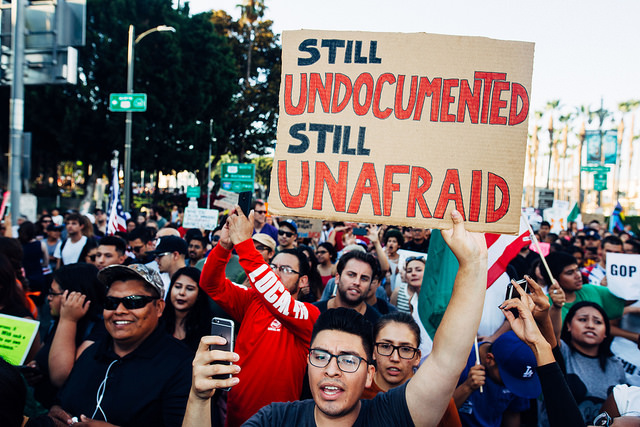
As of today, lawmakers in Congress have 115 days to pass legislation allowing more than 800,000 undocumented immigrants, known as Dreamers, who were brought to the United States as children, the opportunity to remain in the United States lawfully.
If Congress does not act by the March 5th deadline terminating the DACA program, it is likely that the President will give Congress more time to pass such legislation. The President has reiterated that he wants the solution to come from Congress, and will not act unilaterally to shield Dreamers from deportation.
Attorney General Jeff Sessions has signaled to Congress that the future of DACA remains in their hands, recognizing that they have an “opportunity to do something historic.” Republican politicians have thus far shown their willingness to work with Democrats to pass legislation that would grant Dreamers not only protection from deportation and the ability to reside in the United States lawfully, but an opportunity to obtain citizenship. Notoriously conservative Republican Senator, Roy Blunt, along with others has said that he would be willing to support legislation granting Dreamers a path to citizenship, and said as early as Tuesday that deporting Dreamers to a country they did not grow up in would be “totally unreasonable.”
President Trump of course has said that he does not support legislation that would give Dreamers a path to citizenship, however a majority of Congress could override a Presidential veto should such a piece of legislation come to pass. Legislation to protect Dreamers from deportation would however come with certain conditions. The President, as well as Republicans, are pushing for provisions that would secure funding for the wall to be constructed along the U.S./Mexico border and enhance border security. Republican Congressman Dan Newhouse has said that the consensus among Congress is that “it is the responsibility of Congress, and not the administration to make immigration law.”
DHS Announces Termination of TPS Designation for Nicaragua, Grants Honduras 6-Month Extension

Yesterday, November 6, 2017, the acting Secretary of Homeland Security, Elaine Duke, announced her decision to terminate the Temporary Protected Status (TPS) designation for Nicaragua, with a delayed effective date of 12 months until the termination of that designation, giving Nicaraguans enough time to make preparations to either depart the United States or seek alternative lawful immigration status in the United States, before the designation officially terminates on January 5, 2019.
Furthermore, Duke announced that the TPS designation for Honduras will be automatically extended for six months “from the current January 5, 2018 expiration date to the new expiration date of July 5, 2018.” This automatic extension has been granted because additional information is necessary to determine whether conditions have changed in Honduras that would justify termination of the country’s TPS designation.
According to Duke’s announcement, the decision to terminate the TPS designation for Nicaragua was made after it was determined that the conditions in Nicaragua have changed since the country’s original 1999 designation that no longer justify granting protected status to this class of individuals. Furthermore, because the Secretary received no formal request from the Nicaraguan government to extend TPS status, and there was no evidence to indicate that the Nicaraguan government could not adequately handle the return of Nicaraguan nationals, the TPS designation for Nicaragua was no longer justified.
Opinion: Fact checking the President’s remarks on the Diversity Visa Program and “Chain Migration”
It did not take long for President Trump to capitalize on the terrorist attack which took place several days ago in New York City, to attack the Diversity Visa Program and the process by which US Citizens, and in some cases green card holders, can petition for extended family members to immigrate to the United States.
Following the terrorist attack in New York City, which claimed the lives of 8 Americans, the President fired off a series of tweets calling on Congress to terminate the Diversity Visa Program, claiming that the perpetrator of the attack, Sayfullo Saipov, had gained admission to the United States seven years ago through the diversity immigrant visa program, a congressionally mandated program made possible by section 203(c) of the Immigration and Nationality Act (INA). According to CNN, the Department of Homeland Security has said that Saipov came to the United States in 2010 on a diversity visa. Department of Homeland Security archives confirm that Uzbekistan was a country participating in the Diversity Visa program as early as 2007, and continues to participate in the Diversity Visa Program.
The Diversity Immigrant Visa Program
The Diversity Immigrant Visa program is a program enacted by Congress, which allocates up to 50,000 immigrant visas per fiscal year to a special class of immigrants known as “diversity immigrants.” Each fiscal year diversity applicants register for the visa program electronically at no cost. Applicant entries are selected at random through a computerized “lottery” system to allocate the 50,000 available immigrant visas for the Diversity Immigrant Visa Program. Only diversity immigrants who are natives of countries with historically low rates of immigration to the United States qualify for the Diversity Immigrant Visa program. In other words, to qualify for a diversity visa, essentially a green card, you must be a native of a country participating in the diversity visa program. Countries with historically high rates of immigration to the United States DO NOT qualify.
EO Update: Resumption of the U.S. Refugee Admissions Program
On October 24, 2017, the President issued Executive Order 13815 entitled, “Resuming the United States Refugee Admissions Program (USRAP) with Enhanced Vetting Capabilities.” As the title suggests, the U.S. Refugee Admissions Program also known as (USRAP) is no longer suspended and the policies set forth in section 6(a) of Executive Order 13780 also known as “Protecting the Nation from Foreign Terrorist Entry into the US,” are no longer in effect as they pertain to refugees. As outlined in Executive Order 13780, beginning October 24, 2017, “Presidential action to suspend the entry of refugees under the USRAP [is no longer needed] to protect the security and interests of the United States and its people.”
Section 6(a) of Executive Order 13780 imposed a temporary freeze on the admission of refugees to the United States, and provided for a temporary 120-day window in which the Department of Homeland Security would review the application and adjudication process for the Refugee Admissions Program to prevent foreign terrorist entry to the United States. This 120-day window expired on October 24, 2017. Section 6(a) contained a provision which stipulated that refugee travel and application decisions would resume after the 120-day window had terminated, “for stateless persons and for nationals of countries which the Secretary of State, Secretary of Homeland Security, and Director of National Intelligence jointly determine that the additional procedures identified through the USRAP review process are adequate to ensure the security and welfare of the United States.”
At this time, the Secretary of State, Secretary of Homeland Security, and Director of National Intelligence have advised the Trump administration that sufficient improvements have been made to prevent foreign terrorist entry through the Refugee Admissions Program, such as the implementation of enhanced vetting procedures. These improvements have been deemed sufficient to ensure the “security and welfare of the United States,” for the time being. In accordance with this order, the Department of Homeland Security will only apply special measures restricting the travel of refugees to those categories of refugees that “pose potential threats to the security and welfare of the United States.”
USCIS Introduces New Policies to Toughen the renewal process for H-1B visas, and other work visas
Unsurprisingly, this week we learned that the Trump administration is taking further steps to toughen the process of applying for an H-1B visa extension/renewal request, and that of other highly sought-after non-immigrant work visa types filed using Form I-129 Petition for Nonimmigrant Worker such as the H, O, P, L, and R work visas. The news comes as part of the President’s ongoing plan to prioritize the employment of American workers over foreign workers, outlined in the President’s Executive Order “Buy American, Hire American.”
On October 23, 2017, the United States Citizenship and Immigration Services (USCIS) announced that the agency will be updating its adjudication policy “to ensure petitioners meet the burden of proof for a non-immigrant worker extension petition.” The change in policy specifically provides that USCIS officers will “apply the same level of scrutiny to both initial petitions and extension requests” for the H-1B visa as well as other nonimmigrant visa types.
Per USCIS, this policy will now apply to “nearly all non-immigrant classifications filed using Form I-129 Petition for Nonimmigrant Worker.” This means that all nonimmigrant worker visa renewal requests, made using Form I-129, will be subject to the same level of scrutiny that was applied during the foreign worker’s initial non-immigrant work visa request.
Visa Lawyer Blog