
This Friday afternoon, we share with you some interesting new insights revealed by the U.S. Citizenship and Immigration Services regarding the recent H-1B electronic registration period for fiscal year 2024.
USCIS has disclosed that this H-1B season, it received 758,994 eligible registrations for FY 2024, breaking its previous record of 474,421 eligible registrations just the previous year.
This represents a 60% increase in eligible registrations, with 284,573 more registrants in comparison to last year’s H-1B season.
In terms of actual selections, USCIS selected a total of 110,791 registrations to meet the annual H-1B numerical cap of 85,000 visas this H-1B season. When crunching the numbers, registrants had about a 14.6% chance of being selected, when compared to last year when the chance of selection sat at 26.9%.
This H-1B season, USCIS saw a dramatic increase in the number of registrations submitted, in comparison to prior years. Across the board, there was also an increase in the number of registrations submitted on behalf of beneficiaries with multiple registrations, and the number of registrations submitted on behalf of unique beneficiaries with only one registration. USCIS saw upward trends in the FY 2022 and FY 2023 H-1B registration periods as well.
From looking at the chart below for H-1B fiscal years 2021-2014, one can see that the competition has become greater and greater for H-1B visas year by year, however FY 2024 stands out in particular as the most competitive H-1B season overall.
This chart shows registration and selection numbers for fiscal years 2021-2024 (as of April 24, 2023).
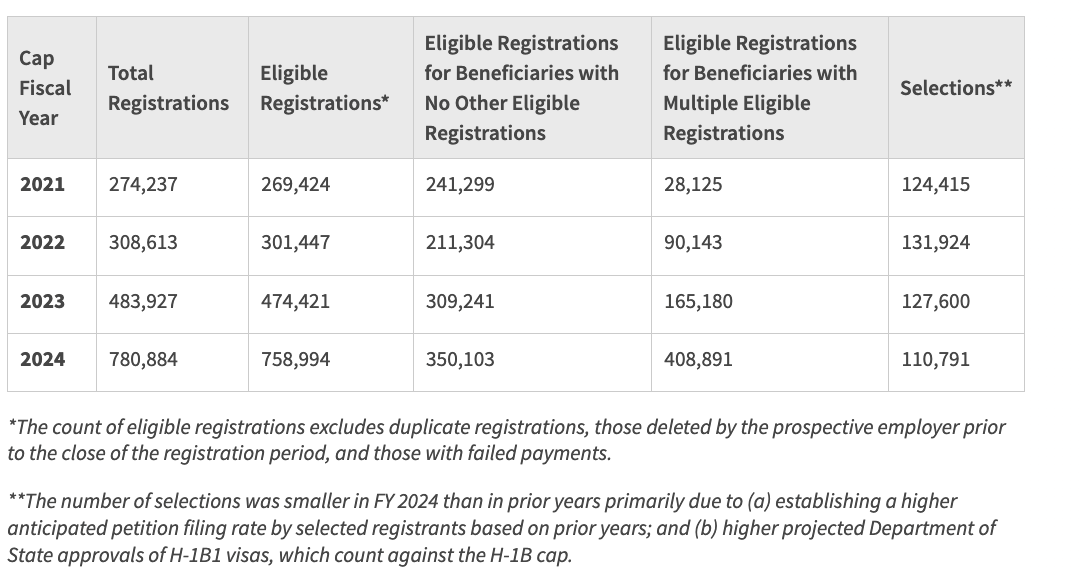
Specifically, the selection rate this H-1B season was significantly lower than all previous H-1B seasons. According to USCIS, there were fewer registrations selected this season, because of higher demand for Chile/Singapore H-1B visa (cap-exempt), and projections showing a higher rate of filings from employers whose registrations were selected in the cap lottery.
Continue reading
 Visa Lawyer Blog


 The U.S. Department of State has announced expanded screening and vetting procedures for visa applicants, effective Monday March 30. As a result, applying for a U.S. visa will now involve closer review of your background, including your online activity.