Articles Posted in Permanent Residents

jennifer-lo-mxrpqMFgIjw-unsplash-scaled
Great news has come down from the U.S. Court of Appeals for the Ninth Circuit this afternoon.

Dealing a blow to the Trump administration, the court issued a majority decision denying the federal government’s motion to lift a lower court injunction that prevented the government from implementing Presidential Proclamation No. 9945, signed by the President on October 4, 2019.

The Proclamation attempted to bar certain individuals from entering the United States pursuant to an immigrant visa, unless they could demonstrate (1) that they would be covered by certain approved health insurance within 30 days of entry or (2) that they had the sufficient financial resources to cover foreseeable healthcare costs.

jc-gellidon-UIp163xCV6w-unsplash-1-scaled

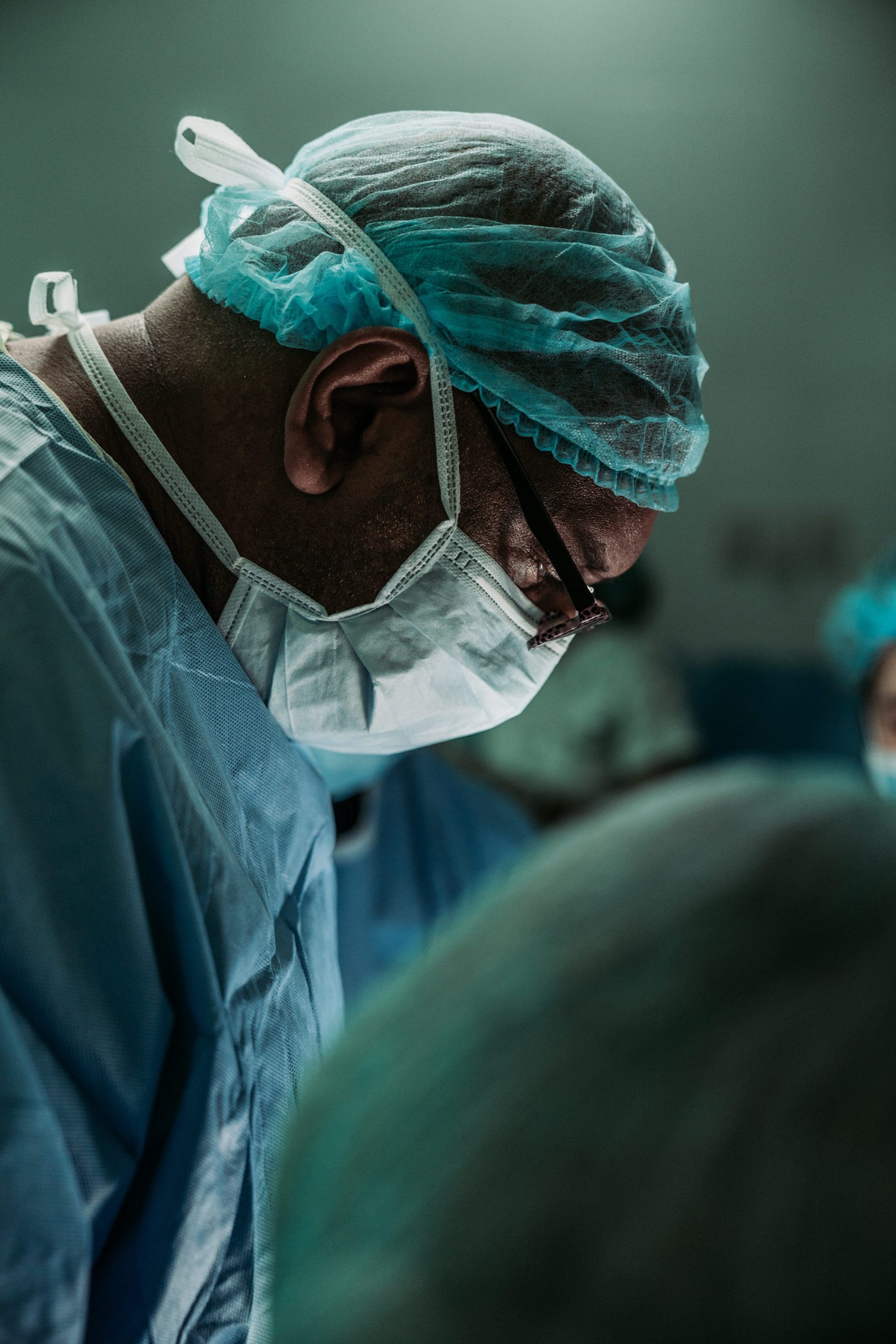
We are pleased to report the introduction of a brand-new Senate bill called the Healthcare Workforce Resilience Act, sponsored by Senators David Perdue, Todd Young, Dick Durbin, and Chris Coons. The purpose of the bill is to increase the number of health care workers available to meet the demand of the COVID 19 pandemic.

If passed, the Healthcare Workforce Resilience Act, would allow nurses and physicians with approved immigrant visas the ability to adjust their status, so that they can help our nation fight the coronavirus and have a durable immigration status.

As you know, there are currently thousands of nurses and doctors stuck overseas waiting in line for green cards to become available, despite a grave need for their services during this public health crisis. What’s worse is that many of these workers already have approved immigrant petitions but are prevented from serving our communities due to the long visa backlogs.

The bill would authorize the U.S. Citizenship and Immigration Services (USCIS) to “recapture” up to 25,000 immigrant visas for nurses and 15,000 immigrant visas for physicians. USCIS would also recapture immigrant visas for the families of these medical professionals.

These recaptured visas would be drawn from the pool of unused employment-based visas that Congress has previously authorized. These visas would be issued in order of priority date and would not be subject to the country caps. To facilitate timely action, premium processing would be applied to qualifying petitions and applications. Furthermore, the bill would direct the Department of Homeland Security and Department of State to prioritize visa appointments for fully qualified nurses and physicians to enter the United States as fast as possible.

Continue reading

bill-oxford-OXGhu60NwxU-unsplash-scaled

It’s been just a few days since President Trump signed his long awaited executive order entitled, “Proclamation Suspending the Entry of Immigrants Who Present Risk to the U.S. Labor Market During the Economic Recovery Following the COVID-19 Outbreak,” and already it is being challenged in federal court.

On April 25, 2020, the first of what is sure to be many lawsuits, Doe v. Trump, was filed in the United States District Court for the District of Oregon challenging the President’s new executive order.

The lawsuit was filed by several individuals and the organization Latino Network against President Trump and the federal government.

Plaintiffs in this case have filed an emergency motion for a temporary restraining order to block the government from enforcing the new executive order, because the executive order does not contain exceptions that preserve the opportunity to request urgent or emergency services for immigrant visa applicants, including for children of immigrants who are at risk of aging out of their current visa eligibility status “by the simple passage of time.”

The lawsuit is concerned specifically with children who are in danger of aging out of their place in the visa queue because they do not have access to emergency services that would have otherwise been available had the proclamation not been issued.

“Without access to such emergency services, children whose underage preference relative status will result in unnecessary and prolonged family separation “for years—or even decades,” the lawsuit says.

Continue reading

donald-trump-4817333_1280

The long-awaited Executive Order temporarily suspending the immigration of certain aliens into the United States has been released.


WHO IS IMPACTED BY THE EXECUTIVE ORDER?


The order entitled, “Proclamation Suspending the Entry of Immigrants Who Present Risk to the U.S. Labor Market During the Economic Recovery Following the COVID-19 Outbreak,” suspends and limits the entry of the following types of aliens (for a 60-day period) beginning 11:59 p.m. eastern daylight time on April 23, 2020.


Your entry is suspended and limited if all of the following are true:

THREE PART TEST


  • You are an alien outside of the United States on the effective date of the Proclamation (April 23rd)
  • You are an alien that does not have an immigrant visa that is valid on the effective date of the Proclamation (April 23rd) and
  • You are an alien that does not have an official travel document other than a visa on the effective date of the proclamation (April 23rd) or issued on any date thereafter that permits him or her to travel to the United States and seek entry or admission
    • Official travel documents include a transportation letter, an appropriate boarding foil, or advance parole document.

ENFORCEMENT


This Proclamation shall be enforced by U.S. Consulates worldwide at their discretion giving them the power to determine whether an immigrant has established his or her eligibility and is otherwise exempted from the Proclamation. The Department of State will implement the proclamation as it applies to immigrant visas, at the discretion of the Secretary of State in consultation with the Secretary of Homeland Security.

The Department of State governs the immigration process outside of the United States, while the Department of Homeland Security governs the immigration process within the United States and guides the United States Citizenship and Immigration Services (USCIS).


WHO IS EXEMPT FROM THE EXECUTIVE ORDER?


The order expressly exempts:

  • Lawful Permanent Residents of the U.S.
  • Aliens who are the spouses of U.S. Citizens
  • Members of the U.S. Armed Forces and any spouse and child of a member of the U.S. Armed Forces
  • Aliens under 21 years of age who are children of United States Citizens and prospective adoptees
  • Aliens seeking to enter the U.S. on an immigrant visa as a physician, nurse, or other healthcare professional
  • Aliens seeking to enter the U.S. to perform medical research or other research intended to combat the spread of COVID-19
  • Any spouse any unmarried child under 21 years of age of any such alien who is accompanying or following to join the alien
  • Any alien applying for a visa pursuant to the EB-5 Immigrant Investor Program
  • Aliens whose entry furthers important United States law enforcement objectives
  • Any alien seeking entry pursuant to a Special Immigrant Visa in the SI or SQ classification, and any spouse and child of any such individual
    • SI: Certain aliens employed by the U.S. Government in Iraq or Afghanistan as translators or interpreters
    • SQ: Certain Iraqis or Afghans employed by or on behalf of the U.S. Government
  • Any alien whose entry would be in the national interest of the United States (national interest waivers)
  • Aliens seeking entry for asylum, refugee status, withholding of removal, or protection under the Convention Against Torture and Other Cruel, Inhuman or Degrading Treatment or Punishment

Continue reading

board-1815980_1920


In this post, we bring you a late-breaking update regarding the President’s recent tweet announcing the temporary suspension of immigration into the United States by executive order.

While the President has not yet signed the executive order suspending immigration, in a press briefing held today, reporters had the opportunity to ask President Trump who will be most affected by his suspension.

hiring-3531130_1920


UPDATE: Green card interviews are being waived for at least some applicants during COVID-19


Unprecedented times call for unusual measures. Recently USCIS announced the closure of field offices nationwide—until May 3rd–to help slow the spread of COVID-19.

This announcement was immediately concerning given that green card applicants (family and employment-based) must attend in-person interviews at USCIS field offices to establish green card eligibility before their green cards can be approved.

USCIS indicated in their announcement that all impacted interviews would be rescheduled at a future time when offices re-open to the public. Of course, the decision to reschedule interviews at a future time would create a backlog, delaying the adjudication of thousands of green cards.

As it appears, to avoid a drastic backlog, USCIS is relaxing the green card interview requirement for employment-based green card applicants during the COVID-19 pandemic.

While there is no official policy or memorandum waiving the interview requirement for employment-based green card applicants, USCIS has been doing just that.

We can report that certain employment-based green card applicants who had their interviews canceled as a result of the COVID-19 office closures, have seen their green card “case status” change to “approved” and have received their green cards in the mail shortly thereafter.

Continue reading

nafinia-putra-Kwdp-0pok-I-unsplash-scaled

In this post we would like to address some of our clients frequently asked questions regarding the Payment Protection Program, a loan forgiveness program created by the CARES Act (Coronavirus Aid, Relief, and Economic Security Act).

In response to the Coronavirus pandemic, the United States government recently passed a bill providing emergency financial relief to individuals, families, and small businesses. As you know, the majority of states nationwide have issued stay-at-home orders requiring the public to avoid all nonessential outings and stay at home as much as possible. Non-essential businesses have also been ordered to close their facilities to the public until further notice. Essential businesses have been allowed to continue to operate such as grocery stores, pharmacies, health care facilities, banking, law enforcement, and other emergency services.

One of the main provisions of the bill, known as the CARES Act (Coronavirus Aid, Relief, and Economic Security Act), allocates billions of dollars in loans to small businesses who are feeling the economic impact of the stay-at-home orders. The CARES Act specifically authorized the Small Business Administration (SBA) to create the Payment Protection Program for the purpose of providing financial assistance to small businesses nationwide that have been adversely impacted by the COVID-19 crisis. SBA lenders began accepting loan applications from small business owners on April 3, 2020. Applications will continue to be accepted until June 30, 2020. It is important for business owners to apply for these loans as soon as possible.

  1. What is the Payment Protection Program?

In a nutshell, the Payment Protection Program is a loan forgiveness program that allows small businesses (of 500 or fewer employees) to apply for loans of (1) $10 million or (2) 2.5x the average total monthly payments of the company’s payroll costs, whichever is less.

Loans under this Paycheck Protection Program (PPP) will be 100 percent guaranteed by SBA, and the full principal amount of the loans will qualify for loan forgiveness provided that:

(1) the business was in operation on February 15, 2020 and either had (a) employees for whom you paid salaries and payroll taxes or (b) paid independent contractors as reported on Form 1099;

(2) all employees are kept on the payroll for 8 weeks and;

(3) the money is used for payroll costs, rent, mortgage interest, or utilities (at least 75% of the forgiven amount must have been used for payroll).

Continue reading

free-to-use-sounds-1xT5Yz2Am0M-unsplash-scaled

It has been nearly two weeks since the President of the United States declared a public health emergency for COVID-19, forcing the American economy to come to a screeching halt. Thereafter, states enacted their own measures requiring non-essential businesses across the country to shutter temporarily until the virus has been contained. Although these measures have been undoubtedly necessary to prevent the rapid spread of the virus, the majority of Americans nationwide have lost their livelihoods overnight.

This past week lawmakers have been busy drawing up legislation that would provide emergency financial assistance for individuals, families, and businesses in the United States.

This afternoon Congress approved the Coronavirus Aid, Relief and Economic Security Act (CARES), and the bill now heads to the President’s desk for signature.

Although this legislation is sweeping in scope, this post will specifically discuss financial relief for individuals and families, and more importantly which individuals will qualify to receive financial assistance.

What does the CARES Act do for individuals and their families?

Under the Act, most single individuals earning less than $75,000 can expect to receive a one-time payment of $1,200. Married couples filing jointly (earning less than $150,000), would each receive a check ($2,400) and families would receive $500 per child. For example, a family of four earning less than $150,000 can expect to receive $3,400.

Rebates would begin to phase out at $75,000 for singles, $112,500 for heads of household, and $150,000 for joint taxpayers at 5 percent per dollar of qualified income, or $50 per $1,000 earned. Rebates phase out completely at $99,000 for single taxpayers with no children and $198,000 for joint taxpayers with no children.

Continue reading

schengen_map

In light of the global Coronavirus pandemic, on March 11, 2020, the President signed a presidential proclamation suspending and limiting the entry of immigrants and nonimmigrants who were physically present within the Schengen Area (most EU states) during the 14-day period preceding their entry or attempted entry into the United States, effective 11:59 eastern time Friday, March 13, 2020.

The proclamation will remain in effect until terminated by the President at his discretion based on recommendations by the Secretary of Health and Human Services.

The proclamation does not apply to persons aboard a flight scheduled to arrive in the United States that departed prior to 11:59 eastern time on March 13, 2020.

Who is exempted from the Proclamation?

The proclamation will not apply to the following categories of people:

  • lawful permanent resident of the United States;
  • any alien who is the spouse of a U.S. citizen or lawful permanent resident;
  • any alien who is the parent or legal guardian of a U.S. citizen or lawful permanent resident, provided that the U.S. citizen or lawful permanent resident is unmarried and under the age of 21;
  • any alien who is the sibling of a U.S. citizen or lawful permanent resident, provided that both are unmarried and under the age of 21;
  • any alien who is the child, foster child, or ward of a U.S. citizen or lawful permanent resident, or who is a prospective adoptee seeking to enter the United States pursuant to the IR-4 or IH-4 visa classifications;
  • any alien traveling at the invitation of the United States Government for a purpose related to containment or mitigation of the virus;
  • any alien traveling as a nonimmigrant pursuant to a C-1, D, or C-1/D nonimmigrant visa as a crewmember or any alien otherwise traveling to the United States as air or sea crew;

Continue reading

kelly-sikkema-f_aHTIof44U-unsplash-scaled

Applying for adjustment of status just became a lot more difficult.

After announcing the nationwide implementation of the final rule “Inadmissibility on Public Charge Grounds” on February 24, 2020, USCIS unveiled a brand-new form (Form I-944) that must be filed with all applications for adjustment of status postmarked on or after February 24, 2020.

What is Form I-944?

This new Form I-944, Declaration of Self Sufficiency, will be used by USCIS to determine whether an applicant is likely to become a public charge at any time in the future based on several factors including receipt of public benefits, as well as the applicant’s age, health, family status, assets, resources, financial status, education and skills, prospective immigration status and period of stay, and the petitioner’s Form I-864 Affidavit of Support.

In general, a person is inadmissible based on public charge grounds if he or she is more likely than not at any time in the future to receive one or more public benefits for more than 12 months in the aggregate within any 36-month period.

Who is Exempt from Filing this Form?

Certain special classes of immigrants are not required to file the new Form I-944, Declaration of Self Sufficiency with an adjustment of status application such as: VAWA self-petitioners, special immigrant juveniles, certain Afghani or Iraqi nationals, asylees, refugees, victims of qualifying criminal activity (U Nonimmigrants), victims of human trafficking (T nonimmigrants), applicants applying under the Cuban Adjustment Act, Haitian Refugee Fairness Act, certain Parolees, Nicaraguans and other Central Americans of the Nicaraguan Adjustment and Central American Relief Act (NACARA), and other special classes of immigrants.

Continue reading