Articles Posted in DOS


13283313123_fbd9b66cc9_z

Do’s and Don’ts

If you are considering applying for a temporary visitor visa to travel to the United States for purposes of leisure or to receive temporary medical treatment, there are several things you should be aware of. First, you should understand what you can do while on a temporary visitor visa and what you cannot do. You may travel to the United States on a visitor visa if your visit will be temporary. The proposed visit must be either for recreational purposes such as to visit your friends and relatives in the United States, receive medical treatment, attend a short course of study related to the nature of your trip, or to engage in activities of a fraternal, social, or service nature. You may not enroll in a course of study that exceeds your authorized duration of stay of is unrelated to the nature of your trip, and you may not seek employment during your stay. If approved, a visitor visa is generally authorized for a 6-month period which may be extended for an additional 6 months by filing Form I-539 Application to Extend/Change Nonimmigrant Status.

Does your country participate in the visa waiver program?

Before applying for a visitor visa , you should verify whether you are a citizen of a country that participates in the visa waiver program. Presently 38 countries participate in the visa waiver program, as shown below.

Andorra Hungary Norway
Australia Iceland Portugal
Austria Ireland San Marino
Belgium Italy Singapore
Brunei Japan Slovakia
Chile Latvia Slovenia
Czech Republic Liechtenstein South Korea
Denmark Lithuania Spain
Estonia Luxembourg Sweden
Finland Malta Switzerland
France Monaco Taiwan
Germany the Netherlands United Kingdom
Greece New Zealand

If your country of citizenship participates in the visa waiver program, you may not need to apply for a tourist visa at a US Consulate or Embassy abroad. If you have been previously denied a United States visa, the Electronic System for Travel Authorization (ESTA) will automatically deny your ESTA submission and you will not be eligible to travel under the VWP even if your country participates in the program. Note: The House of Representatives and the Senate is presently in talks to approve a bill that will block individuals who have traveled to Syria, Iraq, Iran, or Sudan during the last 5 years from using the visa waiver program.

Continue reading

District Court Denies Request for Temporary Restraining Order to Halt Syrian Re-Settlement Program in Texas

23348054250_3bfc1cd6a0_z

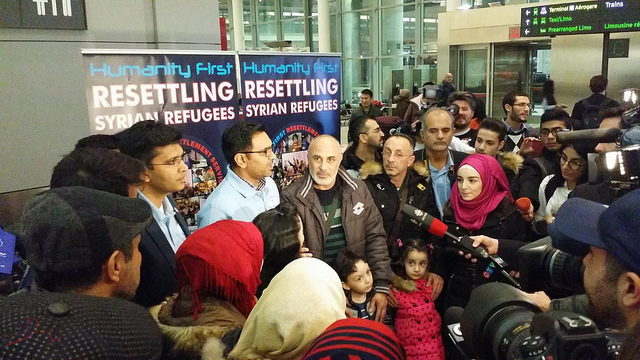
First Family of Syrian Refugees Arrives in Canada

In their December suit, Texas Health and Human Services Commission V. United States, et, al., the state of Texas alleged that the United States government and the International Rescue Committee unlawfully attempted to re-settle six Syrian refugees in the city of Dallas without prior  consultation and collaboration. According to Texas, the federal government failed to consult with the state regarding re-settlement of these refugees, and prevented them from receiving vital information relating to security risks posed by Syrian refugees prior to their re-settlement. Texas also claimed that the International Rescue Committee similarly failed to collaborate and consult with the Texas Health and Human Services Commission in advance prior to the re-settlement of these refugees. To protect itself, the state of Texas asked for an injunction and a temporary restraining order to halt the resettlement of Syrian refugees until security checks could confirm that these Syrian refugees do not pose a threat to the state of Texas.

On December 9, 2015 the U.S. district court denied the temporary restraining order, adding that the state of Texas failed to provide compelling evidence to suggest that Syrian refugees pose a substantial threat of irreparable injury to its citizens. Presiding district court Judge David C. Godbey added that, “the [Texas] commission has failed to show by competent evidence that any terrorists actually infiltrated the refugee program, much less that these particular refugees are terrorists’ intent on causing harm.” Although the lawsuit still stands and will likely not receive a final ruling until early next year, the district court set an important precedent in its denial of the temporary restraining order. Judge Godbey further maintained that it is not within the purview of the district court to assess what risk, if any, Syrian refugees pose to any particular state. Such risk can only be assessed by the federal government. On this issue Godbey stated that, “the Court has no institutional competency in assessing the risk posed by refugees. That is precisely the sort of question that is, as a general matter, committed to the discretion of the executive branch of the federal government, not to a district court.” The rest of the lawsuit remains in litigation.

Continue reading

3034083160_c443cddc38_z

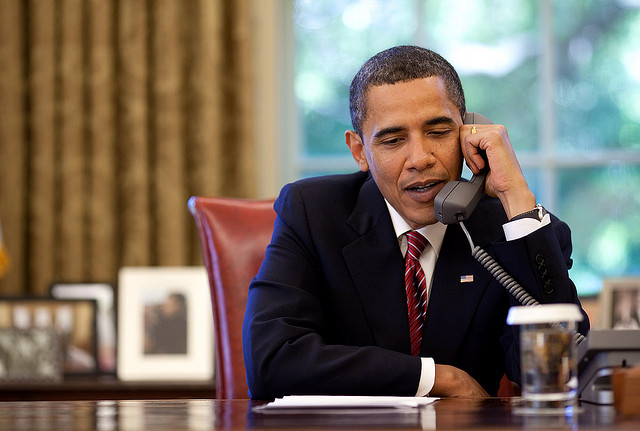
Earlier this week, in a 407-19 vote the House of Representatives successfully passed the Visa Waiver Program Improvement and Terrorist Travel Prevention Act of 2015, a bill that seeks to increase restrictions for travelers coming to the United States under the Visa Waiver Program, a program which currently allows citizens from 38 designated countries to travel to the United States without a visa. In order to become law the bill must also pass through the Senate. The bill was introduced following President Barack Obama’s address to the nation, in which he confronted the threat of the Islamic State of Iraq and the Levant (ISIL) and the recent terrorist attacks in Paris and San Bernardino.

In his address, President Obama pledged to work closely with the Department of State and Homeland Security to revise the visa waiver program, under which one of the San Bernardino assailants traveled to the United States. The Problem? The President misspoke—the assailant traveled to the United States with a K-1 fiancé visa and not through the visa waiver program. Instead Obama meant to say that he would work with the DOS and DHS to revise the visa program in general. In light of this innocent mistake, the House continued its support to tighten the visa waiver program, despite the fact that no evidence has been presented suggesting that terrorists and/or their radicalized accomplices have traveled to the United States using this program. This would mean that the government is concerned that terrorists, disguised as refugees, may travel from Syria and surrounding countries, into Europe and in the process acquire European citizenship making it easy for them to travel to the United States through the visa waiver program. The government may also be concerned that ISIL is radicalizing and recruiting European citizens of middle eastern descent to their cause.

As it stands there are no middle eastern countries participating in the visa waiver program. The majority of the countries eligible to participate are from Western Europe with few exceptions including Chile, Taiwan, Australia etc. Individuals who have applied for a United States visa but have been denied, are not eligible to travel to the United States under the visa waiver program, even if their country participates in the program. Such individuals must apply for the appropriate visa at a US embassy or consulate abroad in order to travel to the United States. Critics allege that as a result of such legislation, consular officials and CBP agents will inevitably profile visa waiver travelers.

Continue reading

3549356643_457f255e03_z

Tashfeen Malik, a Pakistani citizen, and her husband Syed Rizwan Farook, a naturalized United States Citizen, are known globally as the couple behind the San Bernardino shootings, which took the lives of 14 people and left 21 injured. Twenty-eight-year-old Syed Farook was identified as an environmental health services inspector employed by the San Bernardino County Department of Public Health. He was attending a holiday party at the Inland Regional Center where he worked. Reports confirm that a dispute occurred between Syed and an attendee of the party causing Syed to leave the party. He later returned with his wife Tashfeen dressed in tactical gear carrying assault weapons and semi-automatic pistols. Days after the attack, it became known that the assault was inspired but not directed by the Islamic State of Iraq and the Levant (ISIL), the terrorist group which claimed responsibility for coordinated attacks that occurred in Paris just last month. Through a radio message disbursed online, ISIL confirmed that the duo were indeed supporters of the group praising them for their efforts, but stopping short of taking credit for the attack. The FBI has since confirmed that the couple had been ‘radicalized’ for some time before the actual attack took place, though it is not clear how the couple became radicalized, how they rehearsed the attack, and whether the couple maintained ties to any other terrorist organizations. It is known that Syed and his wife Tashfeen had visited gun ranges in the Los Angeles area for target practice just days before the December 2nd assault at the Inland Regional Center, a social services facility located in San Bernardino, California where Syed was employed.

Investigations have revealed that Syed and Tashfeen met one another on a Muslim dating site a couple of years ago. The relationship flourished, and eventually Tashfeen Malik obtained and entered the United States legally on a K-1 fiancé visa. Last year, Tashfeen became a United States lawful permanent resident through her marriage to Syed, a naturalized citizen. In response to the recent terror attacks around the world and the Syrian refugee crisis, President Obama delivered a rare address to the nation from the Oval Office yesterday evening declaring the San Bernardino massacre an “act of terrorism designed to kill innocent people.”

In his address, President Obama outlined his administration’s four-tier strategy to defeat ISIL and discussed necessary measures that must be taken by Congress to bring about legislation that will protect our country from extremism and combat the war on terror. Such measures include the following:

Continue reading

9319698471_083278482d_zThis week USCIS and the Department of Homeland Security (DHS) announced the addition of sixteen new countries that will be eligible to participate in the H-2A and H-2B visa programs next year. Nationals from the following countries: Andorra, Belgium, Brunei, Colombia, Finland, France, Germany, Greece, Lichtenstein, Luxembourg, Malta, Monaco, San Marino, Singapore, Taiwan, and Timor-Leste will join sixty-eight other countries already participating in the H-2A and H-2B programs. Foreign nationals from these countries can apply for the H-2A and H-2B programs beginning January 18, 2016. If a country fails to meet the requirements for continued designation of these benefits, DHS reserves the right to remove any country from the list of eligibility, as it did recently with the country of Moldova and the H-2B program. Moldova may still continue to participate in the H-2A program since it has proven compliant with the necessary standards regulating the H-2A program. USCIS may consider other foreign nationals for the H-2A and H-2B programs even if their countries do not participate in these programs on a case by case basis.

Continue reading

3285309862_e84a0f6bae_z

The December visa bulletin was recently released by the DOS on November 9, 2015. For the month of December CIS has announced that family based applicants must use the ‘date of filing’ chart to determine when their adjustment of status applications may be filed. This means that for family based preference categories, there are presently immigrant visas available and demand has not yet been met for the fiscal year. Employment based applicants must refer to the ‘final action date’ chart as a basis for applying for adjustment of status. This means that presently there is more demand than immigrant visas available for employment based categories. For the month of December, filing dates have remained unchanged. The impact of the dual chart system will not be felt until CIS requests visa numbers from the DOS in April 2016 for adjustment of status filings based on the October Visa Bulletin. In this post we will discuss new announcements that have appeared on the December visa bulletin and projections for EB-2 India, EB-2 and EB-3 China, F-2A, and F-2B. These projections are based on guidance provided by the Chief of the Visa Control and Reporting Division, Charles Oppenheim. While they do not guarantee actual immigrant visa availability, these projections are helpful reference points.

Replacement of Foreign Affairs Manual (FAM) and New Visa Waiting List

The December visa bulletin has announced that the Foreign Affairs Manual (FAM) used internally by the Department of States will be replaced with 9 FAM-e beginning November 18, 2015. Public release of the new FAM has not yet been announced.

Additionally, a ‘Visa Waiting List’ will be released beginning with the January Visa Bulletin which will provide applicants information on the National Visa Center waiting list starting November 1, 2015.

Continue reading

16205135740_83caef24c9_z

Secretary of Homeland Security Jeh Johnson

On October 28, 2015 sixteen Democrats from the House of Representatives including —Zoe Lofgren, Michael M. Honda, Judy Chu, Katherine M. Clark, Elijah E. Cummings, Anna G. Eshoo, Tulsi Gabbard, Luis V. Gutierrez, James A. Himes, Ruben Hinojosa, Eddie B. Johnson, James P. McGovern, Frank Pallone Jr., Jared Polis, David E. Price, and Alma S. Adams — issued a letter addressed to the Secretary of Homeland Security, Jeh Johnson concerning drastic revisions made to the Visa Bulletin on September 25, 2015.

In the letter, House Democrats argue that the revisions to the Visa Bulletin have compromised the integrity of the immigrant visa process, and resulted in a lose of faith in our immigration system. More over they argue that these revisions have adversely impacted the lives of thousands of immigrants, the American businesses who employ highly skilled workers, and our economy which benefits from retaining highly skilled workers.

As previously reported, the Department of State had published a dual chart system on September 9, 2015 with the addition of a new ‘date of filing chart’ which first appeared on the October Visa Bulletin. This new ‘date of filing’ chart was implemented in an effort to modernize and streamline the immigration process, as part of President Obama’s executive actions on immigration reform.

Continue reading

ellis

Photograph taken at Ellis Island

Further changes have been made to the November Visa Bulletin published earlier this month by the Department of State. The dual chart system remains in place including the ‘final action date’ chart and ‘date of filing’ chart. So what has changed? USCIS has become more involved in the application process for family-sponsored and employment-based immigrant applications since the introduction of the date of filing chart. A disclaimer has now been added to the November Visa Bulletin above the date of filing chart which instructs applicants to visit the USCIS website for more instructions on how and when the chart is to be used. USCIS has created this new web page to notify applicants whether they can proceed with applications for permanent residence based on the date of filing chart published monthly on the Visa Bulletin. The website will be updated within about a week of the publication of the Visa Bulletin every month. The webpage is intended to provide applicants information in regards to visa availability for family-sponsored and employment-based immigrant visas for each fiscal year, letting applicants know whether the filing date chart is enforceable. So far, USCIS has indicated that the filing date chart for October and November 2015 is enforceable.

Continue reading

1

Last week, we reported to our readers that on September 25th the Department of State and USCIS re-issued the October Visa Bulletin and changed the date of filing chart drastically, rolling back the ‘Dates of Filing’ for heavily used visa categories, including employment based and family-sponsored petitions. The American Immigration Lawyers Association, along with policymakers, and immigration advocates, are urging Congress, the White House, USCIS, and Department of State to restore the initial dates of filing that were authorized and released on September 9th 2015 with the October Visa Bulletin.

If you would like to pressure the government to honor the initial dates of filing, released on September 9th, we invite you to sign the White House petition by clicking here. We must hold the government accountable for their actions by advocating for the restoration of the initial dates of filing. With the release of the October Visa Bulletin, the DOS introduced a dual chart system for the first time in history which included a new ‘date of filing’ chart. The new date of filing chart would have allowed thousands of foreign nationals to file their adjustment of status and employment authorization applications, before a visa became available to them. This action was made by the DOS in an effort to modernize and streamline our immigration system as part of President Obama’s Executive Actions on Immigration announced on November 20th of last year. Due to the recent drastic changes that have been made to the date of filing chart, we encourage you to become involved by signing the petition or writing to your local Congressman/Congresswoman. Thousands of foreign workers and family members of foreign nationals have been impacted by the recent changes, given that the majority of applicants who would have been eligible to file for their green card applications and employment authorization cards, will no longer be able to do so. They must continue to wait until their priority date becomes current on the date of filing chart.

Continue reading

5535613157_499f6d4863_z

As some of you may have heard, on September 25th the US Department of State made some additional changes to the October 2015 Visa Bulletin. These changes include new and earlier date of filing cut-offs than those initially released on September 9th. The date of filing chart released on September 25th will replace the prior one released on September 9th. To view the complete changes please click here. These new changes have raised several concerns for our readers.

What caused the visa numbers to be re-issued after their release on September 9, 2015?

Though we cannot ascertain the exact reasons why these changes have come about, we can make the fair assumption that these changes were likely due to workload concerns and a lack of resources necessary to accommodate the large amount of adjustment of status applications expected to be filed beginning October 1st. The anticipated workload may have given the Department of State no choice but to retrogress the visa numbers in heavily used categories.

Is the Department of State reneging on their promise to modernize and streamline the immigration process as part of Obama’s executive actions on immigration?

While it is disappointing that the visa numbers on the ‘date of filing’ chart have retrogressed, a departure from the promised executive actions does not seem to be the case. The visa numbers have been adjusted in an effort to streamline the immigration process in a way that is viable, practical, and effective. Dates of filing have been adjusted for family-sponsored and employment-based preferences to create a practical timeline that provide CIS the sufficient time needed to process the large volume of anticipated adjustment of status applications.

Continue reading