Articles Posted in Free Consultation

new-zealand-1184112_1920
New Zealand Now Eligible to Apply for E-1 and E-2 Investor Visas

Beginning June 10, 2019, New Zealand nationals can apply for the E visa categories thanks to the President’s enactment of the Knowledgeable Innovators and Worthy Investors (KIWI) Act. Applicants who are already in the United States on a valid non-immigrant visa may now apply for a change of status to an E visa.

The E visa does not provide a direct path to permanent residency, but it is a great option for individuals who wish to live and work in the United States with their families for a temporary period of time. There is no set limit on the maximum amount of time an individual may remain on the E visa, but applicants must intend to depart at the end of their period of authorized stay in the United States.

36357561133_dd05064f34_z

Photo: Molly Adams

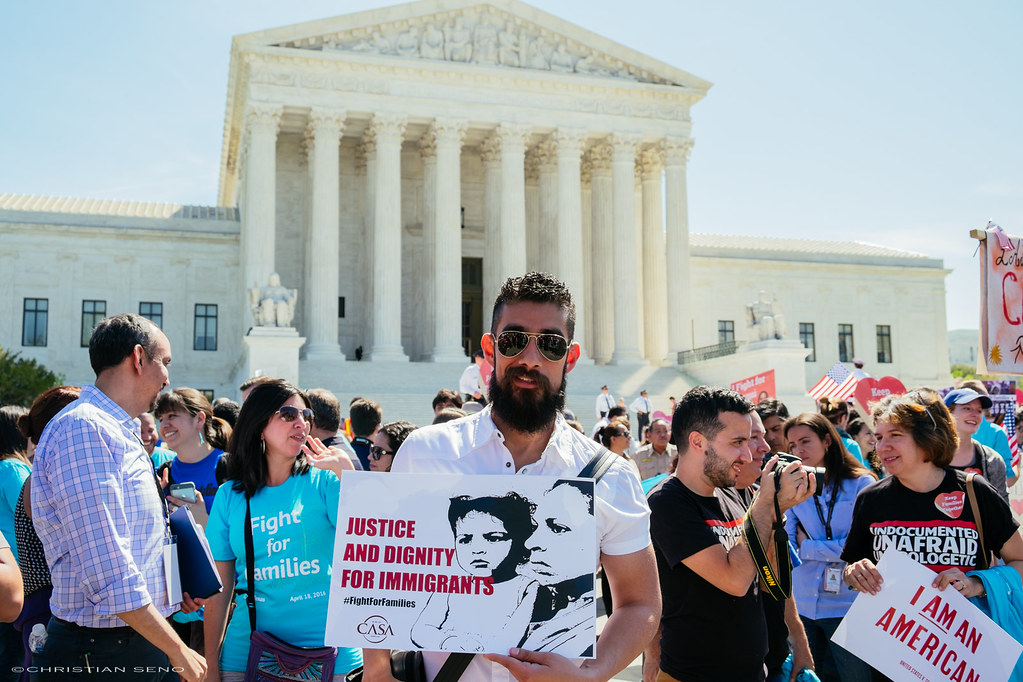
On June 5, 2019, the House of Representatives unified to pass H.R. 6 better known as the American Dream and Promise Act of 2019, offering Dreamers who meet certain requirements, a path to citizenship.

The bill must still pass through the Senate to become law.

nordwood-themes-359015-unsplash

Foreign nationals applying for a non-immigrant or immigrant visa at a U.S. Consulate or Embassy abroad are now required to disclose information relating to their social media presence on their online nonimmigrant and immigrant visa applications known as the DS-160 and DS-260 respectively.

These changes were introduced early last week by the Department of State. Applicants must now provide information about each social media platform they have used within the last five years, including the name of the platform, and the username or handle used on that platform.

Applicants must also provide their current email and phone number, as well as email addresses and phone numbers they have had during the last five years.

Consular officials can use information found on social media during the visa adjudication process to determine whether the individual is eligible for the visa they are requesting. If officials find any information on social media that would lead them to believe the applicant is misrepresenting their true intentions or attempting to gain entry through means of fraud or deceit, the applicant’s visa application may be denied.

In the past, the Department of State only required social media information of individuals that were flagged for further inspection and individuals posing security risks to the United States. This information was provided in a supplemental questionnaire known as the DS-5535. Now, these questions are asked directly on the DS-160/DS-260 applications.

Continue reading

29936853911_6774afae33_z

Photo: CafeCredit

The Trump administration is mobilizing to strictly enforce laws that require the reimbursement of funds from an alien’s financial sponsor, where the alien has requested certain types of public benefits from a government agency.

The White House has issued a memorandum stating that, “Financial sponsors who pledge to financially support a sponsored alien in the event the alien applies for or receives public benefits will be expected to fulfill their commitment under the law.”

Financial sponsors are required to sign Form I-864 Affidavit of Support for most family-based immigrant petitions, as well as some employment-based petitions to show that the intending immigrant has adequate means of financial support and will not become a public charge on the United States government.

The White House has directed various government agencies including the Department of labor, housing, health and human services, etc. to hold sponsors accountable for making a financial commitment to sponsor an alien in the United States, who receives forms of government assistance they are not entitled to receive.

Such benefits that will require reimbursement from a financial sponsor are benefits received from the Supplemental Nutrition Assistance Program (SNAP) which provides food stamps, Medicaid, and Temporary Assistance for Needy Families (TANF).

Continue reading

8566361276_1c793d2502_b

Ken Cuccinelli Photo by Gage Skidmore
Source: Flickr

New developments in the world of immigration have just emerged. The director of the United States Citizenship and Immigration Services (USCIS), L. Francis Cissna, has been forced to resign.

Cissna has served under the Trump administration since October 2017. During his tenure, Cissna oversaw major policy changes within the agency, including the President’s travel ban, the court’s rebuke of the travel ban, the termination of the DACA program, and the Trump administration’s efforts to limit asylum processing for Central Americans.

graduation-2349741_1920

It is that time of the week again! In this post, we bring you the latest immigration news from USCIS.

Texas Service Center Will Begin Processing Certain Cap-Exempt H-1B Petitions

On May 20, 2019, USCIS announced that the Texas Service Center will begin processing certain cap-exempt H-1B petitions filed on Form I-129 Petition for Nonimmigrant Worker.

What types of petitions may be processed by the TSC?

Cap-exempt petitions requesting:

  • A change in previously approved employment;
  • A change of employer;
  • Concurrent employment;
  • Amendments;
  • A continuation of previously approved employment without change with the same employer;
  • A change of status to H-1B; or Notification to a U.S. Consulate or inspection facility (port of entry or pre-flight inspection).

Applicants must continue to refer to the direct filing address chart to determine where the I-129 Form should be filed. The workload for cap-exempt petitions will be distributed between the Texas Service Center, California Service Center, Vermont Service Center, and Nebraska Service Center to increase efficiency and prevent processing delays.

If your case is transferred, you will receive a transfer notice in the mail.

Continue reading

email-3249062_1280
USCIS announced today May 17, 2019, that the agency has completed data entry for all H-1B petitions selected for fiscal year 2020, including petitions filed under the U.S. advanced degree exemption.

USCIS will now begin the long process of returning all H-1B cap-subject petitions that were not selected in the random computer-generated lottery that took place on April 10, 2019. USCIS will provide an announcement once it has completed the return of unselected H-1B petitions.

Petitioners who have not had the H-1B filing fees cashed, can expect to receive the return of their H-1B petition.

update-1672346_1920
On May 10, 2019, USCIS made important updates to its policy manual regarding public services which appear in PA-2019-03.

USCIS has clarified its policy regarding responses to service requests. It is the goal of USCIS to respond to a service request within 15 calendar days from the date the service request was filed with USCIS.

Requests Receiving Priority

honduras-987023_1920
TPS Designations for Nepal and Honduras Will Continue

Today, May 10, 2019, the Department of Homeland Security provided a notice in the Federal Register about their decision not to terminate the Temporary Protected Status designation of Honduras and Nepal.

Beneficiaries under the TPS designations for Nepal and Honduras will retain their TPS status, pending the resolution of the case Ramos v. Nielsen and any appeals that follow.

studying-951818_1920

On August 8, 2018, DHS issued a policy memorandum directing USCIS to change the way in which the agency counted the days of unlawful presence for F, M, and J status violators.

Under that policy memorandum, F, M, and J nonimmigrants who accrued more than 180 days of unlawful presence during a single stay, and then departed the United States, would trigger either a 3- or 10-year bar to admission depending on the period of unlawful presence accrued in the United States prior to departure. The new policy would begin counting the days of unlawful presence the day after an F, M, or J status violation, unless an exception applied.

These bars would prevent the foreign national from applying for an immigration benefit in the future, without the approval of a waiver of inadmissibility.

This policy was to become effective on August 9, 2018; however, it quickly grew controversial and inspired a slew of lawsuits. Prior to this attempted policy change, USCIS did not begin counting a period of unlawful presence until a USCIS immigration official or immigration judge made a formal finding of a status violation.

Continue reading