8149521772_6fcf418645_c

Last week, the Senate held a hearing scrutinizing the temporary H-1B skilled worker program, the second hearing of its kind within just one year. At issue was the protection of American jobs and dissatisfaction with the program among conservatives in the Senate, who believe the program has caused job displacement at the expense of thousands of Americans. Beyond their own political convictions, Republican Senators eyeing the White House, have also scrutinized the H-1B visa program, in order to appease voters who, maintain a hard line stance on immigration.

During the hearing, the Senate Judiciary panel considered testimony questioning the integrity of the H-1B visa program. Many witnesses accused their employers of violating the conditions of the program, alleging that their employers sought to replace American workers with foreign workers by utilizing the H-1B visa program to pay those workers lower wages. This accusation is troublesome for various reasons. Firstly, it is well known that the H-1B visa program requires an employer to hire a foreign worker in a specialty occupation only when the employer cannot obtain the necessary skills and abilities to perform the specialty occupation within the American workforce. H-1B workers must possess distinguished merit and ability, and demonstrate their qualifications through the attainment of a bachelor’s degree or its equivalent, in the intended field of employment. Secondly, the H-1B visa program contains provisions which are specifically designed to protect similarly employed American workers from any adverse affects suffered from the employment of temporary foreign workers. Consequently, there are also provisions which aim to protect H-1B nonimmigrant workers from H-1B violations. One of those provisions includes the requirement that American employers pay temporary H-1B workers at least the ‘prevailing wage,’ the average wage paid to similarly employed workers (experience and qualifications) in a specific occupation in the area of intended employment. This would mean that any employer seeking to use the H-1B visa program for the purposes of obtaining ‘cheap foreign labor’ or to replace American workers would be violating the conditions of the H-1B visa program altogether.


Continue reading

3261953789_cc710caaa5_o

The U.S. Citizenship and Immigration Services (USCIS) has released an updated policy manual addressing the policies and procedures associated with adjustment of status to lawful permanent residence under section 245a of the Immigration and Nationality Act. The policies set forth in the newly updated policy manual are effective beginning February 25, 2016.

Adjustment of status is the process by which an eligible foreign national may adjust their status to lawful permanent resident, based on a qualifying family relationship or employer-employee relationship. Additionally, special categories of green card applicants exist covering self-petitioning Amerasian, Widow(ers) seeking lawful permanent residence under the Violence Against Women Act (VAWA), refugees, asylees, certain U visa holders, humanitarian visa holders, and eligible diversity visa program immigrants. In order to file an adjustment of status application from within the United States the Beneficiary must 1) be living in the United States lawfully and 2) have been inspected, lawfully admitted, or paroled into the United States, (except in cases of 245i).

Foreign nationals living in the United States, who qualify for adjustment of status to lawful permanent residence, may file their adjustment of status application with USCIS, without having to travel abroad to obtain an immigrant visa through a procedure known as consular processing. Foreign nationals residing abroad, who qualify for adjustment of status, must apply for an immigrant visa at a United States Embassy or Consulate abroad. Consular processing is different from adjustment of status from within the United States in various ways. Adjustment of status within the United States is a much faster process, however the main drawback is that applicants cannot travel internationally once their application has been filed with USCIS, until they are issued an advance parole document by USCIS authorizing such travel. In order to obtain an advance parole document, the green card applicant must file Form I-131 with USCIS. The advance parole document is typically issued within 90 days of filing of Form I-131. One of the main benefits of applying for an immigrant visa abroad through consular processing, is that the individual does not have any travel restrictions. It is for this reason that businesspersons and other individuals opt for consular processing instead of adjustment of status despite living in the United States.

Continue reading

8516269783_79248f4ba2_c

Presently, the Employment and Training Administration’s (ETA) Office of Foreign Labor Certification (OFLC) is experiencing significant delays in processing employer H-2B certification applications.  These delays are owed to various factors. The most important includes a mandatory 17-day certification pause that took place at the Chicago National Processing Center, for the purpose of implementing revisions of the H-2B prevailing wage and other standards required by law. Additionally, the OFLC announced that the amount of H-2B certification applications received has doubled in comparison to the previous year. Lastly, the electronic filing system iCERT, experienced significant technical problems, slowing the certification process down significantly for employers of H-2B workers. Unfortunately, these delays have diminished an employer’s ability to hire foreign workers during a time of need, and have had an adverse affect on small businesses who depend on these temporary and seasonal workers to perform work that cannot be readily filled by American workers.

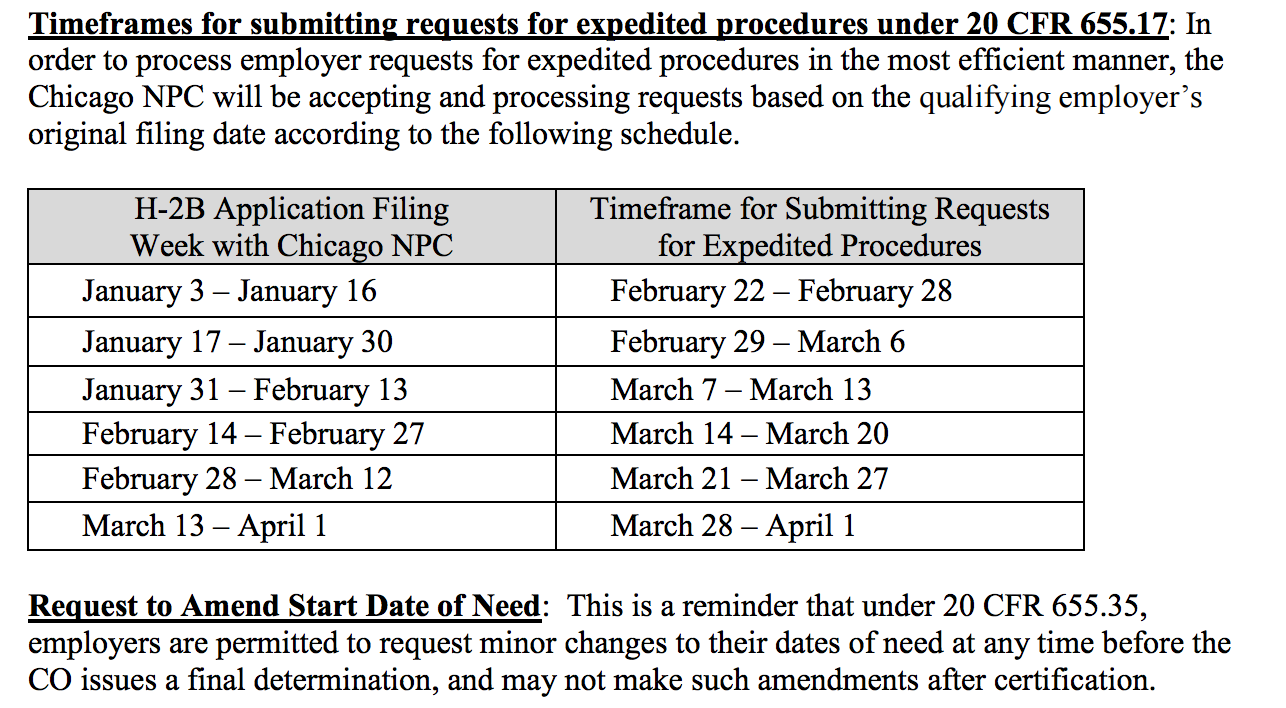
To alleviate the certification backlogs, the Chicago National Processing Center has announced that employers may file an emergency request for expeditious handling of their applications under 20 CFR 655.17.

Expeditious Requests for Emergency Procedures under 20 CFR 655.17:

  • Based on the factors causing the backlogs, the OFLC has determined that employers are entitled to request expeditious emergency procedures for their currently pending applications for certification, under 20 CFR 655.17, on the basis of good and substantial cause. Emergency requests are warranted given that the backlogs caused by the delays in the application process are considered outside of the employers’ control, that employers have suffered unforeseen changes in market conditions because of the delays, amid a climate of uncertainty.

Employers with pending H-2B applications for certification must submit their expedite requests for emergency procedure, by email to the Chicago NPC at ER.H2B.Chicago@dol.gov beginning Monday February 22, 2016 (12:01 AM) through Friday April 1, 2016 (at 12:00 midnight). Requests may also be made by fax (312) 886-1688 or by US mail to:

ATTN: H-2B Request for Emergency Handling

U.S. Department of Labor ETA OFLC

Chicago NPC

11 West Quincy Court

Chicago, IL 60604-2105

The NPC may extend this emergency request period beyond April 1, however at this time no such extension has been announced.  Filing a new H-2B application is not necessary for an expedite request.

Employers filing for emergency treatment under 20 CFR 655.17 must request that the pending application for certification and proposed job order be “incorporated by reference” into the request made under 20 CFR 655.17, and state the withdrawal of the prior application. The procedure for submitting an expedite requested will be listed below.

Screen Shot 2016-02-22 at 2.57.07 PM

Continue reading

4668514068_02942d6921_z

“He was a jurist of captivating brilliance and wit, with a rare talent to make even the most sober judge laugh. The press referred to his “energetic fervor,” “astringent intellect,” “peppery prose,” “acumen,” and “affability,” all apt descriptions. He was eminently quotable, his pungent opinions so clearly stated that his words never slipped from the reader’s grasp” -Ruth Bader Ginsburg

When news broke of the passing of the longest serving Justice on the Supreme Court, Antonin Scalia, a cloud of uncertainty lifted above the heads of Republican frontrunners vying for the Republican nomination for President of the United States. Indeed, the topic of conversation during the February 13th Republican Presidential Debate, which occurred on the day of Justice Scalia’s passing, focused on whether or not the current President should nominate the next Supreme Court Justice. Justice Antonin Scalia, nominated to the Supreme Court by President Ronald Reagan in 1986, was the most outspoken conservative on the bench, and not very well liked by liberal politicians and intellectuals, primarily due to the philosophy behind his jurisprudence. Scalia’s jurisprudence during his 29 years on the bench belonged to the Originalist school of thought. An Originalist’s interpretation of the Constitution denies the contention that the Constitution should be interpreted by the Court as a living, breathing document, a view that is typically shared by liberal Constructivist Justices like Ruth Bader Ginsburg. Instead, Originalists believe that the Constitution should be interpreted according to the original intent or meaning shared by the founders as it was written. This would require an Originalist to adhere to the spirit of the law as it was intended by the founders of our country, as well as an understanding of what was meant when the Constitution was originally drafted.

During his time on the bench, Scalia tenaciously criticized the liberal Constructivist view, calling this interpretation of the Constitution, judicial activism, which he viewed as inappropriate. In his view the Supreme Court must be insulated and not be swayed by the social concerns of the public. Throughout his trajectory, Scalia has gone down in history for handing down the most controversial dissents in the history of the Supreme Court, avidly supporting the right to bear arms, challenging the right to abortion, affirmative action, gay rights, and was ultimately instrumental in securing the Presidential nomination of George W. Bush in the 2000 case Bush V. Gore. Up until his untimely death, the Supreme Court held a conservative majority. The conservatives on the bench include Chief Justice, John G. Roberts Jr. nominated by President George W. Bush in 2005, Justice Clarence Thomas nominated by President George W. Bush in 1991, Justice Samuel Anthony Alito Jr nominated by President George W. Bush in 2006, Justice Anthony Kennedy, a moderate conservative swing vote nominated by President Ronald Reagan in 1988, and up until recently Antonin Scalia nominated by Ronald Reagan in 1986. Together, these conservative Justices established a 5-4 majority against liberal Justices: Ruth Bader Ginsburg, Stephen G. Breyer, and recently appointed Justices Elena Kagan and Sonia Sotomayor. Justice Antonin Scalia’s sudden death has now upset the conservative majority, creating a balance of power between conservative and liberal minds on the bench. With the death of Scalia, the bench is now evenly split ideologically 4-4 with a vacant seat ready to be filled by a liberal Justice, thereby creating a Liberal majority. This of course will not be easy, since the Senate is dominated by the Republican party, and the Senate will be in charge of vetting the President’s nominee.

Continue reading

9374736981_85a6e772fd_z

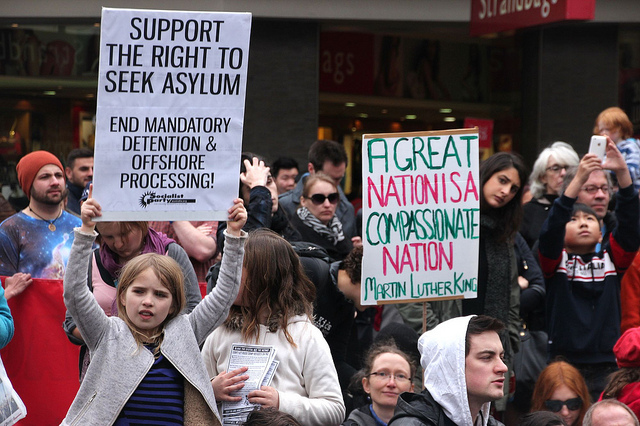
A new factsheet published by AILA and Kids in Need of Defense (KIND) provides statistics on the representation and removal of unaccompanied children and families facing removal proceedings before immigration court. The data concludes that an overwhelming number of unaccompanied children and families are ordered removed from the United States, despite having demonstrated a legitimate fear of persecution or torture and passing a credible fear interview, making these individuals viable candidates for asylum, prosecutorial discretion, or other relief from deportation. This is due to a lack of legal representation and legitimate concern for the due process of law.

Families Passing Credible Fear in preliminary interviews with federal asylum officers

On the whole, the majority of families in detention centers demonstrate a legitimate fear of persecution or torture and maintain a high rate of approval during credible fear interviews;

  • In preliminary interviews with asylum officers, approximately 90% of families successfully demonstrated a credible fear of persecution or torture;
  • Upon completion of these interviews, approximately 88% of detained families pass their credible fear interviews;
  • The USCIS Asylum Office has indicated that the credible fear passage rates remain unchanged—at a rate of 90%;
  • DHS data indicates that 53% of 121 individuals, arrested by DHS during the January raids, lacked legal representation before immigration court;

Continue reading

5188134441_8f4e49880b_z

For this series, we bring you our top tips for filing a successful E-2 visa petition. The E-2 treaty investor visa is a non-immigrant visa that allows foreign entrepreneurs from treaty nations to enter the United States and carry out investment and trade activities. Investment activities may include either the creation of a new business venture or purchase of a pre-existing business. The investment must be significantly proportional to the total investment, that is, usually more than half the total value of the enterprise or, if a new business, an amount normally considered necessary to establish the business. The E-2 ‘investor visa’ is available to an applicant who invests a substantial amount of his own money into a U.S. business, which he can control and direct. Foreign nationals from treaty countries who have made a substantial investment in the United States may qualify for E-2 Treaty Investor status. There is no set minimum level of investment, which may qualify for E-2 status, however the lower the investment the less likely one is to qualify. Therefore, the level of investment must be such that it is sufficient to justify presence of the treaty national in the United States. For the E-2 visa petition, the United States business entity serves as the petitioner of the visa petition, while the Beneficiary serves as the investor.

Tip #1 Ensure that your business entity has been properly set-up

If you do not know how to properly set-up your business entity, you should consult with and retain a licensed attorney to properly set-up the business entity for you. Proper set-up of a business entity, entails much more than filing the company’s Articles of Incorporation, Bylaws, and applying for a Federal Employment Identification Number (EIN) with the IRS. It is for this reason that many applicants are more comfortable retaining a licensed attorney for the E visa process. Our office handles this aspect of the application as part of the E visa preparation package.

Why is this important?

Proper set-up of the business entity ensures that the entity is a bona fide business enterprise that is real, active, and producing goods or services for profit. Improper set up may cause the denial of a petition and increases the company’s liability.

Continue reading

4893974585_f1f7465f5f_z

For this series, we bring you our top tips for filing the perfect family-based adjustment of status application (I-130/485), as well as valuable tips concerning common mistakes to avoid when filing the adjustment of status application, from our in-house family-based legal assistant, Ms. Reagan Volkman. Ms. Volkman has worked with hundreds of clients from all over the world helping them file their adjustment of status packages from beginning to end. With her hard work and dedication, our office has enjoyed an unprecedented approval rate for these petitions.

Tip #1 Ensure accuracy on every form associated with the I-130/485, especially in regards to questions relating to criminal history and/or immigration violations

  • Double check every form to ensure that you have completed each form as thoroughly and accurately as possible, making sure all dates and social security numbers are correct.

REMEMBER: Dates should be written in the (mm/dd/yyyy) format unless otherwise stated on each form;

  • If information is unavailable/not applicable, note such on each form;
  • Review all the yes and no questions listed on pages 3-5 of form I-485. Be very careful when answering these questions and thoroughly explain any “yes” answers. These questions relate to criminal history and immigration violations (such as fraud, willful representation, or removal from the United States);
  • It is strongly advised that you seek counsel from an accredited attorney if you have any criminal history and/or have committed any immigration violations, as these issues may require you to file a waiver before seeking adjustment of status, or make you inadmissible;
  • If you have served in the military in any foreign country and/or have military training you must answer “yes” and provide the relevant information requested. For countries that require military enlistment we recommend to note that the service was ‘mandatory’ in the description;
  • If you have held a J-1 visa in the past, and have been subject to the two-year foreign residence requirement, but did not obtain a waiver, you must answer “yes” and provide the relevant information requested;

Continue reading

3421880567_7c3cfa34f0_z

Beginning February 19, 2016 certain nonimmigrant Caribbean residents seeking admission to the United States as H-2A agricultural workers, will be required to obtain a valid passport and valid H-2B visa in order to be admitted. Spouses and children traveling with an H-2A agricultural worker will also be required to present a valid passport and H-2A visa. The H-2A nonimmigrant visa exception for Caribbean residents was first introduced during World War II in an effort to address labor shortages in the American workforce. The change, comes as part of the revised 2016 Omnibus Appropriations Bill, which eliminates the nonimmigrant visa exception for these individuals, along with other provisions that impact the H-2B nonagricultural visa program. The new rule will apply to nationals of the United Kingdom, France, the Netherlands and nationals of Barbados, Grenada, Jamaica, Trinidad and Tobago, who either maintain a residence in a territory governed by England, France, or the Netherlands located in the adjacent islands of the Caribbean, or maintain a residence in Barbados, Grenada, Jamaica, or Trinidad and Tobago. The change was validated in yesterday’s Federal Register by the Department of State and Homeland Security respectively. Removal of this visa exemption will allow the Department of State to properly screen individuals prior to their arrival in the United States, and further protect agricultural workers from employment violations and work related abuse. To learn more about the H-2A visa program click here.

Continue reading

reagan
For this month’s staff spotlight, we invite you to learn more about Legal Assistant, Reagan Volkman.

Ms. Volkman was born and raised in San Diego, California. She pursued her studies at Cuyamaca and Grossmont College graduating in December 2014 with degrees in History, the German language, and Paralegal Studies. She is fluent in German and has knowledge of American Sign Language. At the office, she assists attorneys with drafting, compiling, and filing family-based immigration petitions including applications for adjustment of status, I-130 consular processing, removal of conditions, naturalization, fiance visas, change of status petitions, and much more.

“The best part of my job is meeting and working with such a diverse group of people. It is very rewarding to be able to make a difference in the lives of others.”

387411647_96fa4d50de_z

On January 21, 2016 the Department of Homeland Security confirmed that the Visa Waiver Program Improvement and Terrorist Travel Prevention Act would begin to be implemented. As a result of the recent terrorist attacks in San Bernardino county and abroad, Congress passed the Act in an effort to protect Americans from potential attacks and to secure the border. The Act increases travel restrictions for certain nationals seeking admission to the United States via the Visa Waiver Program.

Presently, the Visa Waiver Program allows nationals from 38 designated countries to travel and seek admission to the United States without a visa, for a maximum duration of 90 days. Visa Waiver Program travelers must have an approved Electronic System for Travel Authorization (ESTA) before travel.

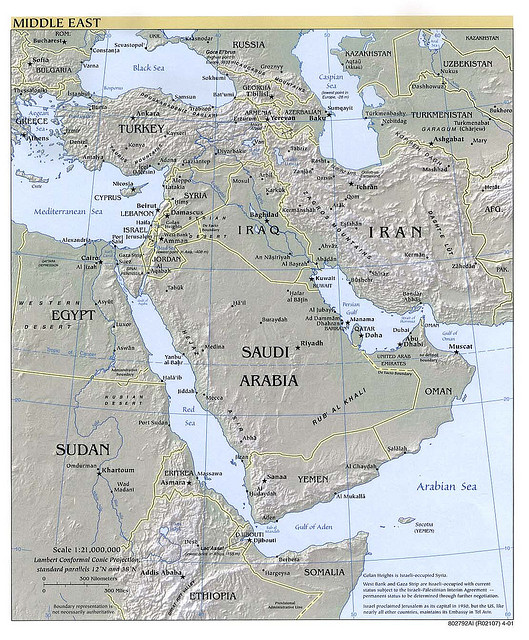
As of January 21, nationals of visa waiver participating countries who have traveled to or been present in Iran, Iraq, Sudan, or Syria on or after March 1, 2011 will no longer be eligible to travel or seek admission to the United States under the visa waiver program.  Nationals from visa waiver participating countries who maintain dual nationality with any of the aforementioned countries, are also excluded from traveling or seeking admission to the United States under the visa waiver program. Instead, these individuals must apply for a tourist visa at a United States Consulate or Embassy abroad before seeking admission to the United States. Part of this process will require a nonimmigrant interview to be conducted, before issuance of a tourist visa. DHS expects that this new legislation will not adversely impact visa waiver program travelers, since the Act does not ban these individuals from traveling to the United States, rather it removes the privilege of traveling under the visa waiver program, and requires these individuals to apply for a tourist visa.

Continue reading