wang-dongxu-777822-unsplash

In this post, we discuss the different options available for foreign nurses to work in the United States.

First, let’s discuss licensure requirements.

Registered Nurse License Requirements by Examination Educated Outside the U.S.

  1. Educational Evaluation of Transcripts:

All applicants who graduated from nursing schools outside the United States must have their transcripts evaluated in a course by course evaluation by one of the following Nursing Commission approved service providers:

  • Graduates of Foreign Trained Nursing Schools (CGFNS), www.cgfns.org,
  • Education Records Evaluation Service (ERES) www.eres.com,
  • International Education Research Foundation, Inc. (IERF) www.ierf.org

*Please review the RN educational requirements of the state in which you wish to be licensed.

  1. English Proficiency Exam

An English Proficiency test is required for all LPN and RN license applicants who received their nursing education out of the United States except for Canada (Quebec requires the English Proficiency test), United Kingdom, Ireland, Australia, New Zealand, American Samoa, Guam, Northern Mariana Islands and Virgin Islands.

You must take and pass either the Test of English as a Foreign Language (TOEFL) www.toefl.com or International English Language Testing System (IELTS, academic version) www.ielts.org. This exam is required regardless of whether the program was taught in English.

  1. NCLEX:

Foreign nurses must take and pass the national licensure examination known as the NCLEX. Once the Nursing Commission approves your application you will need to register with Peasrsonvue at http://home.pearsonvue.com/ to take the national exam (NCLEX). Do not register for the NCLEX before the commission has approved your application. Once you register, our office will make you eligible on the Pearsonvue website. Pearsonvue will then email you the “authorization to test” (ATT). At that point you can schedule to take the NCLEX exam.

Continue reading

andre-hunter-297773-unsplash

In this blog post, we answer one of your frequently asked questions: can I work while my adjustment of status application, Form I-485, is in process?

Form I-485 is an application that must be filed to register a foreign national’s permanent residence or adjustment of status. As part of the adjustment of status process, an applicant can also file Form I-765 Application for Employment Authorization, which is an application for a work permit. The I-485 and I-765, along with other forms, are typically filed concurrently. The I-765 application can also be filed separately, so long as the Form I-485 remains pending with USCIS.

Once Form I-765 Application for Employment Authorization is filed with USCIS, along with Form I-485, the applicant must wait for the application to be adjudicated. The amount of time that it takes for Form I-765 to be adjudicated depends on your service center.

Once Form I-765 is adjudicated, the application culminates in what is known as an “employment authorization card” or EAD, which is essentially a work permit.

The employment authorization card grants the foreign national the ability to work lawfully in the United States, obtain a social security number, open a bank account, and obtain a driver’s license.

Continue reading

10038815984_7a0e6ca153_c

Photo credit: Scott Kirkwood/NPCA

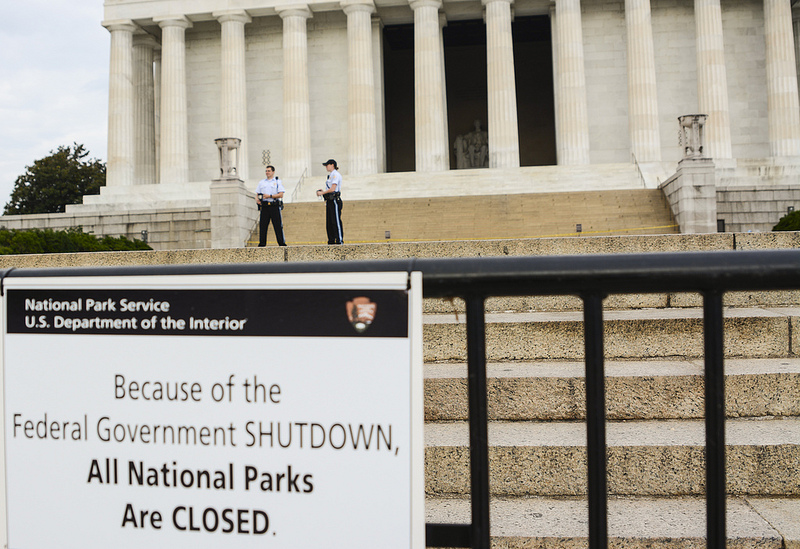
Today marks the fifth day of a partial government shutdown that began on Saturday. The government was forced into a shutdown after Democrats refused to concede $5 billion dollars to fund the President’s wall along the southwest border.

Since then, Democratic leaders in the House and Senate have not opened negotiations to appease the President. If a resolution is not reached before the end of December, it is highly unlikely that the President will receive the money demanded to fund the border wall. When the new House of Representatives convenes after the holidays, the Democrats will command a majority in the House of Representatives, making it more difficult for the President to obtain the necessary funding.

The government shutdown will affect various government entities including the Department of Homeland Security and Department of Labor.

Here’s how it will affect immigration:

EB-5 Immigrant Investor Regional Center Program:

Without congressional authorization to continue the EB-5 Regional Center Program beyond December 21, 2018, USCIS will not accept new Forms I-924, Application for Regional Center Designation Under the Immigrant Investor Program. Any Form I-924 applications that are pending as of December 21, 2018, will be placed on hold until further notice.

Per the USCIS Website:

“We will continue to receive regional center-affiliated Forms I-526, Immigrant Petition by Alien Entrepreneur, and Forms I-485, Application to Register Permanent Residence or Adjust Status, after the close of business on Dec. 22, 2018. As of Dec. 22, 2018, we will put unadjudicated regional center-affiliated Forms I-526 and I-485 (whether filed before or after the expiration date) on hold for an undetermined length of time.

All Forms I-829, Petition by Entrepreneur to Remove Conditions on Permanent Resident Status, filed before or after the expiration date, will not be affected by the expiration of the program.”

Continue reading

eric-froehling-71895-unsplash

Form I-751 Petition to Remove Conditions on Residence is a form that must be filed by conditional permanent residents to remove their conditions and receive the ten-year permanent resident card.

Previously, USCIS was taking approximately 7 months to adjudicate the removal of conditions application and would issue receipt notices automatically extending conditional permanent residence for a period of 12 months while the I-751 application was in process.

As of June 11, 2018, USCIS began issuing receipt notices automatically extending conditional permanent resident status for a period of 18 months. This change was made because current processing times for Form I-751 have increased over the past year.

USCIS is now taking an average of 12 months to adjudicate the removal of conditions application, irrespective of whether the petition was filed jointly or as a waiver of the joint filing requirement.

This increase in processing times is owed to multiple factors including an increased workload, the burden on USCIS offices to review these applications, and the volume of applications received by the respective service centers.

There is however a silver lining. Although the processing times have increased for the I-751, USCIS recently announced that under certain circumstances an I-751 applicant may not be scheduled to appear for an in-person interview.

Continue reading

washington-dc-56722_1920

Senate Introduces Bill to Grant TPS to Venezuelans

The Senate has introduced a bipartisan bill that would allow Venezuelans to seek temporary protected status (TPS) in the United States.

The bill is spearheaded by Bob Menendez of New Jersey, Dick Durbin of Illinois, Patrick Leahy of Vermont, and Marco Rubio of Florida.

According to the United Nations, more than 3 million Venezuelans have fled their country to escape the dire economic crisis. Venezuelans are struggling to afford basic necessities such as food and toiletries due to the astronomic inflation rate plaguing the country.

The United Nations has called on nations like the United States to take in Venezuelan refugees, given the strain placed on South American countries who have few resources to provide for incoming refugees.

The bill is not expected to advance until the new year, but it is the first step in making Venezuela’s government accountable for the economic crisis and providing relief to Venezuelan nationals.

Asylum requests are currently at an all-time high for Venezuelan nationals.

I-539 Workload Transfer

USCIS has announced the transfer of Form I-539 Application to Extend/Change Nonimmigrant Status for F, M, J, or B nonimmigrants from the Vermont Service center to the Texas Service Center, Nebraska Service Center, California Service Center, and Potomac Service Center.

Continue reading

tim-gouw-79563-unsplash

On November 30, 2018, the United States Citizenship and Immigration Services (USCIS) issued a policy memorandum that provides guidance to USCIS officers on waiving the interview requirement for Form I-751, Petition to Remove Conditions on Residence.

This memo went into effect on December 10 and applies to all Form I-751 petitions received on or after December 10, 2018.  This policy memorandum revises and replaces the June 24, 2005 memorandum, “Revised Interview Waiver Criteria for Form I-751, Petition to Remove Conditions on Residence.”

Generally, a conditional permanent residence must attend an in-person interview with USCIS, before the I-751 petition is approved, but in some instances an immigration officer may decide to waive the interview requirement. The new policy memorandum outlines under what circumstances an immigration officer may consider granting an interview waiver.

The purpose of the interview is to provide USCIS with an opportunity to verify information contained the petition or application, as well as an opportunity to discover new information that may be relevant to the adjudication or determine the credibility of the applicant seeking to remove their conditions.

Continue reading

ireland-1312438_1280
The House Proposes to Extend the E-3 Program to Irish Nationals

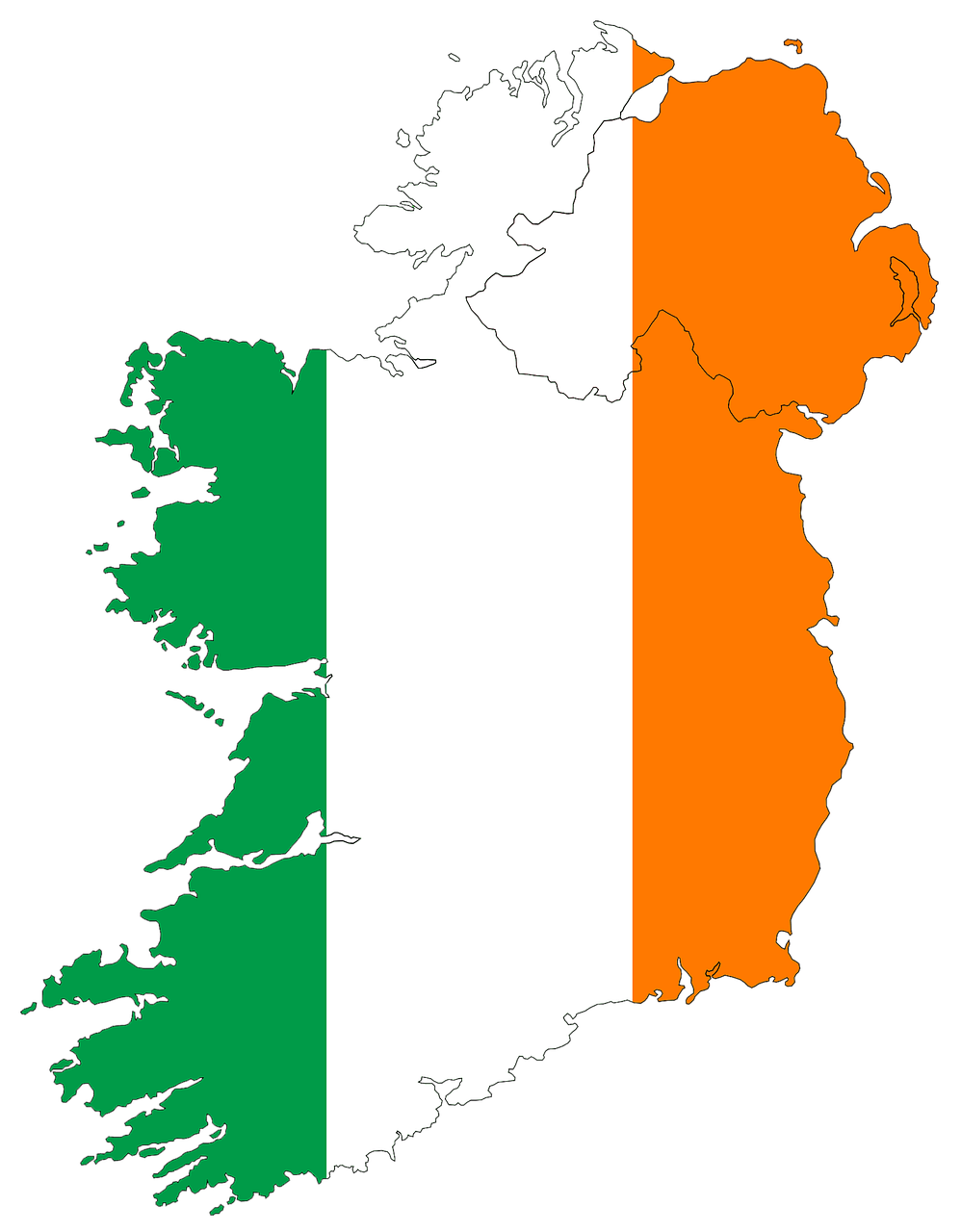
On November 20, 2018, the House of Representatives introduced H.R. 7164, a bill proposing to add Ireland to the E-3 nonimmigrant visa program. Currently, the E-3 visa program is available to American employers seeking to hire Australian nationals to perform services in a specialty occupation for a temporary period of time.

The E-3 visa program functions much like the H-1B program. The program is governed by the same labor certification standards that apply to the H-1B visa program, and much of the same evidence is required. The E-3 visa classification is numerically limited, with a maximum of 10,500 visas available annually for Australian nationals.

rawpixel-252130-unsplash

The E-2 treaty investor visa allows foreign nationals to make an investment in an existing or new business venture in the United States.

Advantages

There are no numerical limitations on the number of E-2 visas that can be issued, and there is no set minimum level of investment required, however the level of investment that should be made in the business venture should be sufficient to justify the presence of the foreign national in the United States. Although the E-2 visa is granted for an initial two-year period, the investor may qualify to extend their stay in two-year increments, with no outer limit on the total period of the foreign national’s stay.

Disadvantages

Not all foreign nationals are eligible to apply for the E-2 treaty investor visa. To qualify, you must be a foreign national from a treaty country that participates in a treaty of friendship, commerce, navigation or similar agreement with the United States. See below for qualifying countries:

Albania Czech Republic Kosovo Romania
Argentina Denmark Kyrgyzstan Serbia
Armenia Ecuador Latvia Senegal
Australia Egypt Liberia Singapore
Austria Estonia Lithuania Slovak Republic
Azerbaijan Ethiopia Luxembourg Slovenia
Bahrain Finland Macedonia Spain
Bangladesh France Mexico Sri Lanka
Belgium Georgia Moldova Suriname
Bolivia Germany Mongolia Sweden
Bosnia and Herzegovina Grenada Montenegro Switzerland
Bulgaria Honduras Morocco Thailand
Cameroon Iran The Netherlands Togo
Canada Ireland Norway Trinidad and Tobago
Chile Italy Oman Tunisia
China (Taiwan) Jamaica Pakistan Turkey
Colombia Japan Panama Ukraine
Congo (Brazzaville and Kinshasa) Jordan Paraguay United Kingdom
Costa Rica Kazakhstan Philippines Yugoslavia
Croatia South Korea Poland

Another disadvantage is that the E-2 visa is a temporary non-immigrant visa type. This means that the E-2 visa does not create a pathway to permanent residency. In addition, making an investment in a small business venture is risky. Most small businesses fail. Investors seeking to establish a new business in the United States must be prepared to face challenges, obstacles, and potential losses. If the investment will be made by a company, at least 50% of owners in the qualifying country must maintain the nationality of a treaty trader country if they are not lawful permanent residents.

Continue reading

john-schnobrich-520019-unsplash

Today, November 30, 2018, the United States Department of Homeland Security announced a notice of proposed rulemaking (NPRM) that seeks to impose a registration requirement for H-1B petitioners seeking to file an H-1B petition on behalf of beneficiaries under the regular cap and advanced degree exemption.  An unpublished version of the proposed rule has been made available in the federal register.

Under the proposed rule H-1B Petitioners would be required to electronically register with USCIS during the designated registration period, in order to file a H-1B cap-subject petition on behalf of a foreign worker. In addition, DHS is proposing to change the order in which H-1B cap-subject registrations would be selected to meet the annual H-1B regular cap and advanced degree exemption. This change would increase the odds of selection for H-1B beneficiaries who have earned a U.S. master’s degree or higher from a U.S. institution.

Under the proposed rule, all petitioners seeking to file an H-1B cap-subject petition on behalf of a foreign worker would be required to submit to a mandatory registration process. Only those whose registrations are selected, would be eligible to file an H-1B cap-subject petition during the associated filing period.

The mandatory Internet-based registration process for petitioners seeking to file H-1B petitions for beneficiaries to be counted under the regular cap or advanced degree exemption, would begin before April 1st, in advance of the period during which H-1B petitions can be filed for a new fiscal year. An H-1B cap-subject petition would not be considered properly filed unless the petition is based on a valid registration selection for that fiscal year.

Continue reading

6690388609_763c83459f_z

The immigrant caravan from Central America has now reached the Southwest border. Thousands of migrants are now waiting in Tijuana for an opportunity to apply for asylum at the San Ysidro and Otay Mesa ports of entry.

Over the Thanksgiving weekend, tensions begin to mount as members of the immigrant caravan rushed the border fence at the San Ysidro port of entry, attempting to enter the United States illegally. In response, U.S. Customs and Border Protection officers shut down both south and northbound traffic at the San Ysidro border crossing south of San Diego for approximately six hours.

The decision to close the San Ysidro port of entry during the holiday weekend was unprecedented considering that the San Ysidro port of entry is one of the busiest land border crossings in the world with 70,000 northbound vehicles and 20,000 northbound pedestrians seeking to cross each day. Many Americans were left stranded in Mexico waiting for the port of entry to re-open to re-enter the country after Thanksgiving.

The saga unfolded on November 25, 2018 when San Diego MTS suspended trolley services at the San Ysidro Transit Center due to increased tensions at the border. Passengers seeking to cross into Mexico were forced to transfer to bus routes traveling to the Otay Mesa border. In similar fashion, Caltrans San Diego announced several closures.

Continue reading