Articles Posted in DHS

16385858547_80cfa6c978_z
As previously reported, the Department of Homeland Security published a new final rule that will allow certain F-1 students with degrees in science, technology, engineering, or mathematics, also known as (STEM) fields, to apply for a 24-month extension of their optical practical training (OPT) program. This new 24-month OPT extension will replace the 17-month STEM OPT extension that had been previously in place since 2008. Eligible students can begin to apply for the new 24-month extension starting May 10, 2016. If you mistakenly apply for a 24-month extension before May 10, 2016 you will receive a 17-month extension.

Applicants should note that the cap gap extension has not changed. Individuals who have filed an H-1B change of status application that is currently pending with USCIS, must keep in mind that their status will only be extended until September 30. It is recommended that selected H-1B participants upgrade their petition to premium processing, so that foreign workers in F-1 status do not experience significant gaps in employment. USCIS will adjudicate STEM OPT applications under the 2008 rules until May 9, 2016. STEM OPT extension applications filed and approved before May 10, 2016 will receive a 17-month extension. If you have a pending application requesting a 17-month STEM OPT extension on May 10, 2016 you will receive a request for evidence asking for additional documentation to satisfy the new rule for the new 24-month extension. We have learned that the SEVIS system will be updated so that I-20’s will reflect 24-month extensions.

Students currently on 17-month STEM OPT

6733401147_3a5069bba1_z
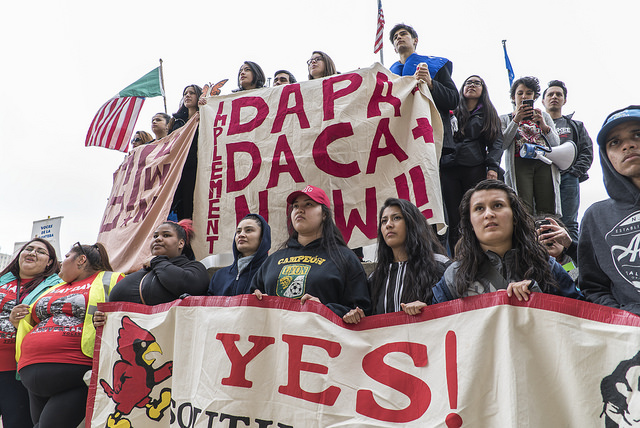
Today the Supreme Court of the United States will begin hearing arguments in the case United States v. Texas, a lawsuit challenging Obama’s executive actions on immigration. As you have heard, a federal court order temporarily froze the expanded DACA and new DAPA programs from going into effect as expected. The Supreme Court will decide the fate of these programs by June of this year.

It is truly an exciting time of the year for immigration law. United States v. Texas is the biggest immigration case of our generation. The Supreme Court’s ruling will set an important precedent for the future of immigration policy. The court will also determine whether the President had authority to enforce the executive actions on immigration. As a member of the American Immigration Lawyer’s Association (AILA), we invite you to join a live webcast with AILA experts Greg Chen,  Legal Director Melissa Crow, and UCLA School of Law Professor Hiroshi Motomura on Tuesday, April 19, 2016, at 1:00 pm (ET), as they recap and offer expert analysis of Monday’s Supreme Court oral arguments in the United States v. Texas case.

Click here to watch the live stream.

61320634_2e4c8e752c_z

Every year USCIS receives and adjudicates approximately 6 million applications from foreign nationals seeking to immigrate to the United States, and U.S. companies seeking to employ foreign workers temporarily.  According to the Department of Homeland Security’s Office of Immigration Statistics, “an estimated 13.1 million lawful permanent residents (LPRs) were living in the United States on January 1, 2013.” Of these permanent residents, more than half–8.8 million–were eligible to apply for naturalization. Additionally, the United States issues approximately 700,000 temporary non-immigrant work visas for a variety of temporary workers including: highly skilled foreign workers employed in specialty occupations in the STEM fields, fashion models, internationally acclaimed athletes and entertainers, aliens of extraordinary ability, religious workers, intra-company transferees, treaty traders/investors, foreign media workers, and agricultural and seasonal workers.

The reason the issuance of temporary worker visas is so low, when compared to the issuance of permanent resident cards, is because most of the temporary foreign worker visa programs are subject to a congressional cap, that limits the amount of non-immigrants that can be admitted per fiscal year. Additionally, certain temporary nonimmigrant worker visa classifications are granted for a specified period of time, although in most cases at least one extension may be granted. The cap applies primarily to the H nonimmigrant worker classifications, and non-minister religious workers. The H visa category accounts for approximately 54% of all visas issued for temporary workers. That is why the H visas are the most talked about visas among politicians when discussing immigration reform. The cap does not apply to treaty traders/investors, aliens of extraordinary ability, intra-company transferees, NAFTA professionals (Canada and Mexico), and foreign media workers. In comparison to developed countries, the United States admits a relatively low number of temporary foreign workers. Foreign workers are typically admitted either to fill labor shortages in the American job market, or because of their exceptional, or highly technical skills, as is the case for the H-1B visa classification.  Only highly skilled foreign nationals, aliens of extraordinary ability, aliens holding advanced degrees, high capital investors, nurses and physical therapists, doctors in undeserved area, and recipients of national interest waivers, have the unique opportunity to obtain permanent residence based on employment.

The mammoth task of meaningful immigration reform will not be easy and it will not happen overnight. The presidential nominees have failed to outline a clear strategy to overhaul our immigration system. None of the presidential candidates have addressed the most contentious areas of immigration policy that must be revised, in order to repair our broken immigration system.

Continue reading

5162244018_51c361d054_z

The new replacement rule affecting the Optional Practical Training (OPT) program for F-1 students with degrees in science, technology, engineering, or mathematics (STEM), has been posted and is now available for inspection in the federal register. The new replacement rule will replace the previous 2008 rule and become effective beginning May 10, 2016.

The new rule authorizes F-1 STEM students pursuing a 12-month Optional Practical Training program in the United States to extend their ‘OPT’ status for a 24-month period. The 24-month extension replaces the 17-month STEM OPT extension previously available to STEM students. The 17-month STEM OPT extension will continue to be effective until May 9, 2016. The new 24-month extension applies only to F-1 STEM OPT students attending accredited United States institutions, whose employers participate in the U.S. Citizenship and Immigration Services E-verify program. Only students in a valid period of post-completion OPT may file for a STEM OPT extension. The 24-month extension, coupled with the 12-month period given with initial post-completion OPT, will give STEM students a period of 36 total months of practical training in their field. Amendments that come with the new rule include additional oversight and improvement of the program requiring formal mentoring and training plans by employers, a new STEM definition and Classification of Instructional Program Categories, provisions on previously obtained STEM degrees, Accreditation and Employer Visits, and OPT compliance. In addition, new provisions have been introduced relating to wage and protections for STEM OPT students and safeguards for American workers as described below.

The ‘Cap Gap’ provision previously available to F-1 STEM OPT students in 2008 remains in place. This provision allows students with a timely filed H-1B petition requesting a change of status, the benefit of automatically extending their F-1 status and employment authorization until October 1 of the H-1B visa fiscal year for which the student has applied. The Cap-Gap was created with intention of avoiding any disruption students might experience in their careers and personal life as a result of temporary gaps in their status.

Continue reading

6000446155_1d67582412_z

The fate of the President’s executive actions on immigration now rests in the hands of eight justices on the Supreme Court, absent Justice Antonin Scalia. The Supreme Court will begin to hear oral arguments for the case, United States v. Texas on April 18th of this year, with a final ruling expected by summertime. Nearly a year and a half ago, President Obama announced a series of executive actions on immigration including the expanded Deferred Action of Childhood Arrivals (DACA) program, the new Deferred Action for Parents of Americans and Lawful Permanent Residents (DAPA) program, and other measures to enhance border security, prioritize deportations, and modernize the immigration system. USCIS was expected to begin accepting applications for the expanded DACA and DAPA program on February 18th. The excitement surrounding the expanded DACA and DAPA program however was very short lived. A federal court order filed by Texas and other states on February 16th temporarily suspended these programs from going into effect.

Since then, the federal government and the State of Texas have been battling one another in court. The Fifth Circuit court determined that Texas and at least 25 other states had sufficient ‘standing’ to challenge both programs from being implemented. The state of Texas along with other states, argue that these programs are not only outside the purview of the President’s constitutional power, but that the States would be substantially burdened, should the programs go into effect. Texas states that as a result of these programs, the State would suffer increased health-care, law enforcement, and educational costs which would come out of the State budget and more importantly the pockets of Texas residents, who do not take kindly to these programs. Additionally, Texas claims that it would suffer additional financial burden in having to issue more drivers’ licenses to individuals qualifying for expanded DACA and DAPA, a state-subsidized benefit. If the Supreme Court decides in favor of the federal government, nearly 5 million immigrants residing in the United States unlawfully will be shielded from deportation, and States will be forced to bear the costs to accommodate their new ‘deferred’ status. Deferred status will grant individuals the right to legally obtain employment, obtain a social security number, a driver’s license, and an education, but it is not a path to citizenship. As it stands, it is unlikely that a new Supreme Court Justice will be appointed before oral arguments begin in this case, especially with mounting political pressure from Republicans seeking to block the President from making a nomination.

Continue reading

9374736981_85a6e772fd_z

A new factsheet published by AILA and Kids in Need of Defense (KIND) provides statistics on the representation and removal of unaccompanied children and families facing removal proceedings before immigration court. The data concludes that an overwhelming number of unaccompanied children and families are ordered removed from the United States, despite having demonstrated a legitimate fear of persecution or torture and passing a credible fear interview, making these individuals viable candidates for asylum, prosecutorial discretion, or other relief from deportation. This is due to a lack of legal representation and legitimate concern for the due process of law.

Families Passing Credible Fear in preliminary interviews with federal asylum officers

On the whole, the majority of families in detention centers demonstrate a legitimate fear of persecution or torture and maintain a high rate of approval during credible fear interviews;

  • In preliminary interviews with asylum officers, approximately 90% of families successfully demonstrated a credible fear of persecution or torture;
  • Upon completion of these interviews, approximately 88% of detained families pass their credible fear interviews;
  • The USCIS Asylum Office has indicated that the credible fear passage rates remain unchanged—at a rate of 90%;
  • DHS data indicates that 53% of 121 individuals, arrested by DHS during the January raids, lacked legal representation before immigration court;

Continue reading

3421880567_7c3cfa34f0_z

Beginning February 19, 2016 certain nonimmigrant Caribbean residents seeking admission to the United States as H-2A agricultural workers, will be required to obtain a valid passport and valid H-2B visa in order to be admitted. Spouses and children traveling with an H-2A agricultural worker will also be required to present a valid passport and H-2A visa. The H-2A nonimmigrant visa exception for Caribbean residents was first introduced during World War II in an effort to address labor shortages in the American workforce. The change, comes as part of the revised 2016 Omnibus Appropriations Bill, which eliminates the nonimmigrant visa exception for these individuals, along with other provisions that impact the H-2B nonagricultural visa program. The new rule will apply to nationals of the United Kingdom, France, the Netherlands and nationals of Barbados, Grenada, Jamaica, Trinidad and Tobago, who either maintain a residence in a territory governed by England, France, or the Netherlands located in the adjacent islands of the Caribbean, or maintain a residence in Barbados, Grenada, Jamaica, or Trinidad and Tobago. The change was validated in yesterday’s Federal Register by the Department of State and Homeland Security respectively. Removal of this visa exemption will allow the Department of State to properly screen individuals prior to their arrival in the United States, and further protect agricultural workers from employment violations and work related abuse. To learn more about the H-2A visa program click here.

Continue reading

387411647_96fa4d50de_z

On January 21, 2016 the Department of Homeland Security confirmed that the Visa Waiver Program Improvement and Terrorist Travel Prevention Act would begin to be implemented. As a result of the recent terrorist attacks in San Bernardino county and abroad, Congress passed the Act in an effort to protect Americans from potential attacks and to secure the border. The Act increases travel restrictions for certain nationals seeking admission to the United States via the Visa Waiver Program.

Presently, the Visa Waiver Program allows nationals from 38 designated countries to travel and seek admission to the United States without a visa, for a maximum duration of 90 days. Visa Waiver Program travelers must have an approved Electronic System for Travel Authorization (ESTA) before travel.

As of January 21, nationals of visa waiver participating countries who have traveled to or been present in Iran, Iraq, Sudan, or Syria on or after March 1, 2011 will no longer be eligible to travel or seek admission to the United States under the visa waiver program.  Nationals from visa waiver participating countries who maintain dual nationality with any of the aforementioned countries, are also excluded from traveling or seeking admission to the United States under the visa waiver program. Instead, these individuals must apply for a tourist visa at a United States Consulate or Embassy abroad before seeking admission to the United States. Part of this process will require a nonimmigrant interview to be conducted, before issuance of a tourist visa. DHS expects that this new legislation will not adversely impact visa waiver program travelers, since the Act does not ban these individuals from traveling to the United States, rather it removes the privilege of traveling under the visa waiver program, and requires these individuals to apply for a tourist visa.

Continue reading

9087166672_92316bba0a_c
On January 23, 2016 a Federal District Court Judge for the District of Columbia granted the federal government an extension for the STEM Optional Practical Training (OPT) program to resume, giving the Department of Homeland Security (DHS) more time to issue a new replacement rule. The STEM OPT program had been in place since 2008, but was recently invalidated following a court order requesting the Department of Homeland Security (DHS) to issue a new replacement rule by February 12, 2016. DHS responded by requesting an additional 90 days to implement the final rule by May 10, 2016.

As part of their request, the federal government argued that exceptional circumstances existed to warrant the extension. This was owed to an unprecedented amount of comments received by DHS, that could not be reviewed and analyzed by the February deadline. According to the Administrative Procedures Act, DHS is required to publish a final rule 60 days before its effective date. During the comment period alone, DHS received over 50,000 comments that were nearly impossible to review and revise by the February deadline. Although plaintiffs for the original suit challenged the court stating that the court did not have jurisdiction to grant the extension, the court agreed with the federal government. The court stated that it did indeed have jurisdiction over the motion and that the undue hardship that STEM OPT participants and employers would experience, absent a new replacement rule, constituted an exceptional circumstance to warrant the extension. It is estimated that approximately 434,000 international students might benefit from the new replacement rule.

Presently, 23,000 students are STEM OPT participants, while approximately 2,300 more individuals are dependents of these participants. Had the extension been denied, thousands of students, their educational institutions, and their employers would be adversely affected. Litigation will continue over the validity and issuance of the replacement rule. If your initial OPT will expire between now and the May 10 deadline, and you are still within the 120-day filing window, you should apply for your 17-month extension as soon as possible, to benefit from the 17-month extension under the 2008 OPT rule. If your OPT will expire on or after May 11, and you are still within the 120-day filing window, you may be able to receive a 17-month extension. Once the new rule is in place and you are outside of the filing window, you will need to wait for the new rule and apply for benefits under the new rule. The new rule is expected to be published by March 11, 2016.

2529706103_d43e75cd10_z

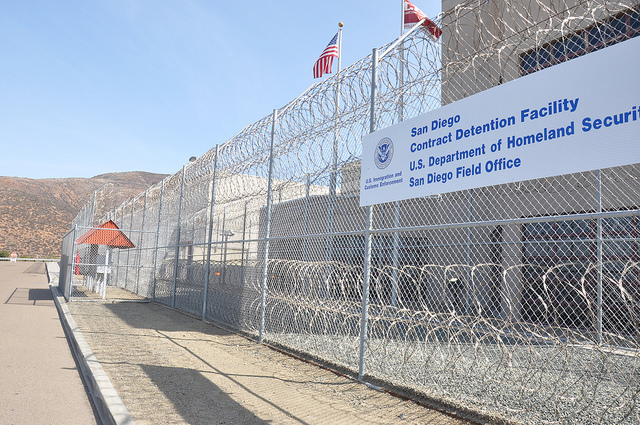
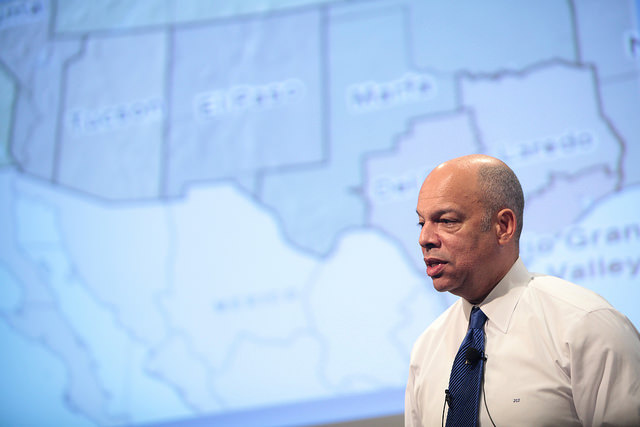
Following a recent surge in apprehensions of undocumented immigrants at the Southwest border, the Department of Homeland Security announced that, beginning January 1st Immigration and Customs Enforcement (ICE) engaged in a concerted nationwide crackdown, taking adults and some children into custody, who have evaded their orders for removal. In a recent press release, the Secretary of DHS, Jeh Johnson indicated that the crackdown occurred as a result of President Obama’s November 2014 executive action on immigration, which put in place new priorities for removal, including the removal of convicted criminals, individuals posing a threat to national security, individuals apprehended at the border or who were found to have entered the United States unlawfully after January 1, 2014. In November 2014 President Obama had implemented these new priorities in an effort to secure the border. In the press release, Jeh Johnson added, “as I have said repeatedly, our borders are not open to illegal migration; if you come here illegally, we will send you back consistent with our laws and values…individuals who constitute enforcement priorities, including families and unaccompanied children will be removed.”

According to the Department of Homeland Security, Central American migrants were removed and repatriated at an increasing rate since the summer of 2014. During this time, there was a surge in the number of families and unaccompanied children from Central America attempting to cross the southern border illegally. In response to this surge, DHS collaborated with the Mexican, Guatemalan, Honduran, and Salvadorian governments to decrease these numbers. According to Jeh Johnson the collaborative efforts were temporarily successfully. In 2015 the number of apprehensions by the U.S. Border Patrol decreased dramatically to 331, 333. Fiscal year 2015 experienced the lowest amount of apprehensions on the southern border since 1972. Recently, an increased rate of apprehensions resurfaced. This sudden spike resulted in the January 1st crackdown prompting ICE to action. As part of the crackdown, dozens of female agents and medical personnel were deployed to assist with the apprehension and removal process. According to DHS, in cases involving medical urgency or other reasons, ICE exercised prosecutorial discretion. As stated by DHS, enforcement operations will continue as needed in collaboration with state and local law enforcement.

Continue reading