Articles Posted in Free Consultation

2982449071_57fc209774_z
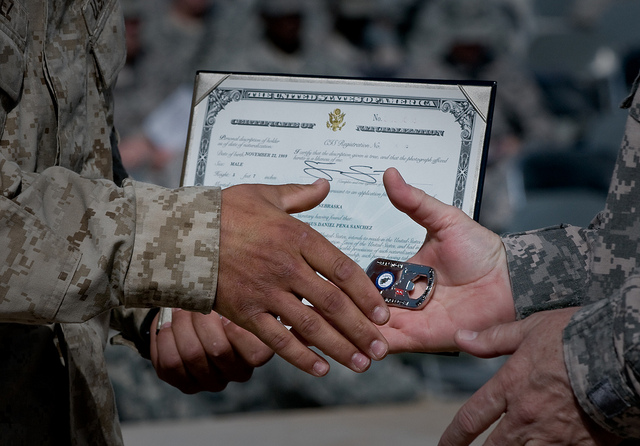
According to a new study by the Pew Research Center, the number of permanent residents applying for U.S. Citizenship has risen 5% when compared to the 2012 election cycle. This fiscal year USCIS received the highest number of applications for naturalization in four years. The Pew Research Center suggests that the recent surge in applications for naturalization is not due to political reasons.

This fiscal year approximately 249,609 permanent residents applied for naturalization, a 13% increase from the previous fiscal year, according to preliminary data provided by the U.S. Citizenship and Immigration Services. During the last election cycle, in fiscal years 2011 and 2012, there was a 19 % increase in applications, compared to this year’s election cycle at 13%. Research conducted by the Pew Research Center indicates that the increase in the number of applications is due to practical reasons, such as avoiding fee increases and criminal prosecution, and not for political reasons. For instance, during fiscal years 2007 and 2008, the number of naturalization applications decreased by 62%, at a time when USCIS announced an increase in the application fee for adults, from $330 to $595, taking place on July 30, 2007. As a result of this announcement, an unusual number of applications were filed before the planned increase in filing fees. In fiscal year 2007, before the increase in filing fees, the number of naturalization applications increased by 89% compared to fiscal year 2006. This was the largest increase in naturalization applications ever seen since 1907.

From fiscal year 1995 to 1998, more than 900,000 people applied for citizenship every fiscal year, reaching a record high 1.4 million naturalization applications in fiscal year 1997, due to a series of Congressional legislation enacted in the mid 1980s. According to the Pew Research Center, one such legislation was the Immigration Reform and Control Act of 1986, which gave approximately 2.7 million undocumented immigrants the opportunity to become legal permanent residents. This piece of legislation increased the pool of potential citizens who would apply for naturalization within 5-10 years. By 2009, nearly 40% of permanent residents had become U.S. Citizens. In 1996 Congress passed laws restricting public benefits and legal protections of noncitizens, and expanded the list of offenses for which legal permanent residents could be prosecuted and deported. These laws prompted millions of permanent residents to apply for naturalization out of fear of deportation.

294797273_6efed53754_o

The United States Citizenship and Immigration Services will allow the families of certain Filipino World War II veterans to reunite with veterans beginning June 8, 2016 as a result of a new policy change called Filipino World War II Veterans Parole Policy. In order to qualify, extended family members of veterans must be beneficiaries of approved family-based immigrant visa petitions, and be awaiting the availability of an immigrant visa. Certain extended family members of U.S. Citizen or LPR Filipino World War II Veterans will have the opportunity to receive advance parole on a ‘discretionary’ case-by-cases basis in order to travel to the United States to be with their loved ones, while they await an immigrant visa to become available. In addition, certain relatives of deceased Filipino World War II veterans, will be able to seek parole for themselves. This new policy change has been implemented to honor Filipino veterans who enlisted in the World War II Veterans Parole Program to fight for our country during World War II. The initiative will also allow extended family members to care and support their U.S. Citizen or LPR veteran family members during the advanced stages of their life. According to the policy, approximately 2,000 to 6,000 family members will be able to benefit from this new policy change. Applications for the the Filipino World War II Veterans Parole Program will not be accepted until June 8, 2016.

Presently, the process of immigrating extended family members of U.S. Citizens and Legal Permanent Residents residing abroad is a very complex and antiquated process. This is because there is a limit to the number of immigrant visa applications that can be issued for extended family members. The Visa Bulletin outlines the numerical immigrant visa limitations for family-sponsored and employment-based preference categories established by the Immigration and Nationality Act (INA).

Continue reading

6848823919_724f516a05_z

On May 04, 2016 the Department of Homeland Security published a proposed rule in the Federal Register, announcing that filing fees for many USCIS petitions and applications are expected to increase for U.S. employers and foreign nationals. The proposed regulation stipulates that filing fees may be adjusted for certain immigration and naturalization benefit requests by USCIS. The increase in filing fees was considered after USCIS conducted a comprehensive review of its fees and found that the current fees do not cover the cost of services provided by USCIS. According to USCIS, in an effort to fully recover costs and maintain adequate services, “an adjustment to the fee schedule will be necessary”. According to the regulation, fees for most employment-based petitions and applications would be raised by an average of 21%, though other types of petitions may experience a higher increase in filing fees.

According to DHS, the higher fees will more accurately reflect the current cost of processing immigration applications and petition. A portion of the increased fees would provide additional funding for refugee and citizenship programs as well as system support for interagency immigration status verification databases.  The increase in filing fees will not take effect until the federal government approves the regulation, which is expected to take several months following the close of the 60-day comment period on July 5, 2016.

According to the new fee schedule under consideration, employment-based petitions would be the most impacted by the increase in filing fees. The filing fee for Form I-129, Petition for a Nonimmigrant Worker, would increase by 42% to a fee of $460, from the current rate of $325.  Similarly, the filing fee for Form I-140, Immigrant Petition for Alien Worker, would increase by 21% to a fee of $700, from the current rate of $580. The complete fee schedule under consideration has been provided below for your reference.

The EB-5 Immigrant Investor Visa Program is expected to be the most heavily affected by the new fee schedule. The filing fee for Form I-924, Application for Regional Center Under the Immigrant Investor Pilot Program, would increase by a rate of 186% requiring Regional Centers seeking designation under the program to pay a filing fee of $17,795 instead of the current rate of $6,230. In addition, Regional Centers would be required to pay a $3,035 annual fee to certify their continued eligibility for the designation. Currently, there is no fee in place for annual certification. The filing fee for the I-526 Immigrant Petition by Alien Entrepreneur, an application associated with the EB-5 visa program, would also increase to a rate of $3,675, a 145% increase up from the current rate of $1,500. The filing fee for an investor’s petition to remove conditions on residence would remain unchanged under these new regulations.

Continue reading

15184528727_084715d318_z

Today May 2, 2016 USCIS announced that data entry for all selected H-1B cap-subject petitions has been completed for fiscal year 2017. Our office expects to receive the final receipt notices of selection for H-1B cap-subject petitions within the next 1-2 weeks. We do not believe that USCIS will be mailing out any more receipt notices for H-1B cap-subject petitions after May 13, 2016. USCIS will begin the process of returning all H-1B cap-subject petitions that were not selected in the random lottery conducted on April 9, 2016. In past years, unselected H-1B petitions have typically been received by our office in the month of June. USCIS recommends that petitioners wait until they have received either a receipt notice or unselected petition in the mail, before contacting USCIS to inquire about the status of a petition. USCIS will issue an additional announcement once all unselected petitions have been returned.

Continue reading

26031574284_479fdd52ab_z
The Department of Homeland Security is currently under pressure to provide Temporary Protected Status (TPS) to Ecuadorians, following a 7.8 magnitude earthquake that rocked the Northern coast of Ecuador on April 16, causing nearly 600 fatalities. Dozens of people remain missing under the rubble, while thousands of Ecuadorians have sustained injuries. The Obama administration is expected to respond to a request from American lawmakers, which would allow Ecuadorians physically present in the United States, to apply for an extension of stay to remain in the country temporarily. Furthermore, New York City Mayor Bill de Blasio and other politicians have called on the Obama administration to intervene, by designating Ecuador as a country temporarily eligible to receive Temporary Protected Status (TPS). In a statement issued last week, De Blasio noted that New York City alone is home to nearly 140,000 Ecuadorian immigrants. Many of these New Yorkers face additional uncertainty about whether it is safe for them to return to Ecuador at this time. We must extend whatever support we can at this critical moment.” Approximately 143,000 Ecuadorians currently reside in the United States illegally in the states of New York, New Jersey, Illinois, California and Florida.

The administration is also being pressured by lawmakers to extend temporary protected status to migrants from Central America, due to the criminal and security concerns in the region including gang violence. The administration has not yielded to this pressure as of yet.

Enacted by the United States Immigration Act of 1990, TPS allows the government to extend the stay of foreign nationals whose countries have been affected by war, civil unrest, violence, natural disasters, or other emergent needs that concern the safety of foreign nationals from troubled regions. The provisions of the Immigration and Nationality Act (INA) allow this temporary status to exist, as well as other blanket forms of relief from removal of individuals from these affected regions. Under the INA, the executive branch and legislative branch are authorized to grant TPS as relief from removal for individuals from designated countries. The Secretary of Homeland Security and Secretary of State, are given the authority to issue TPS for a period of 6 to 18 months that can be extended if conditions remain the same in the designated countries. TPS recipients receive a registration document and temporary employment authorization for the duration that the foreign national is granted Temporary Protected Status. Temporary Protected Status is NOT a visa or a path to permanent residence. Foreign nationals who have been found inadmissible to the United States or in other words have been subject to a “bar” are not eligible to receive Temporary Protected States.

Authority of Law Statue

On April 18, 2016 the United States Supreme Court heard arguments in the lawsuit United States v. Texas, a lawsuit brought by 26 states, led by the state of Texas, challenging President Barack Obama’s executive actions on immigration. These executive actions include the expanded Deferred Action for Childhood Arrivals (DACA) program, and the new Deferred Action for Parents of Americans and Lawful Permanent Residents (DAPA) program announced by President Obama in November of 2014. Following this announcement, the Obama administration received push back from the Republican led House of Representatives. There was also public outcry from conservatives, when President Obama announced that these programs would not only shield eligible individuals from deportation, but allow them to obtain employment authorization. In February 2015 these initiatives came to a screeching halt, when a federal district court granted these states a preliminary injunction preventing the implementation of expanded DACA and DAPA to take place. Since then, the lawsuit has moved through the courts, and now remains at the Supreme Court. On Monday April 18th eight justices heard oral arguments in the case arguing for and against these executive actions on immigration. A final decision is expected from the justices in June. The Director of Advocacy at the American Immigration Lawyers Association (AILA) Greg Chen, AILA’s Legal Director Melissa Crow, and UCLA Law Professor Hiroshi Motomura weighed on what happened in the court Monday morning and what we can expect from the Court moving forward.

The experts identified 2 key issues that were discussed during Monday’s oral arguments.

The court mainly focused on:

  1. Threshold question: Whether or not the Supreme Court should consider the case in the first place. The court asked themselves if the plaintiff states have standing to sue in the first place to bring the case to the court.
  2. The Merits of the case: Whether or not the President has the authority to implement these executive actions based on the ‘Take Care’ clause of the constitution.

Greg Chen highlighted that this case is particularly important because for the first time in 20 years, we have not seen any real immigration reform from any of the three branches of government. Chen also noted that these executive actions on immigration, if implemented, would shield millions of undocumented immigrants from deportation. States also have a huge interest in passing these executive actions for the economic and tax revenue benefits alone, since undocumented immigrants have not been able to properly abide by tax laws due to their unlawful presence in the United States.

Melissa Crow highlighted that in Court proceedings, the traditionally four ‘liberal’ justices on the bench Breyer, Sotomayor, Ginsburg, and Kagan seemed to be sympathetic to the Obama administration in the questions they posed to the attorneys representing both sides in this lawsuit. Melissa noted that in order to overturn the federal injunction halting expanded DACA and DAPA, a fifth vote is required from the conservative camp either from Chief Justice Roberts or Justice Kennedy. The questions posed by the traditionally ‘conservative’ justices did not necessarily provide clues into their stance on these issues. Their questions simply showed that they were engaged in the issues and mostly focused on the issue of standing to sue.

Continue reading

9152815014_f344695012_zU.S. Citizenship and Immigration Services (USCIS) has announced that premium processing for cap-subject H-1B petitions (Bachelor’s cap and Master’s cap) will begin on May 12, 2016. USCIS had previously announced that premium processing would begin no later than May 16, 2016. During fiscal year 2016, USCIS began premium processing on April 27th. This year there will be a slight delay in premium processing due to the large volume of cap-subject H-1B petitions received for fiscal year 2017. Approximately 3,000 more petitions were received this year, when compared to the previous year. USCIS guarantees a 15-calendar-day processing time for certain employment-based petitions as part of the premium processing service. If you did not submit Form I-907 Request for Premium Processing Service with your initial H-1B petition, and you receive notification that your petition has been accepted, you can upgrade your petition to premium processing at any time by filing Form I-907 with the filing fee.

Continue reading

16385858547_80cfa6c978_z
As previously reported, the Department of Homeland Security published a new final rule that will allow certain F-1 students with degrees in science, technology, engineering, or mathematics, also known as (STEM) fields, to apply for a 24-month extension of their optical practical training (OPT) program. This new 24-month OPT extension will replace the 17-month STEM OPT extension that had been previously in place since 2008. Eligible students can begin to apply for the new 24-month extension starting May 10, 2016. If you mistakenly apply for a 24-month extension before May 10, 2016 you will receive a 17-month extension.

Applicants should note that the cap gap extension has not changed. Individuals who have filed an H-1B change of status application that is currently pending with USCIS, must keep in mind that their status will only be extended until September 30. It is recommended that selected H-1B participants upgrade their petition to premium processing, so that foreign workers in F-1 status do not experience significant gaps in employment. USCIS will adjudicate STEM OPT applications under the 2008 rules until May 9, 2016. STEM OPT extension applications filed and approved before May 10, 2016 will receive a 17-month extension. If you have a pending application requesting a 17-month STEM OPT extension on May 10, 2016 you will receive a request for evidence asking for additional documentation to satisfy the new rule for the new 24-month extension. We have learned that the SEVIS system will be updated so that I-20’s will reflect 24-month extensions.

Students currently on 17-month STEM OPT

6733401147_3a5069bba1_z
Today the Supreme Court of the United States will begin hearing arguments in the case United States v. Texas, a lawsuit challenging Obama’s executive actions on immigration. As you have heard, a federal court order temporarily froze the expanded DACA and new DAPA programs from going into effect as expected. The Supreme Court will decide the fate of these programs by June of this year.

It is truly an exciting time of the year for immigration law. United States v. Texas is the biggest immigration case of our generation. The Supreme Court’s ruling will set an important precedent for the future of immigration policy. The court will also determine whether the President had authority to enforce the executive actions on immigration. As a member of the American Immigration Lawyer’s Association (AILA), we invite you to join a live webcast with AILA experts Greg Chen,  Legal Director Melissa Crow, and UCLA School of Law Professor Hiroshi Motomura on Tuesday, April 19, 2016, at 1:00 pm (ET), as they recap and offer expert analysis of Monday’s Supreme Court oral arguments in the United States v. Texas case.

Click here to watch the live stream.

8721550190_01acd27ede_z
This week USCIS announced that over 236,000 H-1B petitions were received by the agency for fiscal year 2017 (including petitions for the general cap and advanced degree exemption), compared to last year’s 233,000. Following the close of the filing period, USCIS conducted a random computer-generated lottery on April 9, 2016 beginning the selection process for the 20,000 available visas for advanced degrees first. Unselected advanced degree petitions were then placed in the lottery to fill the 65,000 general cap. Foreign workers holding an advanced degree from the United States were thus given two chances at selection. Any petitions that were not selected by USCIS will be returned along with official rejection notices, and original filing fees. This year, our office filed 15 advanced degree petitions and 40 bachelor’s cap petitions for a total of 55 H-1B petitions. Of these petitions, 46 were filed with regular processing, and 15 were filed with premium processing. The majority of these petitions were filed with the California Service Center.

As of this afternoon, we have only received 4 selection emails from the California Service Center (CSC) for advanced degree petitions filed with premium processing, and only 1 selection email for a bachelor’s cap petition filed with premium processing. We do not expect to receive any ‘receipt notices’ for petitions filed with regular processing until late April through the month of May. At this point, it does not appear that USCIS has begun cashing filing fees for selected petitions. If the filing fees for your H-1B petition have not been cashed, this does not mean that your H-1B petition was not selected. It is too early to make this conclusion. Employers should monitor their bank accounts closely within the next 2-4 weeks.

This year, USCIS received approximately 3,000 more petitions compared to last year. As in previous years, the H-1B cap was reached within the first five business days of the H-1B filing period. This year the chances of selection ran at roughly 65% for foreign workers holding a U.S. advanced degree, and roughly 35% for foreign workers holding a bachelor’s degree. Last year, the chances of being selected was about 60% for advanced degree holders, and 30% for bachelor’s degree holders.