Articles Posted in Green card

flag-1446423_1920

In this blog post we discuss the highlights of the newly updated Policy Manual guidance released by USCIS which addresses the Inadmissibility on Public Charge Grounds Final Rule. The Final Rule and guidance is effective as of February 24, 2020 and applies to all applications and petitions postmarked on or after February 24, 2020 (except for in the State of Illinois where the Final Rule remains enjoined by court order).

These highlights are broken down by volume. Volume 2 addresses public charge grounds of inadmissibility for non-immigrants, Volume 8 discusses the public charge ground of inadmissibility in great detail, and Volume 12 discusses how the public charge rule may apply to citizenship and naturalization applications postmarked on or after February 24, 2020.

Highlights:

Non-Immigrants Seeking Extension of Stay or Change of Status (Volume 2 Chapter 4)

This section of the policy guidance clarifies that although the public charge ground of inadmissibility does not apply to nonimmigrants seeking either an extension of stay (EOS) or change of status (COS) on Forms I-129 or Form I-539, these applicants are generally subject to the “public benefits condition,” unless specifically exempted by law.

What is the public benefits condition?

According to the policy manual, “the public benefits condition requires an applicant seeking EOS or COS on or after February 24, 2020 (postmarked or if applicable, submitted electronically on or after that date) to demonstrate that he or she has not received, since obtaining the nonimmigrant status he or she is seeking to extend or from which he or she seeks to change, one or more public benefits, or more than 12 months in the aggregate within any 36-month period (where, for instance, receipt of two public benefits in 1 month counts as 2 months).

USCIS only considers public benefits received on or after February 24, 2020 for petitions or applications postmarked (or, if applicable, submitted electronically) on or after that date.”

Continue reading

thinker-28741_1280

In this blog post we answer your frequently asked questions regarding the public charge rule.

Overview:

On October 10, 2018, the Department of Homeland Security first published the final rule “Inadmissibility on Public Charge Grounds” which dramatically changes the way in which an individual is determined to be a “public charge.” Although five separate courts issued injunctions to stop the government from implementing the final rule, on January 27, 2020, the Supreme Court of the United States ruled in favor of the Trump administration, allowing the government to implement the public charge rule, except in the state of Illinois where a state-wide injunction remains in place.

The new regulations will make it more difficult for certain adjustment of status and immigrant visa applicants to prove that they are not likely to become a public charge to the United States government.

The following frequently asked questions have been prepared to better inform our readers and address concerns regarding the effect of the public charge rule.

Q: When will the public charge rule take effect?

A: Shortly after the Supreme Court’s ruling, USCIS formally announced on its website that the public charge rule will affect all applications for adjustment of status (green card applications) postmarked on or after February 24, 2020 (except in the state of Illinois, where the rule remains enjoined by a federal court).

Q: Who does the public charge rule apply to?

A: In general, all applicants for admission to the United States are subject to the public charge ground of inadmissibility under INA § 212(a)(4) unless specifically exempted.

The following non-citizens are affected by the public charge rule:

  • Applicants for adjustment of status in the United States
  • Applicants for an immigrant visa abroad
  • Applicants for a nonimmigrant visa abroad
  • Applicants for admission at the U.S. border who have been granted an immigrant or nonimmigrant visa, and
  • Nonimmigrants applying for an extension or change of status within the United States (new policy under the final rule).

Applicants seeking lawful permanent resident status (applicants for adjustment of status) based on a family relationship are most affected by the public charge rule.

Continue reading

update-1672349_1920

In this post, we would like to provide our readers with an important update released by the United States Citizenship and Immigration Services (USCIS) with respect to the public charge rule.

Given the Supreme Court’s recent ruling in favor of the government, the United States Citizenship and Immigration Services (USCIS) has announced that they will begin implementing the “Inadmissibility on Public Charge Grounds” rule on February 24, 2020, EXCEPT for in the State of Illinois, where the rule remains enjoined for the time being by a federal court.

That means that EXCEPT for in the State of Illinois, USCIS will begin to apply the Final Rule to applications and petitions postmarked (or submitted electronically) on or after February 24, 2020.

The postmark date for all applications and petitions sent by commercial courier (UPS/FedEx/DHL) is the date reflected on the courier receipt.

The public charge rule will NOT apply to applications or petitions postmarked before February 24, 2020 and petitions that remain pending with USCIS.

Prepare for Changes: USCIS to update all Adjustment of Status Forms

USCIS has announced that the agency will be updating all forms associated with the filing of adjustment of status, its policy manual, and will be providing updated submission instructions on its website this week to give applicants and their legal representatives enough time to review filing procedures and changes that will apply to all applications for adjustment of status postmarked on or after February 24, 2020.

Failure to submit forms with the correct edition dates and/or abide by the new filing procedures will result in the rejection of an application or petition.

The Final Rule provides that adjustment of status applicants subject to the public charge grounds of inadmissibility will be required to file Form I-944 Declaration of Self-Sufficiency along with Form I-485, as part of the public charge inadmissibility determination to demonstrate they are not likely to become a public charge. Therefore, we expect USCIS to provide instructions regarding the submission of Form I-944 with adjustment of status applications.

Continue reading

15146360079_21d95fc033_b

We kick off a brand-new week with breaking news handed down by the United States Supreme Court.

Today, in a 5-4 decision, the Supreme Court ruled that the Trump administration may enforce  the controversial rule entitled, “Inadmissibility on Public Charge Grounds” which expands the scope of public benefits that will render a permanent resident or immigrant visa applicant ineligible for immigration benefits. The public charge rule makes certain individuals inadmissible to receive permanent residence on public charge grounds based on their use of certain government assistance programs.

As we reported, on January 13, 2020 the Trump administration filed an emergency appeal asking the Supreme Court to lift a remaining lower court injunction preventing the government from enforcing the public charge rule. Today, the conservatives on the Supreme Court overpowered the four liberal justices on the court, in favor of the Trump administration, ruling that the government may now begin to enforce the public charge rule despite challenges to the rule pending in the lower courts.

Overview: 

Under current immigration law, an individual who, in the opinion of DHS is likely at any time to become a public charge is (1) ineligible for a visa (2) ineligible for admission to the United States and (3) ineligible for adjustment of status (permanent residence).

In determining whether an applicant is or will likely become a public charge USCIS has always considered the receipt of Temporary Assistance for Needy Families (TANF), Supplemental Security Income (SSI), and Medicaid, benefits that make an applicant ineligible for permanent residence.

The public charge rule goes further and expands the list of benefits that make a foreign national ineligible to obtain permanent residence or an immigrant visa (in addition to the benefits listed above). These additional benefits include:

Continue reading

pope-moysuh-ObweQkF5w30-unsplash
Welcome back to Visalawyerblog! In this post, we bring you the latest immigration news for the week.

USCIS Announces Workload Transfers

In an effort to manage heavy workloads, increase efficiency, and decrease processing times, the United States Citizenship and Immigration Services (USCIS) has been transferring cases between service centers.

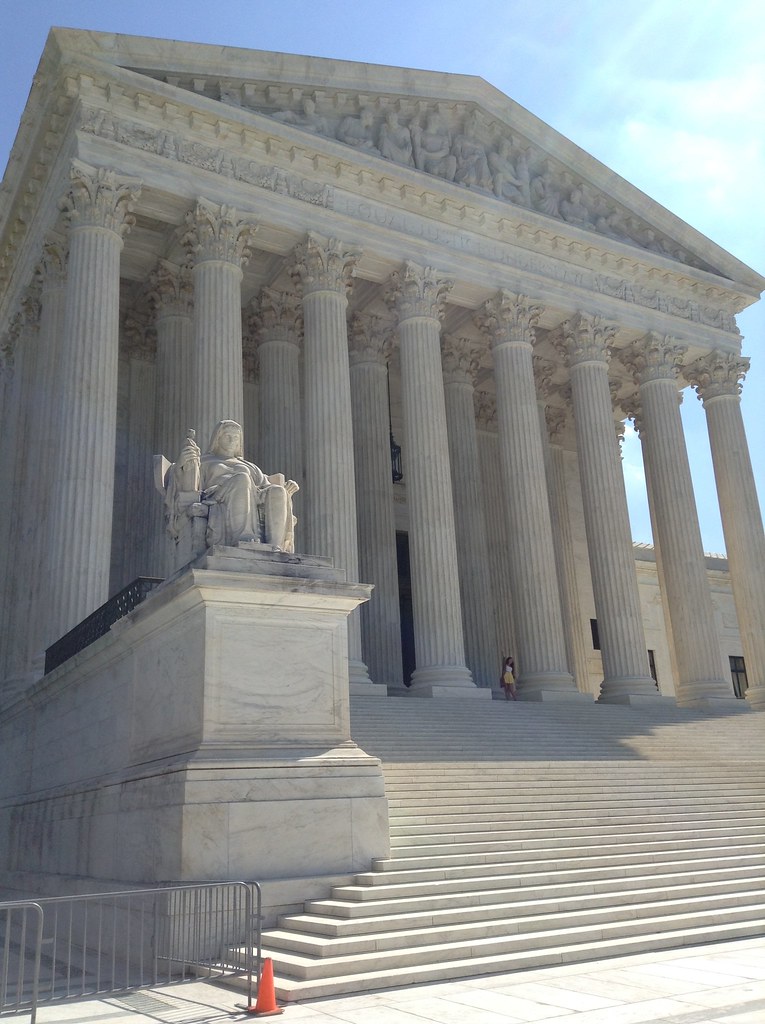
supreme-court-544218_1920-1

Welcome back to our blog! We kick off the week by bringing you recent developments regarding the government’s controversial rule entitled, “Inadmissibility on Public Charge Grounds” which sought to expand the scope of public benefits that could render a permanent resident or immigrant visa applicant ineligible for immigration benefits.

As you know, in October of 2019, the final rule “Inadmissibility on Public Charge Grounds,” was swiftly blocked by several federal judges shortly before going into effect. By court order, the government cannot implement the final rule anywhere in the United States until a final resolution has been reached in several lawsuits brought against the government challenging the validity of the public charge rule.

On Monday, January 13, 2020, the Trump administration filed an emergency appeal with the Supreme Court of the United States, asking the court to lift the remaining lower court injunction, that is currently stopping the government from enforcing the public charge rule.

The government’s request comes just one week after a three-judge panel for the U.S. Court of Appeals for the Second Circuit, upheld a lower court injunction, preventing the government from implementing the public charge rule on a nationwide basis.

Angered by the decision, the government decided to appeal the U.S. Court of Appeals decision by bringing the matter to the Supreme Court, urging the Court to side with the President and allow the implementation of the rule while a decision in the New York lawsuit is reached on the merits.

Continue reading

matthew-t-rader-_d6xGOanXMs-unsplash

The House of Representatives recently made a bold move that could give undocumented farmworkers a pathway to permanent residence.

Yesterday, December 11, 2019, by a vote of 260-165, the House passed the Farm Workforce Modernization Act, a progressive bill that if approved by the Senate, would create several exciting opportunities for undocumented farmworkers as well as U.S. employers.

What does the Bill propose?

The bill would allow existing agricultural workers in the United States to legalize their status through continued agricultural employment and contribution to the United States economy.

Which workers would be eligible for Permanent Resident Status?

Earned Pathway to Legalization

  • Individuals who have worked in agriculture in the U.S. for at least 10 years before enactment of the bill, must continue to work for at least 4 more years in agriculture on Certified Agricultural Worker (CAW) status before being eligible to apply for permanent residence OR
  • Individuals who have worked in agriculture in the U.S. for less than 10 years, must work at least 8 more years in agriculture on CAW status before being eligible to apply for permanent residence
    • Applicants who qualify based on one of these criteria would be required to pay a $1,000 fine

In addition, the bill would:

  • Create a new temporary worker visa program for current unauthorized farmworkers called Certified Agricultural Worker (CAW) status. CAW visas would be renewable and five-and-a-half years in length. The number of CAW visas would be uncapped.
  • Establish eligibility requirements of the CAW visa.Unauthorized immigrants who have spent at least 180 days of the last two years in agricultural employment would be eligible for the Certified Agricultural Worker Visa.
  • With few exceptions, applicants must meet existing work visa admissibility requirements to be eligible and must pass a criminal background check.
  • Felons and those who have been convicted of multiple misdemeanors (two or more offenses of moral turpitude or three offenses in general) would not be eligible.

Continue reading

passport-2642170_1920-1

The U.S. Department of State recently released the December 2019 Visa Bulletin. In this post, we will discuss the current state of the visa bulletin, potential for advancement, retrogression, and predictions.

Family-based Preference Categories

The Final Action Date for F2A has been current and remains current since July 2018 across all countries through December. Low demand in this category has made it “current” and is expected to remain current for the foreseeable future.

Movement for all other family-preference categories remains as before.

F-4 visa demand is increasing which may result in slow movement in this category in the foreseeable future, but not nearly enough to cause a retrogression.

Employment-based preference categories

Overview

For the month of December 2019, EB-2 Worldwide, as well as EB-2 El Salvador, Guatemala, Honduras, Mexico, Philippines, and Vietnam remain current.

Similarly, EB-3 Worldwide, as well as EB-3 El Salvador, Guatemala, Honduras, Mexico, and Vietnam remain current.

The Visa Bulletin notes that visa availability is likely to slow down for employment-based visa categories due to the steady increase in the level of employment-based demand for adjustment of status cases filed with USCIS. If the current pace of demand continues, a final action date will be implemented for EB-2, EB-3, and EB-3 Other Worker preference categories as early as January.

Charles Oppenheim, Chief of the Visa Control and Reporting Division at the U.S. Department of State has reported that if the level of demand subsides, it is possible that these categories will remain current, however there is no evidence that demand will slow down for these categories, therefore visa applicants should be prepared for the implementation of Final Action Dates as early as January 2020.

Continue reading

chicago-3885138_1920

In the latest blow to President Trump’s embattled Presidency, on November 2nd federal judge Michael Simon issued a preliminary injunction blocking the government from enforcing the President’s Proclamation issued on October 4, 2019, suspending the entry of any immigrant who will “financially burden the United States healthcare system.”

Judge Simon’s decision came just one day before the government’s planned implementation of the Presidential Proclamation.

The judge’s order applies nationwide and prohibits the government from implementing any part of the Proclamation requiring individuals seeking an immigrant visa to provide evidence “to a consular officer’s satisfaction” that they would either be covered by an approved health insurance within 30 days of entry to the United States, or possess the financial resources to pay for reasonably foreseeable medical costs.

Judge Simon’s decision came in response to a class action lawsuit filed in Federal District Court in the District of Oregon by seven United States Citizens and a non-profit organization against the Trump administration, challenging the legality of the Presidential Proclamation.

Plaintiff’s argued that the Proclamation should be found unlawful because it does not advance the President’s goal of reducing the burden of uncompensated care for uninsured individuals. Plaintiff’s called into question the President’s true intentions in issuing the Proclamation, stating that the Proclamation “is but the latest link in a long chain of statements and actions by this President and his Administration expressing antipathy toward all noncitizens. . .particularly immigrants of color, from Central and Latin America, Africa and the Middle East.”

Continue reading

healthcare-4235817_1920

The President has once again targeted the immigrant population by signing a Presidential Proclamation suspending the entry of any immigrant who will “financially burden the United States healthcare system.”

While the Presidential Proclamation is likely to encounter resistance in court, as it stands the Proclamation is slated to become effective on November 3, 2019.

According to the Proclamation, a person seeking to immigrate to the United States will be found to be a financial burden on the U.S. healthcare system, unless they can prove either one of the following:

  • They are covered by approved health insurance, within 30 days of their entry to the United States, or
  • They have the financial resources to pay for reasonably foreseeable medical costs.

Beginning November 3, 2019, prior to the adjudication and issuance of an immigrant visa, a non-citizen seeking to immigrate to the United States, must establish to the satisfaction of a consular officer that they will not become a burden on the health care system by either of the means outlined above.

Who does the Proclamation apply to?

Only non-citizens seeking to enter the United States pursuant to an immigrant visa.

Continue reading