Articles Posted in Immigration Enforcement

9544847065_844609a188_z

Beginning December 18, 2015, H-1B and L-1 filing fees will increase for H-1B/L-1 dependent employers, employing 50 or more employees, with more than 50% of those employees in H-1B or L nonimmigrant status. This increase in fees comes with the passage of the Consolidated Appropriations Act, 2016 recently signed into law by President Obama, to be enforced until September 30, 2025. The new fee will apply to initial and change of employment H-1B and L petitions filed on or after December 18, 2015. The additional fee will be $4,000 for H-1B petitions and $4,500 for L petitions. USCIS will be revising Form I-129 and I-129S to reflect the new law and the additional fee. Petitioner’s are advised to accurately complete Item Numbers 1d. and 1d1. of Section 1 of the H-1B Data Collection Supplement and Item Numbers 4a. and 4b. of the L Supplement. Failure to complete this information accurately and include the appropriate fee where necessary may result in the rejection of your petition beginning February 11, 2016. CIS reserves the right to issue a request for evidence to determine if the additional fee will apply. In these cases, the original filing date will be maintained as the date of receipt of the petition.

Other fees that may be included in the H-1B petition are as follows:

  • I-129 processing fee $325;

2529706103_d43e75cd10_z

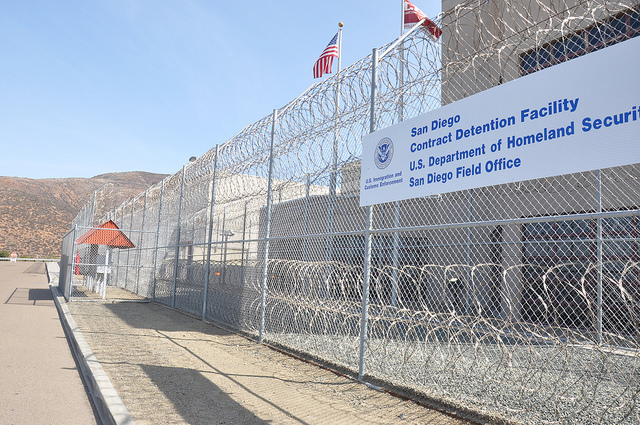
Following a recent surge in apprehensions of undocumented immigrants at the Southwest border, the Department of Homeland Security announced that, beginning January 1st Immigration and Customs Enforcement (ICE) engaged in a concerted nationwide crackdown, taking adults and some children into custody, who have evaded their orders for removal. In a recent press release, the Secretary of DHS, Jeh Johnson indicated that the crackdown occurred as a result of President Obama’s November 2014 executive action on immigration, which put in place new priorities for removal, including the removal of convicted criminals, individuals posing a threat to national security, individuals apprehended at the border or who were found to have entered the United States unlawfully after January 1, 2014. In November 2014 President Obama had implemented these new priorities in an effort to secure the border. In the press release, Jeh Johnson added, “as I have said repeatedly, our borders are not open to illegal migration; if you come here illegally, we will send you back consistent with our laws and values…individuals who constitute enforcement priorities, including families and unaccompanied children will be removed.”

According to the Department of Homeland Security, Central American migrants were removed and repatriated at an increasing rate since the summer of 2014. During this time, there was a surge in the number of families and unaccompanied children from Central America attempting to cross the southern border illegally. In response to this surge, DHS collaborated with the Mexican, Guatemalan, Honduran, and Salvadorian governments to decrease these numbers. According to Jeh Johnson the collaborative efforts were temporarily successfully. In 2015 the number of apprehensions by the U.S. Border Patrol decreased dramatically to 331, 333. Fiscal year 2015 experienced the lowest amount of apprehensions on the southern border since 1972. Recently, an increased rate of apprehensions resurfaced. This sudden spike resulted in the January 1st crackdown prompting ICE to action. As part of the crackdown, dozens of female agents and medical personnel were deployed to assist with the apprehension and removal process. According to DHS, in cases involving medical urgency or other reasons, ICE exercised prosecutorial discretion. As stated by DHS, enforcement operations will continue as needed in collaboration with state and local law enforcement.

Continue reading

District Court Denies Request for Temporary Restraining Order to Halt Syrian Re-Settlement Program in Texas

23348054250_3bfc1cd6a0_z

First Family of Syrian Refugees Arrives in Canada

In their December suit, Texas Health and Human Services Commission V. United States, et, al., the state of Texas alleged that the United States government and the International Rescue Committee unlawfully attempted to re-settle six Syrian refugees in the city of Dallas without prior  consultation and collaboration. According to Texas, the federal government failed to consult with the state regarding re-settlement of these refugees, and prevented them from receiving vital information relating to security risks posed by Syrian refugees prior to their re-settlement. Texas also claimed that the International Rescue Committee similarly failed to collaborate and consult with the Texas Health and Human Services Commission in advance prior to the re-settlement of these refugees. To protect itself, the state of Texas asked for an injunction and a temporary restraining order to halt the resettlement of Syrian refugees until security checks could confirm that these Syrian refugees do not pose a threat to the state of Texas.

On December 9, 2015 the U.S. district court denied the temporary restraining order, adding that the state of Texas failed to provide compelling evidence to suggest that Syrian refugees pose a substantial threat of irreparable injury to its citizens. Presiding district court Judge David C. Godbey added that, “the [Texas] commission has failed to show by competent evidence that any terrorists actually infiltrated the refugee program, much less that these particular refugees are terrorists’ intent on causing harm.” Although the lawsuit still stands and will likely not receive a final ruling until early next year, the district court set an important precedent in its denial of the temporary restraining order. Judge Godbey further maintained that it is not within the purview of the district court to assess what risk, if any, Syrian refugees pose to any particular state. Such risk can only be assessed by the federal government. On this issue Godbey stated that, “the Court has no institutional competency in assessing the risk posed by refugees. That is precisely the sort of question that is, as a general matter, committed to the discretion of the executive branch of the federal government, not to a district court.” The rest of the lawsuit remains in litigation.

Continue reading

8536270677_216de82424_z


Yesterday, December 2, 2015 the state of Texas brought suit against the federal government and the International Rescue Committee (IRC), before the United States District Court in Texas Health and Human Services Commission V. United States et al., 12/2/15. In its suit, the state of Texas claims that the federal government and the IRC acted unlawfully in their attempt to resettle Syrian refugees without prior consultation and direct cooperation with the state of Texas, as required by federal law. The lawsuit was brought by the Texas Health and Services Commission (THSC) representing the interests of the state of Texas in court. The THSC is an agency responsible for the administration and development of the refugee resettlement program in Texas. The state of Texas discovered in a phone call with the IRC that the Committee intended on resettling 6 Syrian refugees in Dallas, Texas on December 4, 2015 without consent. On December 1, 2015 Texas addressed the Committee in a letter requesting a halt to the resettlement of Syrian refugees until the state would receive security assurances and discuss proper screening procedures for said refugees. The IRC responded on December 2nd that it would continue the resettlement process as planned resettling the refugees in Texas.

Refugee Resettlement Program

Texas administers the refugee resettlement program along with the assistance of local government agencies responsible for the financial costs associated with the refugee’s resettlement and transition to the state of Texas.  In order to accomplish its endeavors, all federal and state agencies must adhere to strict framework’s established by the Refugee Act of 1980, which require collaborative and cooperative efforts between all entities involved in the process of refugee resettlement. According to Texas, “instead of adhering to that statutory framework, the federal government and the Committee have left Texas uninformed about refugees that could well pose a security risk to Texans and without any say in the process of resettling these refugees.”

Arguments for the state of Texas

In its suit, Texas aims to re-assert its sovereignty and obligation to protect the safety of its residents. Texas claims that the government’s failure to adhere by the law has raised legitimate security concerns involving potential complicity between refugees and terrorists.

Continue reading

11116320723_8d37fed841_z

Last week, in a 289-137 vote the House of Representatives overwhelmingly voted in favor of a bill that would require a comprehensive background check to be conducted for every Syrian and Iraqi seeking refugee admission to the United States. Among its provisions, the bill, better known as the American Security Against Foreign Enemies Act of 2015 (American SAFE Act of 2015) will require supplemental certifications and background investigations to be conducted before a Syrian or Iraqi refugee can be admitted to the United States. These additional security protocols will require multiple federal government agencies to work together in order to determine whether 1) such an alien poses a threat to the national security of the United States and 2) whether it is in the public interest of the United States to admit the alien based on the findings of the security checks conducted. The bill received overwhelming support from Democrats and Republicans alike amid the recent terrorist attacks claimed by ISIS leaving 129 dead and 353 wounded in the city of Paris. Though the bill will need to pass through the Senate before it can become law, the House’s overwhelming support for the bill has blocked the President from using his veto power.

Specifically, the bill will apply only to Syrian and Iraqi nationals referred to in the bill as ‘covered aliens.’ A covered alien means any alien applying for admission to the United States who is either a) a national or resident of Iraq or Syria b) has no nationality but whose country of last habitual residence is Iraq or Syria c) has been present in Iraq or Syria at anytime on or after March 1, 2011.

Continue reading

Senate

On October 20, 2015 Democrats in the Senate successfully blocked the Republican backed bill S. 2146: Stop Sanctuary Policies and Protect Americans Act from moving forward with a vote of 54-45. At its core, the bill aimed to hold sanctuary jurisdictions accountable for noncompliance of federal orders including detainment of undocumented immigrants, increasing penalties for individuals caught re-entering the United States after their removal, and providing protection to state and local law enforcement officials cooperating with federal law enforcement officials. The bill was introduced by Republicans after an act of violence took the life of a San Franciscan woman at the hands of an alleged undocumented immigrant with a felony record, who had also been the subject of multiple removals. Public outcry ensued after the city sheriff released the perpetrator despite a federal immigration detainment order. According to Republicans, San Francisco is one of hundreds of sanctuary cities that refuse to comply with federal immigration orders to facilitate the detainment and removal of undocumented immigrants.

Among its provisions, the bill aimed to crackdown on so called ‘sanctuary cities’ notorious for their noncompliance by limiting government funding. By cutting necessary funding, Republicans hoped that this would force cooperation between local law enforcement officials and federal law enforcement officials including ICE officers. Republican Senator Vitter who introduced the bill, argued that the violent crime that occurred in San Francisco was just one example highlighting the magnitude of compliance concerns. According to Vitter, ‘sanctuary cities’ like San Francisco have repeatedly refused to comply with orders of detainment issued by the Department of Homeland Security. Prior to the vote, the White House had warned Senate Republicans that if the bill did pass with the 60 necessary votes, they could expect the President to veto the bill. Although the bill was criticized by Democrats for stereotyping undocumented immigrants and making sweeping allegations against the undocumented immigrant community, the bill raises serious competence and compliance concerns.

Continue reading

inese

It is our pleasure to introduce our readers to our senior case manager, Inese Grate, one of the original members of the Law Offices of Jacob J. Sapochnick. Ms. Grate joined our firm when there were merely 2 employees working at the office. In addition to studying law in Latvia, Ms. Grate received her Master’s in Law in International Business Transactions from Temple University Beasley School of Law and attended the International Law Institute at Georgetown University School of Law.

Ms. Grate specializes in business and family immigration, corporate, international trade, and international transactions. Ms. Grate provides consultation on strategic investment in the United States for international clients and corporations to identify potential opportunities, create jobs, and develop successful businesses. Throughout her professional career, she has taken several international and U.S. startup companies from an ideation phase through to establishment and registration. Ms. Grate is unique in that she thinks outside of the box and is able to utilize her professional network of financial advisors, real estate brokers, investors and industry experts to assist our clients based on their unique needs. Throughout her career, Ms. Grate has helped numerous corporations and individuals in the United States as well as several European countries in various immigration/business related issues. Ms. Grate evaluates business plans and works on all related immigration issues including visas, licenses, and permits. She has helped in numerous cases in this area for the past few years.

Continue reading

What is President Obama’s Executive Action?

It is not a path to permanent residency. It is not a permanent solution. It is not an option for felons, undocumented individuals with criminal histories, inadmissibility issues, and recent border crossers. In fact, recent border crossers will be made a priority for deportation under the order. The order also makes border security a number one priority, increasing the chances of apprehension for recent border crossers. If you commit fraud by knowingly misrepresenting or failing to disclose the facts, you may be subject to prosecution or removal from the United States. Always be truthful and careful when presenting information and documentation to USCIS. Eligible immigrants must demonstrate that they have resided in the United States continuously for a period of at least five years. Only immigrants who have been living in the United States for at least five years are allowed to reap the benefits under the executive action. The order grants eligible individuals a temporary status allowing applicants to remain in the United States legally without fear of deportation.

Eligible individuals must be either:

  • A parent of a U.S. Citizen or lawful permanent resident as of the date of the President’s announcement of November 20, 2014, have been residing in the United States continuously for at least five years (beginning on January 01, 2010), must not be an enforcement priority, and not have inadmissibility issues

OR

  • Individuals who arrived in the United States before turning 16 years old and who can prove that they have continuously resided in the United States for at least five years (beginning on January 01, 2010) regardless of their age today. Applicants must not be an enforcement priority and not have inadmissibility issues.

Continue reading

imagePresident Obama closed off the year by announcing his highly anticipated executive action on November 20, 2014 which will go into effect early this year, but the executive action was only one of many important initiatives that occurred in 2014.

2014 was a big year for immigrants for several reasons:

  • AB 60 California Driver’s License Applicants: Beginning January 01, 2015 undocumented immigrants can start the process of obtaining their driver’s licenses under AB 60 at their local DMV field office
  • Executive Action: Beginning February 2015, eligible applicants can apply for the expanded DACA program which shields undocumented individuals from deportation who were brought to the United States illegally as children, our office will be providing you with further updates early this year
  • Beginning May 2015 eligible parents of U.S. Citizens and lawful permanent residents can apply for deferred action thereby protecting them for deportation and allowing millions of parents to be eligible for employment authorization

Continue reading


th

On November 20, 2014, the President announced a series of Executive actions that will be implemented by the administrative agencies to optimize the immigration system in the U.S. The President has not given up on advocating for the comprehensive immigration reform and intended for these executive actions to be the beginning of the change in our broken immigration system. The President’s announcement focused on the following key initiatives:

– Strengthen border security and revise removal priorities.

Per the initiative, DHS will develop effective border security strategies focusing especially on southern land and maritime borders and the West Coast preventing illegal immigration.

DHS will also implement a new department-wide enforcement and removal policy that places

Continue reading