schengen_map

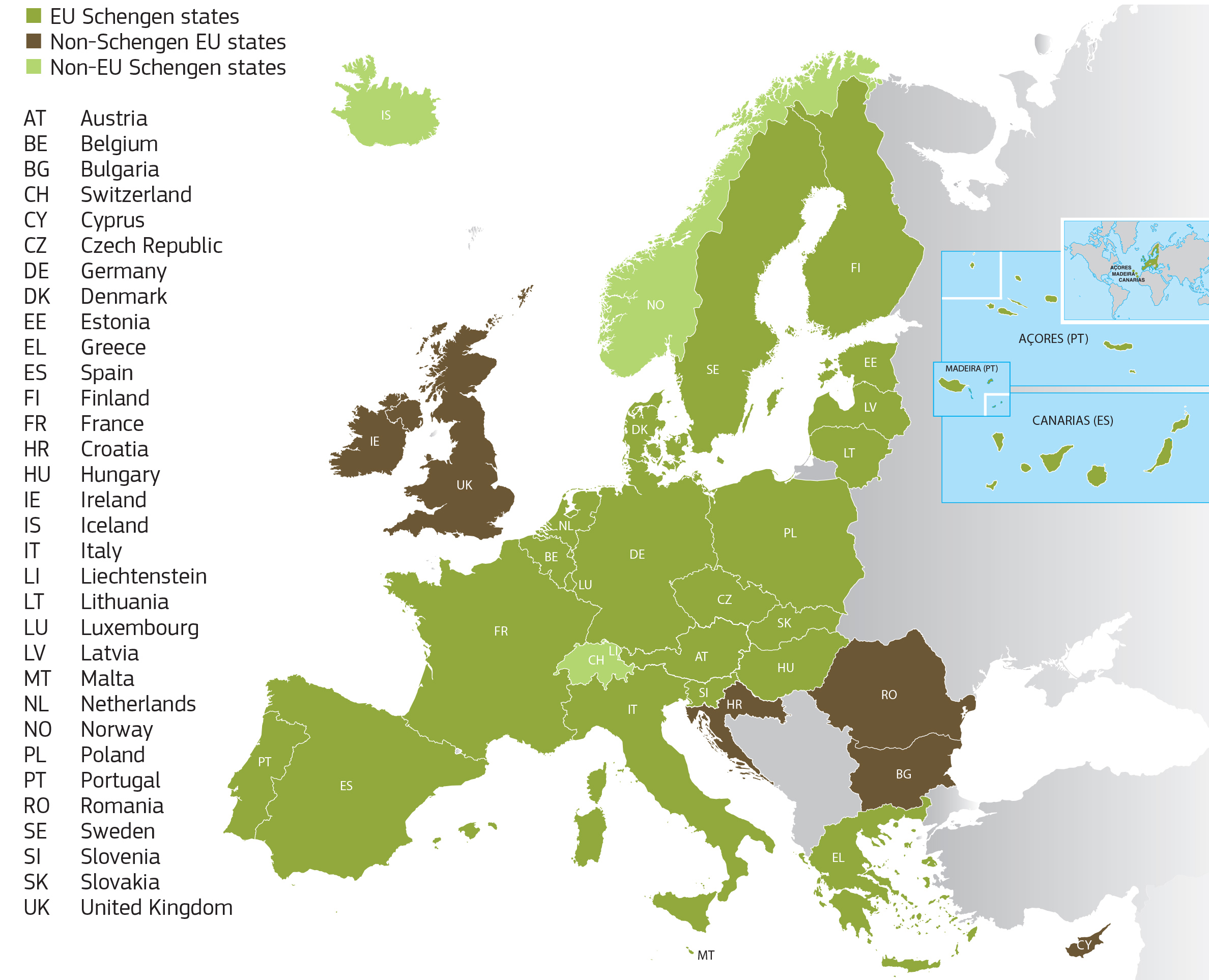
In light of the global Coronavirus pandemic, on March 11, 2020, the President signed a presidential proclamation suspending and limiting the entry of immigrants and nonimmigrants who were physically present within the Schengen Area (most EU states) during the 14-day period preceding their entry or attempted entry into the United States, effective 11:59 eastern time Friday, March 13, 2020.

The proclamation will remain in effect until terminated by the President at his discretion based on recommendations by the Secretary of Health and Human Services.

The proclamation does not apply to persons aboard a flight scheduled to arrive in the United States that departed prior to 11:59 eastern time on March 13, 2020.

Who is exempted from the Proclamation?

The proclamation will not apply to the following categories of people:

  • lawful permanent resident of the United States;
  • any alien who is the spouse of a U.S. citizen or lawful permanent resident;
  • any alien who is the parent or legal guardian of a U.S. citizen or lawful permanent resident, provided that the U.S. citizen or lawful permanent resident is unmarried and under the age of 21;
  • any alien who is the sibling of a U.S. citizen or lawful permanent resident, provided that both are unmarried and under the age of 21;
  • any alien who is the child, foster child, or ward of a U.S. citizen or lawful permanent resident, or who is a prospective adoptee seeking to enter the United States pursuant to the IR-4 or IH-4 visa classifications;
  • any alien traveling at the invitation of the United States Government for a purpose related to containment or mitigation of the virus;
  • any alien traveling as a nonimmigrant pursuant to a C-1, D, or C-1/D nonimmigrant visa as a crewmember or any alien otherwise traveling to the United States as air or sea crew;


Continue reading

Great news for FY 2021 H-1B registrants! USCIS has published step-by-step video instructions showing you how you can submit an electronic registration on the USCIS website without the use of an attorney or representative. It is not too late to register. The registration period closes noon ET on March 20, 2020.

USCIS Adds FAQs to Website

USCIS has also included a helpful and detailed FAQ section about the H-1B electronic registration process on its website addressing various topics regarding the H-1B registration process and filing process itself.

We have included these FAQs in this post for your convenience. Questions marked in red are those that we consider to be of most interest to petitioners.

For further information about the H-1B electronic registration process please click here.

Q: What happens if the prospective beneficiary does not have a last name? What do you enter into the system?

  • A: If there is only one name for a beneficiary, it should be entered as the last name. The first and middle name fields will have check boxes that indicate “Beneficiary does not have a first name” or “Beneficiary does not have a middle name.” These boxes should be checked in these instances. Do not enter placeholders, such as “FNU”, “LNU”, “Unknown”, or “No Name Given.

Q: Is there an appeal process for registrations determined to be invalid duplicates?

  • A: Registrations that are determined to be duplicates will be invalid. A registrant who submits duplicate registrations will not be able to appeal the invalidation.

Q: If you are registering for the master’s cap based on the expectation that the beneficiary will earn a qualifying advanced degree, and you are actually selected under the master’s cap, but, the beneficiary does not obtain their qualifying advanced degree, is there a risk that the cap-subject H-1B petition for that beneficiary will be denied?

  • A: If a registration is submitted requesting consideration under the INA 214(g)(5)(C) advanced degree exemption because the beneficiary has earned, or will earn prior to the filing of the petition, a master’s or higher degree from a U.S. institution of higher education, and the registration is selected under the advanced degree exemption, the beneficiary must be eligible for the advanced degree exemption at the time of filing the I-129 petition. If the beneficiary is selected under the advance degree cap and has not earned a qualifying master’s or higher degree from a U.S. institution of higher education at the time the petition is filed, the petition will be denied or rejected.

Continue reading

jon-tyson-XmMsdtiGSfo-unsplash-scaled

Welcome back to Visalawyerblog! In this blog post we cover the latest immigration news of the week.

USCIS Launches Online Form to Report Fraud

On March 3rd USCIS announced the launch of a new online form available on the USCIS website that can be used to report suspected immigration fraud and abuse including asylum/refugee fraud, religious worker visa fraud, employment-based visa fraud, investor visa fraud (EB-5 program), student visa fraud, marriage or fiancé visa fraud, unauthorized practice of law (notarios), and other types of immigration fraud.

This “USCIS tip form” provides space for the form user to describe alleged fraud or abuse in detail. According to USCIS, the tip form was created to make the tip process more effective and efficient, so that the agency can better collect information and make an assessment regarding the credibility of tips sent to the agency.

Previously fraud reporting was done by email, making it difficult for USCIS to respond and investigate tips.

This new online system for reporting fraud represents the Trump administration’s commitment to crack down and prevent various forms of visa fraud.

Over the years, the Trump administration has signed various directives and executive orders such as “Buy American, Hire American” aimed at rooting out fraudulent H1B, asylum/refugee, and EB-5 investor visas. The Trump administration has also worked to limit or slow down the issuance of these visas by issuing aggressive requests for evidence in the case of H1B visas and increasing the minimum investment amount for EB-5 investors.

Presidential Proclamation Suspending Entry of Certain Immigrants and Nonimmigrants who Pose a Risk of Transmitting the Coronavirus

On February 3rd the Department of State issued an important announcement reminding travelers of a Presidential proclamation signed on January 31st barring entry to the United States of immigrants or nonimmigrants who traveled to China within the 14 days immediately prior to arrival in the United States.

The proclamation went into effect on Sunday, February 2.

Travelers should note that the proclamation does not apply to U.S. citizens or lawful permanent residents of the United States.  Foreign diplomats traveling to the United States on A or G visas are excepted from this proclamation.  Other exceptions include certain family members of U.S. citizens or lawful permanent residents, including spouses, children (under the age of 21), parents (provided that the U.S. citizen or lawful permanent resident is unmarried and under the age of 21), and siblings (provided that both the sibling and the U.S. citizen or lawful permanent resident are unmarried and under the age of 21).  There is also an exception for crew traveling to the United States on C, D or C1/D visas.

Continue reading

lotto-864035_1920-1

H-1B season has officially kicked off!

The new mandatory H-1B electronic registration system for fiscal year 2021 opened yesterday at noon ET on March 1, 2020 and will remain open until noon ET on March 20, 2020.

In order to have a chance of being selected, from now on all prospective petitioners and their authorized representatives seeking to file H-1B cap-subject petitions for FY 2021, including for beneficiaries eligible for the advanced degree exemption, must first register during the registration period (March 1, 2020 to March 20, 2020) and pay the associated $10 registration fee for each beneficiary.

Only petitioners with a selected registration may participate in the H-1B filing process.

Registering is Easy

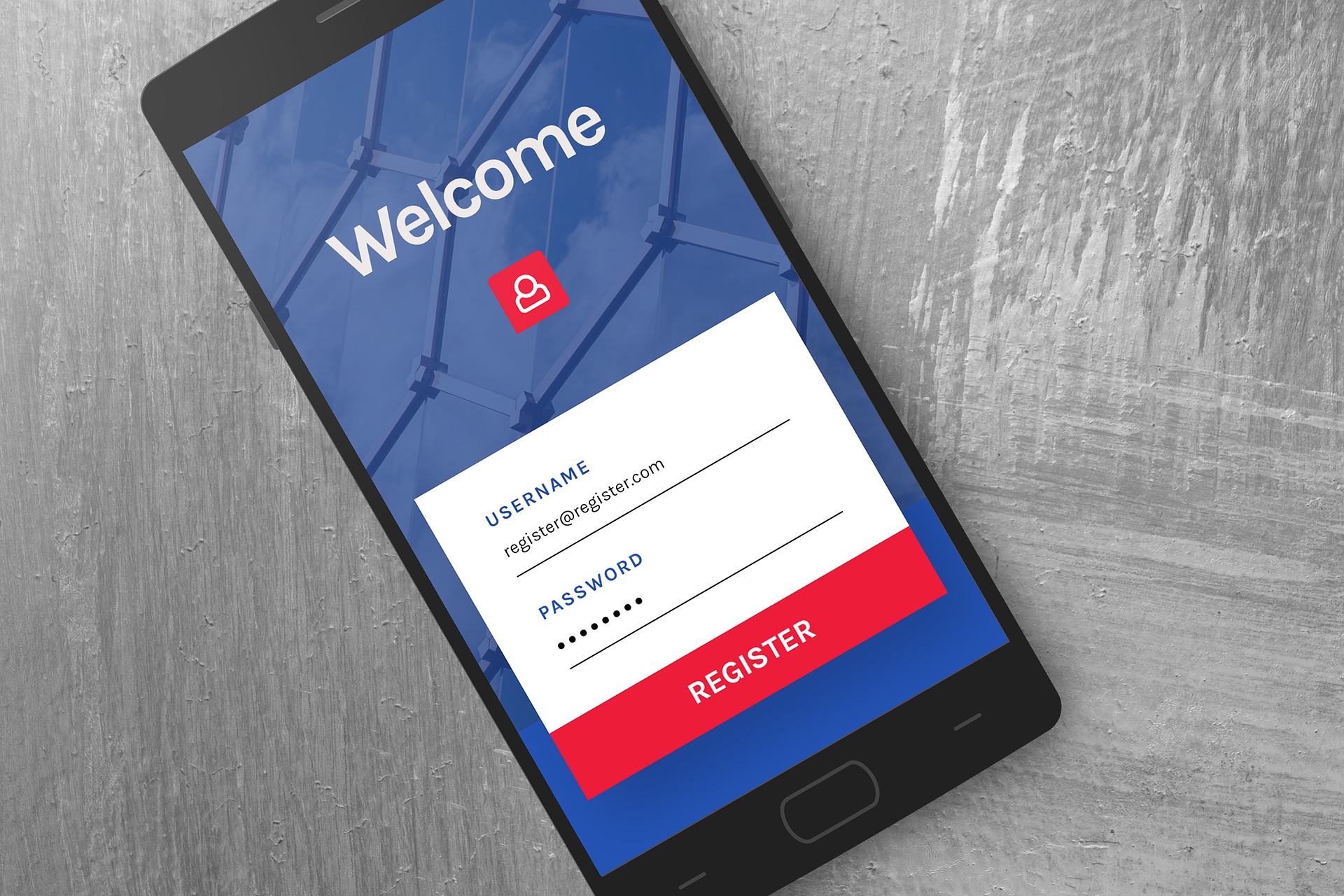
Petitioners and their authorized representatives must create a myUSCIS online account and submit registrations for each beneficiary via their online account during the registration period.

Per USCIS:

Prospective H-1B cap-subject petitioners or their representatives are required to use a myUSCIS online account to: 1) register each beneficiary electronically for the selection process and 2) pay the associated $10 H-1B registration fee for each registration submitted on behalf of each beneficiary. Prospective petitioners or their representatives will be able to submit registrations for multiple beneficiaries in a single online session. Through the account, they will be able to prepare, edit and store draft registrations prior to final payment and submission of each registration.

Continue reading

kelly-sikkema-f_aHTIof44U-unsplash-scaled

Applying for adjustment of status just became a lot more difficult.

After announcing the nationwide implementation of the final rule “Inadmissibility on Public Charge Grounds” on February 24, 2020, USCIS unveiled a brand-new form (Form I-944) that must be filed with all applications for adjustment of status postmarked on or after February 24, 2020.

What is Form I-944?

This new Form I-944, Declaration of Self Sufficiency, will be used by USCIS to determine whether an applicant is likely to become a public charge at any time in the future based on several factors including receipt of public benefits, as well as the applicant’s age, health, family status, assets, resources, financial status, education and skills, prospective immigration status and period of stay, and the petitioner’s Form I-864 Affidavit of Support.

In general, a person is inadmissible based on public charge grounds if he or she is more likely than not at any time in the future to receive one or more public benefits for more than 12 months in the aggregate within any 36-month period.

Who is Exempt from Filing this Form?

Certain special classes of immigrants are not required to file the new Form I-944, Declaration of Self Sufficiency with an adjustment of status application such as: VAWA self-petitioners, special immigrant juveniles, certain Afghani or Iraqi nationals, asylees, refugees, victims of qualifying criminal activity (U Nonimmigrants), victims of human trafficking (T nonimmigrants), applicants applying under the Cuban Adjustment Act, Haitian Refugee Fairness Act, certain Parolees, Nicaraguans and other Central Americans of the Nicaraguan Adjustment and Central American Relief Act (NACARA), and other special classes of immigrants.

Continue reading

announce-3192838_1920
On February 21, 2020, the Supreme Court of the United States by a vote of 5-4 stayed the remaining statewide injunction issued by the U.S. District Court for the Northern District of Illinois, which prevented the government from enforcing the Inadmissibility on Public Charge Grounds rule also known as the “public charge” rule in the State of Illinois. A “stay” is a ruling made by a court to stop or suspend a proceeding or trial temporarily.

What this means

The Supreme Court’s ruling means that the government may now enforce the “public charge” rule in the state of Illinois, while it appeals the District Court’s decision.

board-157016_1280

In this blog post, we discuss visa bulletin trends and projections for the month of March. The U.S. Department of State (DOS) recently released the March 2020 Visa Bulletin revealing some good and bad news for employment based categories and family preference categories.

Adjustment of Status Filing Charts March 2020:

For Family-Sponsored Filings:
In the F2A category, there is a cutoff date on the Dates for Filing chart.  However, the category is “current” on the Final Action Dates chart.  Accordingly, applicants in the F2A category may file using the Final Action Dates chart for March 2020.

For all other family-sponsored preference categories, applicants must use the Dates for Filing chart in the Department of State Visa Bulletin for March 2020.

For Employment-Based Preference Filings:
For all employment-based preference categories, applicants must use the Dates for Filing chart in the Department of State Visa Bulletin for March 2020.

Employment-based Categories: The Highlights

China: This month, employment based categories for China experienced varying degrees of forward movement, with EB-3 experiencing the most advancement.

  • EB-1 China advanced ten days to June 1, 2017
  • EB-2 China advanced one month to August 15, 2015
  • EB-3 China advanced nearly three months to March 22, 2016

Continue reading

highway-1403977_1920

PLEASE NOTE: THE INFORMATION IN THIS POST NO LONGER APPLIES. ON FEBRUARY 21, 2020, THE SUPREME COURT ISSUED A RULING ALLOWING THE GOVERNMENT TO IMPLEMENT THE PUBLIC CHARGE RULE TO RESIDENTS IN THE STATE OF ILLINOIS. USCIS HAS ANNOUNCED THAT THE PUBLIC CHARGE RULE WILL BE IMPLEMENTED NATIONWIDE INCLUDING IN THE STATE OF ILLINOIS TO APPLICATIONS POSTMARKED ON OR AFTER FEBRUARY 24, 2020.

In this blog post we will discuss whether the public charge rule applies to individuals living in Illinois.

The Supreme Court’s decision on January 27, 2020 lifted all lower court injunctions preventing the government’s implementation of the public charge rule, with the exception of an injunction preventing the government from imposing the rule in the state of Illinois.

USCIS has clearly stated that although the agency will implement the public charge rule on February 24, 2020, the agency is prohibited from implementing the rule in the state of Illinois, where it remains enjoined by the U.S. District Court for the Northern District of Illinois.

Accordingly, at this time, the public charge rule does not apply to individuals living in the state of Illinois. In the event the injunction in Illinois is lifted the public charge rule may apply. If this occurs, USCIS will provide additional guidance for individuals residing in the state of  Illinois on its website.

The following frequently asked questions have been prepared to better inform applicants and petitioners living in the state of Illinois regarding the public charge rule.

Q: Does the rule apply to adjustment of status applicants in State of Illinois?

A: No. USCIS has clearly stated on its website that, “applicants for adjustment of status who live in Illinois and who are subject to the public charge ground of inadmissibility are not subject to the final rule.”

Continue reading

register-2819608_1920

Are you ready for the upcoming H1B season for fiscal year 2021?

With the registration period fast approaching, we want to make sure you know everything there is to know about the new mandatory H-1B electronic registration process for fiscal year 2021 (FY 2021).

The following FAQ provides the most up to date information regarding the mandatory electronic registration requirement.


H-1B Registration Process Timeline

Feb. 24: Prospective petitioners may begin creating H-1B registrant accounts (account creation will remain open throughout the entire registration period). Representatives may create an account at any time.

March 1: H-1B registration period opens at noon ET.

March 20: H-1B registration period closes at noon ET.

March 31: Date by which USCIS intends to notify selected registrants.

April 1: The earliest date that FY 2021 H-1B cap-subject petitions may be filed.

FAQs

Q: What is the electronic registration requirement?

A: In order to participate in the upcoming H-1B lottery, prospective petitioners seeking to file H-1B cap-subject petitions for FY 2021, including for beneficiaries eligible for the advanced degree exemption, must first electronically register and pay the associated $10 H-1B registration fee for each beneficiary.

Only those petitioners who have submitted an electronic registration and have received a “Selected” registration notification may properly file an H-1B cap-subject petition for FY 2021.

Continue reading

flag-1446423_1920

In this blog post we discuss the highlights of the newly updated Policy Manual guidance released by USCIS which addresses the Inadmissibility on Public Charge Grounds Final Rule. The Final Rule and guidance is effective as of February 24, 2020 and applies to all applications and petitions postmarked on or after February 24, 2020 (except for in the State of Illinois where the Final Rule remains enjoined by court order).

These highlights are broken down by volume. Volume 2 addresses public charge grounds of inadmissibility for non-immigrants, Volume 8 discusses the public charge ground of inadmissibility in great detail, and Volume 12 discusses how the public charge rule may apply to citizenship and naturalization applications postmarked on or after February 24, 2020.

Highlights:

Non-Immigrants Seeking Extension of Stay or Change of Status (Volume 2 Chapter 4)

This section of the policy guidance clarifies that although the public charge ground of inadmissibility does not apply to nonimmigrants seeking either an extension of stay (EOS) or change of status (COS) on Forms I-129 or Form I-539, these applicants are generally subject to the “public benefits condition,” unless specifically exempted by law.

What is the public benefits condition?

According to the policy manual, “the public benefits condition requires an applicant seeking EOS or COS on or after February 24, 2020 (postmarked or if applicable, submitted electronically on or after that date) to demonstrate that he or she has not received, since obtaining the nonimmigrant status he or she is seeking to extend or from which he or she seeks to change, one or more public benefits, or more than 12 months in the aggregate within any 36-month period (where, for instance, receipt of two public benefits in 1 month counts as 2 months).

USCIS only considers public benefits received on or after February 24, 2020 for petitions or applications postmarked (or, if applicable, submitted electronically) on or after that date.”

Continue reading