Articles Posted in Detention

boy-5752925_1280
San Diego’s immigration community has been rattled by new reports that Immigration and Customs Enforcement (ICE) is arresting individuals with no criminal history during routine green card interviews at USCIS offices—a practice that is historically unprecedented and deeply alarming.

What’s Happening


Starting in early November, immigration attorneys began reporting that ICE agents had been detaining green card applicants at routine interviews conducted at USCIS field offices.

judge-3008038_1280This week, the Justice Department announced that it has hired 36 new immigration judges — 11 permanent and 25 temporary — for the Executive Office for Immigration Review (EOIR), a key agency that handles immigration court proceedings in deportation cases.

What’s happening?


The hiring comes after several months of layoffs among immigration judges occurring earlier this year. In the past 10 months, EOIR fired more than 125 judges, causing delays in immigration court proceedings across the country.

The courts in Massachusetts and Illinois were among the most affected by these departures. The good news is these newly hired judges will begin serving across 16 states nationwide.

Who are the new judges?


  • The permanent hires largely come from federal‑government backgrounds: some from EOIR itself, some from the Department of Homeland Security (DHS), and others who previously trained agents or worked as asylum officers.
  • The temporary hires include military attorneys drawn from the Marines, Navy, Air Force, and Army.
  • These changes accompany a modification in DOJ policy that lowers the qualification requirements for temporary judges—prior immigration law experience is no longer mandatory.

Continue reading

judge-8779957_1280In a significant victory for civil rights and immigrant advocacy groups, a federal appeals court has upheld a lower court’s decision to temporarily block federal immigration agents from conducting immigration-related arrests in Los Angeles without reasonable suspicion.

The Ninth Circuit Court of Appeals issued the ruling late Friday, marking a major legal development in the ongoing battle over immigration enforcement and constitutional protections.

At the heart of the case is the question of whether federal agents can detain individuals based solely on generalized characteristics such as race, ethnicity, or language. The appeals court was clear: they cannot.

A Firm Rejection of Racial Profiling

The three-judge panel ruled that U.S. Immigration and Customs Enforcement (ICE) and other federal agents cannot use factors like “apparent race, ethnicity, speaking Spanish or speaking English with an accent, particular location, and type of work” as the basis for reasonable suspicion to stop an individual. Even taken together, the court stated, these characteristics form only a broad profile and fail to meet the legal standard required for a lawful stop.

“We agree with the district court that…these factors do not demonstrate reasonable suspicion for any particular stop,” the panel wrote, emphasizing the constitutional protections that apply to all individuals, regardless of immigration status.

Continue reading

Gavin_Newsom_by_Gage_Skidmore

Attribution: Gage Skidmore

On Friday July 11, 2025, a federal judge ruled that the government’s ongoing immigration raids in Southern California and its denial of legal counsel to detained immigrants likely violates the Constitution.

In so ruling, the court issued two temporary restraining orders (TROs) barring the Department of Homeland Security (DHS) and other federal agencies from continuing these actions in the counties of Los Angeles, Orange, Ventura, Riverside, San Bernardino, Santa Barbara and San Luis Obispo. (Pedro Vasquez Perdomo v. Kristi Noem (2:25-cv-05605)

The first TRO prohibits immigration agents from stopping individuals without reasonable suspicion and bars law enforcement from relying solely on the following factors—alone or in combination—to form reasonable suspicion for a stop including (1) apparent race or ethnicity (2) speaking Spanish or English with an accent (3) presence in a particular location like a bus stop, car wash, day laborer pick up site, or agricultural site, or (4) the type of work the person does.

The second TRO orders DHS to provide access to counsel on weekdays, weekends, and holidays for those who are detained in B-18, the basement of a federal building in downtown Los Angeles located at 300 North Los Angeles Street.

It further requires immigration officials to develop guidance on how agents and officers should determine whether “reasonable suspicion” exists when conducting stops and to implement training for officers involved in immigration operations.

In addition to immigration officers, the TROs apply to the FBI and Justice Department, who are named in the lawsuit and are involved in immigration enforcement actions.

Continue reading

prison-370112_1280A new lawsuit filed by a man detained in San Diego, California, is challenging the controversial practice of courthouse arrests by U.S. Immigration and Customs Enforcement (ICE) taking place in recent months. The case could offer critical insight into the government’s approach in making these arrests. (A.M. v. Larose (3:25-cv-01412))

The man identified in court filings as A.M. is seeking asylum in the United States after being subjected to torture in his home country from his human rights advocacy. On June 3, he arrived for what he believed would be a routine immigration court hearing but was shocked to find that the judge had dismissed his case and ICE agents were waiting outside, ready to arrest him and take him to Otay Mesa’s Detention Facility to eventually be deported.

Unfortunately, A.M.’s case is not unique. In recent months, the Trump administration has enforced a controversial policy in immigration courts to expedite deportations by instructing judges to swiftly dismiss cases, subjecting individuals to expedited removal without giving them a meaningful opportunity to contest the government’s claims or consult attorneys.

This approach, detailed in a May 30 directive from the Executive Office for Immigration Review, encourages judges to grant oral motions to dismiss without the standard 10-day response period, effectively eliminating opportunities for individuals to contest their cases. Once dismissed, individuals are immediately eligible for expedited removal, making it possible for ICE officers to arrest them.

Continue reading

gavel-7499921_1280In a stunning turn of events, on Tuesday a federal judge in New York blocked the Trump administration from ending Temporary Protected Status (TPS) benefits for Haitians ahead of schedule, ruling that DHS violated the law in attempting to strip deportations and work permits from over half a million Haitians.

The ruling comes in response to the Department of Homeland Security’s abrupt announcement that it would be terminating Haiti’s TPS designation effective September 2, 2025.

In a decision issued Tuesday, District Court Judge Brian M. Cogan found that accelerating the program’s expiration by at least five months was unlawful and that the government failed to follow required procedures mandated by Congress, such as conducting a review of current conditions in Haiti before ending its TPS designation—a requirement that was not followed in this case.

lawyer-3819044_1280The growing presence of U.S. Immigration and Customs Enforcement (ICE) officials at immigration courthouses nationwide has prompted several states to enact laws preventing ICE from arresting or detaining individuals attending their immigration hearings.

One such law passed by the state of New York is the “Protect Our Courts Act,” which shields individuals from being arrested by federal immigration authorities like ICE while traveling to, attending, or leaving court proceedings. This law is designed to guarantee that people can access the justice system without fearing immigration-related repercussions. It forbids arrests in these situations unless a judicial warrant or court order is shown to court personnel.

On June 12th the Justice Department sued the state of New York challenging the constitutionality of the Act under the supremacy clause. The government argues that it unlawfully obstructs federal immigration enforcement operations.

The Trump administration is seeking to invalidate these laws to facilitate detention and removal. According to the government, arrests at courthouses helps prevent individuals from evading authorities and decreases safety risks because of the security offered by courthouses.

In response to the lawsuit, the New York Civil Liberties Union issued a statement defending the state law adding, “This latest attempt by the Trump administration to meddle in our laws would push immigrant communities further into the shadows, throw due process out the window, and weaken trust in our justice system — making everyone less safe. It sends a dangerous message: that ICE can and should operate wherever it wants, regardless of the human cost.”

Continue reading

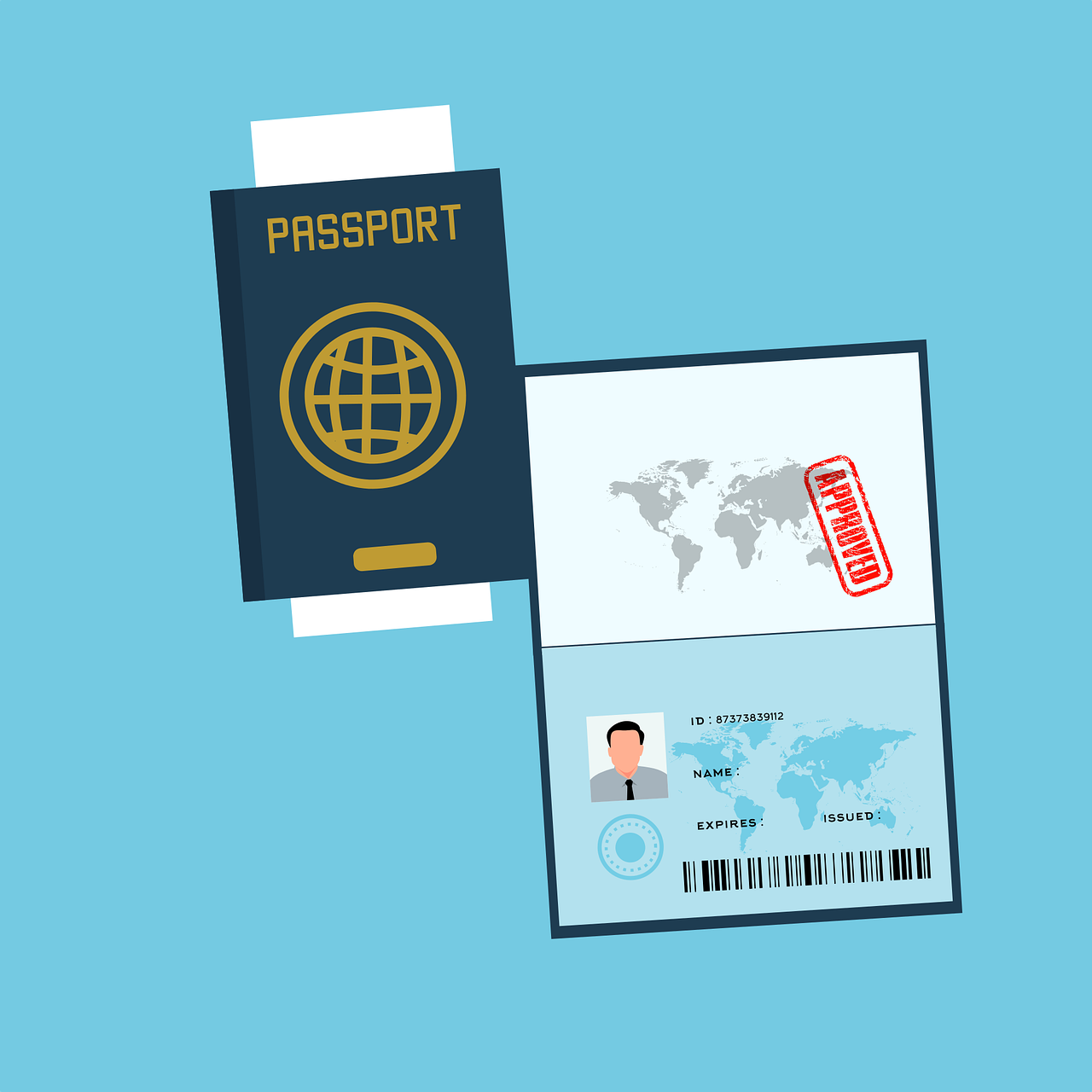
passport-8621284_1280

Harvard Travel Ban Blocked by Federal Judge

Earlier this month President Trump had signed an Executive Order suspending the entry of all nonimmigrants and exchange visitors attending Harvard University, for a period of 6 months starting June 4th (the effective date of the proclamation).

Those affected by the executive order were F, J, and M visa holders outside of the United States as of the date of the proclamation. The suspension did not apply to nonimmigrants entering the United States to attend other universities.

Shortly after the executive order was issued, a federal judge granted a preliminary injunction, temporarily halting its enforcement until the court can rule on the merits of the case.

Following the court’s actions, the State Department ordered embassies and consulates around the world to resume visa processing for Harvard University students and exchange visitors.

As a result, Harvard students can breathe easier. While the preliminary injunction remains in effect, consulates are barred from denying visas to Harvard students and exchange visitors, and visa holders attending Harvard cannot be refused entry to the United States.

For more information, please click here.

Continue reading

ai-generated-9069949_1280On May 12, 2025, Secretary of Homeland Security Kristi Noem announced that the State Department will not renew Temporary Protected Status (TPS) benefits for Afghanistan once the current designation expires on May 20, 2025.

Beneficiaries will be granted a 60-day transition period to make preparations to either depart the United States or seek alternative lawful immigration status in the United States, before Afghanistan’s designation officially terminates on July 14, 2025.

Employment Authorization

Beneficiaries with valid TPS Employment Authorization Documents (EADs) will continue to be authorized to work during the 60-day transition period.

DHS announced the agency will be automatically extending the validity of certain EADs previously issued under the TPS designation of Afghanistan through July 14, 2025.

As proof of continued employment authorization through July 14, 2025, TPS beneficiaries can present an EAD that has the notation A-12 or C-19 under Category and a “Card Expires” date of November 20, 2023, or May 20, 2025.

How We Got Here

Afghanistan was initially designated for TPS during the Biden administration on May 20, 2022. The designation was made based on the Secretary’s determination of ongoing armed conflict and extraordinary conditions in Afghanistan preventing the return of its nationals.

Continue reading

airport-8081875_1280On Friday May 9, 2025, President Trump signed executive order “Establishing Project Homecoming,”a new White House initiative aimed at encouraging the voluntary departure of undocumented immigrants from the United States.

This new policy offers financial incentives and logistical support to those who facilitate self-deportation, with the stated goal of reducing the fiscal and social burdens associated with deportation to prioritize funding for Americans in need.

Key Provisions of Project Homecoming:

  • Free Government-Funded Flights:Undocumented immigrants are offered complimentary flights to any country willing to accept them, excluding the United States.This service is accessible through the government’s new “CBP Home” mobile application and at participating airport
  • $1,000 Exit Bonus: Individuals who voluntarily and permanently depart the U.S. under this program are allegedly eligible to receive a $1,000 “exit bonus” upon successful relocation.
  • Concierge Travel Assistance: A government-provided concierge service is available at airports to assist individuals, even those lacking valid travel documents from their home countries, in booking flights and navigating the voluntary departure process.

Continue reading