Articles Posted in Work Visas

29496131773_a9ba5e3935_z

Unsurprisingly, this week we learned that the Trump administration is taking further steps to toughen the process of applying for an H-1B visa extension/renewal request, and that of other highly sought-after non-immigrant work visa types filed using Form I-129 Petition for Nonimmigrant Worker such as the H, O, P, L, and R work visas. The news comes as part of the President’s ongoing plan to prioritize the employment of American workers over foreign workers, outlined in the President’s Executive Order “Buy American, Hire American.”

On October 23, 2017, the United States Citizenship and Immigration Services (USCIS) announced that the agency will be updating its adjudication policy “to ensure petitioners meet the burden of proof for a non-immigrant worker extension petition.” The change in policy specifically provides that USCIS officers will “apply the same level of scrutiny to both initial petitions and extension requests” for the H-1B visa as well as other nonimmigrant visa types.

Per USCIS, this policy will now apply to “nearly all non-immigrant classifications filed using Form I-129 Petition for Nonimmigrant Worker.” This means that all nonimmigrant worker visa renewal requests, made using Form I-129, will be subject to the same level of scrutiny that was applied during the foreign worker’s initial non-immigrant work visa request.

Continue reading

32601599521_2402aed1f4_z

Just one day before Presidential Proclamation No. 9645, “Enhancing Vetting Capabilities and Processes for Detecting Attempted Entry Into the United States by Terrorists or Other Public-Safety Threats,” was set to go into effect, a federal judge in Hawaii issued a ruling blocking portions of the Presidential Proclamation from being enforced on a majority, but not ALL, of the countries, listed in the Proclamation.

The Presidential Proclamation, commonly referred to in the media as ‘travel ban 3.0’ set out to suspend the entry of foreign nationals from eight “countries of identified concern,” and the admission of foreign nationals from those countries was to remain limited until further notice.

The countries to be affected by travel ban 3.0 included: Chad, Iran, Libya, North Korea, Syria, Venezuela, Yemen, and Somalia. A federal judge from the state of Hawaii by the name of Derrick Watson has granted a temporary restraining order preventing the government from suspending the admission of foreign nationals from the following countries: Chad, Iran, Libya, Syria, Yemen, and Somalia, but DOES NOT prevent the government from suspending the admission of foreign nationals from North Korea and Venezuela, and from imposing stricter screening standards on Iraqi nationals. The restrictions on foreign nationals from North Korea, Venezuela, and Iraq will continue to be enforced according to the Proclamation, beginning today, Thursday, October 19, 2017. Restrictions on North Koreans and Venezuelans will likely remain indefinitely, given that the U.S. government has no formal diplomatic avenues for communication with those countries.

Judge Derrick Watson wrote in his opinion that the latest revision of the ban, “suffers from precisely the same maladies as its predecessor,” and “lacks the sufficient finds that the entry of more than 150 million nationals from [the] specified countries would be ‘detrimental to the interests of the United States,” and “plainly discriminates based on nationality.”

Continue reading

15870725062_120c91470a_z

Supreme Court Dismisses One of Two Travel Ban Cases

On October 10, 2017, in a one-page order, the U.S. Supreme Court dismissed the Maryland case, Trump, President of U.S., Et Al. v. Int’l Refugee Assistance, Et Al.,  which sought to block a key provision of Executive Order No. 13,780 temporarily suspending the entry of aliens outlined under Section 2(c). The Supreme Court has dismissed the case because the provision at issue expired on September 24, 2017 and no longer presents a “live case or controversy” for the court to resolve. Accordingly, the Supreme Court vacated the judgment and sent the case back to the lower courts to dismiss the case as moot.

However, the Supreme Court did not act to remove the case, Trump, President of U.S., Et Al. v. Hawaii, Et Al., from its docket, in which the state of Hawaii joined by other states, called on the court to issue an injunction, stopping the federal government from enforcing a travel ban on individuals from six Muslim majority countries as well as refugees. The travel ban at issue, in that case, began on June 29, 2017 and expired on September 27, 2017. The refugee provision of the act however will not expire until October 24, 2017. Given the Supreme Court’s dismissal of the Maryland case, it is likely that the Court will also dismiss the Hawaii case once the refugee provision has expired.

On September 24, 2017, the President revised Executive Order No. 13,780 for a third time adding Chad, North Korea, and Venezuela to its travel ban, and removing Sudan. The third revision of the travel ban will go into effect on October 18, 2017. The Supreme Court did not address the administration’s newly revised travel ban in its order.

Continue reading

35415181771_0d9e542fd6_z

Today, September 18, 2017, the United States Citizenship and Immigration Services (USCIS), announced that the agency will be resuming premium processing for all H-1B visa petitions subject to the fiscal year 2018 cap. This means that petitioners who filed an H-1B cap subject petition or H-1B cap exempt petition (for the advanced degree exemption) subject to fiscal year 2018, may upgrade to premium processing starting today.

USCIS previously announced that the agency had resumed premium processing of H-1B petitions filed under the Conrad 30 waiver program, as well as interested government agency waivers, and certain cap-exempt H-1B petitions.

Premium processing for all other H-1B petitions including extensions of stay will remain temporarily suspended. USCIS will announce when premium processing will resume for other remaining H-1B petitions not subject to the fiscal year 2018 cap. Petitioners who cannot file for premium processing may request for their petitions to be processed expeditiously, however such requests will only be granted on a discretionary basis.

What is premium processing?

Premium processing service refers to an optional premium processing service offered by USCIS to employers filing Form I-129 (Petition for a Non-immigrant Worker) or Form I-140 (Immigrant Petition for Alien Worker). Premium processing guarantees 15 calendar day processing to petitioners who make use of the service. Applications that are not processed within 15 calendar days, receive a refund of the $1,225 premium processing fee, and are processed expeditiously. To make use of the service, petitioners must file Form I-907 with their application and include the appropriate fees. The I-907 request for premium processing service can be filed together with an H-1B petition or separately pending a decision. The service is only available for pending petitions with USCIS.

Continue reading

refuge-2022868_1280

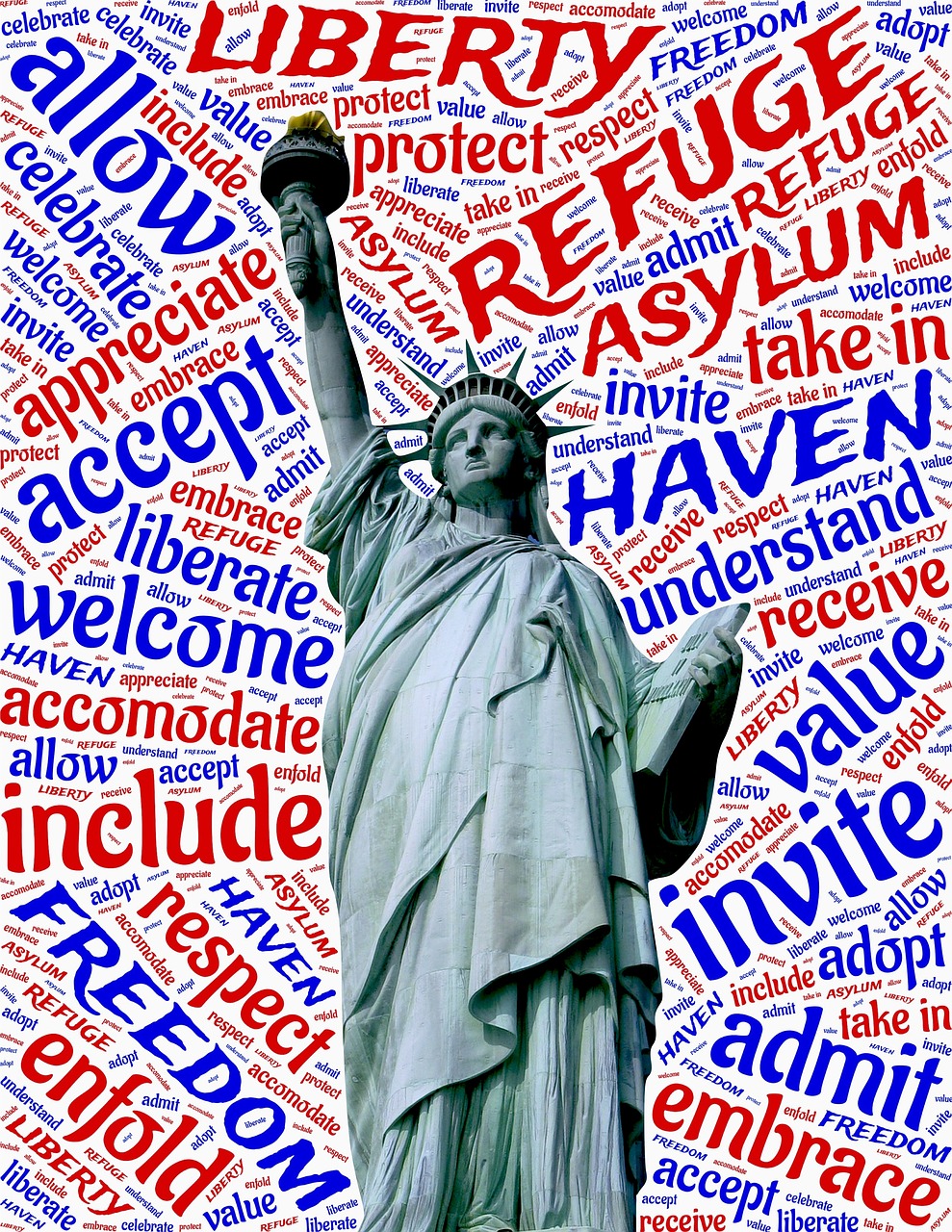
Given the recent termination of the Deferred Action for Childhood Arrivals (DACA) program and the controversy surrounding the immigration system as of late, in this post we address the numerous myths surrounding the DACA program and of immigration law in general. Although there are numerous studies and empirical research debunking the common myths attributed to the immigration system, as well as detailed economic reports published by governmental agencies corroborating the positive effects of immigration, Americans continue to hold a negative perception of immigrants and are increasingly skeptical of the immigration process. In truth, much of these perceptions are perpetuated by the unwillingness of Americans to obtain readily available information on the internet, to discover that the immigration process for individuals who entered the United States illegally is riddled with obstacles. More and more we are seeing Americans rely on news stations to accurately deliver the news and do the work for them. Unfortunately, the best way to understand the immigration process itself is to go straight to the source, and not rely on such sources for information.

The public needs to know the facts to better understand that the average immigrant actually has very few immigration options available to them under the current immigration system.

MYTH #1 It is easy to get a green card under current immigration laws

Most Americans believe that it is relatively easy to get a green card. This cannot be further from the truth. Immigration laws are highly complex and are designed to make it more difficult for extended family members, low-skilled workers, and undocumented immigrants to immigrate to the United States. Under current immigration laws, there are generally only two ways to immigrate to the United States and obtain permanent residency, outside of special immigrant categories specifically reserved for special categories of individuals including: asylees, refugees, certain witnesses of crimes, victims of abuse, and individuals who may qualify for withholding of removal. It is extremely difficult for individuals to qualify for permanent residency under one of these special categories.

Outside of these special categories, foreign nationals may immigrate to the United States and obtain permanent residency, only if they have a qualifying family member (such as a US Citizen or LPR spouse, child, etc.) who may petition for them or if the beneficiary works for a U.S. employer on a valid visa who is willing to sponsor the foreign national by petitioning for their permanent residency.

Continue reading

34704808294_30d802845d_z

Now is a good time to file your green card application. Significant wait times are expected given a new policy passed by the Trump administration that will require in-person interviews for LPR applicants filing based on employment sponsorship

In yet another controversial move, the Trump administration has recently adopted a new policy change that will require an in-person interview for individuals wishing to obtain lawful permanent residency based on employment sponsorship. The new policy will be implemented beginning October 1st.
Previously, foreign nationals applying for permanent residency, based on employment sponsorship, were not required to attend an in-person interview, although this allowance was discretionary. In recent years, the in-person interview requirement was typically reserved for individuals applying for permanent residency based on a qualifying familial relationship, and not for individuals applying based on employment sponsorship.

A USCIS spokesperson announced the new policy change on Friday August 25th, a change that will delay the process of obtaining a green card significantly, given the increased number of individuals that will be required to attend an in-person interview. According to USCIS this change in policy will apply to any individual adjusting their status to legal permanent residency from an employment-based visa category.

What’s more, family members of refugees or asylees, holding a valid U.S. visa, will also be required to attend an in-person interview when applying for provisional status.

Continue reading

12547469204_8fbc4b6018_z

On April 18, 2017, the President signed the controversial executive order, Hire American, Buy American, “in order to promote the proper functioning of the H-1B visa program.”

The President’s executive order directs the heads of various departments to suggest reforms to the H-1B visa worker program, a lottery based work visa program reserved only for professionals working in specialty occupations. The EO specifically aims to “ensure that H-1B visas are awarded to the most-skilled or highest-paid petition beneficiaries.”

Since the President signed the executive order, no reforms or regulations have been passed by Congress to enforce the provisions of the order on the H-1B visa worker program, however enforcement of the provisions of the executive order are beginning to be seen through the adjudicatory measures of USCIS immigration officials.

As of late, the United States Citizenship and Immigration Services (USCIS) has become a lot tougher in adjudicating H-1B visa applications. This means that securing an H-1B work visa will become a lot more difficult going forward. For the last few months, USCIS has been aggressively issuing more numerous and more stringent “requests for evidence” in comparison to previous years. This phenomenon has manifested itself generally in response to work visa applications for highly skilled workers, and is not just reserved to H-1B work visa applications.

Continue reading

3207213225_95bc6b6463_z

On Thursday, August 10, 2017, the prestigious Wharton School at the University of Pennsylvania released a report which discusses the effect that the RAISE Act would have on the country’s economy. The RAISE Act is a Senate bill that was recently introduced by Republican Senators Tom Cotton (R-AR) and David Perdue (R-GA), which seeks to cut the legal immigration system in half. The President threw his support behind the bill shortly after it was introduced.

The Wharton report projects that if passed, the RAISE Act, would result in a loss of 4.6 million jobs by the year 2040, a reduction in GDP that will be 2 percent lower than the current rate by the year 2040, and a reduction in the country’s GDP by 0.7 percent by the year 2027.

On the flip side, the report projects that there will be “very little change” to individual per capita GDP, despite the fact that the RAISE Act would dramatically reduce the country’s population size, the number of jobs available, and the country’s GDP.

The report uses the Penn Wharton Budget Immigration Policy Model to make projections on the impact that the RAISE Act would have on the country’s economy.

Under the RAISE Act, legal immigration would be reduced by 50% while immigration would increase at a rate of 75% for immigrants with at least a college degree.

https://www.visalawyerblog.com/files/2017/08/Screen-Shot-2017-08-11-at-2.53.10-PM.png

Table 1 shows provisions included in the RAISE Act. Immigrant visas with employment preference would be awarded using a skills-based points system. Specifically, immigrant visa applicants would receive points based on education, English language skills, job offers, age, extraordinary achievements, and entrepreneurship. Family preferences for immigrant visas would be limited to spouses and minor children and the diversity lottery immigrant visa program would be eliminated. In addition, the number of refugees would be limited to 50,000 annually.

Continue reading

6576922689_27bf2d1f45_z

You have questions, we have your answers. Here are answers to 6 of your Frequently Asked Questions.

In this blog, we are answering 6 of your frequently asked questions in detail. Please remember that every case and every story is different and unique. You should not compare your situation to anyone else’s. We hope that our answers will provide you with further guidance on your immigration journey. For any further questions please visit our website or call our office for a free first time legal consultation. We thank you for your continued trust in our law office.

Q: Should I hire an attorney to file my green card application and go with me to the green card interview?

This will largely depend on the complexity of your individual case. For example, there are individuals that are eligible to adjust their status to permanent residence based on their marriage to a U.S. Citizen or based on a qualifying family relationship, but may be applying for permanent residence under special circumstances such as 245i or another special immigrant classification such as VAWA.

Still other individuals may be applying for their green card for a second time after being denied.

Individuals who are applying for their green card under one of these special immigrant classifications should absolutely seek the assistance of an immigration attorney to apply for permanent residence to avoid any mistakes in filing and to be well prepared for the green card interview. In these situations, any minor mistakes on the paperwork can result in major delays, or worse—require refiling the green card application altogether. In addition, for complex cases it is always important for an attorney to prepare the foreign national for the most vital part of the green card application which is the green card interview. An attorney’s presence at the green card interview is also important to ensure that the foreign national’s rights are not violated by the immigration officer.

Continue reading

15723222862_9e66f06572_z

On August 02, 2017, Republican Senators Tom Cotton (R-AR) and David Perdue (R-GA) introduced a new Act called “Reforming American Immigration for a Strong Economy” before the U.S. Senate, otherwise known as the RAISE Act, which is a new piece of legislation that has recently been backed by President Trump.

The RAISE Act aims to overhaul the employment-based immigration system and replace it with a skills-based system that awards points to immigrants based on the immigrant’s level of education, age, ability to speak the English language, future job salary, level of investment, and professional achievements. In addition, the RAISE Act would terminate the Diversity Visa Program, which awards 50,000 visas to foreign nationals from qualifying countries, and would ultimately reduce the number of family-sponsored immigrants allowed admission to the United States. The Act intends to focus on the family-based immigration of spouses and minor children and would reduce the number of refugees allowed into the United States.

Among other things the RAISE Act would:

  • Terminate the Diversity Visa Program which awards 50,000 green cards to immigrants from qualifying countries;
  • Slash the annual distribution of green cards to just over 500,000 (a change from the current issuance of over 1 million green cards annually);
  • Employment-based green cards would be awarded according to a skill-based points system that ranks applicants according to their level of education, age, ability to speak the English language, salary, level of investment, and achievements (see below);
  • The issuance of employment-based green cards would be capped at 140,000 annually;
  • Limit the maximum number of refugees admitted to the United States to 50,000;
  • Limit admission of asylees. The number of asylees admitted to the United States on any given year would be set by the President on an annual basis;
  • Amend the definition of “Immediate Relative” to an individual who is younger than 18 years of age instead of an individual who is younger than 21 years of age;
  • Adult children and extended family members of individuals living in the United States would no longer be prioritized to receive permanent residence. Instead the focus would remain on the immediate relatives of U.S. Citizens and legal permanent residents such as spouses and children under the age of 18;
  • The Act would allow sick parents of U.S. Citizens to be allowed to enter the United States on a renewable five-year visa, provided the U.S. Citizen would be financially responsible for the sick parent.

Continue reading