africa-1974671_1920
Today, April 5, 2019, U.S. Citizenship and Immigration Services (USCIS) announced that the Secretary of Homeland Security is extending the designation of South Sudan for Temporary Protected Status (TPS) for 18 months, from May 3, 2019, through November 2, 2020. The extension allows currently eligible TPS beneficiaries to retain TPS through November 2, 2020, so long as they otherwise continue to meet the eligibility requirements for TPS.

Current beneficiaries of Temporary Protected Status (TPS) under South Sudan’s designation who want to maintain their status through the 18-month extension period ending on Nov. 2, 2020, must re-register between April 5, 2019 and June 4, 2019.

All applicants must submit Form I-821, Application for Temporary Protected Status and request an EAD by submitting Form I-765, Application for Employment Authorization, when they file Form I-821 or separately at a later date.

graphic-4067697_1280

Today, USCIS will begin accepting H-1B petitions subject to the FY 2020 cap. Any FY 2020 cap-subject H-1B petitions filed before April 1st will be rejected.

Beginning today, 65,000 H-1B visas will be available for the regular cap, and 20,000 H-1B visas for advanced degree holders.

Selection

Important changes will be implemented for the H-1B cap selection process.

In January, the Department of Homeland Security announced a final rule amending regulations governing cap-subject H-1B petitions, including those that may be eligible for the advanced degree exemption.

The final rule reverses the order by which USCIS selects H-1B petitions under the H-1B regular cap and the advanced degree exemption, which will be in effect for the FY 2020 cap season.

USCIS will first select H-1B petitions submitted on behalf of all beneficiaries, including those that may be eligible for the advanced degree exemption. USCIS will then select from the remaining eligible petitions, a number projected to reach the advanced degree exemption.

Premium Processing Available for COS Cap Subject H-1B Petitions Only

Starting April 1, FY 2020 cap-subject H-1B petitioners requesting a change of status on their Form I-129, Petition for a Nonimmigrant Worker, may request premium processing by concurrently filing Form I-907, Request for Premium Processing Service.

Continue reading

box-157074_1280
It is an exciting and busy time at the Sapochnick Law Firm! Our Firm is gearing up for the long awaited H-1B season to kick off on Monday, April 1, 2019.

To help you put your best foot forward, we are sharing the ultimate running checklist for H-1B- cap-subject petitions. Please remember that employers cannot file an H-1B petition for an employee more than 6 months before the employee’s intended start date of employment. If selected in the lottery, H-1B visa workers can begin employment on October 1st.

How long is the H-1B visa good for?

alex-robert-133576-unsplash

As a reminder, we would like to inform our readers that USCIS has published a revised Form I-539 Application to Extend/Change Nonimmigrant Status. Beginning March 21, 2019, after close of business, USCIS will no longer accept Form I-539 with an edition date of 12/23/16 or earlier.

Applicants must send revised Form I-539 with edition date of 02/04/19. USCIS has also published a new I-539A Supplemental Information for Application to Extend/Change Nonimmigrant status, which replaces Supplement A of Form I-539.

Per the USCIS website:

We have revised Form I-539, Application to Extend/Change Nonimmigrant Status and will publish the revised form on our website on March 8, 2019. We will be removing the 12/23/16 version of Form I-539 from uscis.gov on March 8 but will be allowing for a two-week grace period, until close of business on March 21, for that version to be received by USCIS. Starting on March 22, we will only accept the revised Form I-539 with an edition date of 02/04/19. We will reject any Form I-539 with an edition date of 12/23/16, or earlier, that is received by USCIS after March 21.

We will also be publishing a new Form I-539A, Supplemental Information for Application to Extend/Change Nonimmigrant Status, on the Form I-539 webpage on March 8. Form I-539A replaces the Supplement A provided in previous versions of Form I-539. Form I-539A can only be submitted with Form I-539; it cannot be filed as a standalone form.

Continue reading

charles-575498-unsplash

The start of the FY 2020 H-1B cap season begins on April 1, 2019. This year, USCIS will offer premium processing services in a two-phased approach to avoid temporary suspension of the service.

Change of Status H-1B Cap Petitions

Starting April 1, FY 2020 cap-subject H-1B petitioners requesting a change of status on their Form I-129, Petition for a Nonimmigrant Worker, may request premium processing by concurrently filing Form I-907, Request for Premium Processing Service.

However, to prioritize data entry for cap-subject H-1B petitions, USCIS will not begin premium processing for these petitions immediately.

USCIS will begin premium processing for these petitions no later than May 20, 2019 and will notify the public before premium processing begins for these petitions.

If a petitioner does not file Form I-907 concurrently with an FY 2020 H-1B cap-subject petition requesting a change of status, the petitioner must wait until premium processing begins to submit Form I-907.

All Other FY 2020 Cap-Subject Petitions

Premium processing services for all other FY 2020 cap-subject H-1B petitions will not begin until at least June 19, 2019. Cap-subject petitioners who are not requesting a change of status may not submit their premium processing request concurrently with their H-1B petition. These petitioners will be eligible to upgrade to premium processing once premium processing begins for this group. USCIS will notify the public with a confirmed date for premium processing for cap-subject petitioners not requesting a change of status. Continue reading

marius-ciocirlan-398931-unsplash

Good news for H-1B FY 2020 applicants requesting a change of status. Premium processing services will be offered for applicants filing an H-1B petition in the April 2019 lottery who are requesting a change of status.

Premium processing will be offered in a two-phased approach during the FY 2020 cap season, so that USCIS does not end up having to suspend the use of this service as it has in previous years.

The first phase will include FY 2020 cap-subject H-1B petitions requesting a change of status, and the second phase will include all other FY 2020 cap-subject petitions.

What should you know?

Starting April 1, H-1B FY 2020 cap-subject petitioners requesting a change of status on their Form I-129, Petition for a Nonimmigrant Worker, may request premium processing by concurrently filing Form I-907, Request for Premium Processing Service.

However, to prioritize data entry for cap-subject H-1B petitions, USCIS will not begin premium processing for these petitions immediately.

USCIS will begin premium processing for these petitions no later than May 20, 2019, and will notify the public before premium processing begins for these petitions.

Continue reading

37171881145_635c9606b5_c

Flickr: mollyktadams

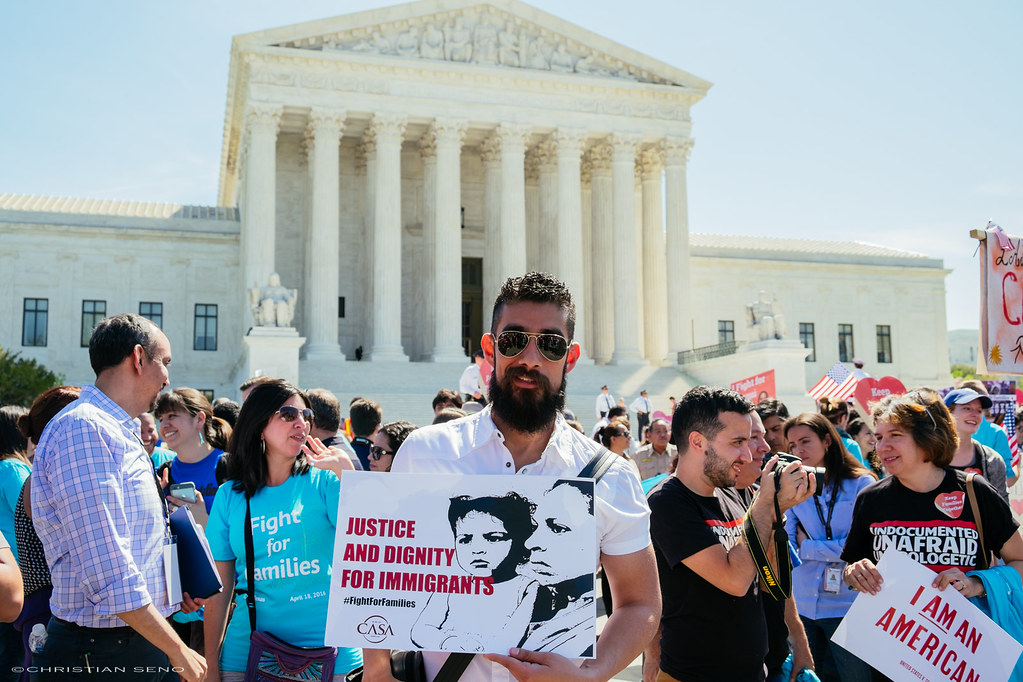
House Democrats are making a move to help Dreamers achieve permanent residence. A new bill dubbed HR 6, the Dream and Promise Act, seeks to provide undocumented immigrants who came to the United States as children, the opportunity to obtain permanent residence. In addition, the bill includes a proposal that would allow certain types of immigrants fleeing war or natural disasters the opportunity to apply for permanent residence.

The Dream and Promise Act would cancel the removal (also known as “deportation”) of and grant conditional permanent resident (CPR) status to a person who is inadmissible or deportable from the U.S. if the person:

  • has been continuously physically present in the U.S. for at least four years before the date of the bill’s enactment;
  • entered the U.S. before turning 18;
  • (a) has been admitted to a college, university or other higher educational institution; or (b) has earned a high school diploma, GED, or equivalent post-secondary education credential; or (c) is enrolled in a secondary school or education program that assists students in obtaining a high school diploma, GED or similar state-authorized exam, certificate or credential from a career or technical school providing education at the secondary level,or in obtaining a recognized post-secondary credential;
  • provides biometric and biographic data, with alternative procedures available for those with physical impairments;
  • passes a background check;
  • registered for military selective service if required to;
  • pays a fee no greater than $495, though fee exemptions may apply;

Continue reading

megaphone-147176_1280
USCIS has announced that it will resume premium processing services for all H-1B petitions on Tuesday, March 12.

Applicants who have received a request for evidence (RFE) for a pending H-1B petition, should include Form I-907 request for premium processing along with the RFE response, if they wish to upgrade their petition.

What is Premium Processing Service?

annie-spratt-37952-unsplash
Beginning March 22nd, USCIS will only accept the revised version of Form I-539 Application to Extend/Change Nonimmigrant Status with edition date 02/04/2019. USCIS will reject any Form I-539 with an edition date of 12/23/16, or earlier, that is received by USCIS after March 21st.

USCIS will accept the 12/23/16 version of Form I-539 from now until close of business on March 21st.

The revised version of Form I-539 will be published on the USCIS website today, March 8, 2019. In addition, USCIS will be publishing a new Form I-539A Supplemental Information for Application to Extend/Change Nonimmigrant Status, on the Form I-539 webpage on March 8. Form I-539A replaces the Supplement A provided in previous versions of Form I-539. Form I-539A can only be submitted along with Form I-539.

kobby-mendez-1399442-unsplash-1

USCIS Issues Notice Extending TPS Designation for Beneficiaries from Sudan, Nicaragua, Haiti, and El Salvador

In compliance with a court ordered preliminary injunction issued in the case Ramos v. Nielsen, USCIS has issued a notice formally announcing the automatic extension of TPS documentation for beneficiaries from Sudan, Nicaragua, Haiti, and El Salvador until January 2, 2020.

Beneficiaries under the Temporary Protected Status (TPS) designations for Sudan, Nicaragua, Haiti, and El Salvador will retain their TPS while the preliminary injunction remains in effect, provided that an individual’s TPS is not withdrawn under Immigration and Nationality Act (INA) section 244(c)(3) or 8 CFR 244.14 because of ineligibility.

DHS has further announced that it is automatically extending through January 2, 2020, the validity of TPS related Employment Authorization Documents (EADs), Forms I–797, Notice of Action (Approval Notice), and Forms I–94 (Arrival/Departure Record) (‘‘TPS-Related Documentation’’), for beneficiaries under the TPS designations for Sudan, Nicaragua, Haiti, and El Salvador, provided that the affected TPS beneficiaries remain otherwise eligible for TPS.

TPS for these countries will not be terminated unless and until any superseding, final, nonappealable judicial order permits such terminations.

Venezuelan Immigrant Visa Processing

The Department of State recently announced that the U.S. Embassy in Bogota, Colombia is now the designated primary site to process immigrant visas for residents of Venezuela. Beginning April 2019, the National Visa Center will begin scheduling Venezuelan immigrant visa interviews at the U.S. Embassy in Bogota. Appointment notices for all future immigrant visa interviews will take place at the U.S. Embassy in Bogota.

Continue reading