Articles Posted in DHS

171776104_2c278aa024_z

USCIS International Field Offices

On August 9, 2019, USCIS announced its plans to maintain seven international field offices open in Beijing, Guangzhou, Nairobi, New Delhi, Guatemala City, Mexico City, and San Salvador.

As previously reported, all other USCIS international field offices will close between now and August 2020.

Functions performed at closing international offices will be handled domestically or by USCIS domestic staff on temporary assignments abroad. In addition, the Department of State (DOS) will assume responsibility for certain in-person services that USCIS currently provides at international field offices.

In addition to issuing visas to foreign nationals who are abroad, DOS already performs many of these service functions where USCIS does not have an office.

Targeted Immigration Raids

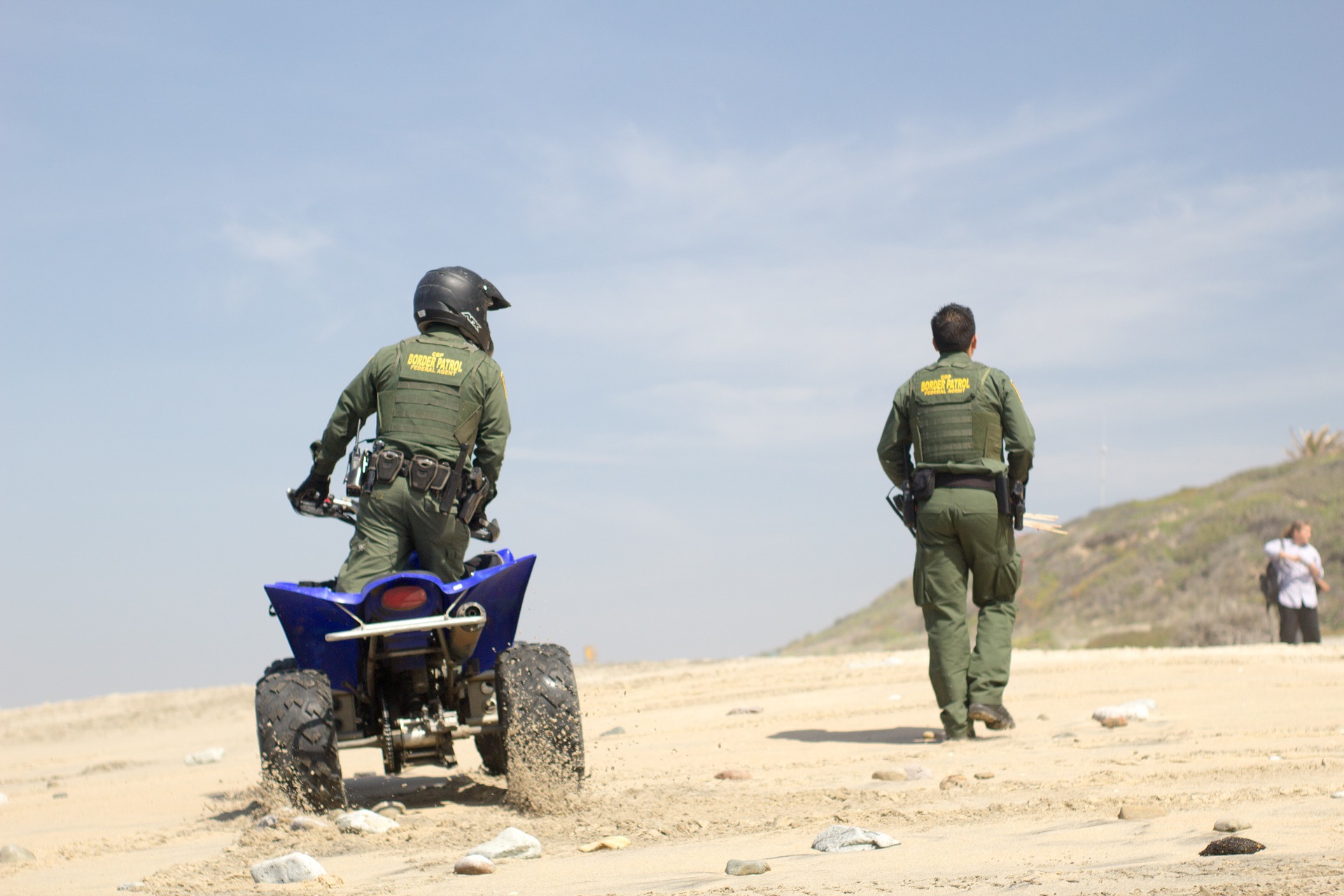
As our readers may be aware, U.S. Immigration and Customs Enforcement (ICE) has been conducting targeted immigration raids (Enforcement and Removal Operations) to remove undocumented immigrants from the United States.

Continue reading

human-3610097_1920

On August 1, 2019, the United States Citizenship and Immigration Services (USCIS) announced that Syrian nationals currently receiving benefits under Temporary Protected Status (TPS) may re-register through March 31, 2021, to maintain their status under the program.

Re-registration instructions and information on how to renew employment authorization will soon be published on the USCIS website and the federal register.

Applicants must re-register by submitting Form I-821 Application for Temporary Protected Status to maintain TPS benefits, and may submit a properly completed Form I-765 Application for Employment Authorization to renew employment authorization documents (EAD) at the same time. Alternatively, TPS applicants may file Form I-765 at a later date.

Those who are eligible to apply will receive new employment authorization documents with a new expiration date.

Continue reading

fence-3585348_1920

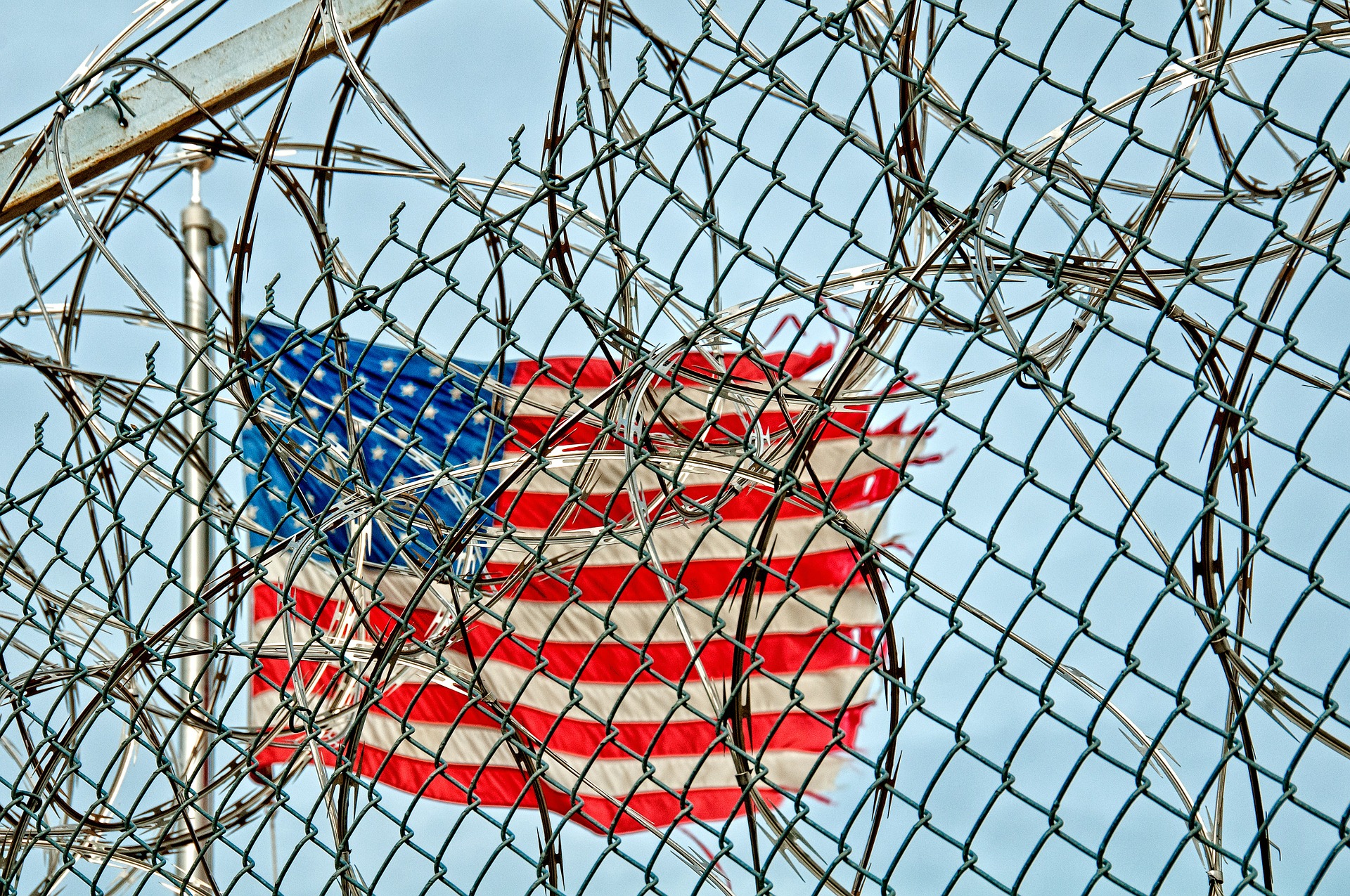
Today, July 16, 2019, the Department of Homeland Security and Department of Justice issued a joint interim Final Rule that has been published in the Federal Register and is effective immediately.

The interim Final Rule aims to place additional restrictions on the asylum application process and limit the eligibility of individuals seeking to apply for asylum.

What is the Rule about?

The Departments of Justice and Homeland Security are revising 8 C.F.R. § 208.13(c) and 8 C.F.R. § 1208.13(c) to add a new bar to eligibility for asylum for an alien who enters or attempts to enter the United States across the southern border, but who did not apply for protection from persecution or torture where it was available in at least one third country outside the alien’s country of citizenship, nationality, or last lawful habitual residence through which he or she transited en route to the United States.

In a Nutshell:

With the passage of this rule, applicants for asylum who enter or attempt to enter the United States across the southern border, without having applied for protection in a third country outside their country of citizenship, nationality, or last lawful habitual residence, will not be eligible for asylum.

Continue reading

nordwood-themes-359015-unsplash

Foreign nationals applying for a non-immigrant or immigrant visa at a U.S. Consulate or Embassy abroad are now required to disclose information relating to their social media presence on their online nonimmigrant and immigrant visa applications known as the DS-160 and DS-260 respectively.

These changes were introduced early last week by the Department of State. Applicants must now provide information about each social media platform they have used within the last five years, including the name of the platform, and the username or handle used on that platform.

Applicants must also provide their current email and phone number, as well as email addresses and phone numbers they have had during the last five years.

Consular officials can use information found on social media during the visa adjudication process to determine whether the individual is eligible for the visa they are requesting. If officials find any information on social media that would lead them to believe the applicant is misrepresenting their true intentions or attempting to gain entry through means of fraud or deceit, the applicant’s visa application may be denied.

In the past, the Department of State only required social media information of individuals that were flagged for further inspection and individuals posing security risks to the United States. This information was provided in a supplemental questionnaire known as the DS-5535. Now, these questions are asked directly on the DS-160/DS-260 applications.

Continue reading

girl-982119_1920
The White House recently issued a Presidential Memorandum to strengthen asylum procedures and safeguard the asylum system against fraud.

The Presidential Proclamation specifically orders the Attorney General and Secretary of Homeland Security to take several measures to enhance the security of the asylum system by July 28, 2019.

These measures require the Attorney General and Secretary of Homeland Security to enact proposals and/or regulations that would:

graphic-3315401_1280

On April 22, 2019, the White House issued a memorandum seeking to curb the high rates of nonimmigrant overstays for nationals from certain countries.

Specifically, the memorandum identifies aliens who overstay their period of lawful admission under the terms of their visa or Visa Waiver Program.

The memorandum instructs the Secretary of State to identify conditions that contribute to the high rates of overstay of nationals from countries in which the total overstay rate is greater than 10 percent in the combined B-1/B-2 nonimmigrant visa category, based on the DHS 2018 Entry/Exit Overstay Report.

Within 180 days, the President has instructed the Secretary of State, Attorney General, and Secretary of Homeland Security to come up with a plan to curb B-1/B-2 visa overstay rates with respect to identified countries of interest. Such a plan may include the suspension or limited entry of individuals of those countries holding B-1 or B-2 visas, targeted suspension of visa issuance for certain nationals, limits to duration of admission, etc.

Continue reading

charles-575498-unsplash

The start of the FY 2020 H-1B cap season begins on April 1, 2019. This year, USCIS will offer premium processing services in a two-phased approach to avoid temporary suspension of the service.

Change of Status H-1B Cap Petitions

Starting April 1, FY 2020 cap-subject H-1B petitioners requesting a change of status on their Form I-129, Petition for a Nonimmigrant Worker, may request premium processing by concurrently filing Form I-907, Request for Premium Processing Service.

However, to prioritize data entry for cap-subject H-1B petitions, USCIS will not begin premium processing for these petitions immediately.

USCIS will begin premium processing for these petitions no later than May 20, 2019 and will notify the public before premium processing begins for these petitions.

If a petitioner does not file Form I-907 concurrently with an FY 2020 H-1B cap-subject petition requesting a change of status, the petitioner must wait until premium processing begins to submit Form I-907.

All Other FY 2020 Cap-Subject Petitions

Premium processing services for all other FY 2020 cap-subject H-1B petitions will not begin until at least June 19, 2019. Cap-subject petitioners who are not requesting a change of status may not submit their premium processing request concurrently with their H-1B petition. These petitioners will be eligible to upgrade to premium processing once premium processing begins for this group. USCIS will notify the public with a confirmed date for premium processing for cap-subject petitioners not requesting a change of status. Continue reading

kobby-mendez-1399442-unsplash-1

USCIS Issues Notice Extending TPS Designation for Beneficiaries from Sudan, Nicaragua, Haiti, and El Salvador

In compliance with a court ordered preliminary injunction issued in the case Ramos v. Nielsen, USCIS has issued a notice formally announcing the automatic extension of TPS documentation for beneficiaries from Sudan, Nicaragua, Haiti, and El Salvador until January 2, 2020.

Beneficiaries under the Temporary Protected Status (TPS) designations for Sudan, Nicaragua, Haiti, and El Salvador will retain their TPS while the preliminary injunction remains in effect, provided that an individual’s TPS is not withdrawn under Immigration and Nationality Act (INA) section 244(c)(3) or 8 CFR 244.14 because of ineligibility.

DHS has further announced that it is automatically extending through January 2, 2020, the validity of TPS related Employment Authorization Documents (EADs), Forms I–797, Notice of Action (Approval Notice), and Forms I–94 (Arrival/Departure Record) (‘‘TPS-Related Documentation’’), for beneficiaries under the TPS designations for Sudan, Nicaragua, Haiti, and El Salvador, provided that the affected TPS beneficiaries remain otherwise eligible for TPS.

TPS for these countries will not be terminated unless and until any superseding, final, nonappealable judicial order permits such terminations.

Venezuelan Immigrant Visa Processing

The Department of State recently announced that the U.S. Embassy in Bogota, Colombia is now the designated primary site to process immigrant visas for residents of Venezuela. Beginning April 2019, the National Visa Center will begin scheduling Venezuelan immigrant visa interviews at the U.S. Embassy in Bogota. Appointment notices for all future immigrant visa interviews will take place at the U.S. Embassy in Bogota.

Continue reading

team-building-3669907_1920
The Trump administration is making another bold move, this time the target is H-4 dependent spouses of H-1B nonimmigrant workers seeking permanent residence.

The Department of Homeland Security has published a notice of proposing rule-making (NRPM) to rescind an Obama era rule extending eligibility for employment authorization to certain H-4 dependent spouses of H-1B workers seeking permanent residence.

We are awaiting publication of the proposed rule in the federal register. At this time, the regulation has preliminarily appeared on the government website reginfo.gov.

donald-trump-2789735_1280

A new policy brief published by the American Immigration Lawyers Association (AILA) analyzing USCIS processing times reveals that the agency has reached “crisis” level delays in processing immigrant and non-immigrant petitions. These delays have worsened during the Trump administration.

According to the report the most vulnerable populations include immigrant families, domestic abuse survivors and their children, traumatized and threatened persons seeking humanitarian aid, and U.S. businesses.

Specifically, the report finds that USCIS data released for fiscal years 2014 through 2018 reveals that USCIS is failing to adjudicate cases in a reasonable and timely manner:

  • The overall average case processing time surged by 46 percent over the past two fiscal years and 91 percent since FY 2014.
  • USCIS processed 94 percent of its form types—from green cards for family members to visas for human trafficking victims to petitions for immigrant workers—more slowly in FY 2018 than in FY 2014.
  • Case processing times increased substantially in FY 2018 even as case receipt volume appeared to markedly decrease
  • Data revealed a “net backlog” exceeding 2.3 million delayed cases at the end of FY 2017
  • DHS identified a net backlog of 2,330,143 USCIS cases as of the end of FY 2017.7
  • DHS observed that USCIS’s “net backlog has been as high as 1.7 million in FY 2004 and 1.5 million in FY 2008”—suggesting that USCIS’s net backlog at the conclusion of FY 2017 was its highest on record
  • the FY 2017 net backlog more than doubled from 1,047,751 cases at the conclusion of FY 2016—despite only a four percent increase in case receipts during that one-year period

What is to blame?

According to the report the following decisions made under the Trump administration have exacerbated delays and slowed the level of immigration to the United States:

Continue reading