Articles Posted in EAD

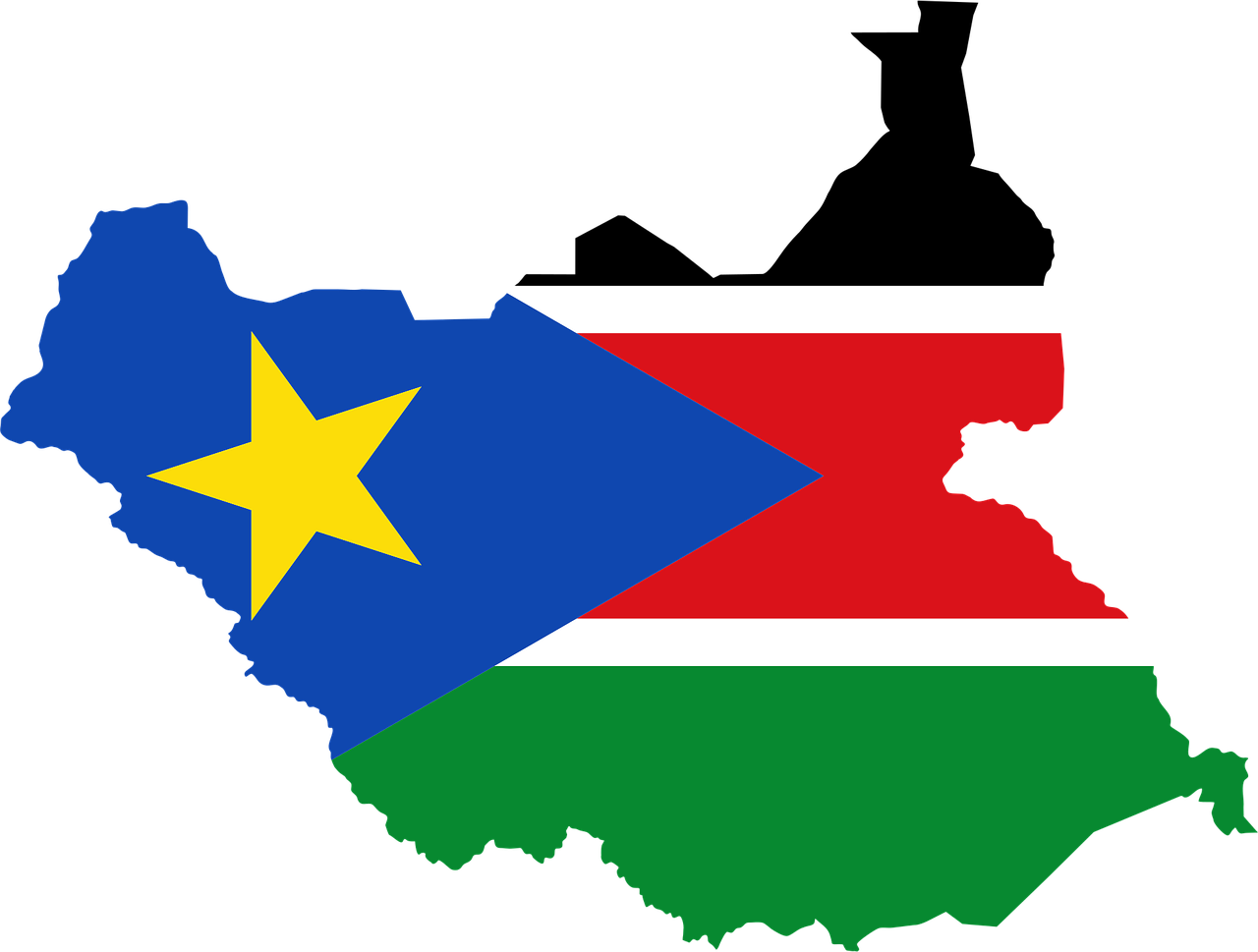
south-sudan-1758979_1280On November 5th the Department of Homeland Security (DHS) announced that the country‑specific designation of South Sudan will be terminated for the Temporary Protected Status (TPS) program. The TPS designation for South Sudan will end on January 5, 2026.


What’s the background?


  • South Sudan was first designated for TPS in 2011 due to ongoing armed conflict and extraordinary temporary conditions in the country.
  • The designation was extended multiple times, including a six‑month extension from May 2025 through November 2025, because DHS was unable to make a timely determination by the statutory deadline.
  • In its termination decision, DHS determined that South Sudan “no longer continues to meet the conditions” for TPS under the statute.

Who is affected?


Nationals of South Sudan (and certain stateless individuals who last habitually resided in South Sudan) who currently hold TPS under that country’s designation. After January 5, 2026, they will no longer have TPS status.


What’s the timeline and transition?


  • Until January 5, 2026: The termination becomes effective then.
  • During the transition period, certain employment authorization documents (EADs) issued under the South Sudan TPS designation remain valid through that date.

Continue reading

hiring-1977803_1280On October 29, 2025, the Department of Homeland Security (DHS) announced an interim final rule that will end the automatic extension of employment authorization documents (EADs) for most renewal applicants effective October 30, 2025.

In this post, we’ll unpack what’s changing, who it affects, the rationale behind the change, and what individuals and employers should do to prepare.

What was the previous policy?


Historically, noncitizens who held valid EADs (Form I-766) and timely filed a renewal application (Form I-765) before their current EAD expired often automatically received continued employment authorization while the renewal was pending. This “automatic extension” policy served as a buffer to prevent employment gaps.

These policies helped many workers avoid a lapse in authorization while waiting for processing of their renewal application.

What is changing now?


Starting October 30, 2025, the automatic extension of work authorization for most renewal applicants will end.

What to know

  • If you file your I-765 renewal on or after October 30, 2025, you will not receive an automatic extension of your EAD for most categories.
  • The rule affects many categories of renewal applicants, including (but not necessarily limited to) those applying under asylum, adjustment of status, H-4 dependent spouses (EAD category C26), etc.
  • Automatic extensions that were already granted (for renewal applications filed before the cut-off) remain valid.
  • Some limited exceptions remain, notably for certain categories such as those tied to TPS (Temporary Protected Status) where automatic extension may still be provided by law or Federal Register notice.

In short, you will not be authorized to keep working simply because you filed a renewal — you must wait for the new EAD to be approved by USCIS.

Continue reading

us-1978465_1280Last week, the U.S. Supreme Court handed down a troubling decision that could strip legal status from hundreds of thousands of Venezuelans currently living in the United States under Temporary Protected Status (TPS).

On Friday, the Court granted the Trump administration’s request to halt a lower court ruling that found the administration’s cancellation of TPS protections for Venezuelans unlawful. The unsigned order from the Court effectively allows the government to proceed, for now, with its plans to revoke temporary protections that had shielded Venezuelan nationals from deportation and granted them employment authorization.

TPS was created in 1990 as a humanitarian safeguard for individuals whose home countries are experiencing extraordinary crises such as armed conflict, environmental disasters, or other temporary but severe disruptions. Venezuela was designated for TPS in 2021 under President Biden, in response to the country’s severe economic collapse, widespread human rights abuses, and political instability.

Since then, approximately 300,000 Venezuelans have relied on that protection to live and work legally in the U.S., building lives, paying taxes, and raising families.

Trump Administration Moves to Strip Venezuela’s TPS Designation


But the political tides have shifted. When the Trump administration returned to office, it appointed Kristi Noem as Secretary of Homeland Security. Earlier this year, Noem moved to revoke Venezuela’s TPS designation, arguing that conditions in the country had improved and that continuing the program was no longer in the national interest. That decision sparked immediate legal challenges. A coalition of Venezuelan TPS recipients and advocacy groups sued, claiming the administration’s actions were arbitrary, rushed, and in violation of federal law.

Continue reading

dollar-2931882_1280On Tuesday, the U.S. Citizenship and Immigration Services (USCIS) will issue a Federal Register notice enforcing new fees for certain immigration benefit requests postmarked on or after July 22, 2025. Benefit requests submitted to the agency without the proper fees will be rejected.

These new fees are part of the H.R. 1 Reconciliation Bill. A portion of these new fees will be deposited into a U.S. Treasury account that primarily funds the operations of USCIS.

Please be aware that the Federal Register Notice does not include all the new fees mandated by the new bill. The Department of Homeland Security (DHS) will issue a future announcement regarding the implementation of fees that have not been addressed in Tuesday’s notice.


What are the new fees?


Continue reading

gavel-7499921_1280In a stunning turn of events, on Tuesday a federal judge in New York blocked the Trump administration from ending Temporary Protected Status (TPS) benefits for Haitians ahead of schedule, ruling that DHS violated the law in attempting to strip deportations and work permits from over half a million Haitians.

The ruling comes in response to the Department of Homeland Security’s abrupt announcement that it would be terminating Haiti’s TPS designation effective September 2, 2025.

In a decision issued Tuesday, District Court Judge Brian M. Cogan found that accelerating the program’s expiration by at least five months was unlawful and that the government failed to follow required procedures mandated by Congress, such as conducting a review of current conditions in Haiti before ending its TPS designation—a requirement that was not followed in this case.

haiti-162313_1280On Friday June 27, 2025, the Secretary of Homeland Security Kristi Noem announced that the government will not renew Temporary Protected Status (TPS) benefits for Haiti once the current designation expires on August 3, 2025.

Beneficiaries will be granted a 60-day transition period to make preparations to either depart the United States or seek alternative lawful immigration status in the United States, before Haiti’s designation officially terminates on September 2, 2025.

Employment Authorization

court-5665886_1280
On Wednesday, May 28, 2025, a federal judge from the United States District Court for the District of Massachusetts issued a nationwide court order lifting the Trump administration’s suspension of adjudications for immigration benefit applications submitted by noncitizens who were lawfully paroled into the United States under certain categorical parole programs implemented during the Biden administration.

Those affected by the suspensions were parolees in the following programs:

  • Military Parole in Place (MPIP) for members of the U.S. armed forces to petition their relatives for parole
  • Uniting for Ukraine (U4U), for Ukrainian citizens and their family members to apply for advanced authorization to travel to the United States to request parole for up to two years and apply for employment authorization with USCIS
  • Noncitizens from Cuba, Haiti, Nicaragua, and Venezuela (CHNV) authorizing parole requests of up to two years, and the ability to apply for employment authorization from USCIS
  • Family Reunification Parole (FRP) programs permitting individuals from Colombia, Cuba, Guatemala, Ecuador, Haiti, Honduras, and El Salvador to receive advanced authorization to travel to the United States while their family-based immigrant visas are pending.
  • Central American Minors Program (CAM) for individuals from El Salvador, Honduras, and Guatemala lawfully present in the United States to request immediate relatives not present in the United States to be granted access to the Refugee Admissions Program.

Continue reading

united-states-supreme-court-6330563_1280On May 19th the U.S. Supreme Court handed the Trump administration a legal victory after the justices agreed to lift a lower court order that had previously stopped the President’s efforts to strip Venezuelans of deportation protections granted under Temporary Protected Status (TPS).


What is TPS?


Temporary Protected Status (TPS) is a humanitarian program allowing nationals of certain countries to remain in the United States temporarily, if the government has determined that it is unsafe for them to return to their home country for humanitarian reasons, such as armed conflict or a natural disaster.

It allows nationals of designated countries to live and work in the United States for a temporary period of time, during which they are protected from deportation. Those who qualify are given temporary employment authorization, which is automatically extended if the government extends their TPS validity period.


Biden’s Designation of Venezuela for TPS


The original TPS designation for nationals of Venezuela was issued on March 9, 2021, due to extraordinary conditions preventing their safe return to Venezuela (the 2021 designation). A separate re-designation was issued on October 3, 2023 (the 2023 designation).

Before leaving office, the Biden administration extended Venezuela’s 2023 designation for an additional period of 18 months, which was meant to last from, April 3, 2025, to October 2, 2026.

Continue reading

student-5473769_1280F-1 International Students at university campuses across the country have been rocked by alarming reports that their visas and SEVIS records have been suddenly terminated by U.S. Immigration and Customs Enforcement (ICE), without any prior notice to the university or the student.

This new wave of SEVIS terminations which began early this month has led to a string of lawsuits filed in federal district court, challenging the legality of the terminations.

School officials became aware of terminated F-1 student records only after conducting checks of the Student & Exchange Visitor Information System (SEVIS) system. The records of those impacted simply state that the visa revocations were due to an immigration status violation.

The following three generic classifications have been provided for the terminations:

  • Termination based on serious adverse foreign policy consequences
  • Student identified in a criminal records check
  • Student identified in criminal check and/or has had their visa revoked

No further details regarding the reason for the terminations have been provided by the government, nor were school officials notified of actions taken.


What is SEVIS?


The Student and Exchange Visitor Information System (SEVIS) is an online system used by the U.S. Department of Homeland Security (DHS) to maintain information on Student and Exchange Visitor Program (SEVP)-certified schools, F-1 and M-1 students who come to the United States to begin a program of student.

Designated school officials use SEVIS to issue Forms I-20 to specific nonimmigrants to obtain F or M status while enrolled at the school and to satisfy their legal responsibilities.

Continue reading

statue-of-liberty-9275095_1280Today March 21, 2025, the Department of Homeland Security (DHS) released an advance copy of a notice in the Federal Register ending four Biden-era parole programs for Cuba, Haiti, Nicaragua, and Venezuela (CHNV).

When


The temporary parole period of aliens in the United States under the CHNV parole programs will terminate on April 24th (30 days from the date of the notice’s publication in the Federal Register)

Parolees without a lawful basis to remain in the United States following this termination of the CHNV parole programs must depart the United States before the program’s termination date.

Who will be impacted


Nationals from Cuba, Haiti, Nicaragua and Venezuela who flew to the U.S. under Biden’s CHNV humanitarian parole program.

Parolees granted admission under CHNV were given a temporary two-year parole period to remain in the U.S., work authorization, and protection from deportation. The purpose of the program was to reduce illegal immigration at the southern border and provide alternative legal avenues.

Approximately 532,000 nationals entered the United States using this program.

Termination of Employment Authorization Documents


Parole-based employment authorization for CHNV parolees will also automatically terminate on April 24th and will be revoked pursuant to 8 CFR 274a.14(b).

Expedited Removal


Following parole termination, DHS intends to promptly remove aliens who entered the United States under the CHNV parole programs, who do not depart the United States before their parole termination date and who do not have any lawful basis to remain in the United States.

Continue reading